USSR in the years 1945-1991
what the characteristics of Stalinisim were;
how the USSR functioned in Stalin's time;
what the thaw of 1956 was and why it was important;
who Nikita Khrushchev was and what he achieved;
who the leaders of the USSR were;
how and why the USSR collapsed.
The Soviet Union left the Second World War as a victor. Joseph Stalin's army captured Berlin and expanded the zone of Soviet influence to half of Europe. However, the war caused many repercussion. Millions have been killed (its estimated at over 20 million victims), and vast areas of the country have been destroyed. The end of the war also did not change the functioning of the superpower. Its economy was still based on heavy industry, central planning, kolektywizacji rolnictwakolektywizacji rolnictwa and satisfying the needs of the army, in relation to the emerging cold war.
The ThawThaw took place after Stalin's death (1953), and his successor, the secretary general of the Central Committee of the Communist Party of the Soviet Union (CPSU Central Committee) Nikita Khrushchev, gave his famous speech in which he condemned the Stalinist period and its crimes (1956). Unfortunately, this has not led to deeper changes in the functioning of the system. There were no significant changes on the international arena. Khrushchev continued the „anti‑imperialist policy” by suppressing all manifestations in the Eastern Bloc (the Hungarian uprising, the Second Berlin Crisis), supporting anti‑Western regimes (Egypt, Cuba) and striving for the expansion of communismcommunism and Soviet influence in postcolonial countries. His submission to the US during the Cuban crisisCuban crisis (1962) led to his replacement by Leonid Brezhnev. He was a supporter of the policy of force (Brezhnev DoctrineBrezhnev Doctrine), the application of which was reflected in the intervention in Czechoslovakia in 1968. He tried to strengthen the power of the USSR in the world by ensuring its military superiority over the United States (Arms raceArms race) and adding more and more new countries (including Angola, Nicaragua, Afghanistan) into its sphere of influence. However, in the economy and political life the direction was still the same, characterized by stagnation and a sharp course against any manifestations of opposition activity. After his death, the „old” leaders took over – Yuri Andropov (1982‑1984) and Konstantin Czernienko (1984‑1985).
After their short reign, Mikhail Gorbachev took charge of the Soviet Union. He decided to loosen the foreign policy (including the suppression of the arms race and ending the war in Afghanistan) and to introduce reforms aimed at liberalizing the life in the country, the basis of which was GlasnostGlasnost (transparency) and perestroikaperestroika (rebuilding). This led to processes that could no longer be stopped. Democratization and emergence of national movements ultimately led to the collapse of the USSR and the foundation of the Russian Federation. The Verkhovna Rada (parliament) was established, headed by the charismatic Boris Yeltsin (president of the Russian Federation since 1991). Unfortunately, the changes in the foreign policy and the democratization were not enough to change the disastrous economic situation. This led to the coup d'étatcoup d'état of the hard‑line members of the Communist Party and military personnel (August 1991). Gorbachev was overthrown. However, thanks to the intervention of Yeltsin and the support of the society and part of the army, the rebellion was crushed. After gaining full power, he finished the reforms started by his predecessor. In December 1991, the USSR collapsed and the Cold War officially ended.
Is it correct to say that outstanding individuals decide about the fate of the world? Justify the answer.
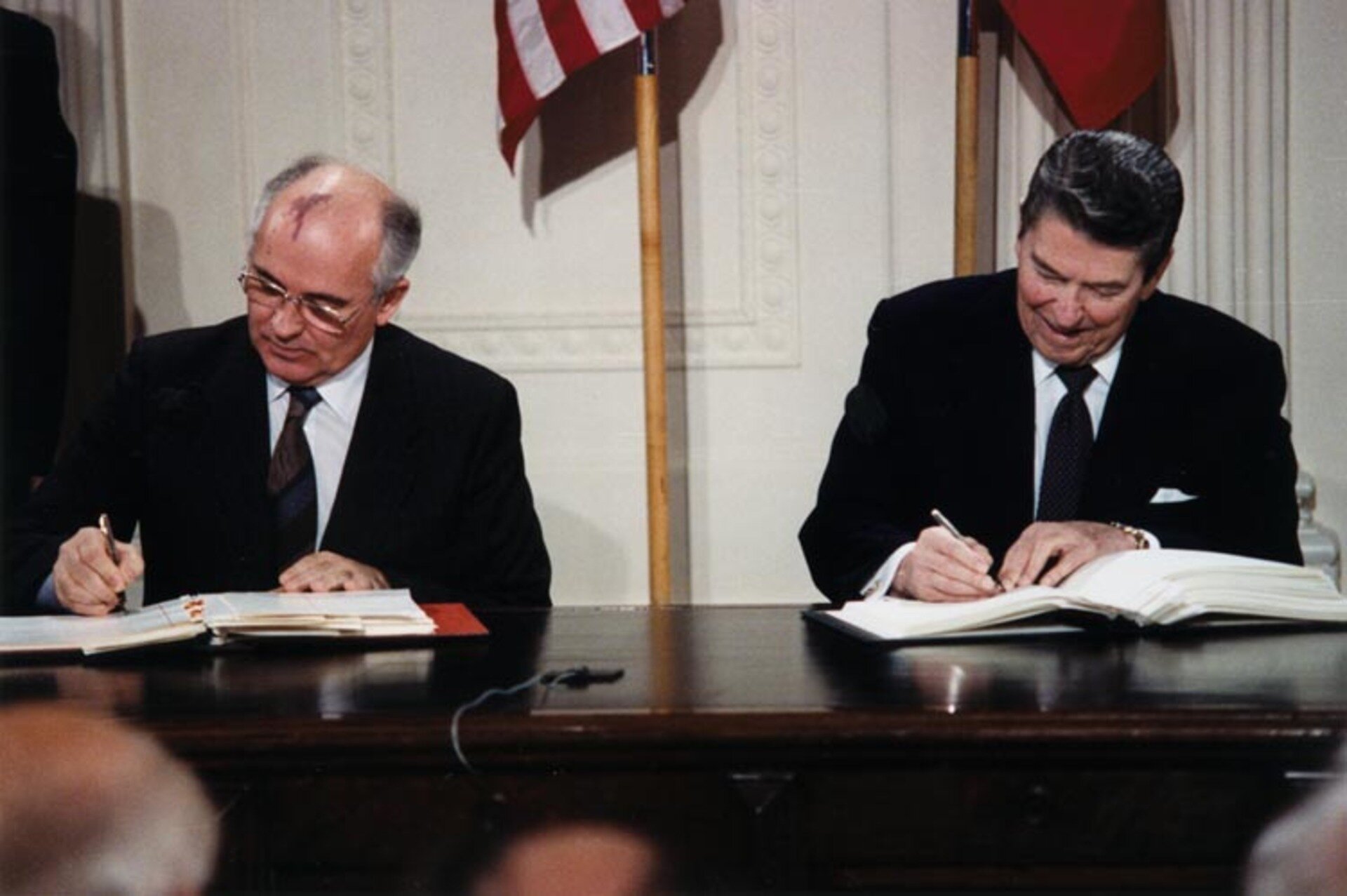
Find out what the SALT II agreement was about.
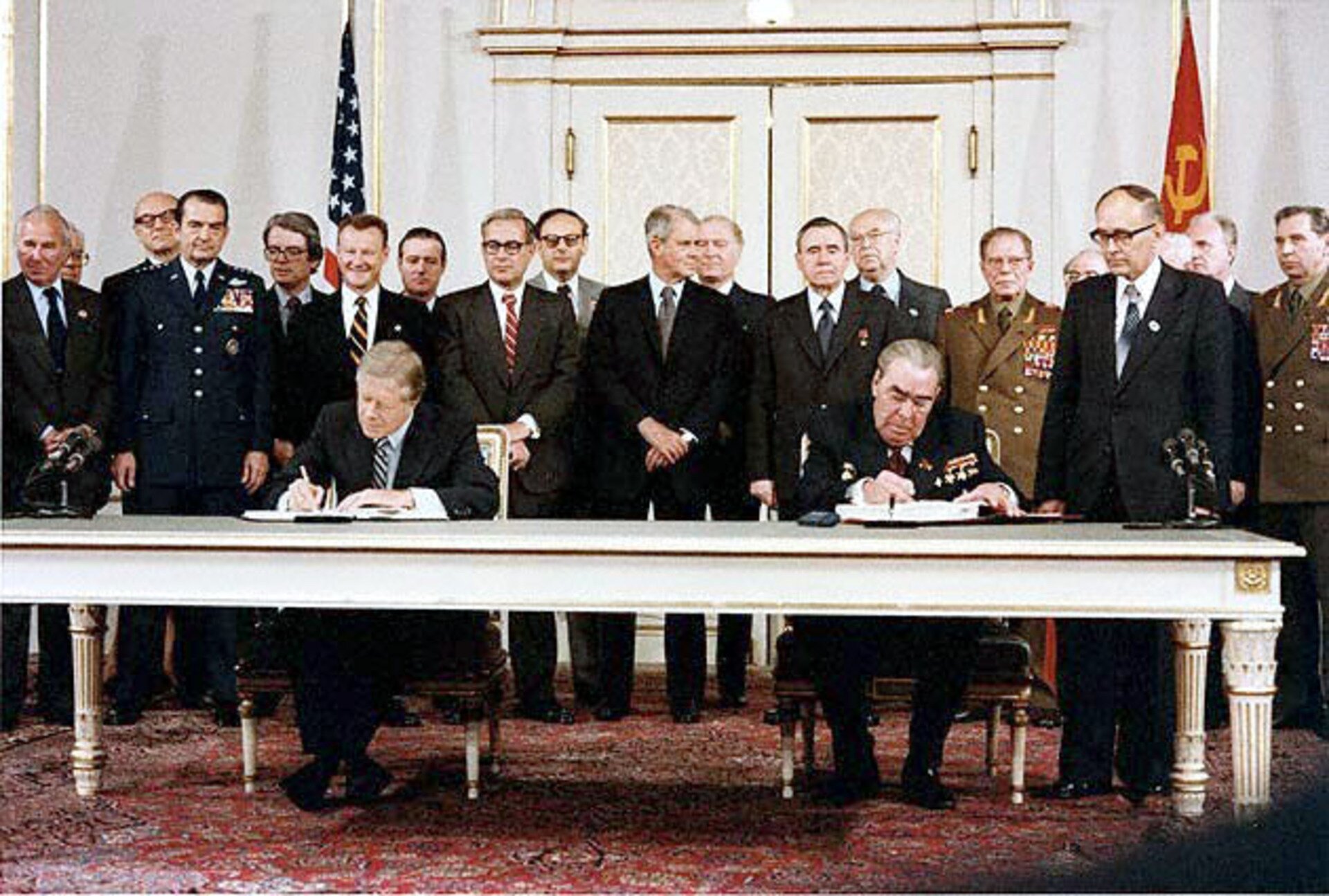
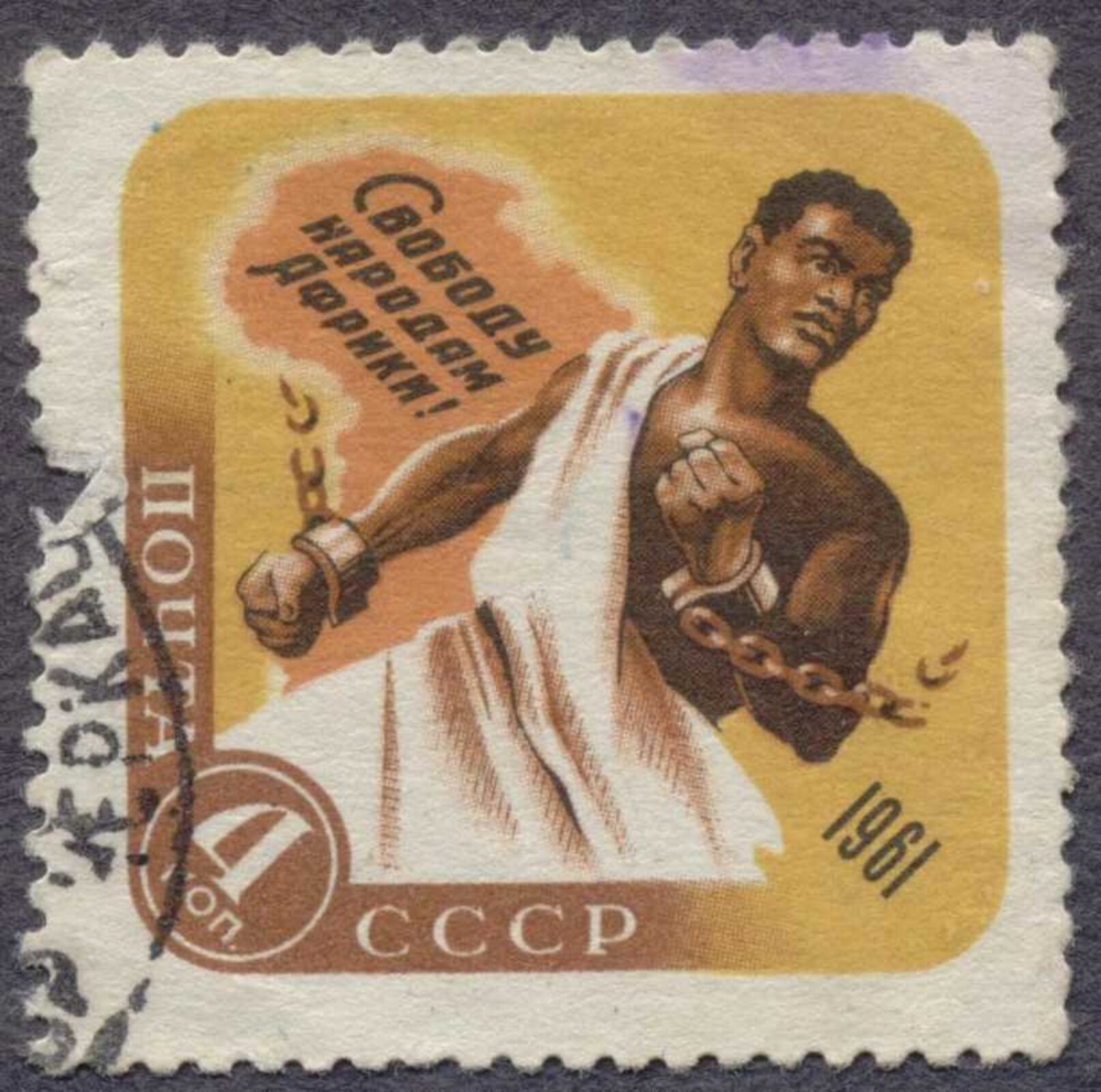
Combine the terms with their definitions.
forced labor camps in the Soviet Union, in which prisoners carried out heavy and often dangerous work, leading to physical and mental exhaustion and, consequently, death., a description of the political system in the countries of the Eastern Bloc in which the people were to rule., the first artificial Earth satellite fired by the USSR in 1957., an ideology proclaiming the emergence of one social class, the elimination of private property and the shared division of wealth. Its goal was to overthrow the existing political systems and introduce a utopian model of a state deprived of oppression and exploitation of others., imposing military force and propaganda of the Soviet system and its economic solutions., art created in 1934 in the Soviet Union, and after the Second World War propagated in other countries of the Eastern Bloc. It had the status of the only method of artistic creation. Characterized by realism; a tool of communist propaganda., a totalitarian ideological system shaped on the basis of the model of governing the state and managing its economy by Stalin. After the Second World War, it was imposed on the so-called People's democracy. It operated in Poland until 1956., the colloquial term for the period of alleviation or cessation of political repression and widespread terror in the countries ruled by the communist parties.
| Communism | |
| Sovietization | |
| Gulags | |
| Socialist Realism | |
| People's Democracy | |
| Stalinism | |
| Thaw | |
| Sputnik |
Keywords
Communism, sovietization, gulags, Socialist realism, People's democracy, stalinismstalinism, Sputnik, Perestroika, coup d'état
Glossary
Komunizm – ideologia głosząca powstanie jednej klasy społecznej, likwidację własności prywatnej i wspólny podział dóbr. Miała obalić istniejące ustroje polityczne i wprowadzić utopijny model państwa pozbawionego ucisku i wyzysku innych.
Sowietyzacja – narzucanie siłą militarną i propagandą ustroju sowieckiego i jego ustrojowo‑gospodarczych rozwiązań.
Kolektywizacja rolnictwa – łączenie indywidualnych gospodarstw rolnych w wielkie spółdzielnie rolnicze oparte na społecznych (wspólnych) środkach produkcji i podziału dochodu. Doprowadzała do załamania się produkcji rolnej i była nieefektywna.
Łagry – obozy pracy przymusowej w Związku Radzieckim, w których więźniowie wykonywali ciężką i często niebezpieczną pracę, prowadzącą do ich fizycznego i psychicznego wyniszczenia, a w konsekwencji śmierci.
Socrealizm – kierunek w sztuce powstały w 1934 r. w Związku Radzieckim, a po II wojnie światowej rozpropagowany w pozostałych krajach bloku wschodniego. Miał status jedynej metody twórczości artystycznej. Cechował się realizmem i był narzędziem propagandy komunistycznej.
Demokracja ludowa – określenie ustroju panującego w krajach bloku wschodniego, w którym miała panować rzeczywista władza ludu.
Stalinizm – totalitarny system ideologiczny ukształtowany na podstawie modelu rządzenia państwem i kierowania jego gospodarką przez Stalina. Po II wojnie światowej został narzucony państwom tzw. demokracji ludowej. W Polsce funkcjonował do 1956 r.
Odwilż – potoczne określenie okresu złagodzenia lub zaprzestania represji politycznych i powszechnego terroru w krajach rządzących przez partie komunistyczne.
Sputnik – pierwszy sztuczny satelita Ziemi wystrzelony przez ZSRR w 1957 r.
Państwa Trzeciego Świata (Trzeci Świat) – grupa państw w okresie zimnej wojny, które pozostały niezależne w konflikcie między blokiem zachodnim, kapitalistycznym (pierwszy świat) a wschodnim, komunistycznym (drugi świat). Z czasem termin ten zaczął oznaczać ubogie i słabo rozwinięte kraje.
Kryzys kubański – kryzys polityczny między USA a ZSRR z 1962 r. spowodowany rozmieszczeniem przez Rosjan na Kubie pocisków balistycznych mogących zagrozić terytorium amerykańskiemu.
Doktryna Breżniewa – przyjęta w 1968 r. w ZSRR doktryna uznająca możliwość interwencji państw Układu Warszawskiego na terenie każdego państwa socjalistycznego, któremu grozi zawrócenie z drogi socjalizmu. Nazywana również doktryną ograniczonej suwerenności. Najlepszym przykładem jej zastosowania była interwencja w Czechosłowacji w 1968 r.
Wyścig zbrojeń – potoczne określnie dla wydarzeń okresu powojennego, w którym Stany Zjednoczone i ZSRR konkurowały ze sobą na polu rozwoju militarnego i powiększaniu arsenału zbrojnego.
Głasnost – jeden z elementów reform Michaiła Gorbaczowa. Zmierzała do wprowadzenia jawności życia publicznego i końca monopolu informacyjnego
Pierestrojka – przebudowa; potoczne określenie przekształceń zachodzących w polityce ZSRR w latach 1985‑1991 stanowiła symbol nowej polityki partii komunistycznej. Jej istotą miała być modernizacja gospodarki, liberalizacja życia społecznego i otwarcie na państwa Zachodu.
Pucz – inaczej zamach stanu, przejęcie władzy w kraju, najczęściej siłowe, przez jednostkę lub grupę. Najczęściej dokonane przy pomocy wojska i niezgodne z obowiązującym prawem.