Does the movement of lithospheric plates affect our planet’s surface?
what the lithosphere is and what it consists of;
the internal structure of Earth;
that Earth's mantle is semi‑liquid and the lithosphere is rigid.
explain the concepts of: spreading and subduction;
present the spreading and subduction zones on the world map;
provide examples of terrain forms arising from the movement of the lithospheric plates;
explain how fold mountains, fault block mountains, and volcanic mountains were formed.
How is Earth's crust built?
From the very beginning of its existence, geology has asked questions about how the mountains were created, why volcanoes erupt, what causes earthquakes. Not more than 100 years ago, in 1912, a revolutionary hypothesis was born known as the continental drift, now called from the surname of its creator - Wegener's theoryWegener's theory. At the time, he was unable to explain the cause of the slow movement of continental and oceanic plates, but this concept gained more and more recognition over time. It was only when the ocean floor was studied several dozen years later that the validity of Wegener’s hypothesis was confirmed and developed into a scientific theory of tectonics of the lithospheric platestheory of tectonics of the lithospheric plates. This theory gives answers to most questions asked by modern geology. It assumes that the lithosphere is divided into huge plates that cover the entire planet and float on a formable mantle. They can move apart, creating places called the spreadingspreading zones. If two plates collide with each other, usually one of them (often the oceanic one) slides under the other (most often the land‑based one), and the line of such a collision is called the subductionsubduction zone. The lithospheric plates can also move parallel to each other along the line of faultsfaults.
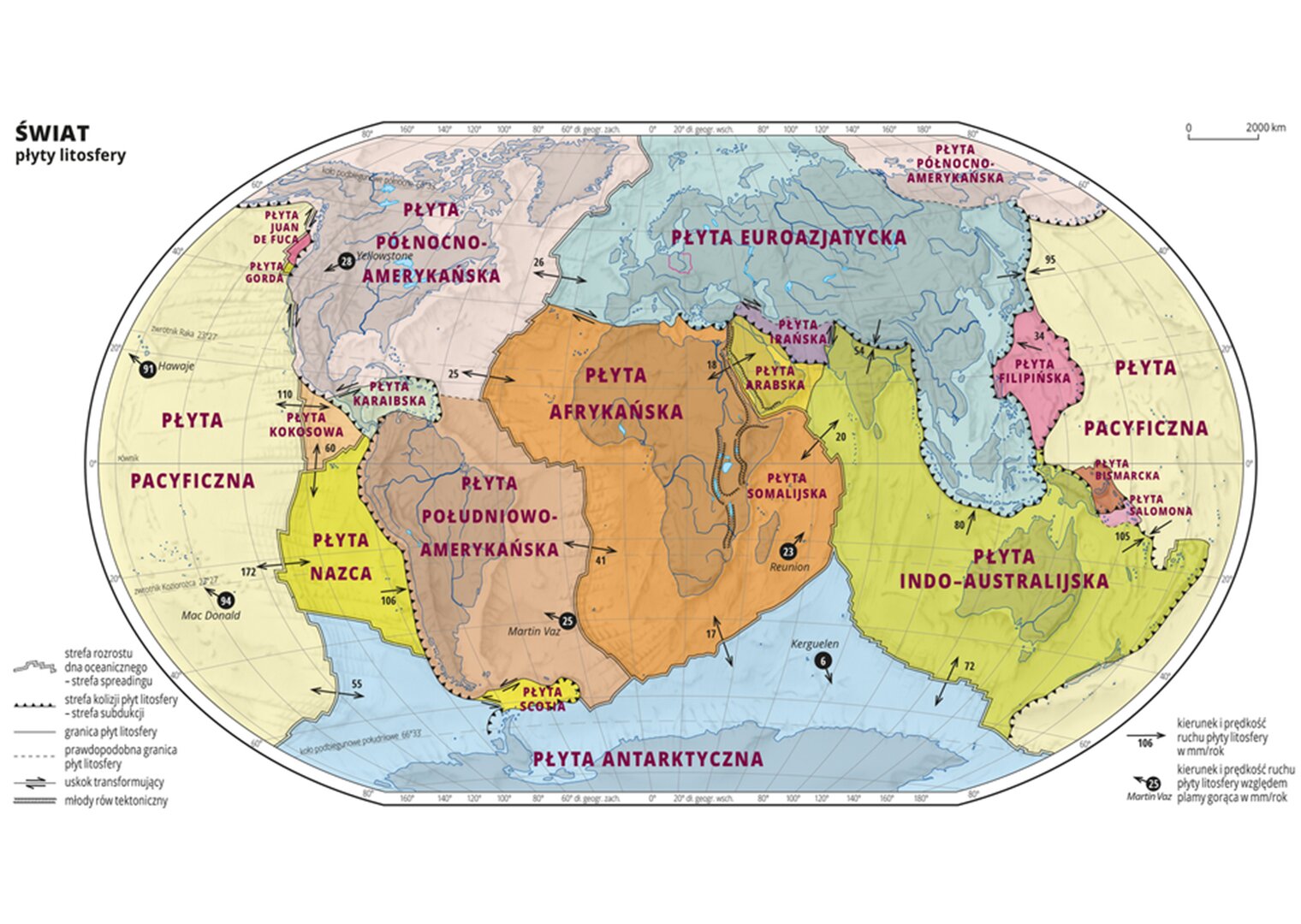
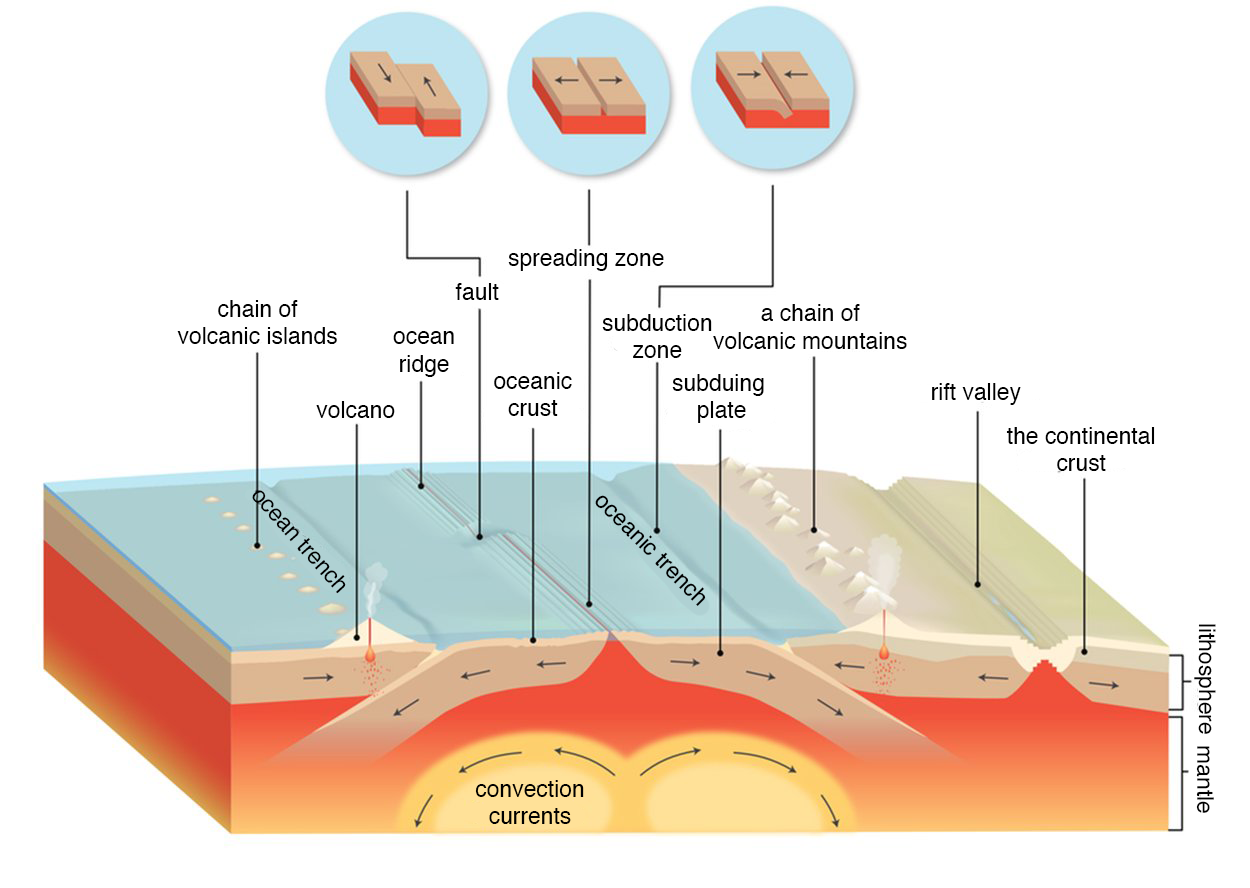
Does the movement of lithospheric plates affect our planet’s surface?
The main reason for the movement of lithospheric plates are convection currentsconvection currents in Earth’s mantle. A mass of heated matter, floating from the inside of Earth, melts to the sides after reaching the rigid lithospheric plates, tearing and moving apart neighbouring plates. Most often they are relatively thinner oceanic plates. What happens is spreadingspreading, there is a rift valleyrift valley on the seabed, with an oceanic ridge forming symmetrically on both of its sides. A new seabed is created.
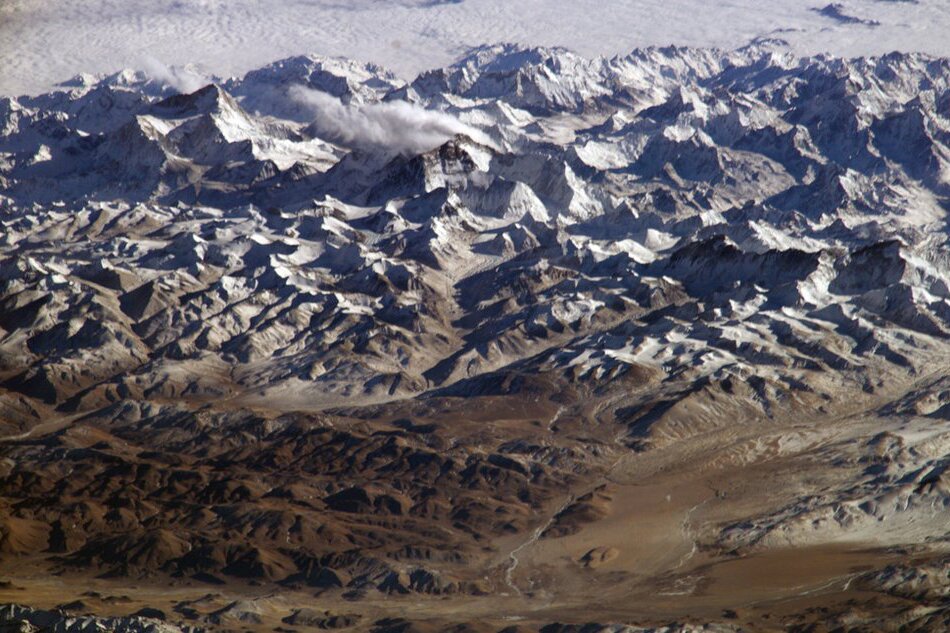
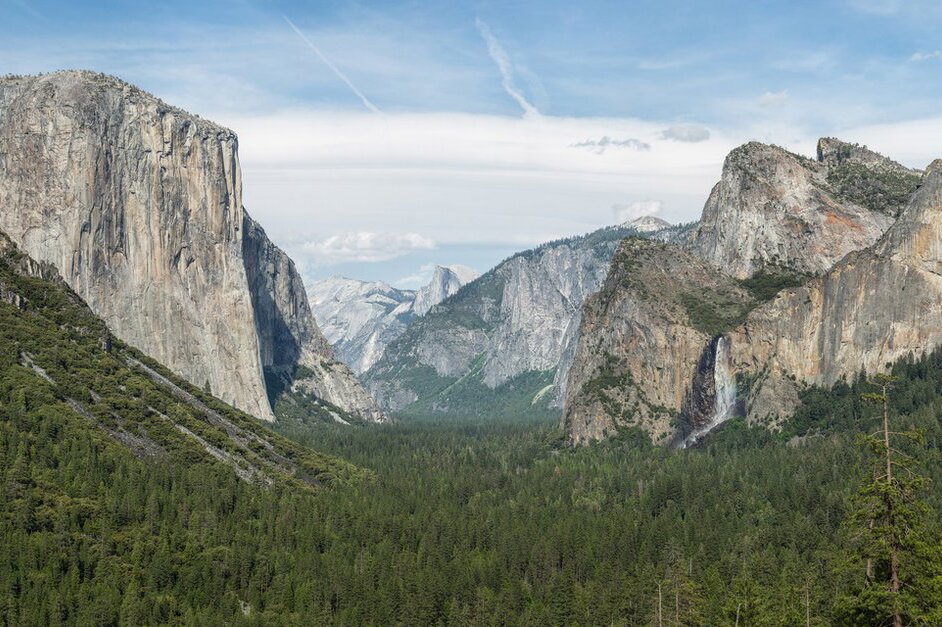
Earth has its permanent shape and size, so when a new Earth's crust is created in one place, it has to diminish in another. This happens in subductionsubduction zones, when two neighbouring lithospheric plates approach each other. One goes below another and is sucked deep inside the mantle. This causes other phenomena to occur. The ocean trenches appear under the seabed and mountains form on land. Rock masses, crushed and uplifted as a result of the collision of two lithospheric plates, bend and form fold mountainsfold mountains. This process is called orogenyorogeny or mountain‑forming movements. When the terrestrial massif is stiff and resistant to folding, faultfault is cut during the above‑mentioned mountain building process and the accompanying stresses. Some fragments are elevated (tectonic blocktectonic block) or lowered (rift faultrift fault), and the terrain transforms into fault block mountainsfault block mountains.
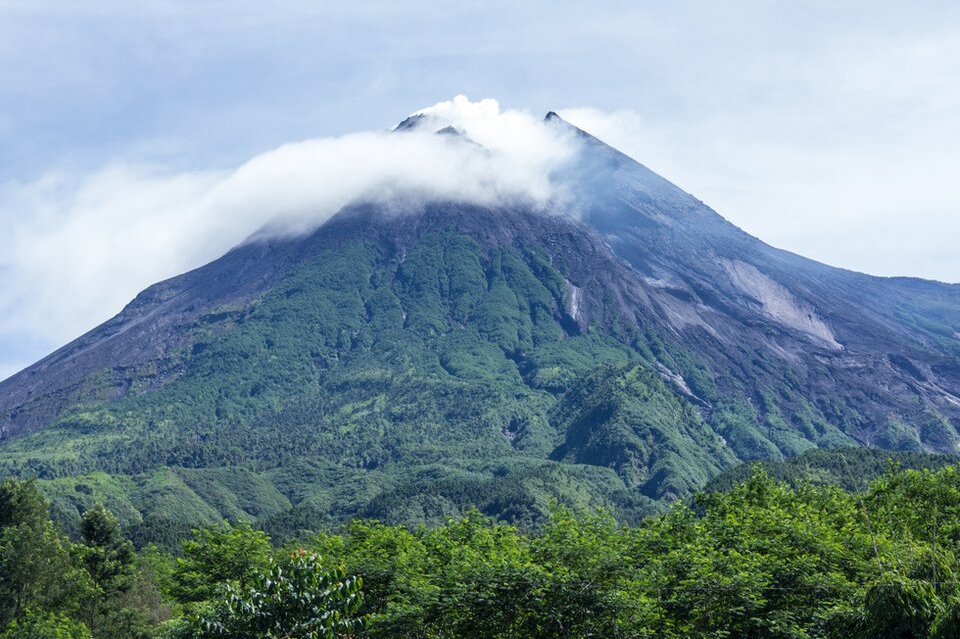
There are also movements, influenced by the slow movement of the masses of the Earth's mantle, raising or lowering the Earth's crust on large surfaces in some areas, called epeirogenic movementsepeirogenic movements. In the neighbourhood of spreading and subduction zones and large tectonic faults, there are often volcanoes forming very high mountains. Strong earthquakes are also possible. Both of these phenomena pose a serious threat to people living nearby.
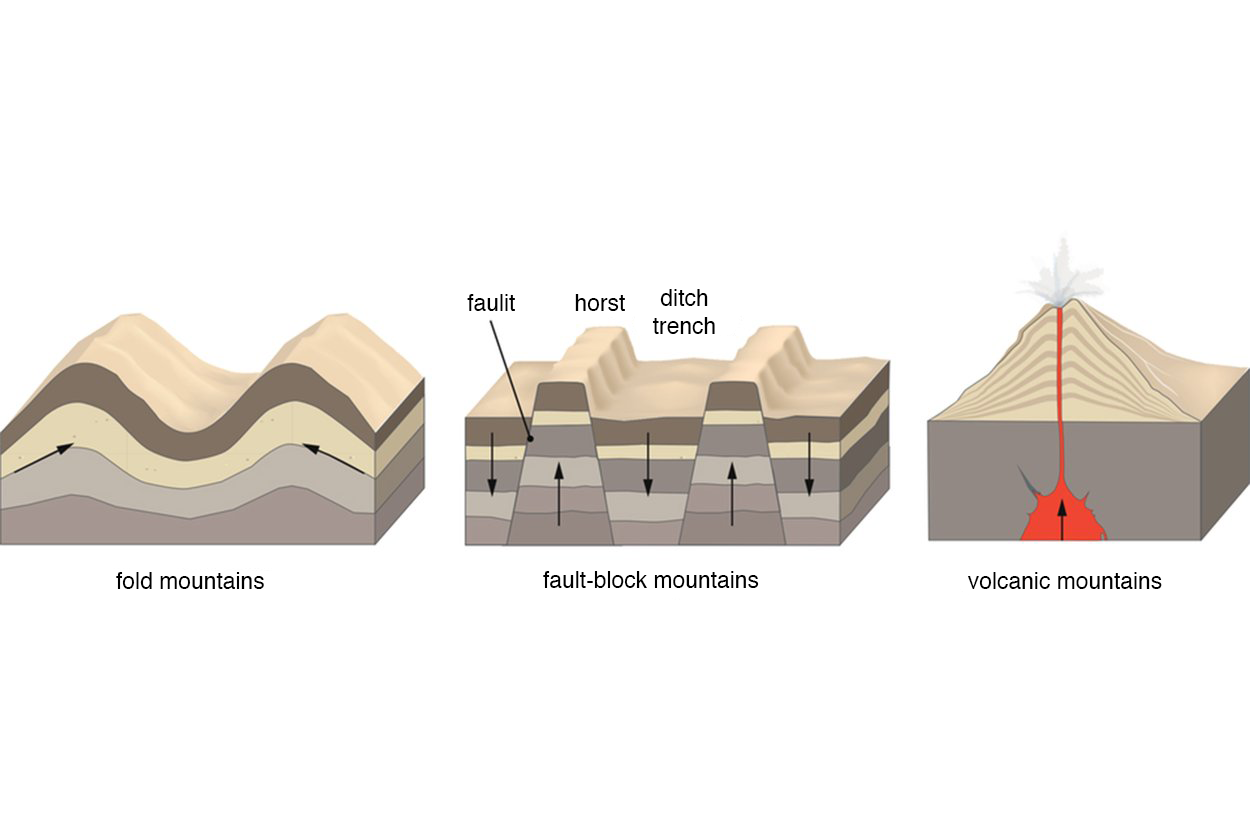
Match the pairs: English words with Polish definition.
proces tektoniczny wynikający z kolizji płyt litosfery, prowadzący do tworzenia się wielkich struktur tektonicznych, m.in. gór takich, jak Alpy, Karpaty czy Himalaje, powolne ruchy mas skalnych w płaszczu Ziemi, spowodowane ciepłem pochodzącym z jądra naszej planety, proces rozsuwania się płyt litosfery i tworzenia nowych powierzchni skorupy ziemskiej, najczęściej w dnie oceanicznym, ruch kontynentów względem siebie i względem powierzchni globu pod wpływem ruchu płyt litosfery, który wywołany jest prądami konwekcyjnymi w płaszczu Ziemi, powolne ruchy wznoszące lub obniżające duże fragmenty skorupy ziemskiej; ruchy te nie powodują wyraźnych deformacji ani fałdowania skał, obniżenie terenu ograniczone co najmniej dwoma uskokami, ciągnące się na długości dziesiątek, a nawet setek kilometrów, powstałe w wyniku ruchów górotwórczych, góry powstałe w efekcie naprężeń w skorupie ziemskiej spowodowanych ruchami płyt litosfery; ruchy te doprowadziły do pękania i przemieszczania się mas skalnych, góry zbudowane ze skał, które przeszły proces fałdowania w wyniku ruchu płyt litosfery i zostały wypiętrzone podczas procesów górotwórczych, podłużne wypiętrzenie mas skalnych ograniczone co najmniej dwoma uskokami, powstałe w wyniku ruchów górotwórczych, proces wciągania fragmentów płyt litosfery w głąb płaszcza ziemskiego; zwykle jest to wciąganie płyty oceanicznej pod kontynentalną, deformacja mas skalnych powstająca w wyniku pionowego lub poziomego przesunięcia masywu skalnego wzdłuż rozdzielającej je płaszczyzny, teoria, która tłumaczy przyczyny i skutki ruchu płyt litosfery, w tym także zjawisko dryfu kontynentów, ryft to podłużne obniżenie terenu długości setek lub nawet tysięcy kilometrów, leżące wzdłuż szczeliny powstającej wskutek spreadingu, inna nazwa teorii dryfu kontynentów
| rift valley | |
| continental drift | |
| fold mountains | |
| fault block mountains | |
| orogeny (mountain‑forming movements) | |
| convention currents | |
| rift fault | |
| epeirogenic movements | |
| spreading | |
| subduction | |
| theory of tectonics of the lithospheric plates | |
| Wegener's theory | |
| fault | |
| tectonic block |
Summary
The lithospheric plate tectonics theory, derived from the Wegener theory, explains most of the geological phenomena in the lithosphere.
The lithosphere breaks, stretches, and builds up in spreading zones.
In subduction zones, the lithospheric plates collide; one of them is absorbed deep within Earth’s mantle.
The movement of the lithosphere plates causes the formation of fold and fault block mountains, rifts, oceanic ridges and ocean trenches.
In the neighborhood of spreading zones, subductions and large tectonic faults volcanic phenomena occur most strongly and earthquakes are most often present.
Keywords
rift valley, continental drift, fold mountains, fault block mountains, volcanic mountains, spreading, subduction zones
Glossary
dolina ryftowa – ryft to podłużne obniżenie terenu długości setek lub nawet tysięcy kilometrów, leżące wzdłuż szczeliny powstającej wskutek spreadinguspreadingu
dryft kontynentów – ruch kontynentów względem siebie i względem powierzchni globu pod wpływem ruchu płyt litosfery, który wywołany jest prądami konwekcyjnymi w płaszczu Ziemi
góry fałdowe – góry zbudowane ze skał, które przeszły proces fałdowania w wyniku ruchu płyt litosfery i zostały wypiętrzone podczas procesów górotwórczych
góry zrębowe – góry powstałe w efekcie naprężeń w skorupie ziemskiej spowodowanych ruchami płyt litosfery; ruchy te doprowadziły do pękania i przemieszczania się mas skalnych
orogeneza (ruchy górotwórcze) – proces tektoniczny wynikający z kolizji płyt litosfery, prowadzący do tworzenia się wielkich struktur tektonicznych, m.in. gór takich, jak Alpy, Karpaty czy Himalaje
prądy konwekcyjne – powolne ruchy mas skalnych w płaszczu Ziemi, spowodowane ciepłem pochodzącym z jądra naszej planety
rów tektoniczny – obniżenie terenu ograniczone co najmniej dwoma uskokami, ciągnące się na długości dziesiątek, a nawet setek kilometrów, powstałe w wyniku ruchów górotwórczych
ruchy epejrogeniczne – powolne ruchy wznoszące lub obniżające duże fragmenty skorupy ziemskiej; ruchy te nie powodują wyraźnych deformacji ani fałdowania skał
spreding – proces rozsuwania się płyt litosfery i tworzenia nowych powierzchni skorupy ziemskiej, najczęściej w dnie oceanicznym
subdukcja – proces wciągania fragmentów płyt litosfery w głąb płaszcza ziemskiego; zwykle jest to wciąganie płyty oceanicznej pod kontynentalną
teoria tektoniki płyt litosfery – teoria, która tłumaczy przyczyny i skutki ruchu płyt litosfery, w tym także zjawisko dryfu kontynentów
teoria Wegenera – inna nazwa teorii dryfu kontynentówdryfu kontynentów
uskok – deformacja mas skalnych powstająca w wyniku pionowego lub poziomego przesunięcia masywu skalnego wzdłuż rozdzielającej je płaszczyzny
zrąb (zrąb tektoniczny) – podłużne wypiętrzenie mas skalnych ograniczone co najmniej dwoma uskokami, powstałe w wyniku ruchów górotwórczych