Adaptation of pine to environmental conditions, reproduction of pine
the plant organs include: roots, stems and leaves;
that the mosses and ferns reproduce thanks to spores.
to describe the range of gymnosperms on the Earth, and their adaptations to living conditions;
to describe characteristics of gymnosperms;
to identify the most common species of gymnosperms;
to present the importance of gymnosperms.
The adaptation of pine to environmental conditions
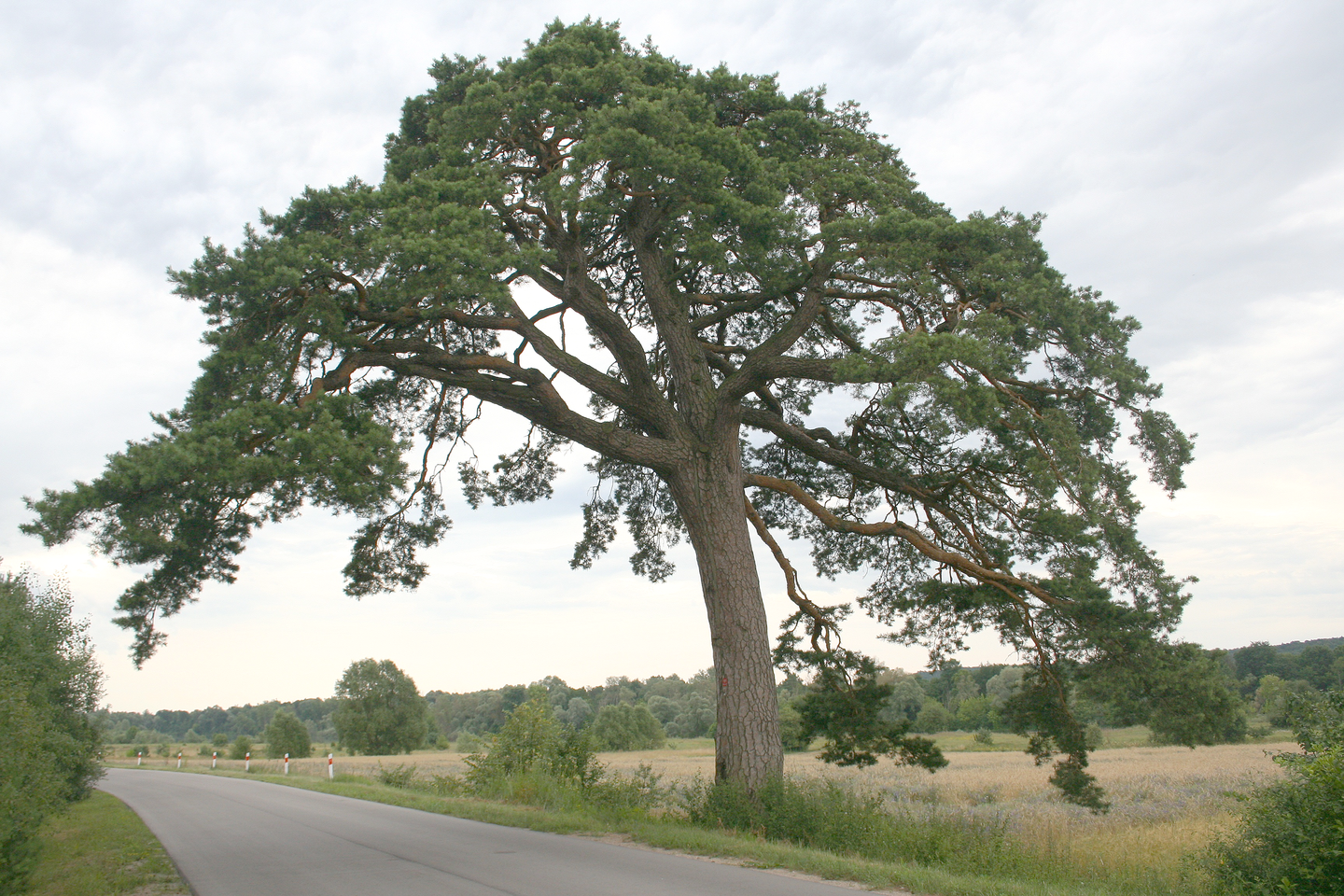
Pine is a common gymnospermgymnosperm. Pine trees create pinewood on sandy, poor soils of central and northern Poland. Due to massive roots growing deep into the soil and thick lignified stems, pine can grow tall and is resistant to wind. Pine stem, called trunk, supports the branches growing in regular intervals. Together, they form the tree crown. The shape of a trunk and crown (tree form) depends on the amount of light reaching a plant. Pines growing in dense stands have tall, slim trunks and small crowns. These are specimens which, due to their ability to grow fast, overcame the competition which grew slowly to the light. Other trees, and even own branches of pines, were shadowed by such pines, and therefore they lost needlesneedles and died. Contrary to the trees growing in a forest, the stand‑alone pines growing in full sunlight are not tall, and they have branchy, dense crowns supported by a short, thick trunk.

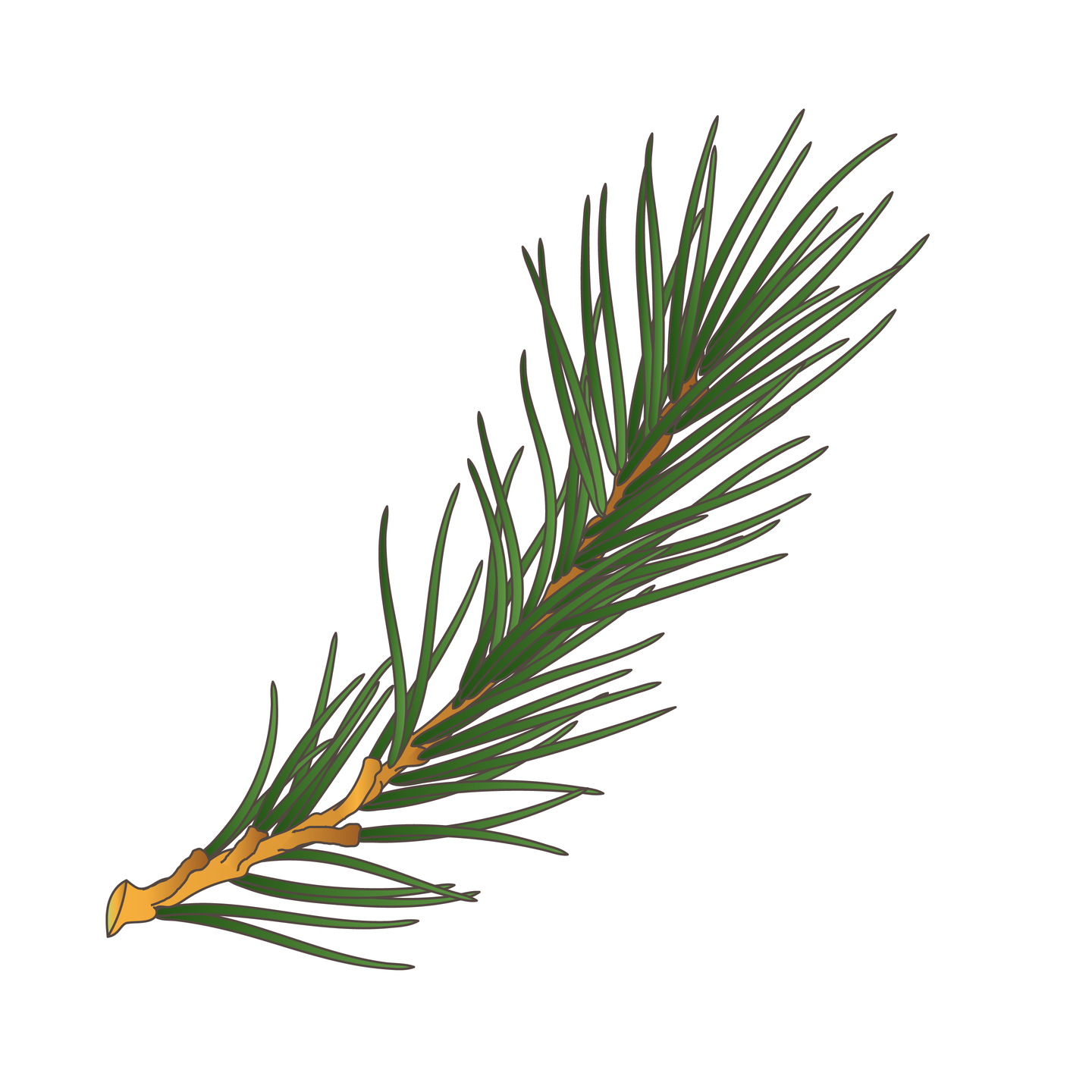
The leaves of the scots pine (Pinus sylvestris) have the form of narrow and quite long grey‑blue needles which grow in pairs from shortened shoots (dwarf shoots). The length and quantity of needles are important features which form the basis for distinction of pine species. The pine needles are evergreen, therefore they can perform photosynthesis also during winter.
The structure of needles of majority of gymnosperm trees in temperate and cold climate is the adaptation to the conditions of drought and frost. Their shape is a result of reduction in surface area – it limits the evaporation of water from leaves. They are covered with thick epidermis protected with the layer of wax, protecting the leaves from excessive loss of water. It helps these plants in surviving long winter months when it is impossible to draw water from the frozen soil.
It is believed that coniferous trees (except for larch which loses its soft needles, devoid of protective layer, fall each autumn) do not lose their leaves before winter. Thus, why there is a thick layer of needles in spruce forest or pinewood?
Thick bark protects the trunks against the activity of severe frosts and drying up, and against mechanical damage. There are numerous channels running through the trunks of coniferous trees and their needles which produce resin – a substance used by the plants for sealing the damages. Gymnosperms, such as pine, may reach big size thanks to well‑formed mechanical tissues which stiffen tall stems, and thanks to conducting tissues able to transport water up to the top of a tree.
Draw a tree form of a pine growing at the Edge of a forest. Indicate the side neighbouring with the open space, and the side neighbouring the forest. Explain why the tree crown is asymmetrical. Compare the form of a pine growing at the Edge of a forest with a solitary pine, growing for example in a garden, nursery or another open space. OR Describe characteristics of gymnosperms.
Reproduction of pine
Pine trees reproduce by sexual reproduction. Gametes are produced in female and male cones. In May, on the top of young sprouts small, reddish cones appear, composed of tiny scales. There are two ovules on each scale. Ovules contain female gametes. At the base of other young branches there are small, egg‑shape male cones. They produce vast amounts of light yellow pollen which contains male gametes. After tipping out the pollen, male cones dry up and come off.
During the pollen time of pine trees, the pollen grains fall on everywhere, sometimes in a big distance from the tree. Some of them land on the ovules. Then, male gametes can combine with female gametes, and fertilisation takes place. An embryo of a new plant is developed from a fertilised egg cell. It takes place in an ovule, which turns into a seed after some time. During this time, female cones grow and lignify, and seeds develop and become mature. This process takes three years. Both the ovules and seeds are uncovered – they lie on the scales of cones, without any protection covering them. That is why the plants such as pine tree are called gymnosperms.
Gymnosperms reproduce by sexual reproduction. They do not produce fruits.
Provide at least two reasons why male cones grow near the end of branches and not deep inside the tree crown.
Pine as an anemophilous and anemochorous plant
Pine is an anemophilous plant because the grains of pollen are transported by wind. Anemophilous plants produce enormous amounts of pollen which lands on the ovules by accident. This method of pollination is effective because pollen is small and it has structures making it easier to lift it. In the case of pine tree, pollen grains have two bubbles filled with air. Pollen produced on high part of a tree has a Chance to be transported over long distances. Also the distribution of female cones in the external part of a tree crown is the adaptation to anemophily.
Seeds of scots pine are also transported by wind, and therefore this plant is described as anemochorousanemochorous. Seeds are tiny, light, and they have wings which lengthen the time of landing on the ground. Gusts of wind may transport them over long distances from a tree on which they were produced. Then, the seedlings which germinate from the seeds do not have to compete with a parent plant for sunlight or water.
Seeds protect their valuable content better than the spores. A spore is a single cell adapted to survive difficult conditions. A seed is composed of, apart from an embryo, a spare tissue which can be used by an embryo, and a thick, resistant testa.
A cone found in a park or a forest locate in a warm and dry room, and after few days saturate it heavily with water. Observe and describe the arrangement of scales. Explain what is the importance of the observed phenomenon for the seeds of this plant. OR What is seed composed of ?
Observation of the adaptation of seeds to be transported by the wind.
pine seeds with wings, and few seeds without wings.
Drop from a raised hand few pine seeds with wings and few without wings. Watch their flight and compare the speed of fall. Blowing, try to keep them in the air as long as possible.
Draw the path of falling of seeds with wings and without wings.
Formulate and note down the conclusion.
The seeds which fall slower will stay longer in the air during windy weather, and they will fly further.
Select all the correct answers.
- Needles produce resin.
- Gymnosperms produce fruits.
- Seeds of scots pine are transported by wind.
- The shape of a trunk and crown not depends on the amount of light.
Summary
Pine is a common gymnosperm.
Pine stem, called trunk, supports the branches growing in regular intervals. Together, they form the tree crown. The shape of a trunk and crown (tree form) depends on the amount of light reaching a plant.
Pines are anemophilous and anemochorous.
1. List 3 characteristics for each pair on the basis of which you can distinguish spruce and larch, fir and yews (Taxus).
2. Describe the adaptation of spruce to
a. perform photosynthesis,
b. spread the seeds,
c. manage the scarcity of water during winter.
Keywords
gymnosperms, cone, anemophily
Glossary
igła – silnie wydłużony, płaski, półokrągły lub graniasty liść roślin iglastych
nagonasienne – inaczej nagozalążkowe; wiatropylne rośliny naczyniowe, których nieosłonięte zalążki spoczywają na łuskach szyszek żeńskich, a nasiona nie są zamknięte w owocu
wiatrosiewność – roznoszenie nasion przez wiatr