Przeczytaj
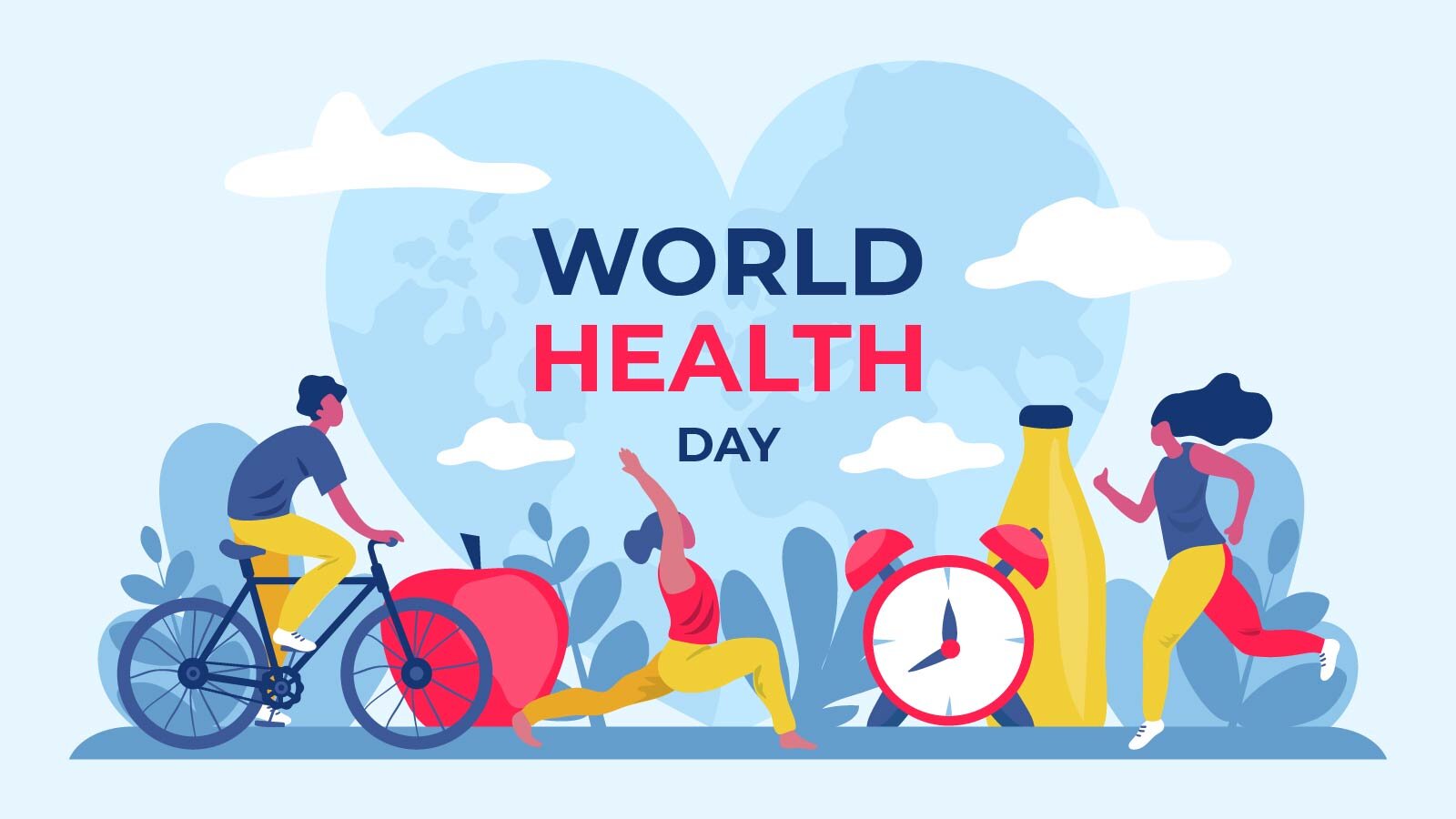
The picture below shows the elements of everyday life that help us stay healthy: being active, following a balanced diet, getting enough sleep and staying hydrated. Did you know that exercising when you are young slows bone deterioration in old age? Start doing it now and you will thank yourself when you grow old! In this section, you are going to read a text describing the origin and ways of celebrating World Health Day. Before you read, think: can you change anything to lead a healthier lifestyle?
Poniższa ilustracja obejmuje te elementy codziennego dbania o siebie, które pomagają nam utrzymać zdrowie: bycie aktywnym, stosowanie zbilansowanej diety, wysypianie się oraz nawadnianie organizmu. Czy wiesz, że wykonywanie ćwiczeń fizycznych w młodym wieku spowalnia pogarszanie się stanu kości na starość? Ćwicz teraz, a podziękujesz sobie, gdy się zestarzejesz! W tej sekcji przeczytasz tekst opisujący początki Światowego Dnia Zdrowia i to, w jaki sposób się go obchodzi. Zanim przeczytasz, zastanów się, czy możesz coś zmienić w swoich nawykach, tak aby wieść zdrowszy tryb życia.
Drag the words to make quotes about health.
Read the text about the history and celebration of World Health Day and do the exercises below.
Celebrating Health(1)
“The first wealth is health.” These words by Ralph Waldo Emerson should remind us what is really important in our lives. Yet many people do not appreciate it until they come down withcome down with a serious illness. By then, the poor diet, missed sleep and lack of exercise take their tolltake their toll and suddenly, you are immobilisedimmobilised and can’t do much until you fully recoverfully recover. Sometimes, a reminder of how essential health is can be helpful in motivating individuals to healthier behaviour, and that is partly the role of World Health Day.
(2)
This day is celebrated on the 7th of April each year in order to commemorate the launchcommemorate the launch of the World Health Organisation and to raise awareness aboutraise awareness about the overall health and wellbeingwellbeing of people around the world. WHO is an agency of the United Nations that concentrates on the public health of the world in general. All UN member countries unanimously signedunanimously signed its constitution, agreeing to the tenetstenets of general health promotion across the globe. The first World Health Assembly decided to celebrate World Health Day on April 7th of each year, the first one being held in 1950. Since then, this day has been celebrated all over the world, and it has become an important event focusing on a different theme each year in the hope of drawing worldwide attention to a particular current global health issue.
(3)
At present, WHO has 194 members and each of them is tasked with putting together regional, local and international events on this day, referring to the subject set for a particular year. Usually, there are fundraising campaignsfundraising campaigns created in the build‑up toin the build‑up to World Health Day in an attempt to provide the most vulnerable communities around the world with better access to essential health provisionsessential health provisions. There are also a lot of events aimed not only at educating the public and policy makerspolicy makers about a specific aspect of the organisation's work, but also at triggering actiontriggering action by governments and other health stakeholdershealth stakeholders to improve health services. They may include conferences for health workers, panel discussions, briefingsbriefings for local politicians and informational displaysinformational displays for children and young people. Sometimes, there might also be charity events, public marches or demonstrations, as well as free screening of people and other medical tests organised by local authorities.
(4)
The World Health Organisation has been working tirelessly to improve many aspects of health around the world. One of its biggest achievements is the global eradication of smallpoxglobal eradication of smallpox (a highly infectious disease), which happened between 1958 and 1979, so it took the organisation only 20 years to succeed in this mission. The achievement went down in historywent down in history as the first disease ever to be eliminated by the dedicated effortdedicated effort of humans working together from different parts of the world. Other successes include reducing the number of polio cases by more than 99% since 1988, immunisationimmunisation of more than two billion children and the implementationimplementation of a wide range of public health strategies. The present focus of the organisation is on communicable diseasescommunicable diseases, such as tuberculosistuberculosis and HIV/AIDS.
(5)
Although the main theme of World Health Day varies from year to year, it always revolves around important issues of the day, ranging from the global eradication of polio, through staying active in old age, to road safety. All of them have been deemeddeemed vital enough to merit further discussionmerit further discussion, especially on that particular day. Thanks to such initiatives, we are reminded to be grateful for being healthy and take care of our health as well as we can, hoping the world will get rid of serious diseases in the future.
Źródło: Agnieszka Sękiewicz‑Magoń , licencja: CC BY-SA 3.0.
2. 1. Amazing feat, 2. What to expect on Health Day, 3. Common feature, 4. How it all came about, 5. WHO individual initiatives, 6. Life essential
3. 1. Amazing feat, 2. What to expect on Health Day, 3. Common feature, 4. How it all came about, 5. WHO individual initiatives, 6. Life essential
4. 1. Amazing feat, 2. What to expect on Health Day, 3. Common feature, 4. How it all came about, 5. WHO individual initiatives, 6. Life essential
5. 1. Amazing feat, 2. What to expect on Health Day, 3. Common feature, 4. How it all came about, 5. WHO individual initiatives, 6. Life essential
2. COVID-19 has become one of the most vicious 1. come down, 2. implementation, 3. communicable diseases, 4. fully recover, 5. policy makers, 6. fundraising campaign, 7. health provisions in history.
3. I think that 1. come down, 2. implementation, 3. communicable diseases, 4. fully recover, 5. policy makers, 6. fundraising campaign, 7. health provisions should get more involved in activities aimed at facilitating health care around the world.
4. You should not do anything strenuous until you 1. come down, 2. implementation, 3. communicable diseases, 4. fully recover, 5. policy makers, 6. fundraising campaign, 7. health provisions after this illness.
5. We organised a 1. come down, 2. implementation, 3. communicable diseases, 4. fully recover, 5. policy makers, 6. fundraising campaign, 7. health provisions in order to collect funds for a cancer facility in the local hospital.
6. In some parts of the world, 1. come down, 2. implementation, 3. communicable diseases, 4. fully recover, 5. policy makers, 6. fundraising campaign, 7. health provisions are still limited, so help is urgently needed.
7. You should eat right, take supplements and wear appropriate clothes if you don’t want to 1. come down, 2. implementation, 3. communicable diseases, 4. fully recover, 5. policy makers, 6. fundraising campaign, 7. health provisions with a cold or flu during autumn.
Answer the questions in 2‑3 sentences.
Is it important to celebrate World Health Day? Why? Why not?
Do you take good care of your health? How?
What health concerns should WHO focus on in the future and why?
Słownik
/ ˈbriːfɪŋz / / ˈbriːfɪŋ /
instruktaże [instruktaż]
/ ˈkʌm daʊn wɪð /
zachorują na [zachorować na]
/ kəˈmeməreɪt ðə lɔːntʃ /
upamiętnić powstanie
/ kəˈmjuːnɪkəbl̩ dɪˈziːzɪz / / kəˈmjuːnɪkəbl̩ dɪˈziːz /
chorobach zakaźnych [choroba zakaźna]
/ ˈdedɪkeɪtɪd ˈefət /
ogromny wysiłek
/ diːm / / diːm /
uznane za [uznać za]
/ ɪˈsenʃl̩ heltheta prəˈvɪʒn̩z / / ɪˈsenʃl̩ heltheta prəˈvɪʒn̩ /
istotne świadczenia zdrowotne [istotne świadczenie zdrowotne]
/ˈfʌndˈreɪzɪŋ ˈkæmˌpeɪnz/ /ˈfʌndˈreɪzɪŋ ˈkæmˌpeɪn/
kampanie zbierania funduszy [kampania zbierania funduszy]
/ ˌfʊli rɪˈkʌvə /
całkowicie wyzdrowiejesz [całkowicie wyzdrowieć]
/ ˈɡləʊbl̩ ɪˌrædɪˈkeɪʃn̩ əv ˈsmɔːlpɒks /
globalne wyeliminowanie czarnej ospy
/ heltheta ˈsteɪkhəʊldəz / / heltheta ˈsteɪkhəʊldə /
zainteresowane podmioty w dziedzinie zdrowia [zainteresowany podmiot w dziedzinie zdrowia]
/ ɪˈməʊbɪlaɪzd /
unieruchomiony
/ ˌɪmjʊnaɪˈzeɪʃn̩ /
zaszczepienie
/ ˌɪmplɪmenˈteɪʃn̩ /
wprowadzenie
/ ˌɪnfəˈmeɪʃn̩əl dɪˈspleɪz / / ˌɪnfəˈmeɪʃn̩əl dɪˈspleɪ /
wystawy informacyjne [wystawa informacyjna]
/ ɪn ðə ˈbɪld ʌp tuː /
w przygotowaniu do
/ ˈmerɪt ˈfɜːðə dɪˈskʌʃn̩ /
zasłużyć na dalszą dyskusję
/ ˈpɒləsi ˈmeɪkəz / / ˈpɒləsi ˈmeɪkə /
decydentów [decydent]
/ reɪz əˈweənəs əˈbaʊt /
zwiększać świadomość
/ ˈteɪk ðeə təʊl / / ˈteɪk ə təʊl /
zbiorą swoje żniwo [zebrać żniwo]
/ ˈtenɪts / / ˈtenɪt /
zasady, założenia [zasada, założenie]
/ ˈtrɪɡərɪŋ ˈækʃn̩ / / ˈtrɪgə ˈækʃn̩ /
sprowokowanie działania [sprowokować działanie]
/ tju:ˌbɜːkjʊˈləʊsɪs /
gruźlica
/ juːˈnænɪməsli saɪnd / / juːˈnænɪməsli saɪn /
jednomyślnie podpisali [jednomyślnie podpisać]
/ ˈwelˌbiːɪŋ /
dobrostan
/ ˈwent daʊn ɪn ˈhɪstr̩i / / ˈɡəʊ daʊn ɪn ˈhɪstr̩i /
przeszło do historii [przejść do historii]