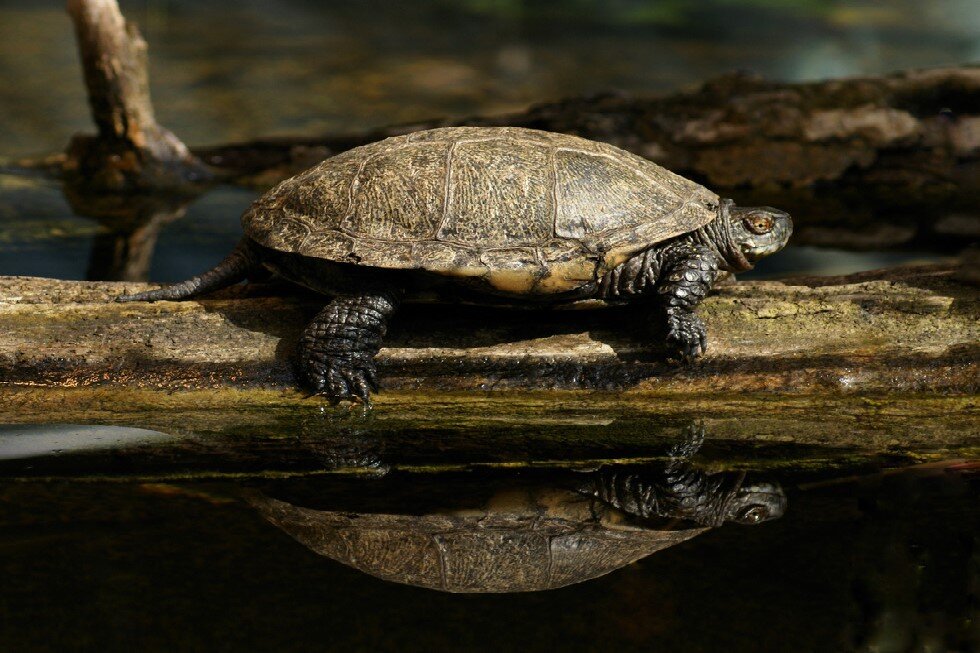
Only one species of turtle lives in Poland – European pond turtle. Its natural habitat are shallow lakes. It hunts tadpoles, snails and insects. It has dark coloration. It has got small bright spots on the underside of the shell as well as on the skin of the paws and neck. It is very skittish. Alarmed, it pulls the head and limbs into the armor.
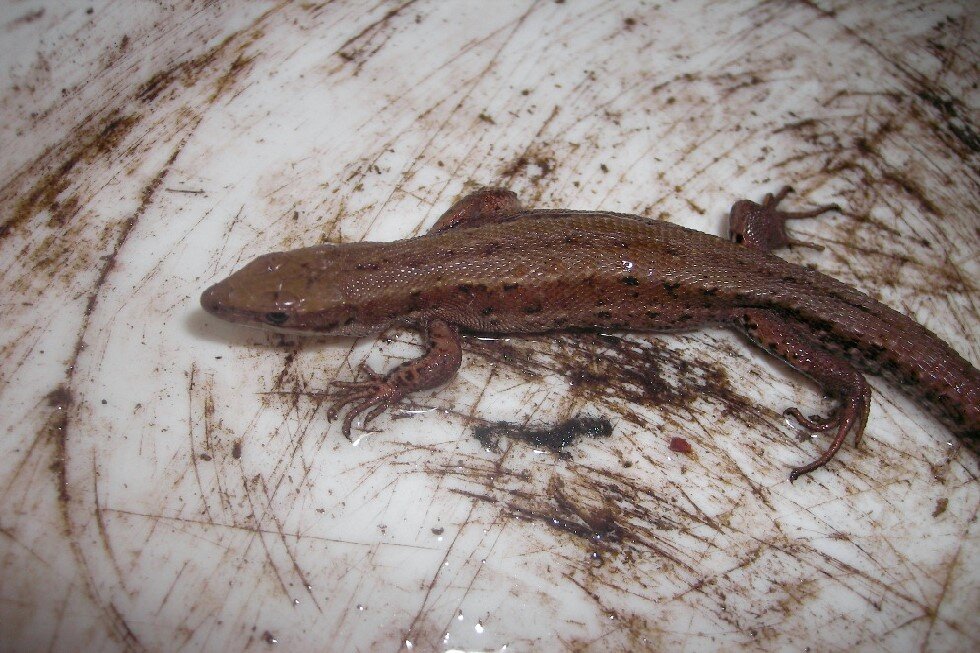
Viviparous lizard is the smallest Polish lizard. It can be found throughout the country. Especially often occurs in the mountains and foothills. It feeds on insects, slugs, earthworms and spiders. Attacked by a predator, it can discard its tail that moves rapidly for a few minutes, which distracts the attacker's attention and creates the opportunity for the lizard to escape. After some time, the lost tail grows back.
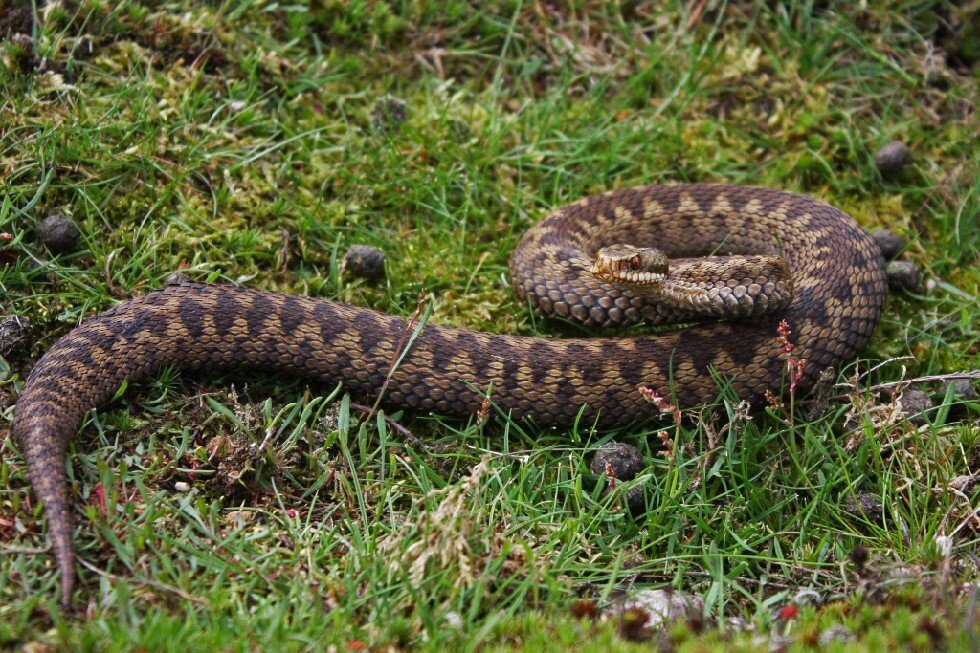
Common European adder is the only poisonous snake occurring in Poland. It lives in the forest edges, glades, neglected gardens, dry mountain meadows. It can often be seen to be basking in the sun. It is not aggressive. It attacks only when it feels threatened and its venom is not lethal. It feeds mainly on small mammals, frogs, eats bird chicks and insects. It has a broad, heart‑shaped head and a stocky body structure. Unlike other snakes, its pupils are vertical. Most adders have got a zigzag pattern on their back, the so‑called cain ribbon.
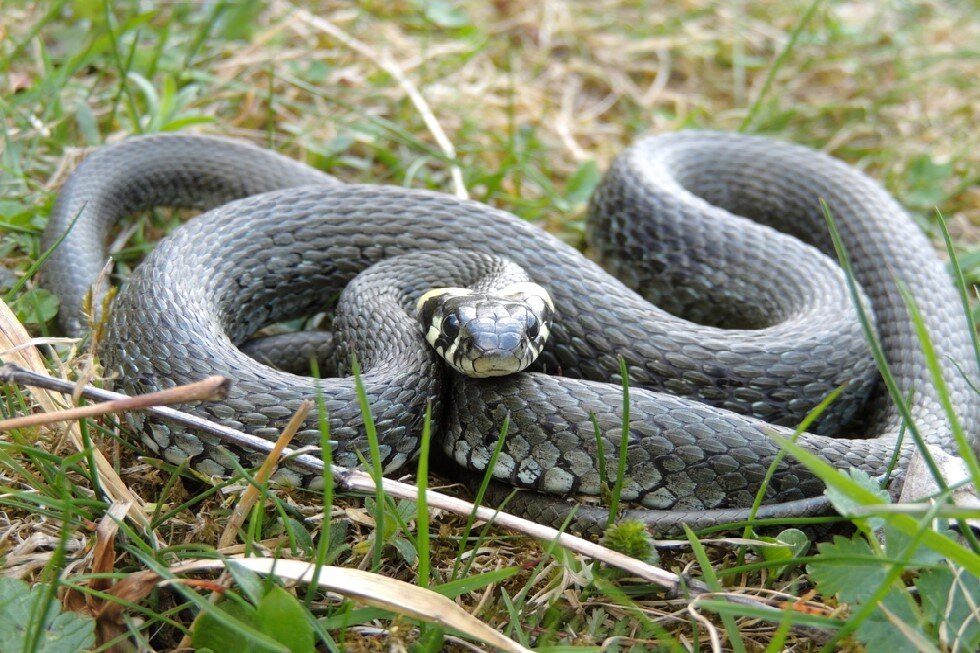
The grass snake is most often found near water basins, where it hunts amphibians and their larvae. It is a great swimmer. It can be easily distinguished from the Common European adder because it has got yellow, crescentspots on both sides of its head.
Task 1
Before watching the „Portraits of our reptiles” picture gallery, write down the research question and the hypothesis. When watching the picture gallery, write down your observations and finally, conclusions.
RWgbljaNj18XN
Research question (Uzupełnij). Hypothesis (Uzupełnij). Observations (Uzupełnij). Conclusions (Uzupełnij).
Research question (Uzupełnij). Hypothesis (Uzupełnij). Observations (Uzupełnij). Conclusions (Uzupełnij).
Analysis of photos:
R1dTNrkMRTZoX
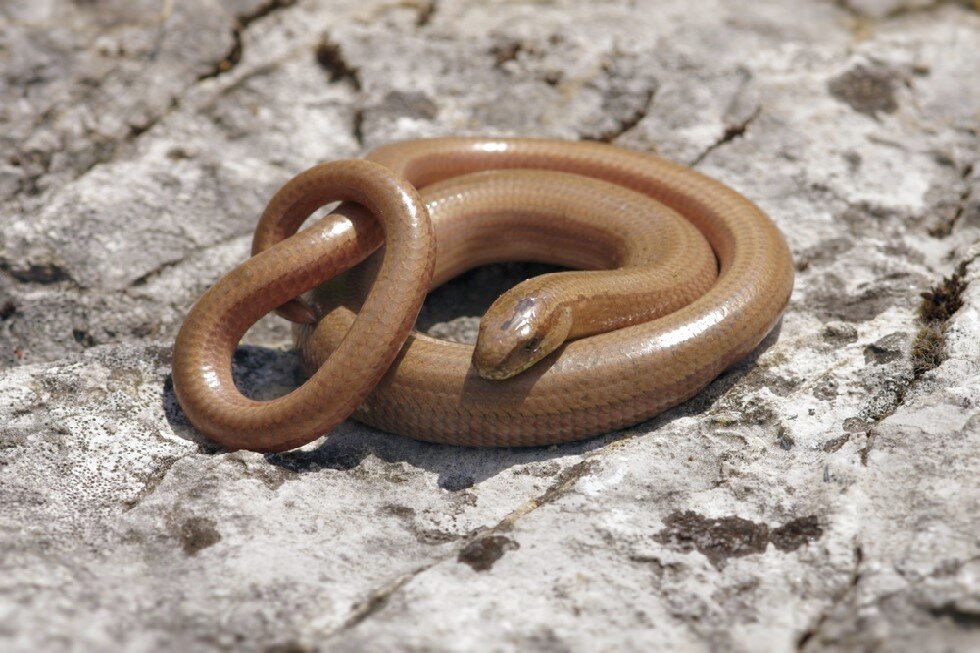
Fotografia przedstawia jasnobrązowego, zwiniętego padalca zwyczajnego. Wąska głowa ułożona na grubym tułowiu. Niewielkie oko znajduje się na boku. Ogon zawinięty. Wyraźne łuski na całym, jednolicie ubarwionym ciele.
Blindworm
Source: Hans Hillewaert, Wikimedia Commons, licencja: CC BY-SA 4.0.
R1KGWqeyf6VgH
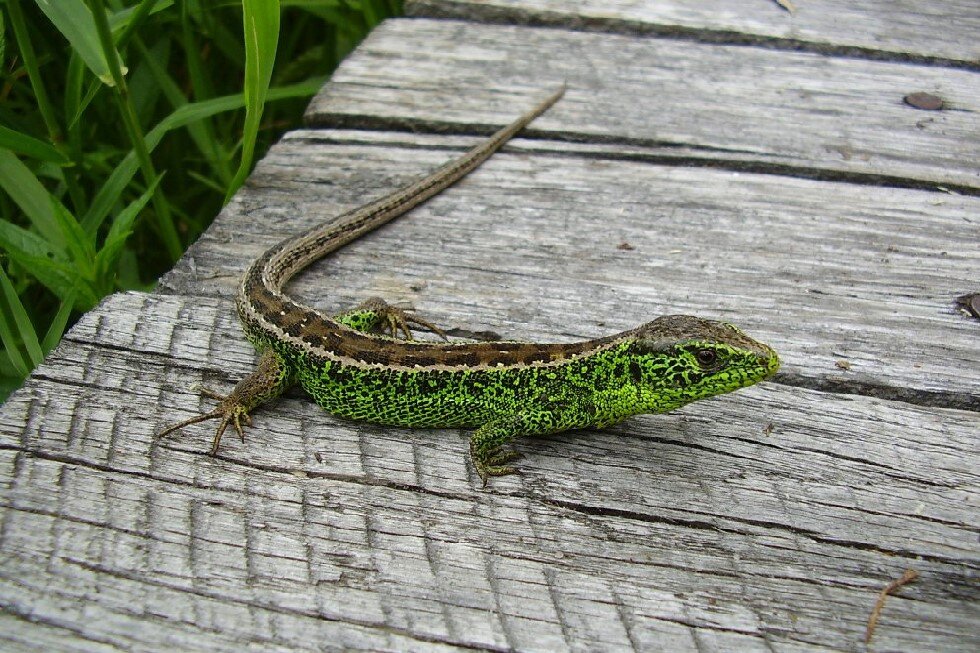
Fotografia przedstawia przybliżenie małej jaszczurki zwinki siedzącą na drewnianej kładce. Jaszczurka jest skierowana bokiem. Ma długi cienki ogon. Jej skóra jest szorstka i cętkowata, w kolorze jaskrawo zielonym po bokach i brązowym wzdłuż grzbietu.
Sand lizard
Source: Karol Nicinski (Bzdykol), http://commons.wikimedia.org, licencja: CC BY 2.0.
RdNido2yYAWC6
Fotografia przedstawia dużą jaszczurkę zieloną na fragmencie suchej trawy. Jaszczurka jest skierowana bokiem. Niebieska głowa skierowana w prawo z widocznym jednym okiem, zielone ciało grubości głowy zwężane ku granatowemu ogonowi. Jej skóra jest szorstka i łuskowata. Nogi rozpostarte zakończone cienkimi palcami.
European green lizard
Source: Ralf Lotys (Sicherlich), Wikimedia Commons, licencja: CC BY 2.5.
R1ayWl1oWSUW0
Fotografia przedstawia ujęcie z góry brązowej jaszczurki żyworodnej na pobrudzonym, białym i mokrym plastiku. Jaszczurka ma głowę skierowaną w lewo, widoczne oko i cztery krótkie kończyny zakończone cienkimi palcami. Skóra jaszczurki jest morka, szorstka i łuskowata. Uwidoczniona jest oś grzbietu od głowy do ogona, po bokach nieregularne czarne cętki.
Common lizard
Source: Danny Steaven, Wikimedia Commons , licencja: CC BY-SA 3.0.
RzMTAvP8aFhvJ
Fotografia przedstawia żółwia błotnego na kawałku drewna w wodzie, w której zwierzę się odbija. Żółw ma jasnobrązowy pancerz, podzielony na duże pola. Mała czarna głowa w prawo, na niej bursztynowe oko. Szyja zwinięta w fałdy. Kończyny i ogon czarne.
European pond tortoise
Source: Böhringer Friedrich, http://commons.wikimedia.org, licencja: CC BY-SA 2.5.
RNiUcbV1CQo5j
Fotografia przedstawia wijącego się po trawie zaskrońca zwyczajnego. Ciało grube w kolorze popielatym. Jego trójkątna głowa skierowana jest do przodu z widocznymi oczami. Skóra gładka, sucha z zarysowanymi łuskami.
Grass snake
Source: xulescu_g, Wikimedia Commons, licencja: CC BY-SA 2.0.
RHnr4dX6shtaf
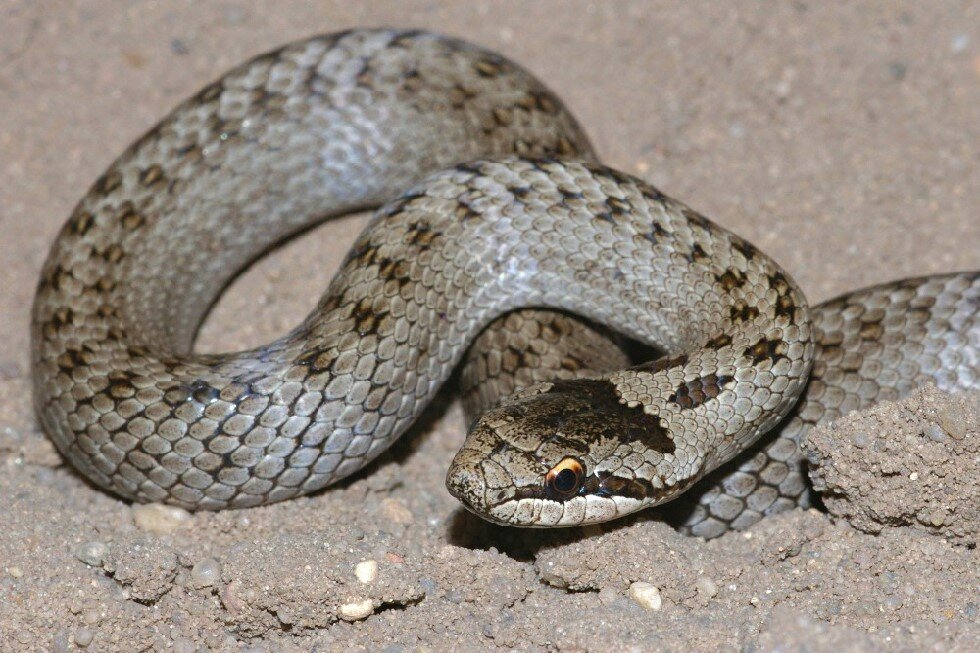
Fotografia przedstawia wijącego się po piasku, jasnobrązowego Gniewosza plamistego. Ujęcie gada jest zrobione z przybliżeniu. Jego ciało grube, zwinięte z owalną głową skierowaną w lewo. Na fotografii widać wyraźnie oko gada oraz brązowe nieregularne, ciemobrązowe plamy wzdłuż ciała. Skóra jest sucha, błyszcząca z widocznymi zarysami łusek.
Smooth snake
Source: Christian Fischer, Wikimedia Commons, licencja: CC BY-SA 3.0.
R11LPni4xeBwr
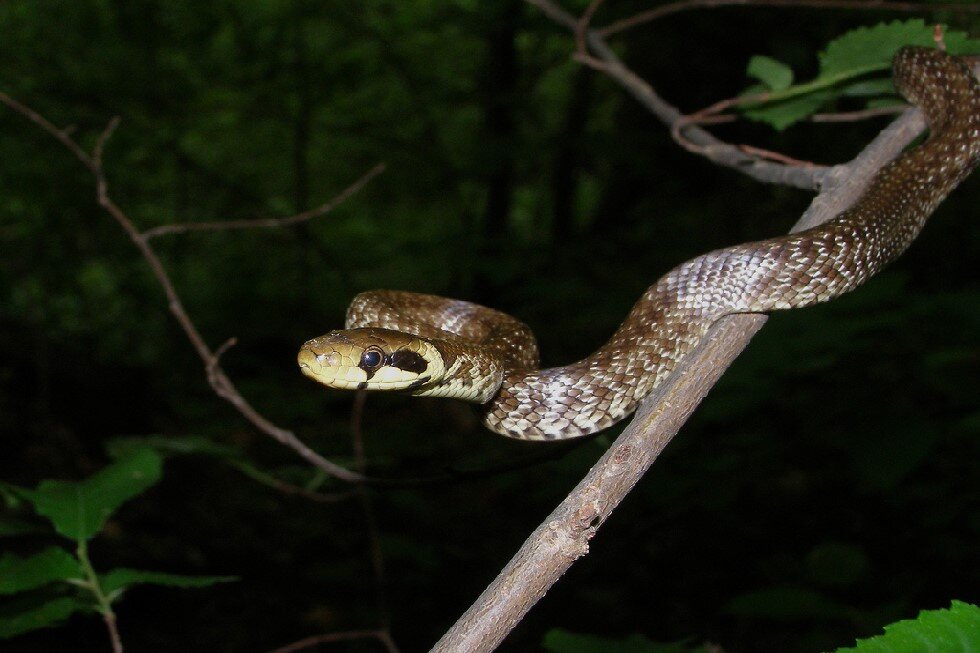
Fotografia wykonana w nocy, z lampą, przedstawia węża pełznącego po cienkiej, ukośnej gałęzi. Wąż Eskulapa ma głowę i część tułowia poziomo w lewo, poza gałęzią. Ubarwienie brązowe na grzbiecie, na brzuchu jasne. Głowa z okrągłym okiem i wyraźną, ciemnobrązową plamą za nim. To największy wąż w Polsce.
Aesculapian Snake
Source: Mircea Nita, www.flickr.com, licencja: CC BY 2.0.
RtUc4Urfbo7fp
Fotografia przedstawia wijącą się po trawie, ciemnobrązową Żmiję zygzakowatą. Ujęcie gada jest zrobione z przybliżeniu. Jej ciało grube, długie, zwinięte z trójkątną głową skierowaną do przodu. Na fotografii widać czerwone, okrągłe oko gada oraz brązowe regularny, ciemobrązowy zygzak wzdłuż ciała. Skóra jest sucha, szorstka i gruba z widocznymi zarysami łusek.
Common European adder
Source: Thomas Brown, Wikimedia Commons, licencja: CC BY 2.0.
Task 2
Explain why there are more species of reptiles in the south of Poland than in the north.
Reptiles, similarly to amphibians, are perceived by humans as useful animals. They regulate the numbers of insects, snails and small vertebrates, especially rodents that are pests to forests and fields. In addition, they constitute food for other vertebrate animals, mainly birds and mammals.
Task 3
Some people eradicate snakes and similar to them blindworms. Formulate arguments that this behaviour is inappropriate in both ethical and biological terms. Use scientific grounds.
RmKXsMmo4zfTZ
Exercise 1
Wymień charakterystyczne cechy budowy ciała żmii i zaskrońca.
Wymień charakterystyczne cechy budowy ciała żmii i zaskrońca.
Source: Peter Trimming, licencja: CC BY 2.0.
Conclusion
All Polish reptiles are under species protection.
Keywords
reptiles, lizards, adder
R1JRNfT6yKZ4c
Exercise 2
Match the pairs: English words with Polish definition. tarsi Możliwe odpowiedzi: 1. zewnętrzna część powłoki ciała zwierząt zrzucana w procesie linienia, np. oskórek stawonogów lub zrogowaciałe warstwy naskórka gadów, 2. wytwory skóry pokrywające fragmenty ciała gadów, np. głowę jaszczurek i węży czy ciało krokodyla; pełnią funkcje ochronne. molt Możliwe odpowiedzi: 1. zewnętrzna część powłoki ciała zwierząt zrzucana w procesie linienia, np. oskórek stawonogów lub zrogowaciałe warstwy naskórka gadów, 2. wytwory skóry pokrywające fragmenty ciała gadów, np. głowę jaszczurek i węży czy ciało krokodyla; pełnią funkcje ochronne
Match the pairs: English words with Polish definition. tarsi Możliwe odpowiedzi: 1. zewnętrzna część powłoki ciała zwierząt zrzucana w procesie linienia, np. oskórek stawonogów lub zrogowaciałe warstwy naskórka gadów, 2. wytwory skóry pokrywające fragmenty ciała gadów, np. głowę jaszczurek i węży czy ciało krokodyla; pełnią funkcje ochronne. molt Możliwe odpowiedzi: 1. zewnętrzna część powłoki ciała zwierząt zrzucana w procesie linienia, np. oskórek stawonogów lub zrogowaciałe warstwy naskórka gadów, 2. wytwory skóry pokrywające fragmenty ciała gadów, np. głowę jaszczurek i węży czy ciało krokodyla; pełnią funkcje ochronne
Match the pairs: English words with Polish definition.
wytwory skóry pokrywające fragmenty ciała gadów, np. głowę jaszczurek i węży czy ciało krokodyla; pełnią funkcje ochronne, zewnętrzna część powłoki ciała zwierząt zrzucana w procesie linienia, np. oskórek stawonogów lub zrogowaciałe warstwy naskórka gadów