Przeczytaj
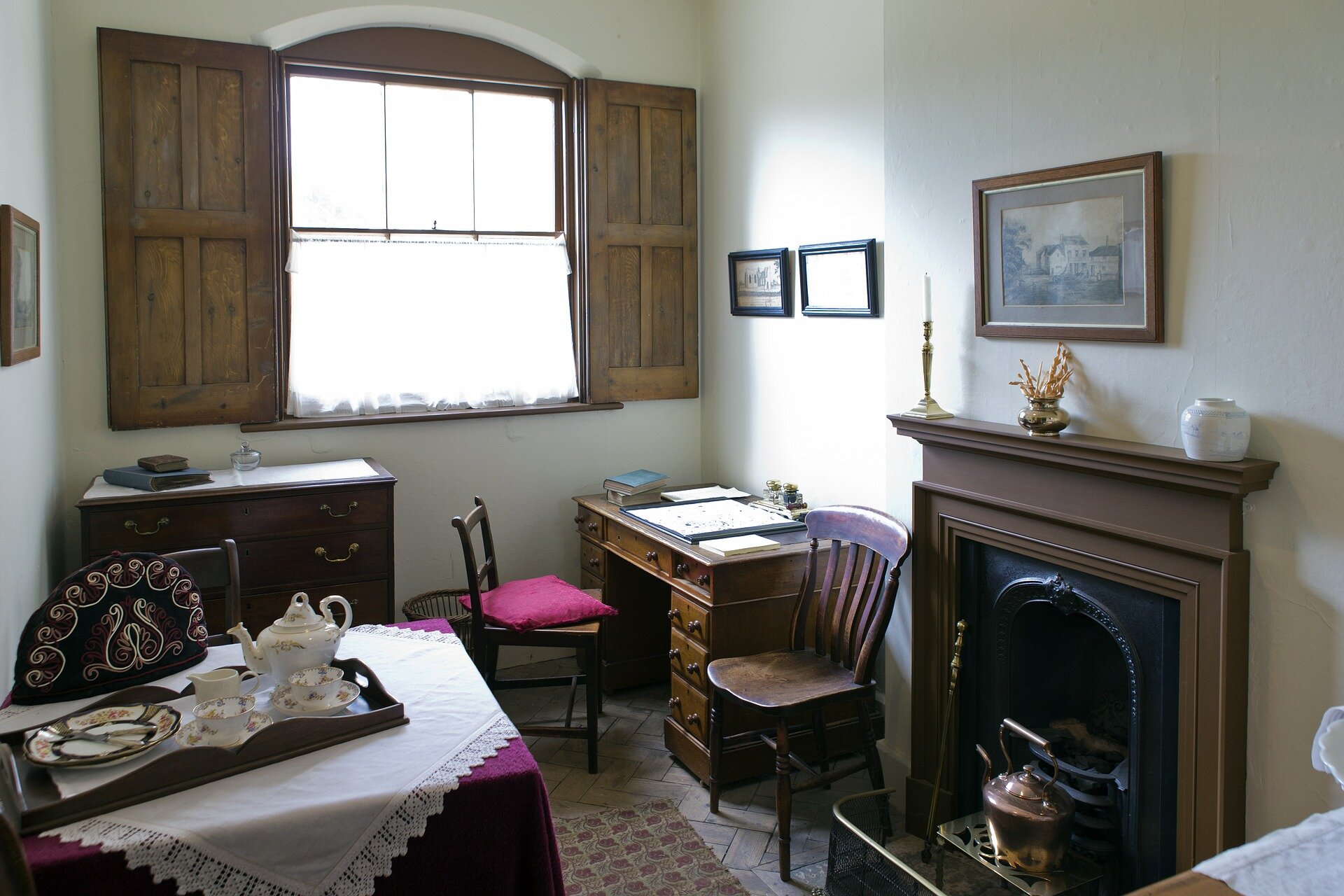
The picture depicts a room in the Victorian era for a working‑class family. Houses weren’t usually equipped with toilets and waste facilities. You are going to study the text about houses which were built in the Victorian era, and how living conditions changed for the better due to the Industrial Revolution.
Zdjęcie przedstawia pokój, w jakim mieszkała przeciętna rodzina robotnicza w czasach królowej Wiktorii. W tamtych czasach domy z reguły nie były wyposażone w urządzenia sanitarne. W tej części materiału zapoznasz się z tekstem na temat domów budowanych w czasach wiktoriańskich. Dowiesz się także, w jaki sposób rewolucja przemysłowa wpłynęła na warunki bytowe obywateli Wielkiej Brytanii.
Match the following phrases with their translation.
Look at the examples of houses built in Victorian architecure and their names. Click on the recordings and match them to pictures that represent them.
Painted ladies, San Francisco
Queen Anne style Mansion, California
Victorian terraced houses, London
House with gingerbread trims, New Jersey
Italianate home, Victoria
Get familiar with the text and do the exercises below.
Altering Housing StandardsWhen thinking of a Victorian house, you might bear in mind a colourful, doll‑like building. This style is strictly associated with the time when Queen Victoria reigned in Great Britain, from 1837 to 1901. Not only was it used on a wide scaleon a wide scale in Great Britain and in all former British colonies, but it is also a common sight in Australia, Malaysia, Canada and the U.S.A.
A.
In 19th‑century Great Britain, at the time of the Industrial Revolution, when hand production was exchanged for a mechanical one, more and more people arrived in towns and cities to find work. They were often given inexpensive shelter by the factory owners, but unfortunately, it was too small for the average Victorian family with four or five children. The living conditions were far from satisfactory, and several families had to share a couple of toilets and a water pump. Water was regularly polluted, which caused a drastic increase in the number of deaths of children.
On the contrary, the middle and higher classes led much more comfortable lives. Flushing toiletsFlushing toilets or gas lightinggas lighting constituted a standardconstituted a standard. People would also enjoy heavy curtainsheavy curtains, flowery wallpaperflowery wallpaper, rugsrugs, carpets, ornamentsornaments, solid furnituresolid furniture, paintings, and plants. Middle and higher classes had water pumpswater pumps in their kitchens, from which all the waste went away into underground sewersunderground sewers.
B.
Finally, in 1848, laws were passed and long awaited regulationslong awaited regulations concerning building rules were introduced by Parliament. Sanitation featuresSanitation features were of the greatest importance to average citizens. They could enjoy proper drainageproper drainage, waste facilitieswaste facilities, toilet facilitiestoilet facilities including a water toilet. By the end of the century, almost everybody could take full advantage of them. Also, at that time, gas for lightning was widely available. The lives of factory workers were highly improved and as a further consequence of this, the slums were knocked down. Landowners were obliged to build houses to set a standardset a standard.
C.
Meanwhile, in the 1840s houses were still influenced by the classicism of Regency styles (related to George IV, Prince Regent in the UK, whose main traittrait was simplicity) which were replaced by the dominant ItalianateItalianate style and finally from the 1850s were under Gothic Revival influence. Gothic Revival introduced pointed, projecting porchesprojecting porches and bay windowsbay windows. Houses were usually built on terraces or detached ones made of bricks or stones. The great popularity of this type of building was the consequence of the abolition of tax on glass and bricks,abolition of tax on glass and bricks, which made it affordable for people to come into possession of a house. Vegetation and small gardens were common additions to Victorian homes.
D.
Victorian housing was spread all around the world, but with few differences. In eastern American cities, three‑stories houses are most common while in the west of the country; two storey houses or one storey cottages. They are not all the same, though. The use of wooden, gingerbread trimgingerbread trim used as decorative ornamentsdecorative ornaments gained popularity in the USA and Canada. In Australia houses often have porchesporches and varied detailed ornamentation.
While the Victorian era officially ended in 1901, its architectural styles are still popular and easily recognisable. So, while travelling around the world, search for old‑looking houses from this time and remember the words said by Isabel La Howe: “He who loves an old house never loves in vain.”
Źródło: Anna Faszcza, licencja: CC BY-SA 3.0.
TRUEFALSE
2. Contaminated water in houses contributed to youngsters’ premature dying.
TRUEFALSE
3. In the middle of the 19th century, house access to water was made available to citizens by law.
TRUEFALSE
4. From the middle of the 1850s, a typical house in Great Britain was built with regional materials and products.
TRUEFALSE
5. Houses built in the Victorian era were almost identical.
TRUEFALSE
Based on the information in the text, write how the Industrial Revolution changed peoples' living conditions in the Victorian era. Write 6–7 sentences.
Słownik
/ ˌæbəˈlɪʃn̩ əv tæks ˈɒn glɑ:s ənd brɪks /
zniesienie podatku na szkło i cegły
/ ˈbeɪ ˈwɪndəʊz / / ˈbeɪ ˈwɪndəʊ /
okna wykuszowe [okno wykuszowe] (a window that forms a bay in the room and projects outward from the main walls)
/ ˈkɒnstɪtjuːtɪd ə ˈstændəd / / ˈkɒnstɪtjuːt ə ˈstændəd /
ustanowił/ustanowiła standard [ustanowić standard]
/kræmpt/
ciasny
/ ˈdekərətɪv ˈɔːnəments / / ˈdekərətɪv ˈɔːnəment /
dekoracyjne zdobienia [dekoracyjne zdobienie]
/ ˈflaʊəri ˈwɔːlpeɪpə /
kwiecista tapeta
/ ˈflʌʃɪŋ ˈtɔɪlɪts / / ˈflʌʃɪŋ ˈtɔɪlɪt /
toalety ze spłuczką [toaleta ze spłuczką]
/ ˈgæs ˈlaɪtɪŋ /
oświetlenie gazowe
/ ˈdʒɪndʒəbred trɪm /
ozdobne wykończenie kojarzące się z chatką z piernika (fancifully cut and pierced parts of the roof or balconies)
/ ˌhevi ˈkɜːtn̩z / / ˌhevi ˈkɜːtn̩ /
ciężkie zasłony [ciężka zasłona]
/ɪˈtæljəneɪt/
styl włoski
/ ˈlɪvɪŋ kənˈdɪʃn̩z /
warunki mieszkaniowe
/ lɒŋ əˈweɪtɪd ˌreɡjʊˈleɪʃn̩z / / lɒŋ əˈweɪtɪd ˌreɡjʊˈleɪʃn̩ /
długo oczekiwane regulacje [długo oczekiwana regulacja]
/ ˈɒn ə ˌwaɪd skeɪl /
na szeroką skalę
/ ˈɔːnəments / / ˈɔːnəment /
ozdoby [ozdoba]
/pɔːtʃɪz/ /pɔːtʃ/
ganki, werandy [ganek, weranda] (an area that is adjoined to the house with its roof)
/ prəˈdʒektɪŋ ˈpɔːtʃɪz / / prəˈdʒektɪŋ pɔːtʃ /
wysunięte ganki [wysunięty ganek] (a porch that extends beyond the face of the house)
/ ˈprɒpə ˈdreɪnɪdʒ /
właściwe odprowadzanie wody
/ rʌɡz / / rʌɡ /
dywaniki [dywanik]
/ ˌsænɪˈteɪʃn̩ ˈfiːtʃəz /
warunki sanitarne
/ set ə ˈstændəd /
wyznaczać standard
/ ˌsɒlɪd ˈfɜːnɪtʃə /
solidne meble
/ ˈstɔːri /
piętro, kondygnacja
/ thetari: stɔ:ri ˈhaʊs /
dom trzypiętrowy
/ ˈtoɪlɪt fəˈsɪlɪtɪz / / ˈtoɪlɪt fəˈsɪlɪtɪ /
urządzenia sanitarne [urządzenie sanitarne]
/treɪt/
cecha
/ ˈʌndəɡraʊnd ˈsjuːəz / / ˈʌndəɡraʊnd ˈsjuːə /
kanalizacje podziemne [kanalizacja podziemna]
/ ˈweɪst fəˈsɪlɪtɪz / / ˈweɪst fəˈsɪlɪti /
zakłady utylizacji odpadów [zakład utylizacji odpadów] (a facility for recycling, reprocessing, treatment, or storage)
/ ˈwɔ:tə pʌmps / / ˈwɔ:tə pʌmp /
pompy wodne [pompa wodna] (a pump for circulating water)
Źródło: GroMar Sp. z o.o., licencja: CC BY‑SA 3.0