How is the film made?
you will become familiar with the stages of filmmaking process
you will indicate who takes part in the filmmaking process and what do these people do
you will describe the actions of people working on film production
you will talk about favorite movie genres
you will make a note from the lesson
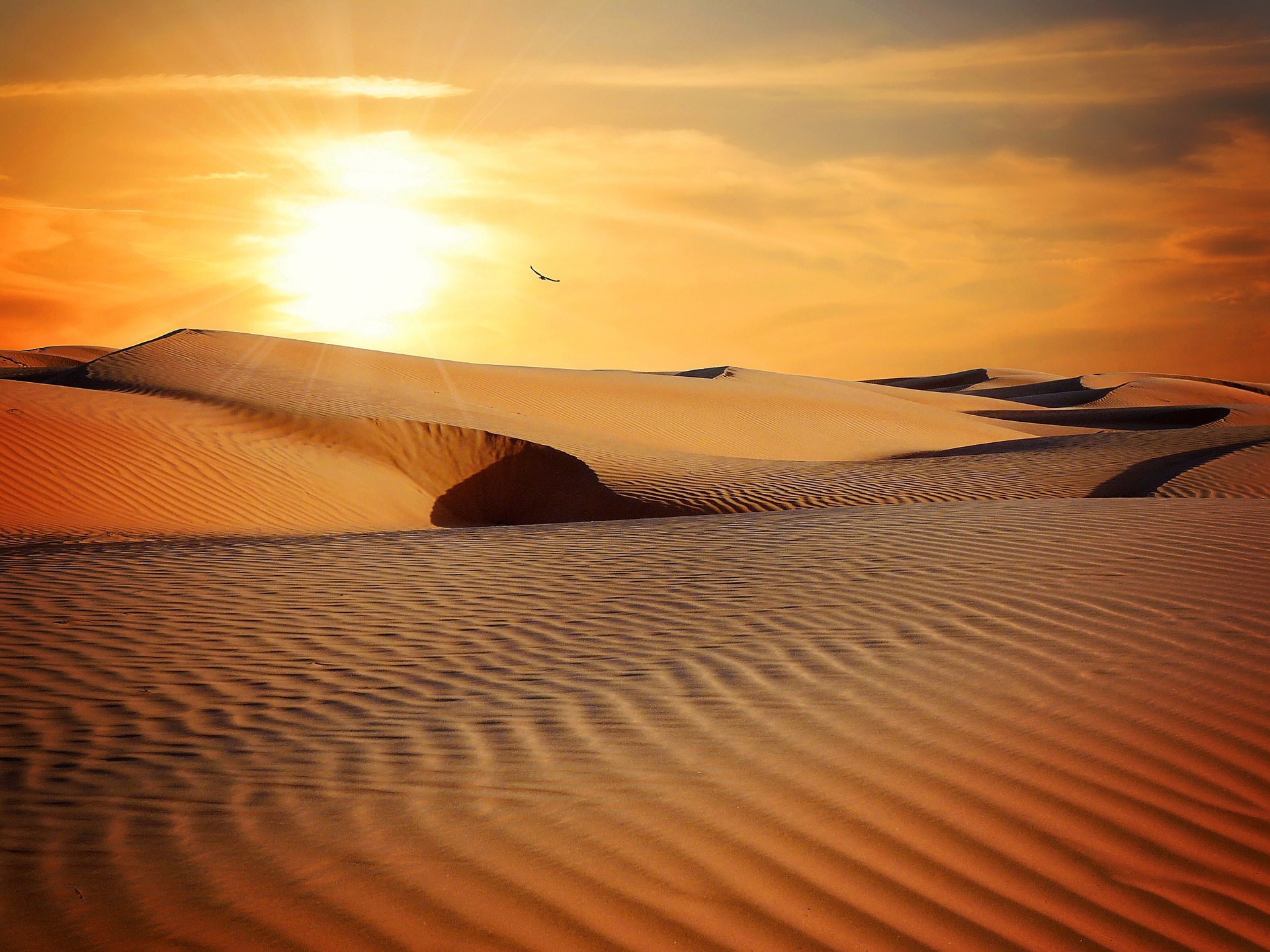
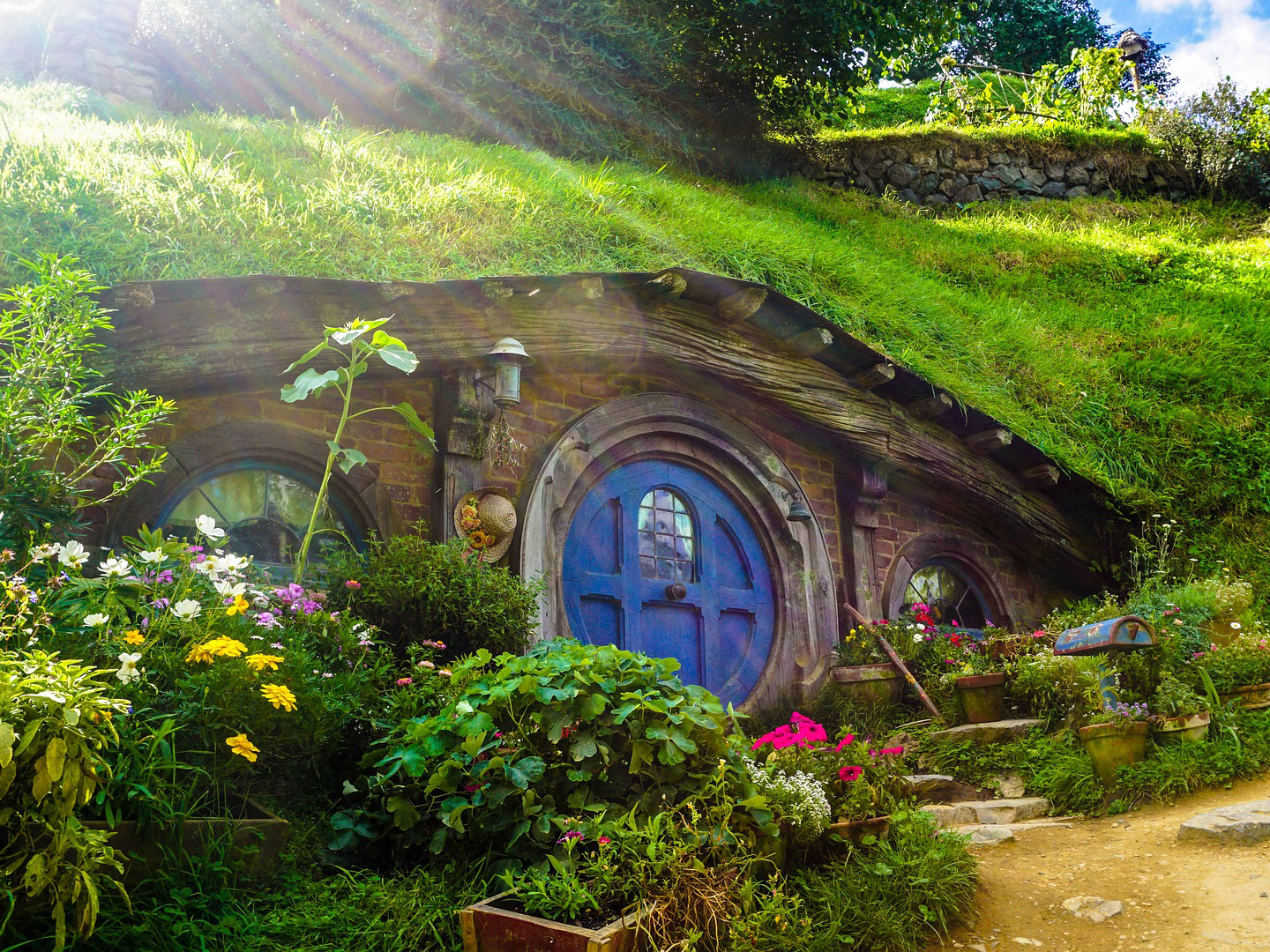
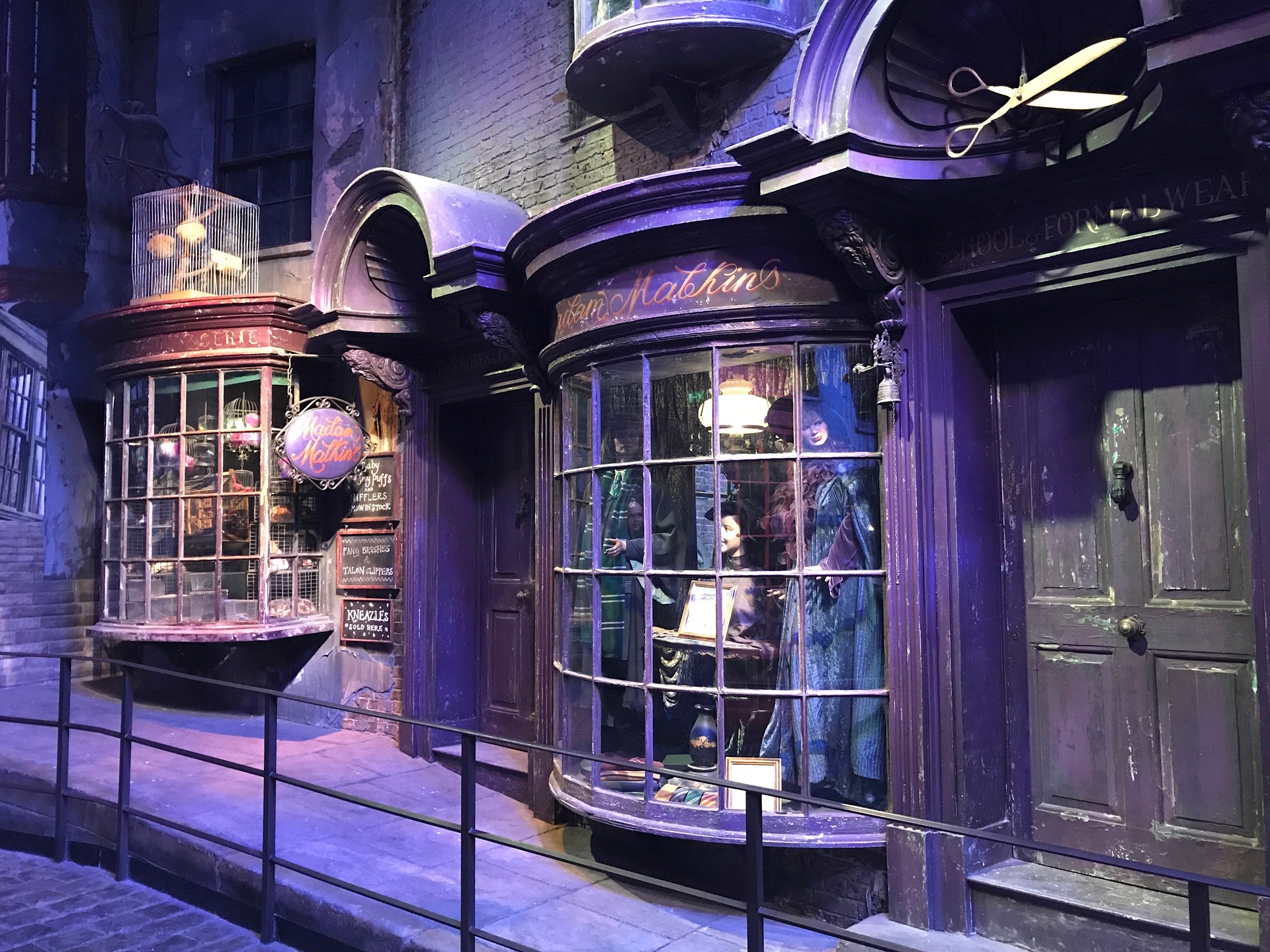
Match the title of the film and its director’s name to the picture. Do the drawn elements match each other?
|
Harry Potter and the Philosopher's Stone
(2001 r.) |
directed by: Chris Columbus
|
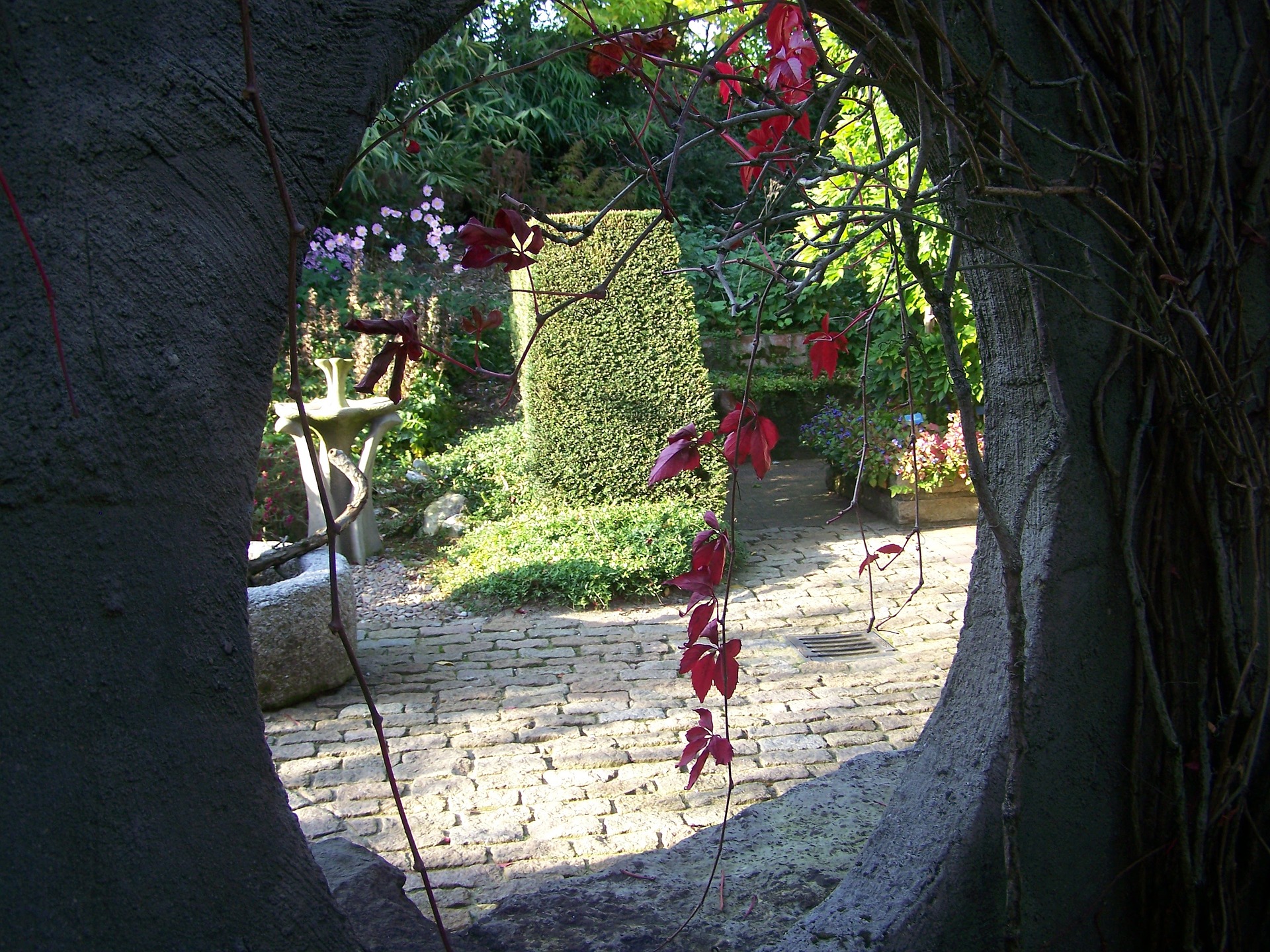
|
The Secret Garden
(1993 r.) |
directed by: Agnieszka Holland
|
|
W pustyni i w puszczy
(1973 r.) |
directed by: Władysław Ślesicki
|
|
The Hobbit. An Unexpected Journey
(2012 r.) |
directed by Peter Jackson
|
List five Polish and five foreign film directors. If you don’t remember them you can use the Internet.
Listen to Juliusz Machulski explaining how the film is made. Pay special attention to the stages of the filmmakingfilmmaking process and people who take part in it.
Mark those people who take part in the filmmaking process and were listed by Juliusz Machulski. Check the meaning of the words in the glossary.
- editor
- stuntman
- scriptwriter
- sponsor
- director
- soundman
- composer
- dubler
- producer
- episode actor
Work in groups. Describe the stages of the filmmaking process. Use the information from the text below: “How the film is made” by Tomasz Macios, and the pictures from the gallery.
Group 1: What kind of work is done at the first stage of the filmmaking process: pre‑production stagepre‑production stage. Who is working at this stage of filmmaking?
Group 2 and 3: How many people work at the second stage of the filmmaking process: production stage? What do they do?
Group 4: Describe the third stage of filmmaking: post‑production stage or the film editing. Who is working at this stage?
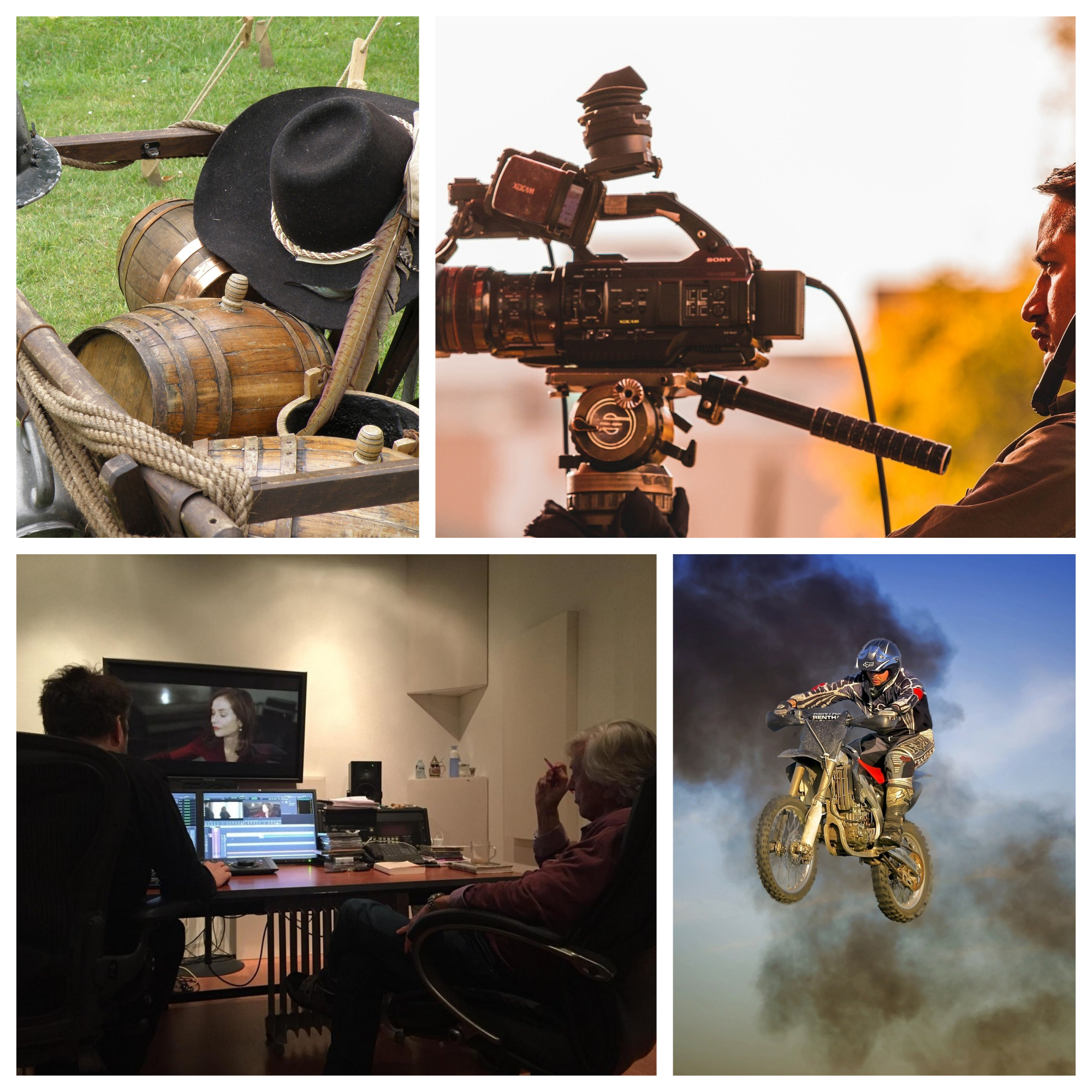
1. Selecting props Selecting props is a part of pre-production stage. It has to be done in accordance with the screenplay.
2. Working with the camera Making a movie is a part of production stage. The cameraman, who is the most important member of the team, is not a technical staff, but an artist, just like the photographer.
3. Stuntman There are also people for special tasks – stuntmen. Their role is to replace actors in dangerous situations, in scenes that require special abilities. Making scenes with the stuntmen is a part of production stage.
4. Editing Editing is the last stage of filmmaking process. From the very long material the director picks the best, in his opinion, fragments and together with the editor they combine them together, add sound – characters’ dialogues, different noises and music.
How is the film made?(fragments)
A film, just like the theatre play, is a piece of art created by a team of people co‑operatingco‑operating who co‑operate together and are supervisedsupervised by the directordirector. His main task is to create the concept of the film, to think about how to transfer the earlier conceivedconceived story into pictures. The director has a much more difficult task that the painter who uses his paints and a brush to paint a picture. Apart from the camera and other technical devicestechnical devices the film creator needs also actors and other specialists. Without them he wouldn’t be able to do much. […]
If we would like to make a film about filmmaking, it would have three episodes: […]
Pre‑production stage
The first episodeepisode tells about the pre‑production stage, when the creators think about the topic of the film they would like to make. At the beginning the director or the film producerfilm producer, who employs the director to make the film, selects the screenplayscreenplay.
A screenplay – it is simply a story divided into roles, scenes and dialogues. It is the base of the film. The screenplay’s text looks a bit like a drama. Apart from dialogues we can find there general hints concerning the actors’ play - it is similar to the stage directions in drama; however, there are no technical details directly connected with the film productionfilm production. Screenplay’s author is called the screenwriter and very often the screenwriterscreenwriter works with the same director on many films […]
It can happen that the director writes the screenplay for his own movie. In this case, the film is called an auteur filmauteur film. Sometimes the screenplay is based on a novelnovel. Then we call it adaptationadaptation, and usually it is much shorter version of the original.
Apart from shortening the story, the screenwriter can also change the ending, characters, time and place of the story, or show everything from his own perspective. [...] The film based on the novel doesn’t have to present exactly the same story. There are, however, a very faithful book to film adaptations [...]. For example, the Harry Potter films, based on the novel by J.K. Rowling […].
The next stage of filmmaking process is creating the screenplay. People who do it are: the director, the camera man and sometimes the set designerset designer. The screenplay is simply a script prepared to be filmed. It is divided into the subsequent scenes and shots and includes a detailed description of the places where they will be filmed and the duration and the amount of shots that will be taken, both in the studio and outdoors. In the screenplay there are also remarks concerning the sound effects that will appear in a given shot, for example noises and sounds coming from the streets, or a music composed especially for this film. The whole film is directed in accordance with the screenplay, that includes: scenography design, selecting props and film editingediting. […]
Before the shoots start there is one more important task that the director has to do - to select the castcast. It means choosing the right actors to act the roles from the script. The actors are usually selected during castingscastings organised specially for this purpose. Casting is a process during which the candidates who meet the requirements of a given character are reviewed. The director and his assistants decide who has the best features and skills for playing a certain role. Apart from the main actors, the film also requires a lot of bit players and extras. A bit playerbit player is an actor that appears in a film and plays a small role called “an episode”. Usually he has a very short line to say. […]
Extras are people who do not have any lines to say, they are just “the background” for the actors. Very often they appear as a crowd, for example in battle scenes, or just as the ordinary passers‑by, customers in shops or guests in restaurants. There are also people for special tasks - the stuntmenstuntmen. Their role is to replace the actors in the dangerous situations, in the scenes that require special abilities. […]Production stageProduction stage
[…] It is simply making the movie, working with the camera. A photographer employed especially for this purpose takes the pictures of the actors at the movie setmovie set. These photos are called “stillsstills”. […]
Movie set is [...] a place where the film is shot. The whole team of people necessary for the director to realise his concept work there. Each member of the team contributes to the creation of work, however, the most important person is the cameramancameraman. […]
The cameraman is not a technical staff, but an artist, just like the photographer. To make the perfect shot it is not enough to set the actors and turn the camera on. Everything that is filmed has to be thought over by the director, prepared by the artists and technical staff that work at the movie set. The operator films only specially composed scenes called frames.
The second operator, called in Polish “szwenkier” is responsible for the direct camera operation. There are people who help him: lightning engineers and a camera assistant. Their task is to select the right lenses and to measure the light so the right depth of focus and the f‑stop can be set. The camera has many options for recording particular frames. […]
If we have a shot in which an actor or an object, i.e. a car moves, the camera follows it on a trolley, in another car or on a plane. Such camera movement is called a dolly.
Probably in many films you have seen the scenes in which an object suddenly moves away. You see a man who is very close and in a second he moves away and disappears in the crowd. Such a technique is called a „dolly outdolly out”. When it is the other way round, we call it: a “dolly indolly in”.
[...] Movie set is a place where the movie is filmed, but the term “movie set” has one more important meaning. It is used when we want to describe the picture size captured by the camera, that means everything that is within the frameframe.
[...] Most of the camera shots are named in reference to the human body. When the shot shows the character up close and the bust of the actor is in the frame – we talk about medium shotmedium shot, when the picture shows for example, a face, hand or a larger object, it is called close‑upclose‑up. If we see a face that is very close, or the camera shows us just an eye, lips or a ring on a finger, we call this shot the extreme close‑up. Medium‑full shot, called the American shot, shows actors from their knees or waist up. There are also shots that show more elements from the greater distance. We can list here: Full shotFull shot, when we see the whole silhouette of the actor, a master shotmaster shot when a person is in or in front of a building and extreme long shot that shows the landscape or a city skyline. Each shot has its own meaning and provides important information about the characters and the place of action.
[...] Movie set can be inside a building, in a studio or in the open space, that is outdoor. The place is always precisely defined in the screenplay. […]
Usually [...] the movie set is in a specific place, like inside the palace, in the mountains, at the seaside or on the crowded street. On the movie set the set designer is very important. Just like in the theatre, he creates the world in which the main characters live. However, the film scenography is different that scenography in the theatre, because in the film the camera influences everything we see. […]
The camera can show us on the whole screen the view of the big city ot just one tiny object, that is a prop. Usually the set designer works together with the costume designercostume designer, who makes sure that everyone wears the right costume, and the property masterproperty master. His task is to ensure that every actor and every extra receives the right prop and that all things are in place. As you may already know from the film “Lord of the Rings”, the prop is not only a part of a decoration, but by becoming the main thing in the plot it may “play” a role that is even more important than the actors. Interior designers, costume designers and property masters have a lot of work especially in the production of costume and historical films where the streets, interiors, houses and clothes have to be reproduced carefully and in details.
At the movie set there is also the sound techniciansound technician who records dialogues and different sounds, for example car noises, birds singing etc. Later, together with the director and the editor in the editing process he synchronises the recorded material with the pictures. The film almost always includes a specially composed music reflecting the atmosphere of particular scenes. […]
However, before we hear the results of the sound technicians and composerscomposers, the movie set work has to be finished. Everything there is under the watchful eye of the set managerset manager and his assistants who ensure that everything is well prepared and nobody disturbs the actors, the director and the camera men. […]
When it comes to the scheduleschedule, each day at the movie set looks similar – every shot is filmed a couple of times to achieve the effect desired by the director. And even if it is perfect, it is repeated once or a couple of times. Such repetition is called a takea take. […]
A take is needed during the editing processediting process, because it gives more possibilities. Editing process means choosing and combining together the shots that were filmed before.
Sometimes, after all the shots are finished, there are few more filmed and usually they are scenes not included in the screenplay. The reason is that during his work the director very often changes his concept and wants to try out some new ideas. In the language of the filmmakers such additional shots are called pickup shotspickup shots. Long work at the movie set if finally over – now there is a time for the last chapter of the story.Post‑production stagePost‑production stage
[...] After the shots are finished the director selects those that, in his opinion, are the best and then combines them together to create a scene. A scene in a film means several shots connected either by the unity of location or the unity of time or the same characters. Several scenes create a sequencesequence (from Latin sequentia – following) – that is a fragment of the film made of scenes that come together, and in which the same characters appear. As you can see, the particular shoots are the smallest elements of which the film is made. After the shots are finished, during the editing process, they are connected according to the plan, that is the screenplay, and synchronised with the soundtrack. However, before it happens, the shots have to be developed and edited. Nowadays a lot of work is done by computers, especially special effects. There are also films made entirely in a digital technique.
Editing is the last stage of filmmaking process. From the very long material the director picks the best , in his opinion, fragments and together with the editor they combine them together, add sound – characters’ dialogues, different noises and music. Those elements together create a story that we watch on TV or at the cinema. […]
Actually, editing is not only a technique, but also a great art. [...] The director has to combine the shots taken at the different film sets and with different camera settings, into one meaningful whole. Particular frames can be connected in different ways, depending on the director’s creativity and his concept of the movie. […]
Editing is not only cutting and putting together the film stock, but it is the way of telling the story by skilful joining the recorded pictures so they come alive and attract the viewer’s attention.
After the editing is done, the master copy of the film is made and then it is reproduced. When the film is finished and ready it is distributed (being spread) thought the distributing companies, is shown in different cinemas, and after some time it can be watched on TV, on the videotape or DVD. There are also interactive DVD’s that allow the viewer to change the ending or even to create their own version of the story.Source: Tomasz Macios, How is the film made?, Warszawa 2009.
How was this lesson? Did you like it? Finish selected sentences.

Keywords
film, production, director
Glossary
produkcja filmowa – trzystopniowy proces produkcji filmu składający się z fazy przedprodukcyjnej, produkcyjnej i postprodukcyjnej
reżyser
współpracować ze sobą
nadzorowany, pod nadzorem
producent filmowy – osoba finansująca produkcję filmową i zatrudniająca pracujące przy niej osoby
poczęty, stworzony, wymyślony
środki techniczne
kręcenie filmu
faza przedprodukcyjna, czyli wszystkie czynności, które należą do etapu przygotowań
epizod filmowy, odcinek
scenopis, plan realizacji filmu zawierający szczegółowy opis ujęć kamery
scenarzysta, tu: scenarzysta filmowy
film autorski, czyli wymyślony od początku do końca przez reżysera, który nie bazuje na obcym scenariuszu, lecz posiłkuje się własnym pomysłem
powieść
adaptacja filmowa, czyli dostosowanie tekstu literackiego na potrzeby filmu. Tym różni się od ekranizacji, że nie jest wierna pierwowzorowi.
operator kamery
scenograf
obsada
castingi, nabory aktorów do ról
epizodysta, aktor mający do zagrania niewielką rolę, tzw. epizod w filmie
kaskader, aktor, który zastępuje innych aktorów w niebezpiecznych scenach
faza produkcyjna
fotosy (z filmu)
plan filmowy, czyli miejsce, gdzie kręci się film
ujęcie, kadr
odjazd kamery (oddalenie)
najazd kamery (zbliżenie)
plan średni, postać ukazana jest od pasa w górę
zbliżenie
plan pełny, postać aktora wypełnia cały kadr
plan ogólny sceny, ujęcie pleneru lub wnętrza z całymi sylwetkami aktorów
projektant kostiumów
rekwizytor
dźwiękowiec
kompozytor
montaż filmu
dokrętki, dodatkowe ujęcia, których nie było w scenariuszu
faza postprodukcyjna
sekwencja filmowa
montaż
kierownik planu
ujęcie, scena z filmu
plan pracy, harmonogram