Observing the movement of the weight suspended on the spring, answer the following questions.
1. Is the weight movement a periodic or repetitive motion in time? 2. Is there a specific position of the weight around which this movement takes place? 3. Does the weight move with constant acceleration during vibrations?
The weight suspended on the spring after precipitating it from the equilibrium position performs simple harmonic vibrations.
The weight suspended on the spring performs simple harmonic motions. It is a periodic movement that repeats in time. There is a characteristic point around which this movement takes place. This characteristic point is called the position of balance.
Selected examples of vibrating motionvibrating motionvibrating motion
RayVPiYhCTeqH
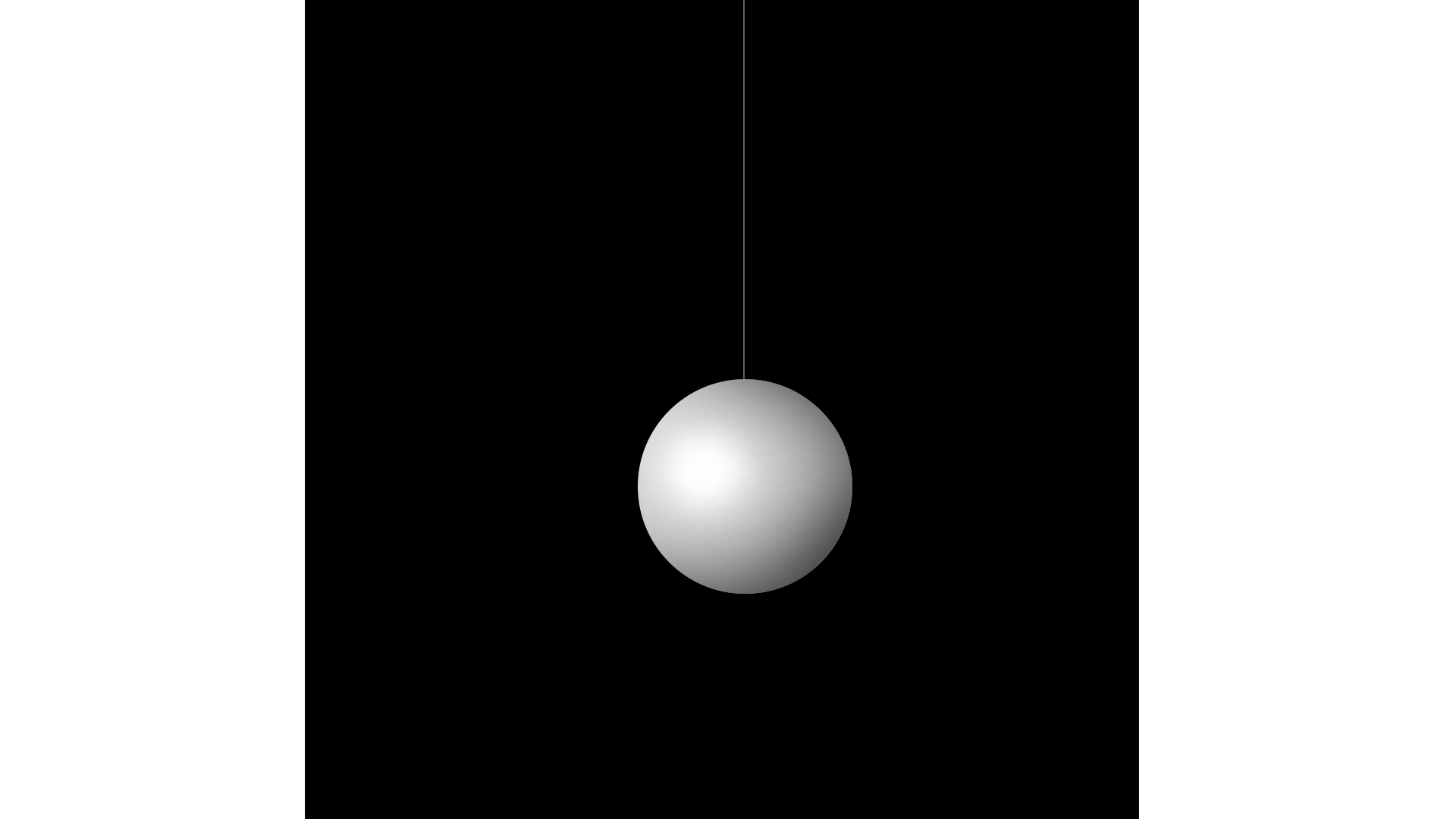
Ilustracja przedstawia kulkę zawieszoną na nitce.
The weight suspended on the thread performs harmonic motions
Source: GroMar, licencja: CC BY 3.0.
R9ApLRuRuuQF7
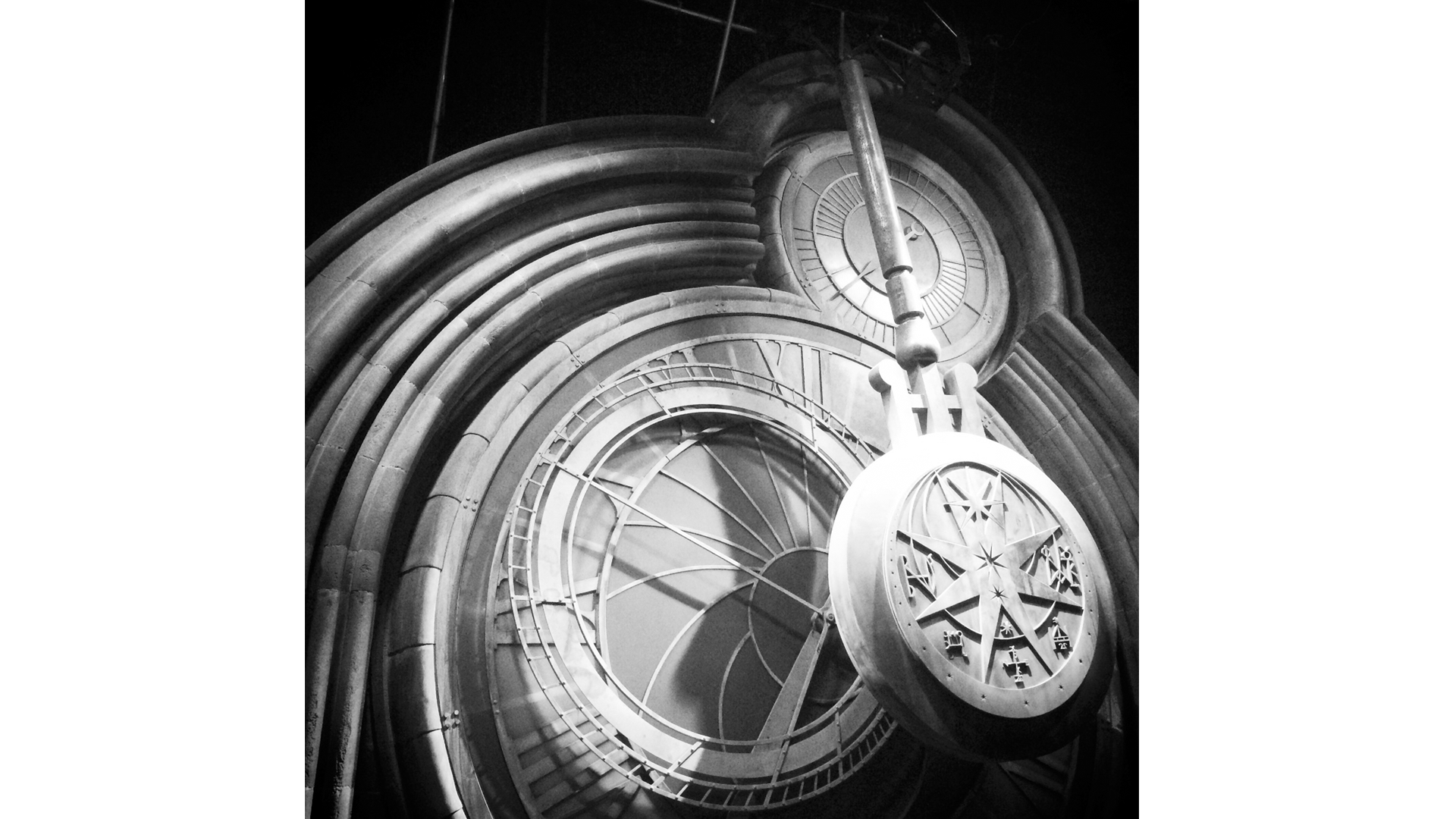
Ilustracja przedstawia wahadło zegara.
The clock pendulum also performs a vibrating motion
Source: GroMar, licencja: CC BY 3.0.
R1Dl4E4uW3okv
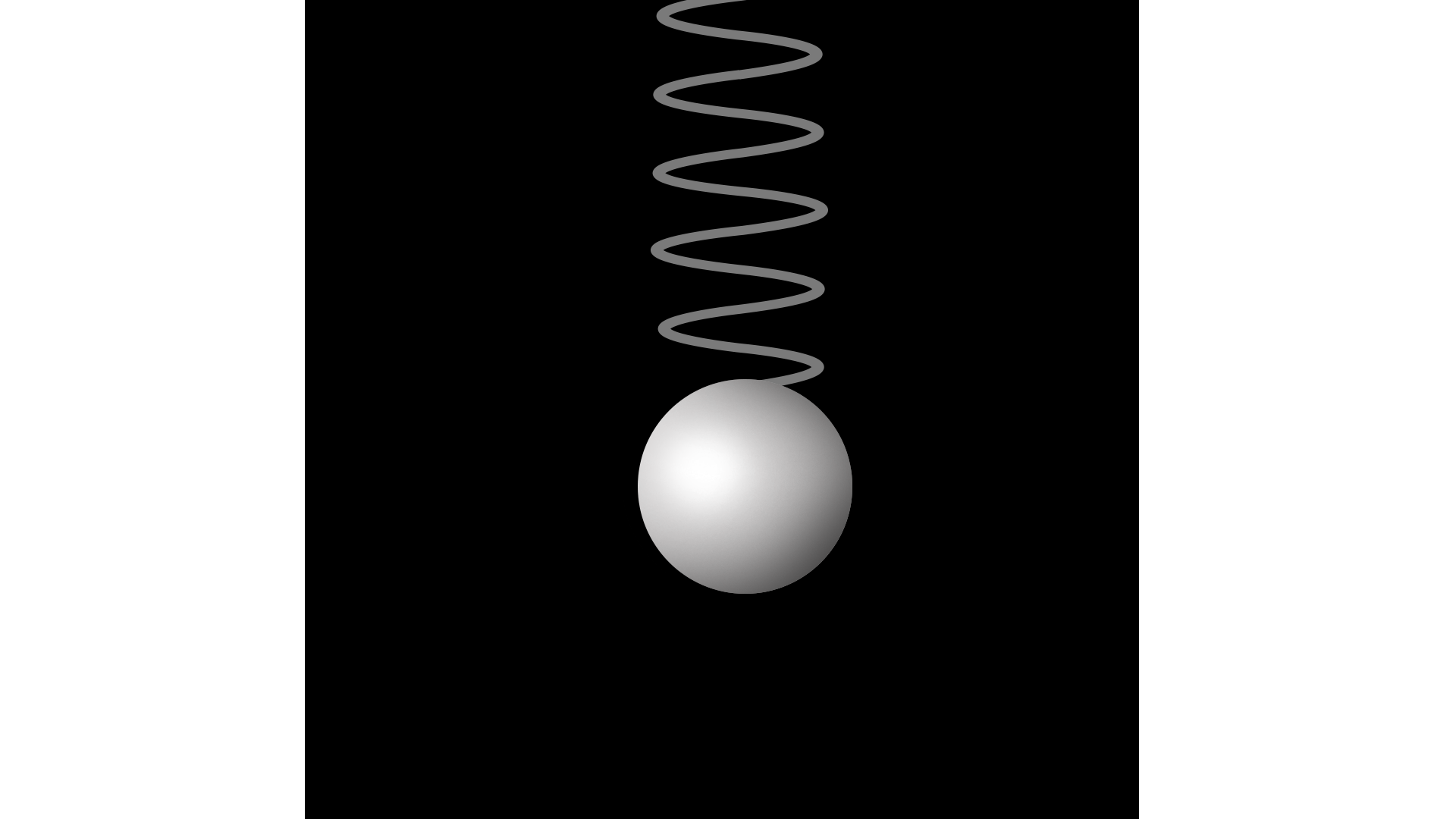
Ilustracja przedstawia kulkę zawieszoną na sprężynie.
The weight suspended on the spring after precipitation from the equilibrium position also performs harmonic vibrations
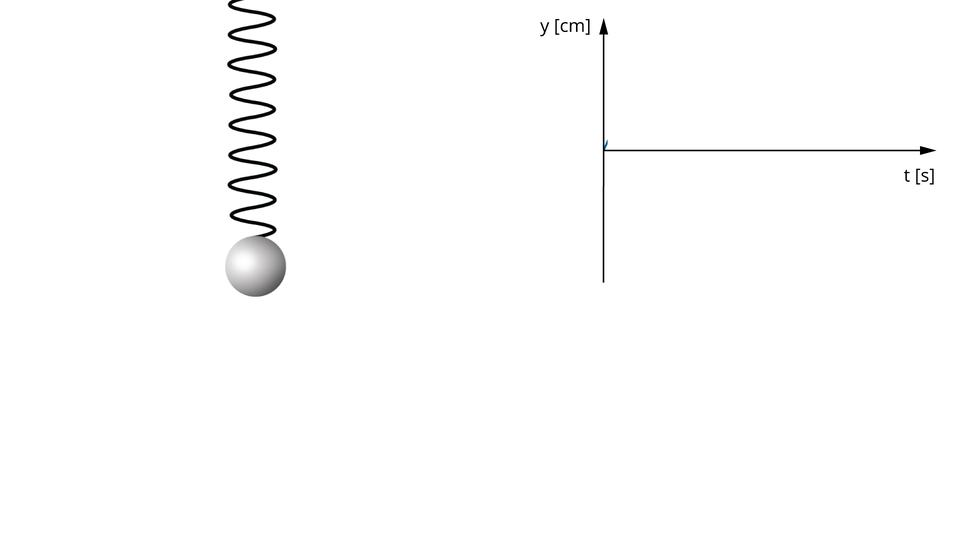
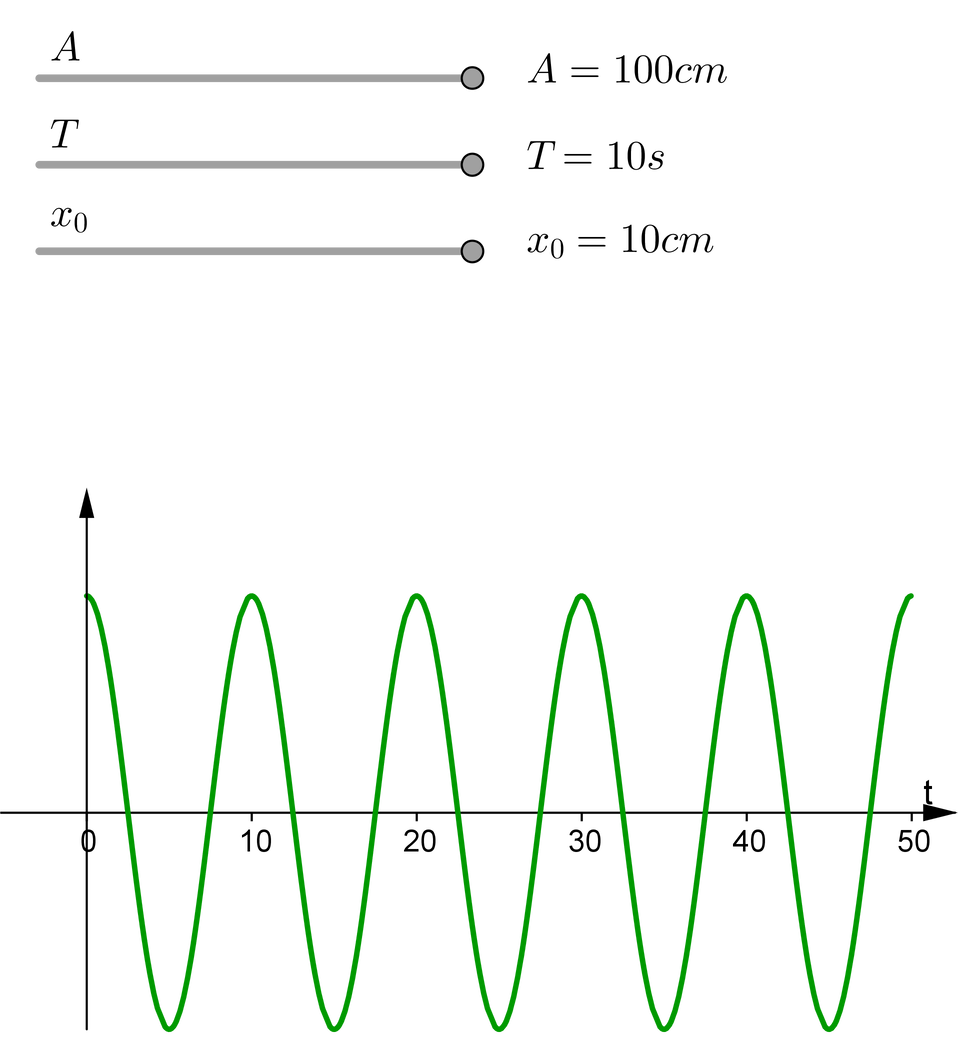
A weight was hung on the spring, which was then set in a vibrating motion. During vibrations, the position of the weight was recorded and the obtained result was plotted on the graph. Below there are some slides from the experiment.
R1Sw0oGyqO4ry1
Prezentacja slajdów – ruch ciała zawieszonego na sprężynie. Instrukcja obsługi z poziomu klawiatury: 1. Uruchomienie aplikacji - ENTER, 2. Na każdym ze slajdów czytany jest automatycznie tekst alternatywny po polsku, 3. Przy pierwszym uruchomieniu na pierwszym slajdzie, czytanie tekstu po angielsku - TAB, 4. Przejście między slajdami: do następnego slajdu - TAB, do poprzedniego slajdu - TAB + SHIFT, 5. Przejście do czytania napisu po angielsku - strzałka w górę + strzałka w dół (czyta tekst po angielsku widoczny na slajdzie).
Prezentacja slajdów – ruch ciała zawieszonego na sprężynie. Instrukcja obsługi z poziomu klawiatury: 1. Uruchomienie aplikacji - ENTER, 2. Na każdym ze slajdów czytany jest automatycznie tekst alternatywny po polsku, 3. Przy pierwszym uruchomieniu na pierwszym slajdzie, czytanie tekstu po angielsku - TAB, 4. Przejście między slajdami: do następnego slajdu - TAB, do poprzedniego slajdu - TAB + SHIFT, 5. Przejście do czytania napisu po angielsku - strzałka w górę + strzałka w dół (czyta tekst po angielsku widoczny na slajdzie).
The deflection of the body from the equilibrium position is the distance of the body from the position of equilibrium. Usually it is marked with the letter x.
The vibration period is the shortest time after which the movement begins to repeat. It is a time needed to perform one full vibration.
Comment
When we want to determine practically the period of vibrations, the best method of it is to determine the time t needed to perform n full vibrations. The vibration periodvibration periodvibration period is then determined from the formula:
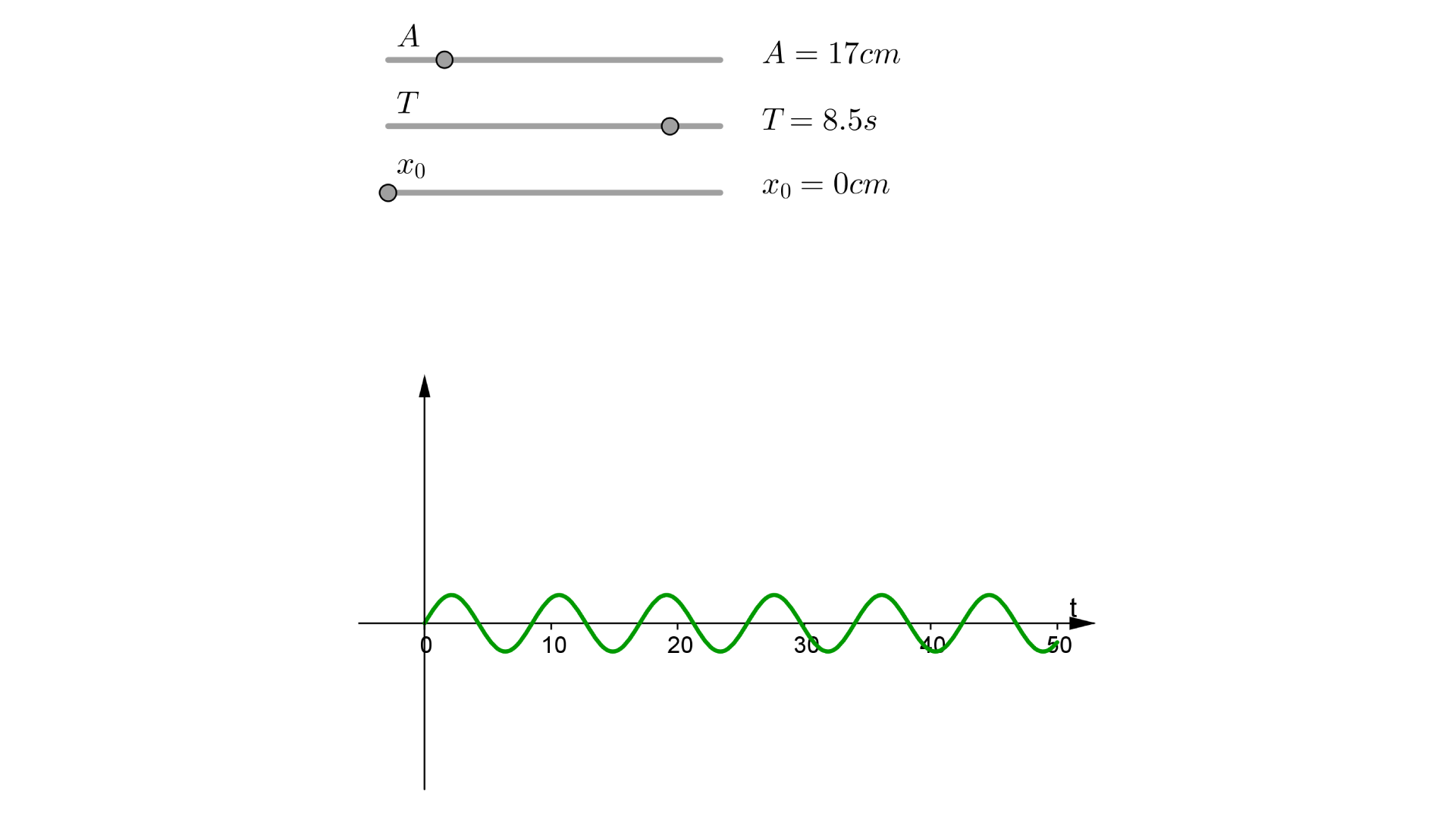
Na ilustracji pokazany jest przykład ruchu drgającego, o amplitudzie A równej 17 centymetrów, częstotliwości drgań T równej 8,5 sekundy oraz wychyleniu x z indeksem dolnym 0 równym 0 centymetrów. Narysowany jest wykres sinusoidy symbolizujący ruch drgający. Oś pozioma opisana t, zaznaczone punkty 0, 10, 20, 30, 40 i 50. Oś pionowa opisana A. Oś pozioma znajduje się w połowie wysokości osi pionowej. Powyżej suwak A obok napis A równa się 17 cm, suwak T obok napis T równa się 8,5 s, suwak x z indeksem dolnym 0 obok napis x z indeksem dolnym 0 równa się 0 cm.
Simple vibrating motion and quantities describing it. Examples of vibrating motion - 1
R6gyEPIFhh0zS
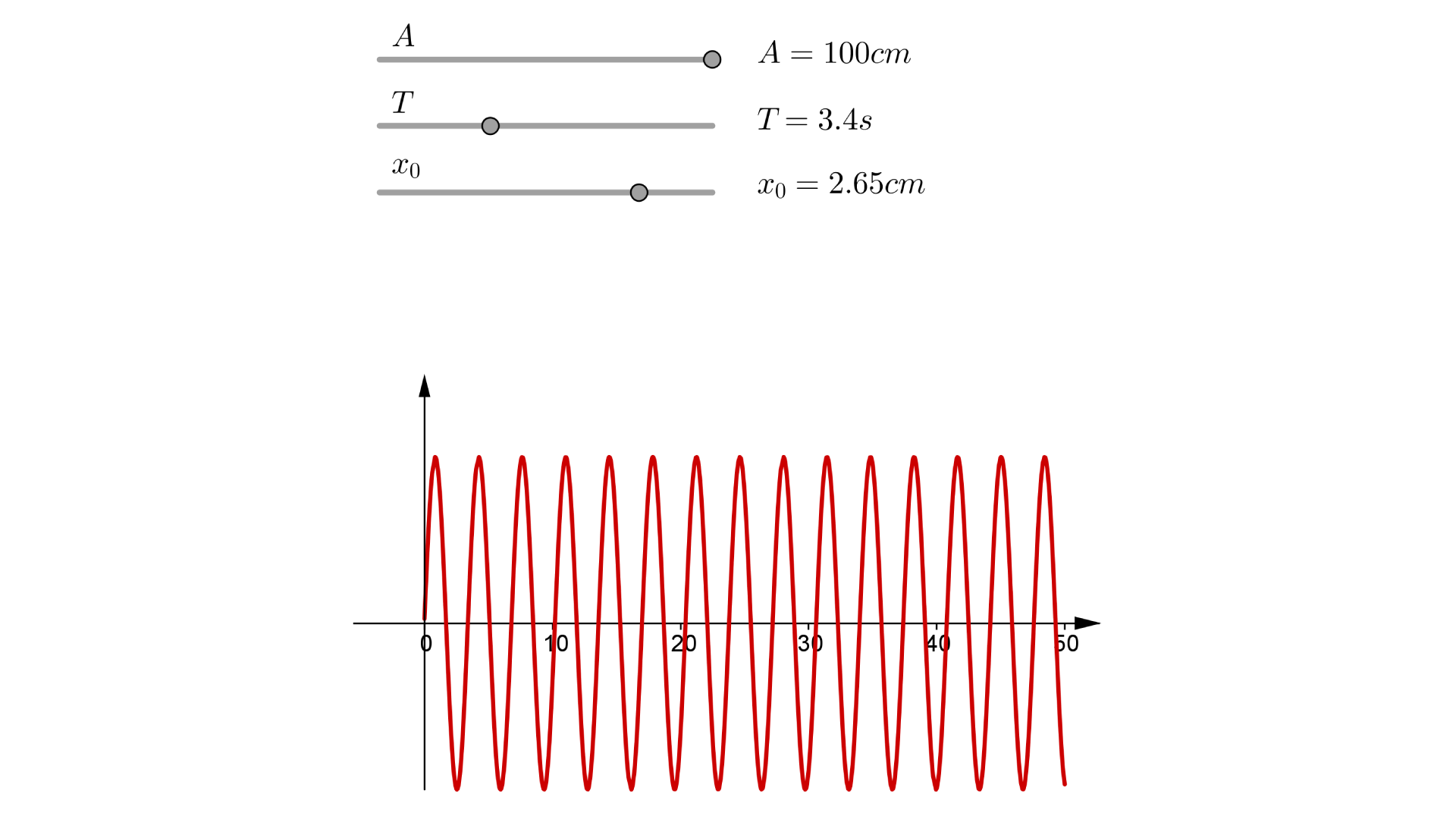
Na ilustracji pokazany jest przykład ruchu drgającego, o amplitudzie A równej 100 centymetrów, częstotliwości drgań T równej 3,4 sekundy oraz wychyleniu x z indeksem dolnym 0 równym 2,65 centymetrów. Narysowany jest wykres sinusoidy, symbolizujący ruch drgający. Oś pozioma opisana t, zaznaczone punkty 0, 10, 20, 30, 40 i 50. Oś pionowa opisana A. Oś pozioma znajduje się w połowie wysokości osi pionowej. Powyżej suwak A obok napis A równa się 100 cm, suwak T obok napis T równa się 3,4 s, suwak x z indeksem dolnym 0 obok napis x z indeksem dolnym 0 równa się 2,65 cm.
Simple vibrating motion and quantities describing it. Examples of vibrating motion - 2
Task 1
1. Set . 2. Determine . 3. Observe how the vibration plots change depending on the amplitudes and . 4. Explain how the vibration amplitude influences the shape of the graphs.
Task 2
1. Set . 2. Determine . 3. Observe how the vibration plots change depending on and . 4. Explain how the frequency of one and the other body can be determined on the basis of the graph.
Task 3
1. Set . 2. Determine . 3. Observe how the vibration plots change depending on and 4. Explain if the change of or affects the vibration frequency of both bodies.
The vibration movement takes place around a point called the equilibrium positionequilibrium positionequilibrium position.
The quantities describing the vibration motion are:
the amplitude of vibrationsamplitude of vibrationsamplitude of vibrations A - the maximum displacement of a vibrating body from its position of rest; unit - meter [m],
the vibration periodvibration periodvibration period T - the time needed for one full vibration; the unit - second [s],
the vibration frequency f - number of vibrations per unit of time; unit - hertz [Hz],
The frequency and the period are related to each other in the following way:
The examples of vibrating systems are: the mathematical pendulummathematical pendulummathematical pendulum and the spring weight that perform harmonic oscillationsharmonic oscillationsharmonic oscillations.
The graph of the time dependence in the harmonic motionharmonic motionharmonic motion is a sinusoid. From this graph you can read the amplitude and period of vibration.
Exercises
R170Q7k66VzMi
Exercise 1
Wersja alternatywna ćwiczenia: Determine which sentences are true. Możliwe odpowiedzi: 1. The body performed 120 vibrations in 1 minute. The vibration frequency of this body is 2 Hz., 2. All vibrations observed in nature are simple harmonics motions., 3. The first body vibrates with a vibration period of 0,5 s and the second one with a frequency of 2 Hz. These bodies are perform the same number of vibrations in one minute.
Wersja alternatywna ćwiczenia: Determine which sentences are true. Możliwe odpowiedzi: 1. The body performed 120 vibrations in 1 minute. The vibration frequency of this body is 2 Hz., 2. All vibrations observed in nature are simple harmonics motions., 3. The first body vibrates with a vibration period of 0,5 s and the second one with a frequency of 2 Hz. These bodies are perform the same number of vibrations in one minute.
Determine which sentences are true.
The body performed 120 vibrations in 1 minute. The vibration frequency of this body is 2 Hz.
All vibrations observed in nature are simple harmonics motions.
The first body vibrates with a vibration period of 0,5 s and the second one with a frequency of 2 Hz. These bodies are perform the same number of vibrations in one minute.
Exercise 2
The body, performing vibrations on a certain spring, has the mass of 100 g. Its vibration period is equal to 1 second. It is known that the period of body vibration on the spring is proportional to . Calculate the vibration frequency of the weight of 400 g suspended on this spring.
Exercise 3
Construct a mathematical pendulum, i.e. on a thin thread of the known length l, and hang a small size body of mass m (e.g. a metal nut suspended on a thread).
Examine and describe in English how the oscillation period of this pendulum depends on the length of the thread l. Make a plot of dependence of the oscillation period on the pendulum period T and the thread length l.
RsKHIuJhGpf6Y
Exercise 4
Wersja alternatywna ćwiczenia: Indicate which pairs of expressions or words are translated correctly. Możliwe odpowiedzi: 1. drgania harmoniczne - harmonic oscillations, 2. okres drgań - vibration period, 3. amplituda drgań - amplitude of vibrations, 4. częstotliwość drgań - frequency of vibrations, 5. wahadło na sprężynie - equilibrium position, 6. wahadło matematyczne - pendulum on the spring
Wersja alternatywna ćwiczenia: Indicate which pairs of expressions or words are translated correctly. Możliwe odpowiedzi: 1. drgania harmoniczne - harmonic oscillations, 2. okres drgań - vibration period, 3. amplituda drgań - amplitude of vibrations, 4. częstotliwość drgań - frequency of vibrations, 5. wahadło na sprężynie - equilibrium position, 6. wahadło matematyczne - pendulum on the spring
Indicate which pairs of expressions or words are translated correctly.
drgania harmoniczne - harmonic oscillations
okres drgań - vibration period
amplituda drgań - amplitude of vibrations
częstotliwość drgań - frequency of vibrations
wahadło na sprężynie - equilibrium position
wahadło matematyczne - pendulum on the spring
zadanie
Source: GroMar, licencja: CC BY 3.0.
R1ChatPzzZOjk1
Interaktywna gra, polegająca na łączeniu wyrazów w pary w ciągu jednej minuty. Czas zaczyna upływać wraz z rozpoczęciem gry. Jeden ruch to odkrywanie najpierw jednej potem drugiej karty z wyrazem. Każdy wyraz jest odczytywany. Kolejny ruch to odkrywanie trzeciej i czwartej karty. W ten sposób odsłuchasz wszystkie wyrazy. Nawigacja z poziomu klawiatury za pomocą strzałek, odsłuchiwanie wyrazów enterem lub spacją. Znajdź wszystkie pary wyrazów.
Interaktywna gra, polegająca na łączeniu wyrazów w pary w ciągu jednej minuty. Czas zaczyna upływać wraz z rozpoczęciem gry. Jeden ruch to odkrywanie najpierw jednej potem drugiej karty z wyrazem. Każdy wyraz jest odczytywany. Kolejny ruch to odkrywanie trzeciej i czwartej karty. W ten sposób odsłuchasz wszystkie wyrazy. Nawigacja z poziomu klawiatury za pomocą strzałek, odsłuchiwanie wyrazów enterem lub spacją. Znajdź wszystkie pary wyrazów.
Match Polish terms with their English equivalents.
okres drgań
częstotliwość drgań
amplitude of vibrations
położenie równowagi
equilibrium position
drgania harmoniczne
vibration period
frequency of vibrations
harmonic oscillations
amplituda drgań
Source: Zespół autorski Politechniki Łódzkiej, licencja: CC BY 3.0.