Przeczytaj
Extreme experiences leave a lingering mark in people’s memory. What if this extreme experience is a tornado, hurricane, or any other extreme weather phenomenon, and you live in a region of the world where they are a common occurrence? Is it possible to get used to the thought that they happen every season? Have you ever experienced any extreme weather conditions? Have they affected your perception of the world in any way?
Ekstremalne doświadczenia pozostawiają trwały ślad w ludzkiej pamięci. Co się dzieje, jeśli tym przeżyciem było tornado, huragan lub inny kataklizm, a ty osiedliłeś/osiedliłaś się na obszarze, na którym te zjawiska występują regularnie? Czy da się przyzwyczaić do myśli, że tornado albo huragan mogą co sezon nawiedzić rejon, w którym mieszkasz? Czy kiedyś doświadczyłeś/doświadczyłaś ekstremalnych warunków pogodowych? Jak wpłynęły one na twoje postrzeganie świata?
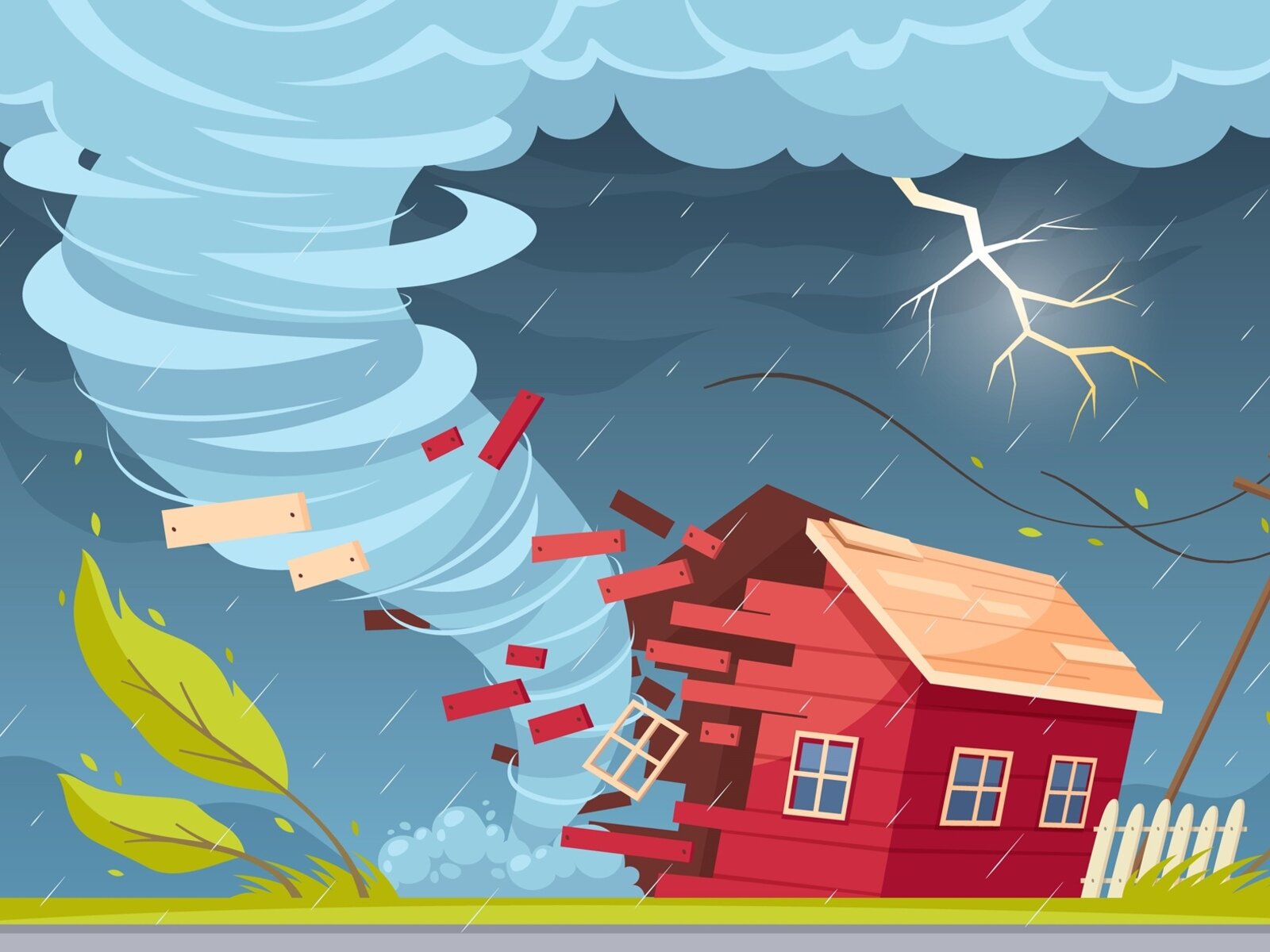
Match the natural catastrophes and extreme weather conditions with their translations.
Can you name the natural catastrophes and extreme weather conditions presented in the pictures? Drag and drop the names in the correct places.
Study the text and do the exercises below.
Survivors’ AccountsA) Hurricane Katrina
We followed the news and we knew it was going to bring heavy rainsheavy rains and damaging windsdamaging winds. It formed over the Bahamas and was picking up moisturemoisture and heatheat. On 24th August it was officially qualified as a tropical storm and was given the name, Katrina. The next day it hit the coast with extreme power and it grew into a Category 1 hurricane. It means that by that time its speed was twice as big as the day before and it was dangerous to walk outside. By the time Katrina made landfallmade landfall in Louisiana, it was a Category 3 hurricane. Apart from powerful winds, it brought torrential rainstorrential rains which contributed so heavily to the level of destruction we experienced. We lost all our possessions. Although the Southwest had been our home for decades, enough was enoughenough was enough. We moved to a place where we don’t have to run for our livesrun for our lives every hurricane season.
B) Bhola CycloneCyclone
It was over 50 years ago, and I was only a teenager at the time, but I still sometimes wake up in the middle of the night remembering the events of those days. Now Bangladesh, then East Pakistan, was hit on 12 November 1970 by the world's deadliest tropical cyclone, later named Bhola, which killed up to 500 thousand people and caused catastrophic damage. A storm alertstorm alert had come through the radio warning people about the Red 4 storm coming. Many people ignored it as they were used to the older, 10‑point scale, in which 4 did not sound serious enough to take sheltertake shelter. Unfortunately, it turned out to be more than serious. It took years to rebuild the whole area. An interesting fact is that this enormous tragedy contributed to the formation of the modern Bangladesh state. A civil warcivil war that broke outbroke out soon after the cyclone and one of its causes was people’s reaction to the lack of adequate alert systemlack of adequate alert system that could give people a chance to prepare for such events.
C) Tri‑State Tornado
My family comes from Illinois and my grandma, who passed awaypassed away 5 years ago, kept telling us this story about a giant tornado that swept throughswept through half of the United States when she was young. I always thought she blew things out of proportionblew things out of proportion but then I decided to check this story and that’s how I found out about the Tri‑State Tornado which hit Missouri, Illinois and Indiana in 1925. The magnitude of that event was truly spectacularspectacular and no wonder it etched so vividly into my gran’s memory. It was exceptionally large, with winds exceeding 300 mph. As I learned, it continued devastating everything on its way for 3.5 hours, which is also rather unusual, as tornadoes are rather short‑lasting phenomena. It killed 695 people which was a record for a single tornado.
D) Super Typhoon Yolanda
I know one thing, after what we experienced in the Philippines in 2013, I will never ever go on holiday to a place affected byplace affected by typhoons. It got a name – Yolanda – and two days before hitting the Philippines it was categorised as a super typhoonsuper typhoon. Inexperienced and not really understanding what was going on, we followed the announcements of the local authorities and we were evacuated with other inhabitants further inlandinland. We always had our backpacks with us, packed with our essentialsessentials, such as passports, some cash, phones and food, all ready if we had to escape. We spent that day with other people evacuated from the coast in a school. I will never forget two things – the howling windhowling wind and the scale of devastationscale of devastation we saw when we were finally able to leave the building.
Źródło: Anna Posyniak‑Dutka, licencja: CC BY-SA 3.0.
2. Which author decided to change their place of living to a calmer and safer one? 1. A, 2. B, 3. C, 4. B, 5. D, 6. B, 7. C, 8. C, 9. A, 10. D
3. Which event had political consequences? 1. A, 2. B, 3. C, 4. B, 5. D, 6. B, 7. C, 8. C, 9. A, 10. D
4. Which event affected the author’s choice of future holiday destinations? 1. A, 2. B, 3. C, 4. B, 5. D, 6. B, 7. C, 8. C, 9. A, 10. D
5. Which event was underestimated by the local people as a result of confusing systems? 1. A, 2. B, 3. C, 4. B, 5. D, 6. B, 7. C, 8. C, 9. A, 10. D
6. Which event was very much unlike other events of the same kind? 1. A, 2. B, 3. C, 4. B, 5. D, 6. B, 7. C, 8. C, 9. A, 10. D
7. Which author describes a phenomenon which was upgraded as it approached the land? 1. A, 2. B, 3. C, 4. B, 5. D, 6. B, 7. C, 8. C, 9. A, 10. D
8. Which author felt confused by the whole situation? 1. A, 2. B, 3. C, 4. B, 5. D, 6. B, 7. C, 8. C, 9. A, 10. D
9. Which author did not initially believe a story they were told? 1. A, 2. B, 3. C, 4. B, 5. D, 6. B, 7. C, 8. C, 9. A, 10. D
10. Which event still impacts the author’s wellbeing these days? 1. A, 2. B, 3. C, 4. B, 5. D, 6. B, 7. C, 8. C, 9. A, 10. D
Answer the questions in 4–5 sentences each.
Which story made the biggest impression on you? Why?
What are the most extreme weather conditions you’ve ever experienced? How did you feel?
Would you decide to go on holiday to a region of the world which could possibly be affected by some extreme weather phenomena? Why? Why not?
Słownik
/ bluː ˈthetaɪŋz aʊt əv prəˈpɔːʃn̩ / / ˈbləʊ ˈthetaɪŋz aʊt əv prəˈpɔːʃn̩ /
wyolbrzymiał/wyolbrzymiała [wyolbrzymić coś]
/ brəʊk ˈaʊt / / ˈbreɪk ˈaʊt /
wybuchł/wybuchła [wybuchnąć]
/ ˈsɪvəl wɔː /
wojna domowa
/ ˈsaɪkləʊn /
cyklon
/ ˈdæmɪdʒɪŋ wɪndz / / ˈdæmɪdʒɪŋ wɪnd /
niszczycielskie wiatry [niszczycielski wiatr]
/ ɪˈnʌf wəz ɪˈnʌf / / ɪˈnʌf ɪz ɪˈnʌf /
dość tego, miarka się przebrała
/ ɪˈsenʃl̩z / / ɪˈsenʃl̩ /
niezbędne rzeczy [niezbędna rzecz]
/ etʃt ˈsəʊ ˈvɪvɪdli ˈɪntə / / etʃ ˈɪntə /
wryło się tak wyraźnie w [wryć się w]
/ hiːt /
ciepło, gorąco
/ ˌhevi reɪnz / / ˌhevi ˈreɪn /
ulewne deszcze [ulewny deszcz]
/ ˈhaʊlɪŋ wɪnd /
wyjący wiatr
/ ˈɪnlænd /
w głąb lądu
/ ˈlæk əv ˈædɪkwət fɔːˈwɔːnɪŋ ˈsɪstəm /
brak odpowiedniego systemu wczesnego ostrzegania
/ ˈmeɪd ˈlændfɔːl / / ˈmeɪk ˈlændfɔːl /
dotarł/dotarła do wybrzeża [dotrzeć do wybrzeża]
/ ˈmæɡnɪtjuːd /
siła
/ ˈmɔɪstʃə /
wilgoć
/ pɑːst əˈweɪ / / pɑːs əˈweɪ /
zmarł/zmarła [umrzeć]
/ pleɪs əˈfektɪd baɪ /
miejsce nawiedzane przez
/ ˈrʌn fə ˈaʊə laɪvz / / ˈrʌn fə wʌnz laɪf /
ratować się ucieczką
/ skeɪl əv ˌdevəˈsteɪʃn̩ /
skala zniszczeń
/ ˈʃɔ:t ˈlɑːstɪŋ fɪˈnɒmɪnə / / ˈʃɔ:t ˈlɑːstɪŋ fɪˈnɒmɪnən /
krótkotrwałe zjawiska [krótkotrwałe zjawisko]
/ spekˈtækjʊlə /
spektakularny/spektakularna
/ ˈstɔ:m əˈlɜːt /
ostrzeżenie przed burzą
/ ˈstretʃɪŋ əˈkrɒs / / stretʃ əˈkrɒs /
rozciągający/rozciągająca się [rozciągać się]
/ ˈsuːpə taɪˈfuːn /
supertajfun
/ səˈvaɪvəz əˈkaʊnts / / sərˈvaɪvərz əˈkaʊnt /
opowieści ocalałych [opowieść ocalałego/ocalałej]
/ swept thetaruː / / swiːp thetaruː /
przetoczyło się przez [przetoczyć się przez]
/ ˈteɪk ˈʃeltə /
szukać schronienia
/ tɔːˈneɪdəʊ ˈæli /
Aleja Tornad (pas ziemi w Stanach Zjednoczonych słynący z częstego występowania tornad)
/ təˈrenʃl̩ reɪnz / / təˈrenʃl̩ ˈreɪn /
ulewne deszcze [ulewny deszcz]
/ ˌʌndəˈrestɪmeɪtɪd / / ˌʌndəˈrestɪmeɪt /
niedoceniany/niedoceniana [nie doceniać]
/ ˈweðə fɪˈnɒmɪnə / / ˈweðə fɪˈnɒmɪnən /
zjawiska pogodowe [zjawisko pogodowe]
Źródło: GroMar Sp. z o.o., licencja: CC BY‑SA 3.0