Przeczytaj
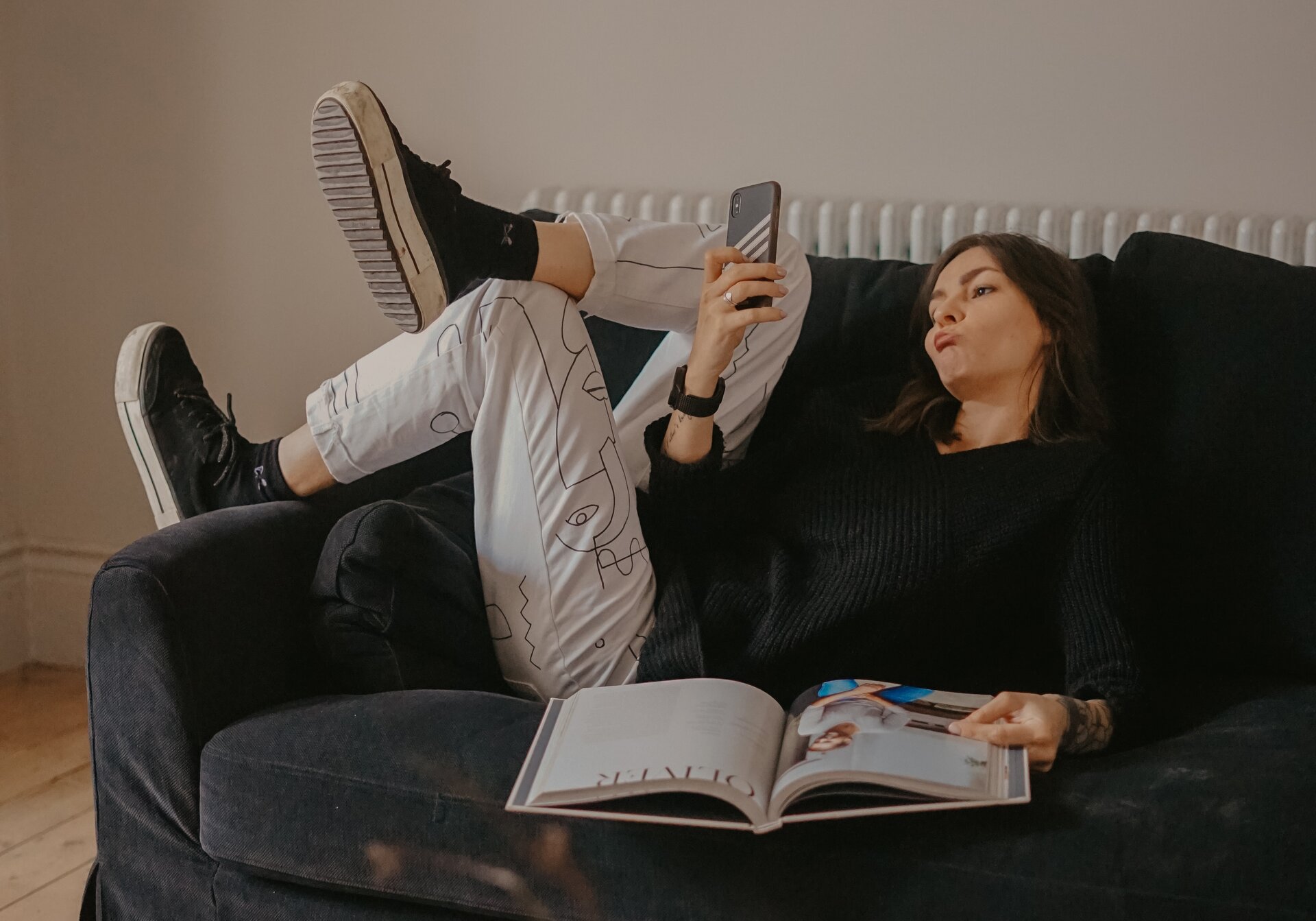
The teenager in the picture seems to be spending her time in an inactive way scrolling texts or videos on her mobile. Does it sound familiar to you? How many hours daily do you think you spend sitting, surfing the net, watching TV, or playing games? And how much time do you devote to physical activities on a daily basis? Are you aware of the consequences of a sedentary lifestyle? In this part of the material you will find out what, in fact, it means and you will get familiar with the symptoms that should raise the alarm.
Nastolatka na zdjęciu zdaje się spędzać czas w sposób mało aktywny, przewijając wiadomości lub filmiki na telefonie. Brzmi znajomo? Jak sądzisz, ile godzin dziennie poświęcasz na przeglądanie internetu, oglądanie telewizji, granie? Ile czasu zajmuje ci aktywność fizyczna? Czy jesteś świadom/świadoma konsekwencji siedzącego trybu życia? W tej części materiału dowiesz się, czym jest siedzący tryb życia oraz jakie symptomy powinny cię zaniepokoić.
Study the text and do the exercises below.
Sitting DiseaseLiving an inactive way of life has already become a significant public medical and health issue and seems to be widespread in many nations. Research shows that about 21 percent of adults meet the physical activity guidelinesmeet the physical activity guidelines while 5 percent perform 30 minutes of any kind of sport every day. What does it exactly say about our habits? A. ________ But how do we know that we are among those who lead a sedentary lifestylesedentary lifestyle?
First of all, if you lack energy and feel fatiguedfeel fatigued for most of the time, it should raise the alarm. The less we move, the less endorphins are produced. B. ________ In other words, unless we take up any activity, we won’t improve our cardiovascular conditionwon’t improve our cardiovascular condition nor generate more energygenerate more energy to act.
Struggling with sleep? Scientists have solid evidencesolid evidence that physical activity has a salutary effect on the quantity and quality of sleephas a salutary effect on the quantity and quality of sleep. In order to guarantee a good rest during the night, it’s sufficient to exercise 30 minutes of aerobics four or five times a week at least one to two hours before going to bed.
Putting on weightPutting on weight might be a sign either of a health problem or… lack of movement. Actually, both reasons need a complete attitude changeattitude change. Sitting for the majority of the day results in slow metabolismslow metabolism, digestion problemsdigestion problems, gaining kilos, and stiff jointsstiff joints as well. C. ________ If your body aches, the only possible cure for that is regular exercise which will bring reliefbring relief and strengthen muscles.
Don’t forget that lying on the sofa for most of the day doesn't help your spine keep upright posturekeep upright posture. Without enough physical activity, you are at risk of weakening your muscles, which may consequently lead to slouchingslouching. It goes like this: a bad body position causes backaches and stiff joints. The longer you remain inactive, the more problems you will have with your back. That makes a vicious circlevicious circle.
Another issue that you should examine thoroughly is the condition of your skin. Healthy skin looks and feels smooth and is of a natural glow. If your skin is dry, of darkened colour, dull and looks aged, it might be a signal that you don’t exercise enough, nor drink enough water. Exercising supports healthy blood circulationblood circulation, which maintains vibrant skin.
Not only our physical sphere suffers from a sedentary lifestyle, but our mental health does too. D. ________ Many struggle with depression, stress, and anxiety. Needless to say, weak psychological conditions negatively affect the quality of life. Remember: a healthy body is a healthy mind.
A sedentary lifestyle is not only about bad skin condition, problems with digestion, or feeling tired. The consequences of it might be far more serious than we imagine. Being inactive can be one of the causes of a number of chronic diseaseschronic diseases such as heart diseaseheart disease, high blood pressurehigh blood pressure, strokestroke, osteoporosisosteoporosis, diabetesdiabetes, obesity, and increased feelings of depression. It is also said that avoiding physical activities may raise the risk of premature deathpremature death. The more sedentary you are, the higher the risks are.
If you haven’t been active, you can start slowly and gradually. Changing habits isn’t easy, but it’s worth the effort for your health’s sake. There are many ways to start being active, and everyone should find the type best for them. You can start with simple, regular walks. Getting some exercise is always better than none. So, do not wait for another Monday, leave the sofa, wear a pair of comfortable sneakers, and move, move, move!
Źródło: Anna Faszcza, licencja: CC BY-SA 3.0.
B. 1. Having a decrease in psychological well-being needs immediate doctor’s advice., 2. Endorphins are produced to help relieve pain and reduce stress., 3. Well, it seems that on average we sit daily for almost 8 hours., 4. Lack of flexibility is something you shouldn’t ignore, though., 5. These are the body’s natural hormones that are released when we remain active and which make us perform., 6. It is proven that people who are less active have a decrease in psychological well-being.
C. 1. Having a decrease in psychological well-being needs immediate doctor’s advice., 2. Endorphins are produced to help relieve pain and reduce stress., 3. Well, it seems that on average we sit daily for almost 8 hours., 4. Lack of flexibility is something you shouldn’t ignore, though., 5. These are the body’s natural hormones that are released when we remain active and which make us perform., 6. It is proven that people who are less active have a decrease in psychological well-being.
D. 1. Having a decrease in psychological well-being needs immediate doctor’s advice., 2. Endorphins are produced to help relieve pain and reduce stress., 3. Well, it seems that on average we sit daily for almost 8 hours., 4. Lack of flexibility is something you shouldn’t ignore, though., 5. These are the body’s natural hormones that are released when we remain active and which make us perform., 6. It is proven that people who are less active have a decrease in psychological well-being.
Based on the information from the text, write in 4–5 sentences what the bad effects of a sedentary lifestyle there are on our:
a) physical health
b) mental health
Słownik
/ ˈætɪtjuːd tʃeɪndʒ /
zmiana nastawienia (a change in the way we think)
/ blʌd ˌsɜːkjʊˈleɪʃn̩ /
krążenie krwi (the movement of blood throughout the body)
/ brɪŋ rɪˈliːf /
przynosić ulgę (to make someone feel relieved)
/ ˈkrɒnɪk dɪˈziːzɪz / / ˈkrɒnɪk dɪˈziːz /
choroby przewlekłe [choroba przewlekła] (an illness that lasts long and requires medical attention)
/ dɪˈkriːs ɪn ˌsaɪkəˈlɒdʒɪkl̩ wel ˈbiːɪŋ /
obniżenie samopoczucia psychicznego (a deterioration in the way someone feels)
/ ˌdaɪəˈbiːtɪz /
cukrzyca (a disease in which the body’s ability to manage the insulin hormone is impaired)
/ dɪˈdʒestʃən ˈprɒbləmz / / dɪˈdʒestʃən ˈprɒbləm /
problemy trawienne [problem z trawieniem] (a problem with digesting food)
/ fiːl fəˈtiːɡd /
odczuwać zmęczenie (to feel tired)
/ ˈdʒenəreɪt mɔːr ˈenədʒi /
wytwarzać więcej energii (to make energy)
/ ˈhæz ə ˈsæljʊtri ɪˈfekt ˈɒn ðə ˈkwɒntɪti ənd ˈkwɒlɪti əv sliːp / / həv ə ˈsæljʊtri ɪˈfekt ˈɒn ðə ˈkwɒntɪti ənd ˈkwɒlɪti əv sliːp /
ma zbawienny wpływ na ilość i jakość snu [mieć zbawienny wpływ na ilość i jakość snu] (to have a positive influence on how much and well we sleep)
/ ˈhɑ:t dɪzi:zɪz / / ˈhɑ:t dɪzi:z /
choroby serca [choroba serca] (a disease related to the heart)
/ ˌhaɪ blʌd ˈpreʃə /
wysokie ciśnienie krwi (it happens when blood pressure, the force of your blood pushing against the walls of your blood vessels, is too high)
/ kiːp ʌpraɪt ˈpɒstʃə /
utrzymać wyprostowaną postawę ciała (to keep a correct and healthy posture)
/ miːt ðə ˈfɪzɪkl̩ ækˈtɪvəti ˈɡaɪdlaɪnz /
spełniać wytyczne dotyczące aktywności fizycznej (to do the recommended amount of sports)
/ ˌɒstiəʊpəˈrəʊsɪs /
osteoporoza (a health condition that weakens one’s bones)
/ ˈpremətjʊə detheta /
przedwczesna śmierć (death that occurs too early)
/ ˈpʊtɪŋ ˈɒn weɪt / / ˈpʊt ˈɒn weɪt /
przybieranie na wadze [przybierać na wadze] (to gain weight)
/ ˈkwɒntɪti ənd ˈkwɒlɪti /
ilość i jakość (information about how much of sth there is and how well it is made)
/ ˈsedntri ˈlaɪfstaɪl /
siedzący tryb życia (an inactive way of spending time)
/ sləʊ məˈtæbəˌlɪzəm / / məˈtæbəˌlɪzəm /
spowolniony metabolizm [metabolizm] (a process in the body whose aim is to maintain life)
/ ˈslaʊtʃɪŋ / / slaʊtʃ /
przygarbienie [garbić się] (to have a drooping posture)
/ ˌsɒlɪd ˈevɪdəns /
rzetelny dowód (strong proof)
/ stɪf dʒɔɪnts / / stɪf dʒɔɪnt /
sztywne stawy [sztywny staw] (a joint that isn’t flexible)
/ strəʊk /
udar (a medical condition that happens when a lot of blood flows to a part of the brain or when the flow of blood to the brain is blocked)
/ ˈvɪʃəs ˈsɜːkl̩ / / ˈvɪʃəs ˈsaɪkl̩ /
błędne koło (a continuing unpleasant situation)
/ wəʊnt ɪmˈpruːv ˈaʊə ˌkɑːdiəʊˈvæskjələ kənˈdɪʃn̩ / / ɪmˈpruːv ðə ˌkɑːdiəʊˈvæskjələ kənˈdɪʃn̩ /
nie poprawi naszego układu krążenia [poprawić układ krążenia] (to fix the heart and blood vessels system )
Źródło: GroMar Sp. z o.o., licencja: CC BY‑SA 3.0