bg‑azure

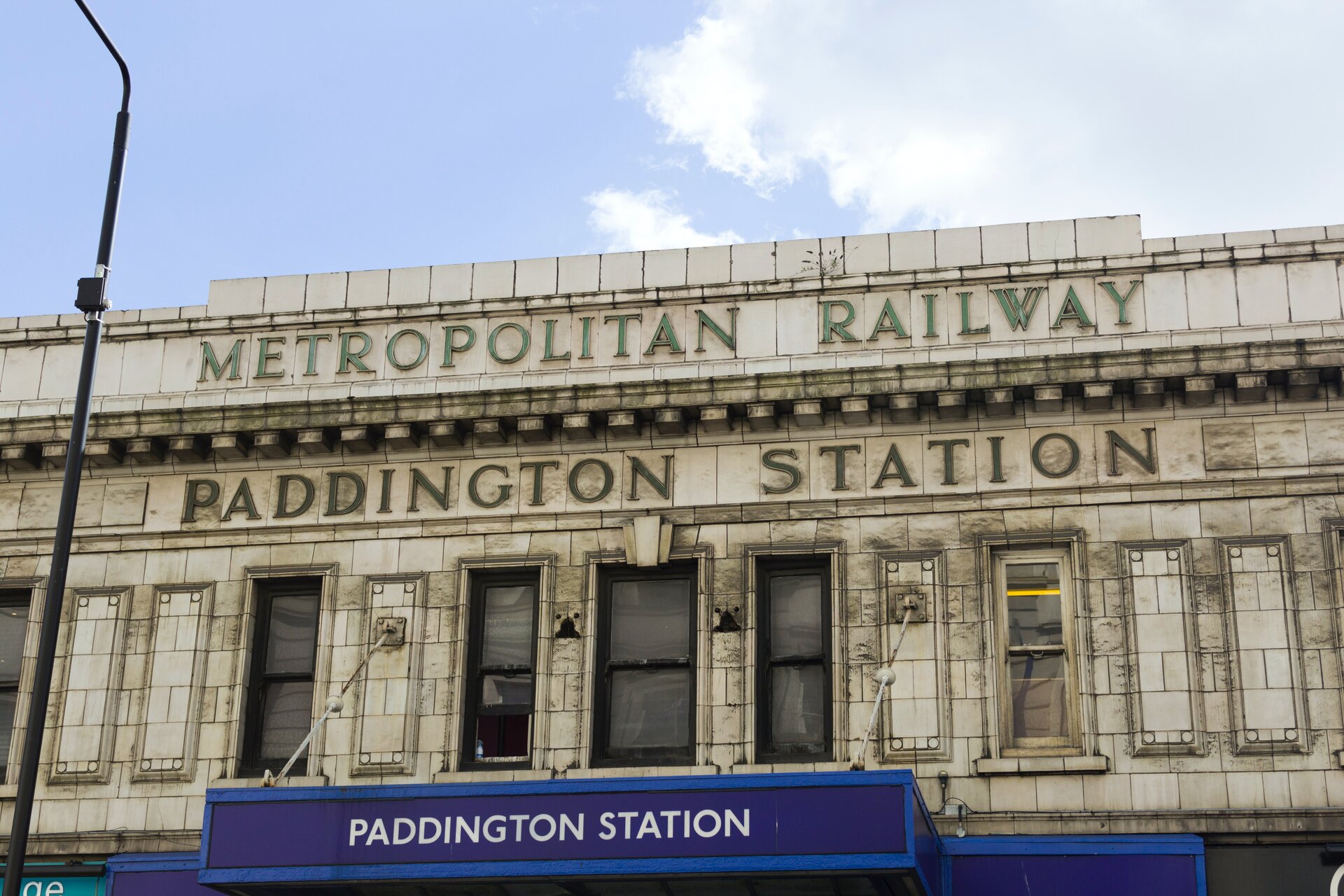
By now, you know about the Paddington Station in London. But do you know its history? In this section, you are going to listen to a tour guide talking to children about it.

Wiesz już, że w londyńskim metrze jedna ze stacji to Paddington. Jednak czy znasz jej historię? W tej sekcji usłyszysz, jak przewodnik opowiada o niej dzieciom.
R17JB0i1r2F7j
Paddington Station
Stacja Paddington
Źródło: dostępny w internecie: unsplash.com [dostęp 13.09.2021], domena publiczna.
Exercise 1

Match the words with their definitions.

Połączy wyraz z ich definicjami.

R1JDpKLIzVstK
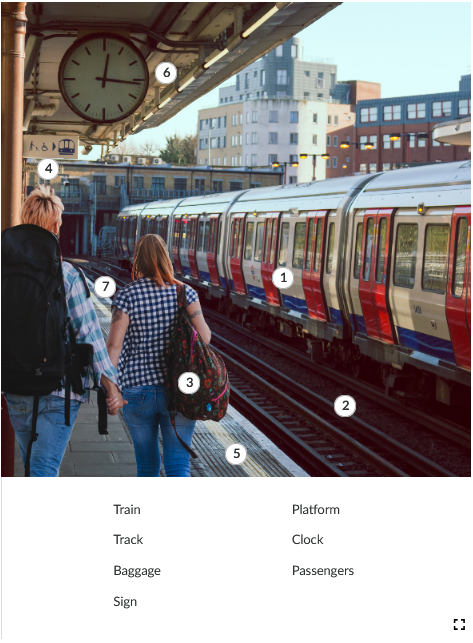
track Możliwe odpowiedzi: 1. a place where people get on and off trains, 2. a vehicle with carriages, 3. a person travelling in a vehicle but not driving it, 4. a notice giving information, directions, and so on, 5. long metal bars on which trains travel platform Możliwe odpowiedzi: 1. a place where people get on and off trains, 2. a vehicle with carriages, 3. a person travelling in a vehicle but not driving it, 4. a notice giving information, directions, and so on, 5. long metal bars on which trains travel passenger Możliwe odpowiedzi: 1. a place where people get on and off trains, 2. a vehicle with carriages, 3. a person travelling in a vehicle but not driving it, 4. a notice giving information, directions, and so on, 5. long metal bars on which trains travel train Możliwe odpowiedzi: 1. a place where people get on and off trains, 2. a vehicle with carriages, 3. a person travelling in a vehicle but not driving it, 4. a notice giving information, directions, and so on, 5. long metal bars on which trains travel sign Możliwe odpowiedzi: 1. a place where people get on and off trains, 2. a vehicle with carriages, 3. a person travelling in a vehicle but not driving it, 4. a notice giving information, directions, and so on, 5. long metal bars on which trains travel
Źródło: GroMar Sp. z o.o., licencja: CC BY-SA 3.0.
1
Exercise 1

Click on the objects in the illustration. Listen and repeat.

Kliknij w zaznaczone na ilustracji elementy. Słuchaj i powtarzaj.
R1TF3dAXXzPyJ
Źródło: GroMar Sp. z o.o., licencja: CC BY-SA 3.0.

Study the recording below and then, do the exercises.

Zapoznaj się z poniższym nagraniem, a następnie wykonaj ćwiczenia.

R4xAb7pmwkeQ6
Nagranie dźwiękowe.
TRANSCRIPTazurewhite
Exercise 2

Work with the transcript below and in each sentence, choose the correct answer.

Pracuj z poniższym transkryptem i wybierz poprawną odpowiedź w każdym zdaniu.

Rm0Rhb1Cuq5eQ
Guide: Come on children. Come closer. Welcome to the oldest metro station in the world. What’s the name of this station? Did you see the sign?Child 1: Paddington! Guide: Right! The metro, or the underground as it is called by Londoners, was opened in 1863 but travellers started using this station in 1854. It is one of the oldest stations in the world. Do you know how many passengers it has per year? Child 3: 10 million? Guide: No, about 30 million! It is one of the ten biggest metro stations in London. It has 14 platforms. Do you know how many stations there are in London today? Child 2: 250! Child 3: 200! Child 4: 370! Guide: In fact there are 274 stations in London today. And how many lines are there? Child 1: There are 11 lines in London. I saw it on the map. Guide: Excellent. There are 11 lines and they go across the whole city. Watch out! The train is coming! Are you ready for a journey? Children: Yes!
Źródło: GroMar Sp. z o.o., licencja: CC BY-SA 3.0.
Exercise 2

Based on the recording, choose the correct answer.

W oparciu o nagranie wybierz prawidłową odpowiedź.

R1nFL4o6U93oH
  1. Paddington is one of the oldestnewestsmallest metro stations.
  2. The Tube has about 30 million travellers visitors passengers every per year.
  3. Paddington has 14 tracks platforms trains.
  4. There are 274 stationslines tracksin London today.
Źródło: GroMar Sp. z o.o., licencja: CC BY-SA 3.0.
Exercise 3

Based on the information from the recording, drag the words below to the correct places.

Korzystając z informacji zawartych w nagraniu, przeciągnij podane wyrazy w odpowiednie luki.

R1Fs2fTUzmFNf

  1. 1. are, 2. opened, 3. Did, 4. call, 5. Do you see the sign?
  2. 1. are, 2. opened, 3. Did, 4. call, 5. Do you know how many stations there are in London today?
  3. They 1. are, 2. opened, 3. Did, 4. call, 5. Do the metro in 1863.
  4. Londoners 1. are, 2. opened, 3. Did, 4. call, 5. Do it the underground.
  5. There 1. are, 2. opened, 3. Did, 4. call, 5. Do 11 lines and they go across the whole city.
Źródło: GroMar Sp. z o.o., licencja: CC BY-SA 3.0.
Exercise 4

How much do you know about Paddington station? Summarize the information from the recording in three sentences.

Ile wiesz o stacji Paddington? Podsumuj w trzech zdaniach wysłuchane informacje.

R1Myv1sGsoW81
(Uzupełnij).
Źródło: GroMar Sp. z o.o., licencja: CC BY-SA 3.0.