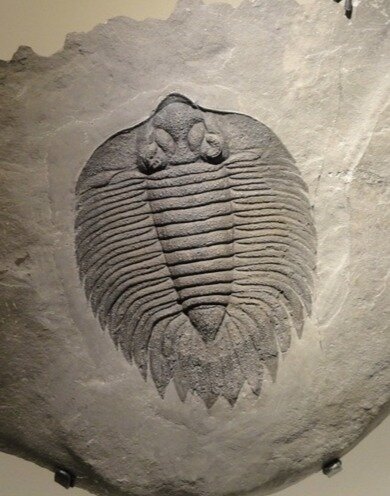
Na fotografii przedstawiono skamieniałość trylobita o owalnym i spłaszczonym grzbietobrzusznie ciele, z wyraźnie wyróżnioną częścią głowową, tułowiową i ogonową. Od strony grzbietu stworzenie przykryte było kalcytowym pancerzem.
Trylobit
Source: licencja: CC BY-ND 3.0, [online], dostępny w internecie: commons.wikimedia.org.
One of the methods of researching history of the Earth is examining evolution of organisms. Appropriate data are provided by paleontologypaleontologypaleontology which deals with searching, analyses and comparison of remains and traces of life activity of various organisms, preserved in sediments in the Earth’s crust. In favourable circumstances, dead remains of organisms and traces of their life activity may have been covered with layers of various sediments which slowed down their decomposition. Subsequent processes were responsible for gradual mineralisation which is decomposition of organic substances (remains) to simple permanent inorganic compounds, and fossilisation (petrification) of hard parts of their bodies, e.g. shells Describing this process, we tell how organic remains have turned into stone, and sediment has transformed to solid rock. Tree trunks, leaves or seeds as well as shells, bones or even moulds of soft animal tissues, preserved in rocks, are called fossilsfossilsfossils. They usually maintain many details of anatomical structure of a specific organism.
For paleontologists, the most valuable fossils came into being from organisms which dwellt in a short period and yet appeared in widespread area, namely index fossilsindex fossilsindex fossils. Discovery of any such fossil enables precise determination of relative agerelative agerelative age of a rock where such fossil has been found. In such situation, we are certain that examined rocks could not have been formed earlier than fossils found within. As all trilobites (small marine animals found in sediments) became extinct around the end of the Permian, also marking the end of Paleozoic Era, we cannot find them in younger rocks. The same principle applies to ammonites or plesiosaurs which became extinct around the end of the Cretaceous, also marking the end of the Mesozoic Era.
RoYrw2OiqSaLk
Ilustracja przedstawiająca amonit o pastorałowato zwiniętej muszli. Ammonite with a crosier-rolled shell
Age: early Cretaceous, Occurrence: Agadir (Morocco)
Typical ammonites had regular, spirally wound shells. There was also a group with heterogeneous (abernable) shells
Genus: molluscs, Class - cephalopods, Subclass - ammonite, Order: Ammonitida, Family: Ancyloceratidae
Ilustracja przedstawiająca amonit o pastorałowato zwiniętej muszli. Ammonite with a crosier-rolled shell
Age: early Cretaceous, Occurrence: Agadir (Morocco)
Typical ammonites had regular, spirally wound shells. There was also a group with heterogeneous (abernable) shells
Genus: molluscs, Class - cephalopods, Subclass - ammonite, Order: Ammonitida, Family: Ancyloceratidae
Ammonites are extinct marine cephalopods that are characteristic of the Mesozoic era. Ammonites do not occur in rocks younger than Cretaceous Period.
Rc0GMBbhDPM9F
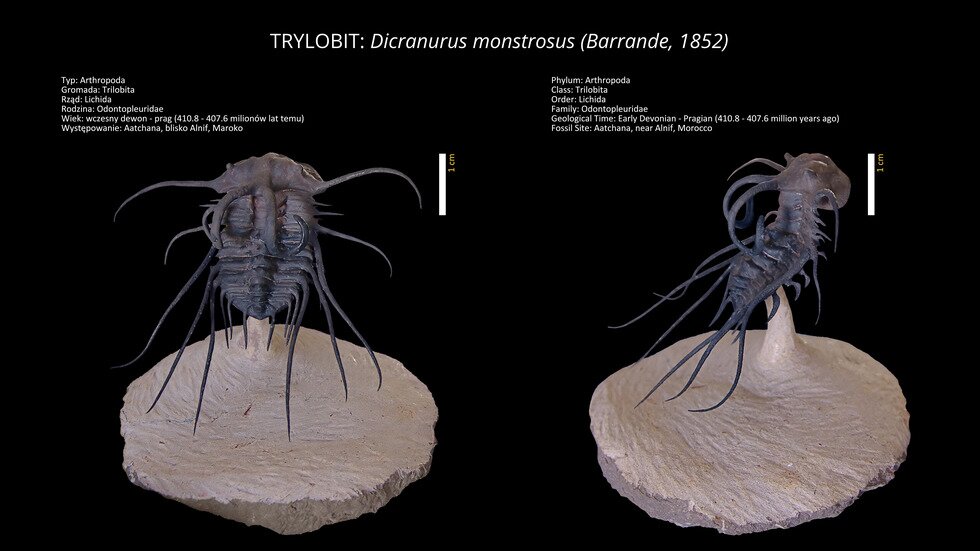
Trylobit: Dicranurus onstrosus (Barrande, 1852) Fossils can be remarkably well preserved, as in the case of this trilobite. Typ, Phylum: Arthropoda, Gromada, Class: Trilobita, Rząd, Order: Lichida, Rodzina, Family: Odontopleuridae, Wiek, Age: Wczesny dewon, Występowanie, Fossil Site: Maroko
Fossils can be remarkably well preserved, as in the case of this trilobite
R1HiiPLWXAfDe
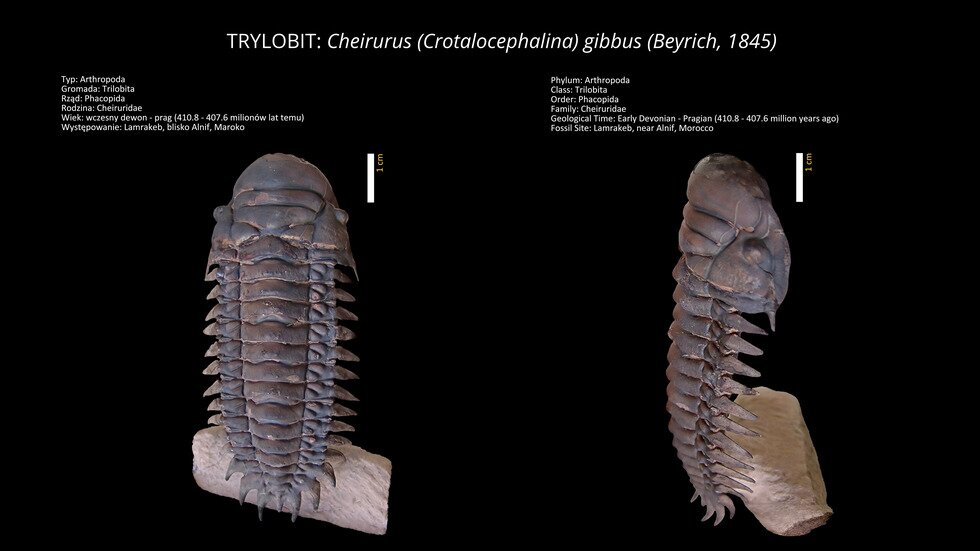
Trylobit: Cheirurus (Crotalocephalina) gibbus (Beyrich, 1845)Some trilobites are the leading fossils of the Paleozoic era. Typ, Phylum : Arthropoda, Gromada, Class: Trilobita, Rząd, Order: Phacobits, Rodzina, Family: Cheiruridae, Wiek, Age: Wczesny dewon, Występowanie, Fossil Site: Maroko, Lamrakeb, near Atnif
Some trilobites are the leading fossils of the Paleozoic era
Task 1
Ułóż trzy pytania quizowe odnoszące się do abstraktu i daj je do rozwiązania swoim kolegom i koleżankom.
Ułóż trzy pytania quizowe odnoszące się do abstraktu i daj je do rozwiązania swoim kolegom i koleżankom.
While inspecting fossils, their photographs in albums or online, try to learn how to recognise some index fossils: trilobites, ammonites, fossils of ferns, lepidodendrons, corals, sponges, snail shells, petrified bivalves, fishes or other organisms.
Task 2
Watch the following film showing the way you can make a model of rock layers containing fossils.
RRpMNBqGcSw69
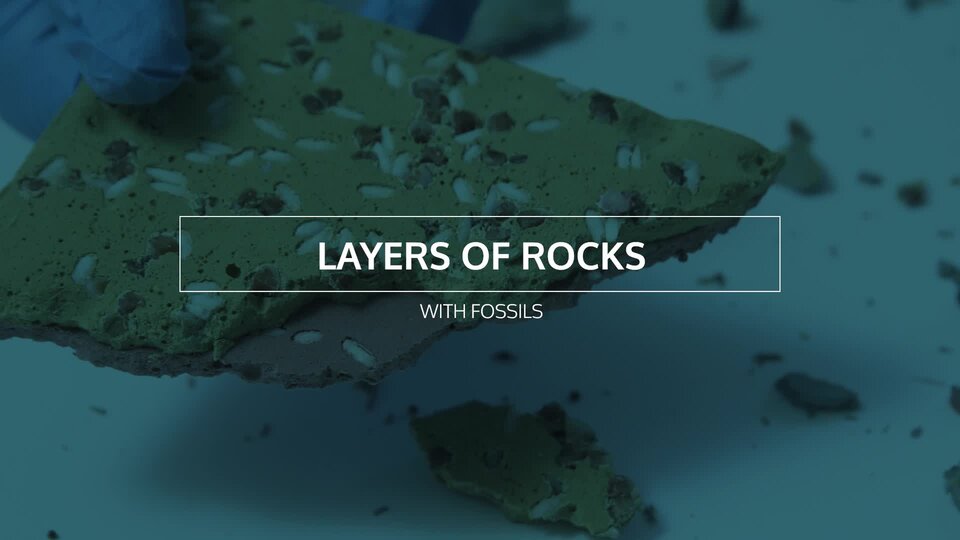
Film przedstawia warstwy skał ze skamielinami, layers of rocks with fossils. Użyto następujących substancji: gips, putty plaster, farb wodnych, water paints, słoik, jar, przypraw i nasion, grains and spices. Do słoika została wlana woda oraz dodana farba. Następnie zmieszano roztwór wodny z gipsem. Do prostokątnego naczynia dodano odrobinę oleju i wysmarowano nim wszystkie ściany naczynia. Następnie dodano nasiona i przyprawy i wlano mieszaninę gipsu z farbą. Odczekano aż gips wyschnie. Czynności te powtórzono dwukrotnie z mieszaniną kolejnych kolorów farb oraz kolejnymi nasionami. W efekcie końcowym uzyskano masę gipsową składającą się z trzech, różnokolorowych warstw, w których zastygły różne nasiona.
Film przedstawia warstwy skał ze skamielinami, layers of rocks with fossils. Użyto następujących substancji: gips, putty plaster, farb wodnych, water paints, słoik, jar, przypraw i nasion, grains and spices. Do słoika została wlana woda oraz dodana farba. Następnie zmieszano roztwór wodny z gipsem. Do prostokątnego naczynia dodano odrobinę oleju i wysmarowano nim wszystkie ściany naczynia. Następnie dodano nasiona i przyprawy i wlano mieszaninę gipsu z farbą. Odczekano aż gips wyschnie. Czynności te powtórzono dwukrotnie z mieszaniną kolejnych kolorów farb oraz kolejnymi nasionami. W efekcie końcowym uzyskano masę gipsową składającą się z trzech, różnokolorowych warstw, w których zastygły różne nasiona.
Film przedstawia warstwy skał ze skamielinami, layers of rocks with fossils. Użyto następujących substancji: gips, putty plaster, farb wodnych, water paints, słoik, jar, przypraw i nasion, grains and spices. Do słoika została wlana woda oraz dodana farba. Następnie zmieszano roztwór wodny z gipsem. Do prostokątnego naczynia dodano odrobinę oleju i wysmarowano nim wszystkie ściany naczynia. Następnie dodano nasiona i przyprawy i wlano mieszaninę gipsu z farbą. Odczekano aż gips wyschnie. Czynności te powtórzono dwukrotnie z mieszaniną kolejnych kolorów farb oraz kolejnymi nasionami. W efekcie końcowym uzyskano masę gipsową składającą się z trzech, różnokolorowych warstw, w których zastygły różne nasiona.
Task 3
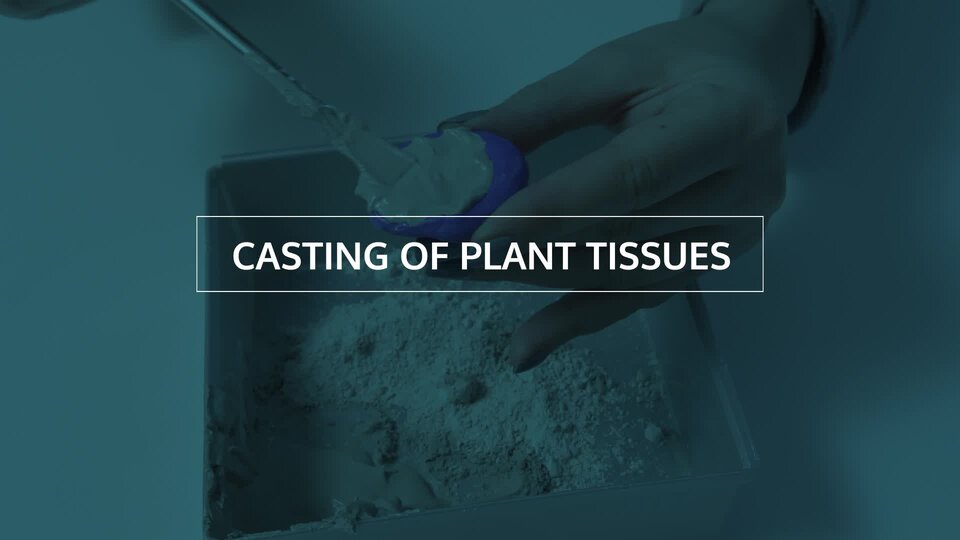
Watch the following film showing the way you can make a cast of plant tissues.
R1dyJNIUjE4pX
Film przedstawia tworzenie odlewów tkanek roślinnych, casting of plant tissues. Użyto następujących substancji: gips, putty plaster, olej, oil, orzech włoski, walnut, modelinę, modeling clay, wodę, water. W modelinie odciśnięto orzech włoski. Następnie modelinę zanurzono we wrzącej wodzie, aby utrwalić odciśnięty wzór. W kolejnym kroku przygotowano gips z wodą i nałożono go na odciśnięty wzór w modelinie. Odczekano 2 godziny, aby gips wysechł. W efekcie końcowym otrzymano odciśnięty wzór orzecha włoskiego na gipsie.
Film przedstawia tworzenie odlewów tkanek roślinnych, casting of plant tissues. Użyto następujących substancji: gips, putty plaster, olej, oil, orzech włoski, walnut, modelinę, modeling clay, wodę, water. W modelinie odciśnięto orzech włoski. Następnie modelinę zanurzono we wrzącej wodzie, aby utrwalić odciśnięty wzór. W kolejnym kroku przygotowano gips z wodą i nałożono go na odciśnięty wzór w modelinie. Odczekano 2 godziny, aby gips wysechł. W efekcie końcowym otrzymano odciśnięty wzór orzecha włoskiego na gipsie.
Film przedstawia tworzenie odlewów tkanek roślinnych, casting of plant tissues. Użyto następujących substancji: gips, putty plaster, olej, oil, orzech włoski, walnut, modelinę, modeling clay, wodę, water. W modelinie odciśnięto orzech włoski. Następnie modelinę zanurzono we wrzącej wodzie, aby utrwalić odciśnięty wzór. W kolejnym kroku przygotowano gips z wodą i nałożono go na odciśnięty wzór w modelinie. Odczekano 2 godziny, aby gips wysechł. W efekcie końcowym otrzymano odciśnięty wzór orzecha włoskiego na gipsie.
Interesting
Scientists are very keen to use fossils to determine details of a primal dwelling environment of fossil organisms. For example, if, we found numerous corals, shells of tropical snails and bivalves in sediments representing reef, we know that we are dealing with marine tropical environment in shallow water, reaching the depth of 50 m, characterised by good water transparency, good oxygenation and full salinification. Why? Because organisms responsible for formation of coral reefs can only dwell in such conditions. Similarly, if we find a coal deposit, we are certain it must have been formed in land environment, with dense vegetation.
Interesting
The hardest part of vertebrae skeleton is teeth, built of calcium phosphate. Frequently, they make up the only remains, left in older, eroded sediments. It is a reason why sometimes older fossils may emerge among younger sediments. Determining age of such sediments, only the youngest fossils are taken into account.
RlD6qW7kzVzIK
Tytuł ilustracji - Ząb rekina, Shark tooth - Notidanidon loozi (Vincent, 1976). Ilustracja przedstawiająca skamieniały ząb rekina (shark tooth). Shark tooth. Ząb rekina pochodzący z dolnej szcęki, widziany z obydwu stron. A tooth coming from the lower jaw is seen from both sides. Typ: Chordata - strunowce. Gromada: Chondrichthyes - chrzęstnoszkieletowe. Podgromada: Elasmobranchi - spodouste. Rząd: Hexanchiformes - sześcioszparokształtne. Rodzina: Hexanchidae - sześcioszparowate. Wiek: paleocen (66,0 - 56,0 milionów lat temu). Występowanie: Maroko.
Tytuł ilustracji - Ząb rekina, Shark tooth - Notidanidon loozi (Vincent, 1976). Ilustracja przedstawiająca skamieniały ząb rekina (shark tooth). Shark tooth. Ząb rekina pochodzący z dolnej szcęki, widziany z obydwu stron. A tooth coming from the lower jaw is seen from both sides. Typ: Chordata - strunowce. Gromada: Chondrichthyes - chrzęstnoszkieletowe. Podgromada: Elasmobranchi - spodouste. Rząd: Hexanchiformes - sześcioszparokształtne. Rodzina: Hexanchidae - sześcioszparowate. Wiek: paleocen (66,0 - 56,0 milionów lat temu). Występowanie: Maroko.
Shark tooth - Notidanidon loozi (Vincent, 1976)
Exercise 1
R7SRPHYbLXHV2
Wysłuchaj nagrania abstraktu i zastanów się, czego jeszcze chciałbyś się dowiedzieć w związku z tematem lekcji.
Wysłuchaj nagrania abstraktu i zastanów się, czego jeszcze chciałbyś się dowiedzieć w związku z tematem lekcji.
Exercise 2
R13NJWwoieFWj
Choose sentences containing true information.
tu wybierz
1. Fossilisation is decomposition of organic remains.
2. Plants cannot become fossils.
3. Paleontology deals with searching, analyses and comparison of remains and traces of life activity of various organisms.
4. Index fossils came to being from organisms which lived in a limited period and were prevalent in large areas.
5. Ammonites became extinct with closure of the Mesozoic Era.
Choose sentences containing true information.
tu wybierz
1. Fossilisation is decomposition of organic remains.
2. Plants cannot become fossils.
3. Paleontology deals with searching, analyses and comparison of remains and traces of life activity of various organisms.
4. Index fossils came to being from organisms which lived in a limited period and were prevalent in large areas.
5. Ammonites became extinct with closure of the Mesozoic Era.
Mark sentences containing true information.
Fossilisation is decomposition of organic remains.
Plants cannot become fossils.
Paleontology deals with searching, analyses and comparison of remains and traces of life activity of various organisms.
Index fossils came to being from organisms which lived in a limited period and were prevalent in large areas.
Ammonites became extinct with closure of the Mesozoic Era.
Summary
Trunks, leaves or seeds as well as shells, bones, and sometimes casts of soft tissues of animals, preserved in rocks, are called fossils.
Scientists are eager to use fossils to establish the details of the original living environment of fossil organisms.
paleontologia – nauka zajmująca się badaniem szczątków organicznych zachowanych w postaci skamieniałości oraz śladów działalności życiowej organizmów zawartych w osadach skorupy ziemskiej
skamieniałości – szczątki kopalnych organizmów zachowane w osadach skorupy ziemskiej; pierwotne tkanki organiczne oraz części twarde ciał (muszle, skorupy, szkielety) często ulegają skamienieniu wskutek procesów fosylizacji
skamieniałości przewodnie – skamieniałości charakteryzujące się krótkim czasem występowania (a więc małym zasięgiem stratygraficznym) i szerokim rozprzestrzenieniem geograficznym; na ich podstawie wyznacza się wiek względny
wiek bezwzględny – wiek obiektu geologicznego lub wydarzenia liczony w latach (tysiącach, milionach i miliardach) od momentu powstania obiektu lub zjawiska do dzisiaj
wiek względny – ustala wiek obiektów lub wydarzeń geologicznych w odniesieniu do innych; pozwala na określenie, które elementy są starsze, a które młodsze, lecz nie pozwala na precyzyjne określenie ich wieku w latach.