Calcareous rocks
that the process in which energy is transferred from a system to the surroundings is an exoenergic process;
that calcium oxide has hygroscopic properties;
that precipitation reactions are chemical reactions which create products that are sparingly soluble or practically insoluble in water;
that one of the products of reactions of carbonates with acids is carbon dioxide;
that the presence of carbon dioxide is detected with limewater.
to describe the types of calcareous rocks, their properties and uses;
to distinguish between calcareous rocks and other rocks or minerals;
to explain what 'slaking' of quicklime consists in;
to discuss the process of setting (hardening) of lime mortar;
to explain why walls should not be wallpapered in a newly built house.
Karst phenomena
Karst phenomena are the result of chemical impact of surface water and groundwater on rocks. The term karst comes from the name of a plateau in Slovenia, where these phenomena are very common. Karstification is undergone especially by limestones, but also by dolomites, gypsum, chalk and rock‑salt. Water saturated with carbon dioxide, which comes from the air and from rotting organic remains, reacts with the components of rocks, e.g., with calcite. Reducing the amount of carbon dioxide in the solution, as a result of evaporating water, causes a reverse process, i.e., slow crystallization of calcium carbonate:
Precipitation of calcium carbonate from the solution flowing down from the cave's ceiling leads to the formation of dripstones which can take various forms, e.g., stalactites, stalagmites, stalagnates. The intensity of limestone's dissolving depends on many factors: climate, amount of rain (more rapid in humid climates), carbon dioxide content in water, altitude above sea level (in high areas, water circulates longer, so it acts more intensively on rocks), lay of the land (the flatter the area, the greater water's penetration).
Use of calcareous rocks
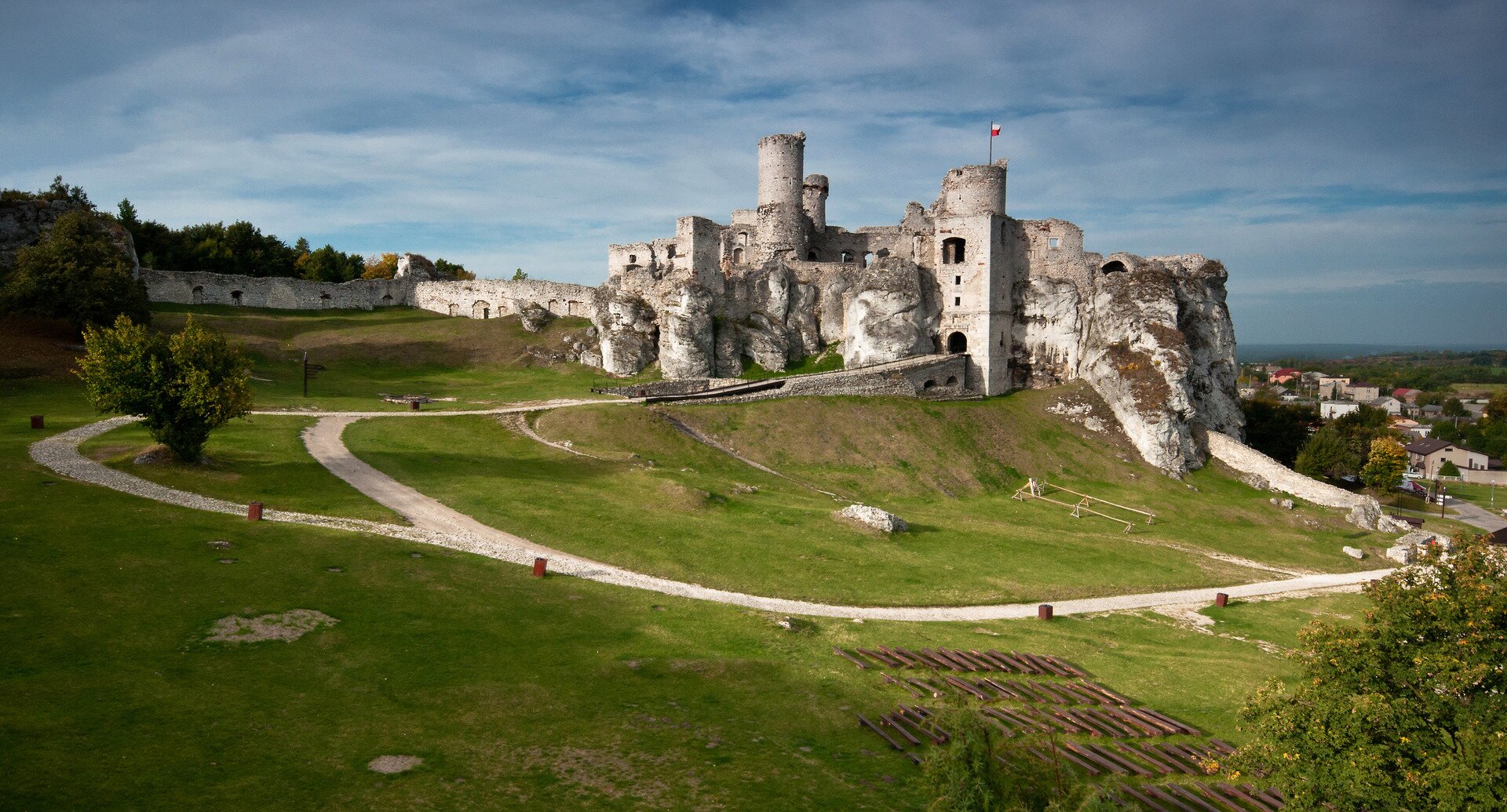
Limestone is mainly used in the construction industry. Many historical buildings were erected using limestone, such as the medieval St. Florian's Gate in Kraków and the mascarons at the Kraków Cloth Hall, or the castles along the Trail of the Eagle's Nests. On a large scale, it was a local building material from which houses and farm buildings were built.
Marble is a very good sculptural material, highly appreciated by artists. The interesting range of colors, unique design and prevalence of calcite, whose hardness on the Mohs' scale is 3, result in ease of processing and application mainly in interior design. Marble slabs are used to make floors, stairs, window sills, elements of fireplace finishes, vases, sculptures etc.
Furthermore, marble is an extremely attractive building material. Some of the world's most beautiful buildings were erected using this stone.

Why can it be troublesome to use marble tops in the kitchen?
Chalk is a rock which is added to white paints, putty, powders and toothpastes. It is used in the ceramic, chemical, pharmaceutical and cosmetic industries. After mixing with gypsum, it is used to produce writing chalk.
Properties of calcareous rocks
Limestones are a group of rocks very diverse in terms of physicochemical aspects. Their color is usually white, light gray or beige. Sometimes, depending on chemical admixtures (such as: quartz, dolomite, pyrite), limestones can be red, greenish or brown. They are poorly resistant to weather conditions. It is a raw material that is easy to process.
How does hydrochloric acid affect calcareous rocks?
Hydrochloric acid reacts with calcareous rocks.
calcium carbonate,
marble,
school chalk,
diluted hydrochloric acid,
3 small conical flasks,
3 beakers with limewater,
3 plugs with integrated discharge pipes.
Pour 2 teaspoonfuls of calcium carbonate into one flask, put pieces of marble into the second one, and add school chalk to the third one.
Introduce the diluted hydrochloric acid into each flask.
Quickly close each flask with the plug fitted with the discharge pipe, placing the pipe's end in a beaker containing limewater.
Observe the processes in all the flasks.
How can you identify the presence of calcium carbonate in the scale that is formed when boiling water in a kettle at home?
What substances can be obtained as a result of roasting calcareous rocks?
The product of calcium carbonate roasting is, among others, quicklime (calcium oxide).
calcium carbonate,
beaker with limewater,
test tube made of refractory glass,
stand,
burner,
plug with an integrated discharge pipe.
Put 1–2 g of calcium carbonate in the refractory glass test tube.
Close the test tube using the plug with the discharge tube, placing the tube's outlet in the beaker containing limewater.
Heat the tube intensively in the burner's flame and observe the solution in the beaker.
As a result of intensive heating, calcium carbonate decomposes:
Why is it imperative to observe safety precautions when slaking quicklime, by using protective goggles, gloves and clothing? What should you do if quicklime gets into your eye?
Conclusion
Many sedimentary (limestone, chalk) and metamorphic (marble) rocks contain calcium carbonate.
Roasting of limestones results in quicklime. It is used for the preparation of slaked lime, carbide, as a fertilizer for liming of soils, insecticide, etc.
Under the influence of water rich in carbon dioxide, limestones undergo chemical weathering, which results in the creation of Karst forms.
Identification of calcareous rocks is carried out by means of acids, which causes foaming and releasing of colorless gas – carbon dioxide.
Calcareous rocks are used in the following industries: construction, horticulture, agriculture, cosmetics, pharmaceuticals, ceramics, chemistry.
Keywords
calcite, slaked lime, hydrated lime, quicklime, limewater
Match the pairs: English words with Polish definition.
minerał o wzorze (<math><mi>C</mi><mi>a</mi><mi>C</mi><msub><mi>O</mi><mn>3</mn></msub></math>), główny składnik skał wapiennych, nazwa zwyczajowa wodorotlenku wapnia, nasycony wodny roztwór wodorotlenku wapnia, stały wodorotlenek wapnia, stosowany do otrzymywania zapraw wapiennych i cementowo‑wapiennych, nazwa zwyczajowa tlenku wapnia, skały, których głównym minerałem jest węglan wapnia
| calcite | |
| calcareous rocks | |
| slaked lime | |
| hydrated lime | |
| quicklime | |
| limewater |
Glossary
kalcyt – minerał o wzorze (węglan wapnia), główny składnik skał wapiennych
skały wapienne – skały, których głównym minerałem jest węglan wapnia
wapno gaszone – nazwa zwyczajowa wodorotlenku wapnia
wapno hydratyzowane – stały wodorotlenek wapnia, stosowany do otrzymywania zapraw wapiennych i cementowo‑wapiennych
wapno palone – nazwa zwyczajowa tlenku wapnia
woda wapienna – nasycony wodny roztwór wodorotlenku wapnia