The total volume of the Earth’s water resources is estimated as no more than 1.4 billion kmIndeks górny 33. A vast majority of it is found in seas and oceans. This means that plants and animals that live there have water in abundance. We should remember, however, that sea and ocean creatures live in salt water, so they need to remove excess salt from the organism. Land organisms face even more difficulties. Only 3 to 3.5% of all water resources are found on the land and most of them are ice sheets, glaciers, permanent snow, ground ice or deep groundwater. Only a small fraction of surface water is accessible to plants, animals and people. It is found in lakes, rivers, swamps, soil and in the atmosphere as well as in living organisms themselves. What is more, even these limited resources are very unevenly distributed. Due to a significant variety in climates, water is easily available in equatorial regions and, during the rainy season, also in subtropical and monsoon climate zones. Sufficient water resources are also found in areas with oceanic subtropical climates (in winter) as well as maritime and transitional temperate climates. Vast areas of the Earth, mainly in the tropical climate zone, are covered by deserts and semi‑deserts, where water is scarce throughout the year or for a major part of it. The same happens during the dry season in the subequatorial, subtropical and monsoon climate zones. Subtropical and temperate regions characterised by continental climates usually have two dry seasons in a year. Polar zones are almost devoid of liquid water.
Below you can find some examples of the Earth’s water resources.
R1C76XVS7A2T0
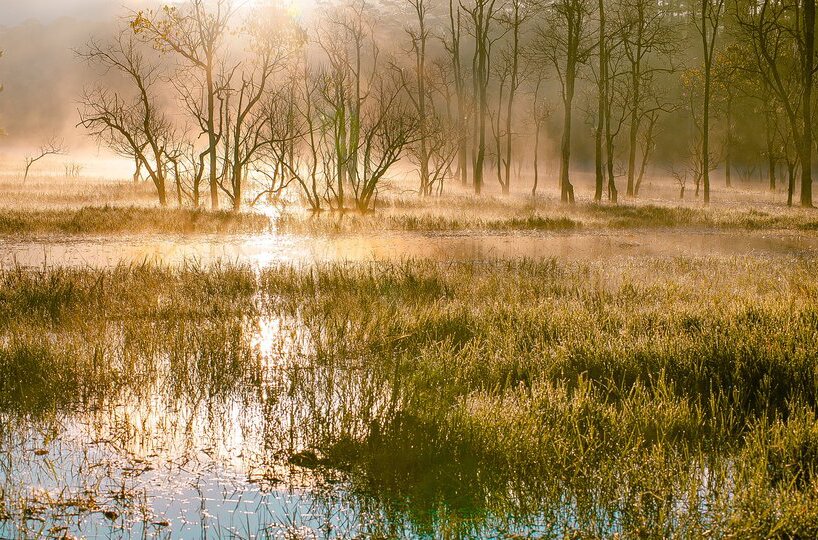
Ilustracja przedstawia tereny bagniste oświetlone słońcem. Na zdjęciu roślinność charakterystyczna dla obszaru mokradeł - liczne trawy rosnące w wodzie. W oddali bezlistne drzewa.
Swamps
Source: licencja: CC 0, [online], dostępny w internecie: pixabay.com.
R55bvvWNPgpiB
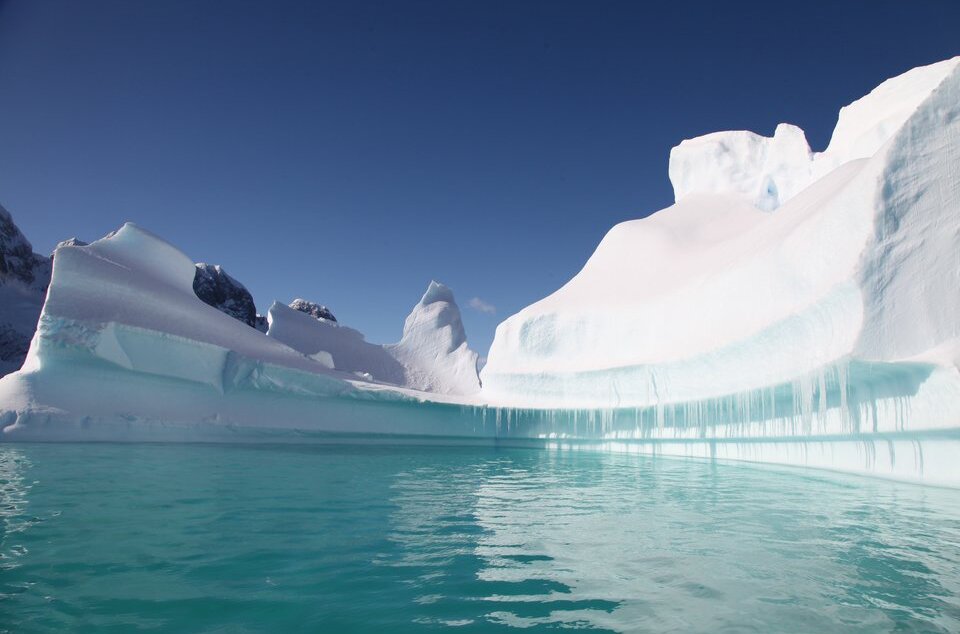
Zdjęcie przedstawia fragment lodowca otoczony przez wody oceanu, ma on kształt półokrągły oraz liczne wyżłobienia, uskoki. W oddali pasmo górskie.
Glaciers
Source: licencja: CC 0, [online], dostępny w internecie: pixabay.com.
R1R77xBvbcATD
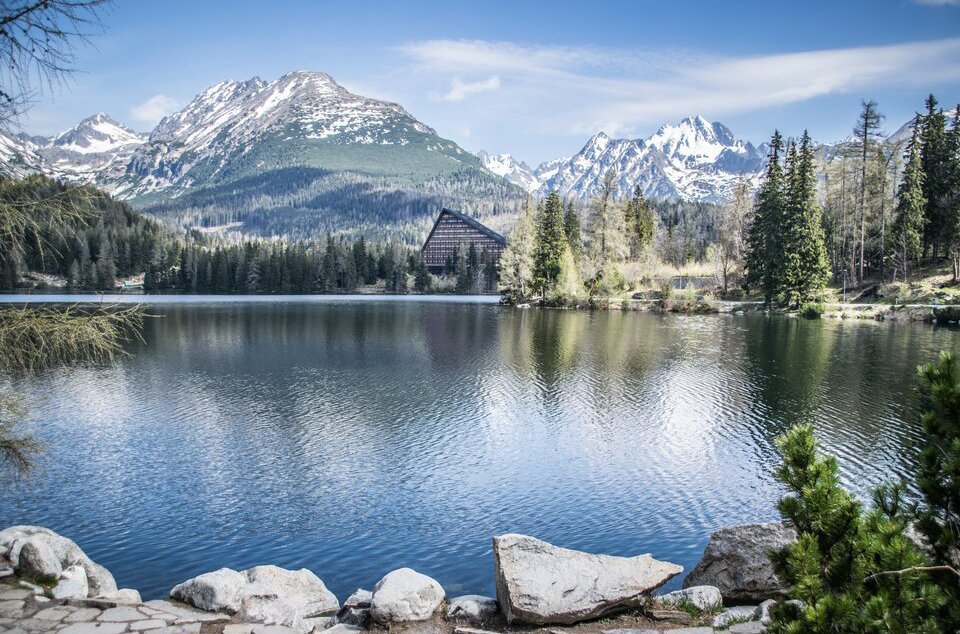
Zdjęcie przedstawia jezioro, które jest położone w terenie górzystym. Nad brzegami jeziora rosną drzewa iglaste oraz drewniany budynek ze spadzistym dachem. W oddali rozciągają się wysokie góry do połowy porośnięte roślinnością. Na szczytach gór leży śnieg.
Lake
Source: licencja: CC 0, [online], dostępny w internecie: pixabay.com.
R10PtYVNZV9Td
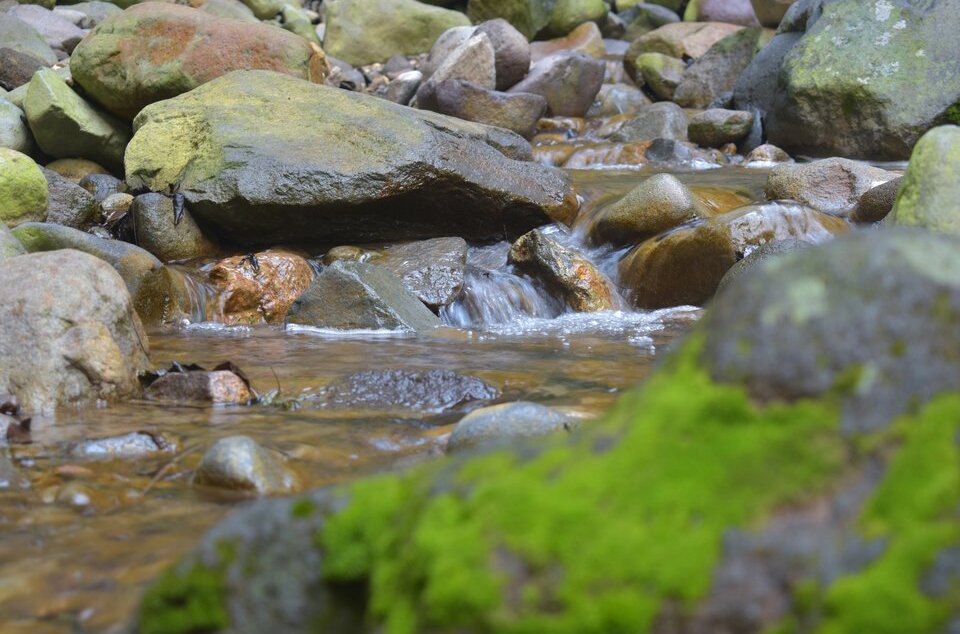
Fotografia barwna przedstawia górski strumyk. Woda płynie pomiędzy kamieniami, które tworzą koryto. Kamienie są różnej wielkości oraz mają różne kształty.
River
Source: licencja: CC 0, [online], dostępny w internecie: pixabay.com.
RjYe8NqJuDO11
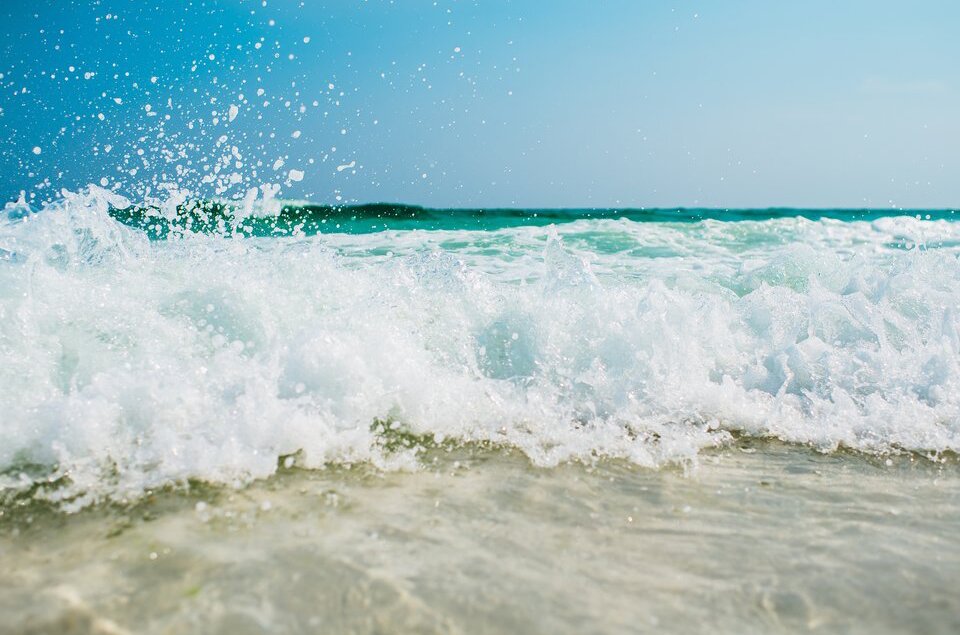
Zdjęcie przedstawia morze. Na pierwszym planie spieniona fala rozbijająca się na piaszczystym brzegu, a w oddali następna, która płynie w stronę brzegu.
Seas and oceans
Source: licencja: CC 0, [online], dostępny w internecie: pixabay.com.
RrKqAbxgqwDaB
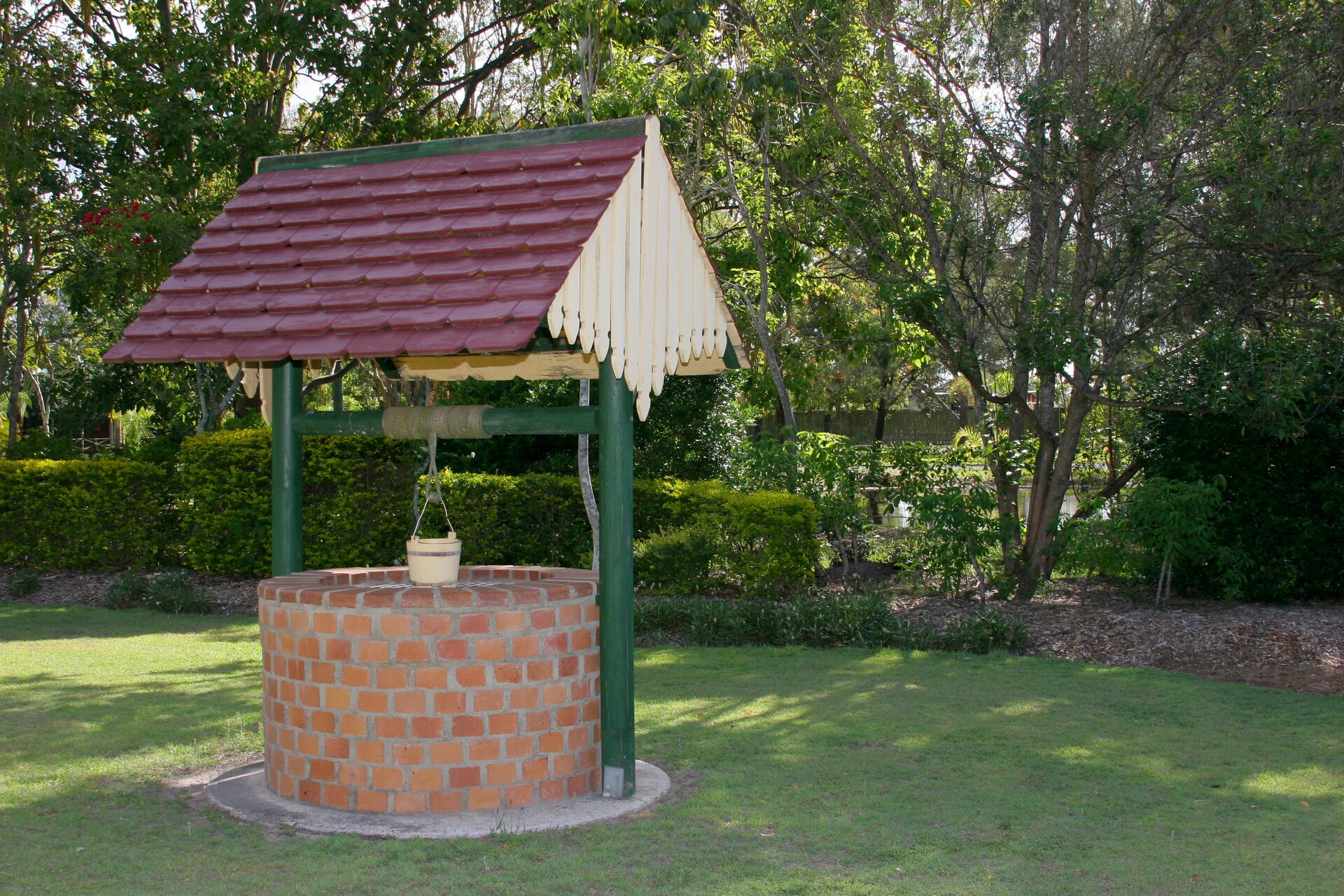
Fotografia barwna przedstawiająca ceglaną studnię z daszkiem. Studnia stoi na trawniku. Na drugim planie drzewa i krzewy.
Household groundwater well.
Source: licencja: CC 0, [online], dostępny w internecie: pixabay.com.
Task 1
Familiarize with the Earth's water sources.
Familiarize with the Earth's water sources.
Study the data and complete the task below.
RuumqeRP8X7BS
Grafika przedstawia wykres słupkowy opisujący zasoby wodne na Ziemi. Pierwszy słupek: zasoby wody na Ziemi water on Earth – 3% woda słodka fresh water, 97% woda słona (oceaniczna) salt water oceans. Drugi słupek: zasoby wody słodkiej na Ziemi fresh water– 0,3% wody powierzchniowe surface water 31,4% wody podziemne groundwater, 68,3% pokrywy lodowe i lodowce icecaps and glaciers. Trzeci słupek: wody powierzchniowe na Ziemi surface water – 2% rzeki rivers, 11% bagna i rozlewiska swamps and marshes, 87% jeziora lakes.
Earth's water resources consist mainly of salt water in seas and oceans.
Source: Olga Mikos, licencja: CC BY-ND 3.0, [online], dostępny w internecie: http://creativecommons.org/licenses/by/3.0/pl/legalcode.
Study the data presenting the Earth’s water resources and name possible sources of fresh water for agriculture in the case of a deficit of water in the soil and rivers. Write your observations below.
RSNnCH5Np20wv
Sformułuj zagadkę odnoszącą się do wybranego terminu słownikowego.
Sformułuj zagadkę odnoszącą się do wybranego terminu słownikowego.
Task 2
Wybierz jeden kontynent i dowiedz się, korzystając z dostępnych źródeł, jakie obszary na tym kontynencie charakteryzują się nadwyżką wody i jej deficytem.
Wybierz jeden kontynent i dowiedz się, korzystając z dostępnych źródeł, jakie obszary na tym kontynencie charakteryzują się nadwyżką wody i jej deficytem.
Choose one continent and find areas on that continent characterised by water surplus and water deficit. Write your conclusions below.
R1dl3owzFVM1E
Continent (uzupełnij),
Water surplus (uzupełnij),
Water deficit (uzupełnij).
Continent (uzupełnij),
Water surplus (uzupełnij),
Water deficit (uzupełnij).
Find online (on youtube)and watch a video titled „Where Did Earth’s Water Come From?”, paying attention to the origin of water on the planet.
Exercise 1
R18YelvC722oz
Opisz negatywne skutki nieodpowiedzialnego gospodarowania zasobami wodnymi, uzupełniając luki w tekście: It is estimated that tu uzupełnij of the Earth amount to no more than 1.4 billion km3. A vast majority of the Earth’s water (about 97%) can be found in seas and oceans, meaning that it is tu uzupełnij water. Fresh water resources, readily available to land organisms as tu uzupełnij water, are very limited. They amount to as little as 0.3% of all fresh water on the planet. Most tu uzupełnij water is locked in glaciers or confined underground as deep tu uzupełnij, meaning that it is inaccessible to living organisms. About 87% of all available surface water is found in tu uzupełnij. Surface water resources are very tu uzupełnij distributed, which results in permanent or seasonal water deficits in some areas.
Opisz negatywne skutki nieodpowiedzialnego gospodarowania zasobami wodnymi, uzupełniając luki w tekście: It is estimated that tu uzupełnij of the Earth amount to no more than 1.4 billion km3. A vast majority of the Earth’s water (about 97%) can be found in seas and oceans, meaning that it is tu uzupełnij water. Fresh water resources, readily available to land organisms as tu uzupełnij water, are very limited. They amount to as little as 0.3% of all fresh water on the planet. Most tu uzupełnij water is locked in glaciers or confined underground as deep tu uzupełnij, meaning that it is inaccessible to living organisms. About 87% of all available surface water is found in tu uzupełnij. Surface water resources are very tu uzupełnij distributed, which results in permanent or seasonal water deficits in some areas.
Complete the text below based on what you’ve learnt in the lesson titled “Where are Earth’s natural water resources?”.
fresh, unevenly, groundwater, salt, surface, water resources, lakes
It is estimated that .............................. of the Earth amount to no more than 1.4 billion km3. A vast majority of the Earth’s water (about 97%) can be found in seas and oceans, meaning that it is .............................. water. Fresh water resources, readily available to land organisms as .............................. water, are very limited. They amount to as little as 0.3% of all fresh water on the planet. Most .............................. water is locked in glaciers or confined underground as deep .............................., meaning that it is inaccessible to living organisms. About 87% of all available surface water is found in ............................... Surface water resources are very .............................. distributed, which results in permanent or seasonal water deficits in some areas.
RkcGKtlrWZB0B
Exercise 2
Match the pairs: English words with Polish definition. deep groundwater Możliwe odpowiedzi: 1. wody w szczelinach skał i komorach podziemnych znajdujących się na różnych głębokościach, 2. wody podziemne występujące głęboko pod powierzchnią ziemi, mocno odizolowane od wód powierzchniowych, często zmineralizowane groundwater Możliwe odpowiedzi: 1. wody w szczelinach skał i komorach podziemnych znajdujących się na różnych głębokościach, 2. wody podziemne występujące głęboko pod powierzchnią ziemi, mocno odizolowane od wód powierzchniowych, często zmineralizowane
Match the pairs: English words with Polish definition. deep groundwater Możliwe odpowiedzi: 1. wody w szczelinach skał i komorach podziemnych znajdujących się na różnych głębokościach, 2. wody podziemne występujące głęboko pod powierzchnią ziemi, mocno odizolowane od wód powierzchniowych, często zmineralizowane groundwater Możliwe odpowiedzi: 1. wody w szczelinach skał i komorach podziemnych znajdujących się na różnych głębokościach, 2. wody podziemne występujące głęboko pod powierzchnią ziemi, mocno odizolowane od wód powierzchniowych, często zmineralizowane
Match the pairs: English words with Polish definition.
wody podziemne występujące głęboko pod powierzchnią ziemi, mocno odizolowane od wód powierzchniowych, często zmineralizowane, wody w szczelinach skał i komorach podziemnych znajdujących się na różnych głębokościach