bg‑azure

Many discoveries of science are obvious for us now, but remember, in the past people didn’t know many of these things. For example, did you know that the circulatory system was only discovered in the 1620s? You’ll now read a short lecture on human anatomy.

Obecnie wiele naukowych odkryć zdaje się nam oczywistymi, jednak musisz pamiętać, że w przeszłości ludzie nie mieli o tych rzeczach pojęcia. Czy wiedziałeś/wiedziałaś, że układ krążenia został odkryty dopiero w latach 20. XVII wieku? Przeczytasz teraz krótki wykład o anatomii człowieka.
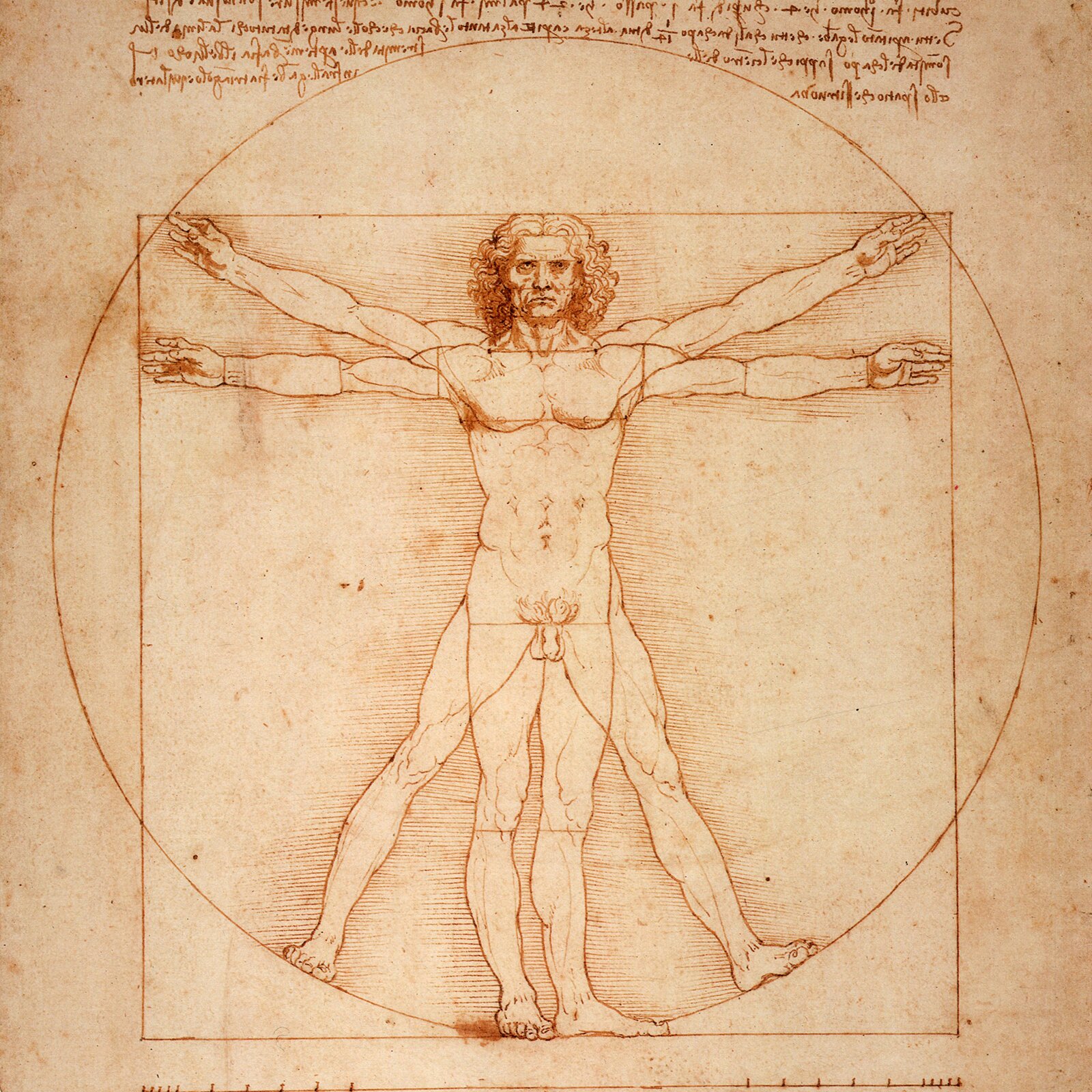
R1DF3rL5DkcpX
The Vitruvian Man by Leonardo da Vinci demonstrates the deep understanding of human body proportions
Człowiek Witruwiański Leonarda da Vinci jest dowodem głębokiego zrozumienia proporcji ludzkiego ciała.
Źródło: dostępny w internecie: https://pixabay.com/ [dostęp 3.10.2021], domena publiczna.
Exercise 1
RgafeMAEV879k
Check if you know the words below, then match them to their Polish equivalents. spine Możliwe odpowiedzi: 1. wątroba, 2. jelita, 3. mózg, 4. kręgosłup, 5. trzustka, 6. żołądek, 7. nerki, 8. śledziona, 9. żyły brain Możliwe odpowiedzi: 1. wątroba, 2. jelita, 3. mózg, 4. kręgosłup, 5. trzustka, 6. żołądek, 7. nerki, 8. śledziona, 9. żyły stomach Możliwe odpowiedzi: 1. wątroba, 2. jelita, 3. mózg, 4. kręgosłup, 5. trzustka, 6. żołądek, 7. nerki, 8. śledziona, 9. żyły intestines Możliwe odpowiedzi: 1. wątroba, 2. jelita, 3. mózg, 4. kręgosłup, 5. trzustka, 6. żołądek, 7. nerki, 8. śledziona, 9. żyły liver Możliwe odpowiedzi: 1. wątroba, 2. jelita, 3. mózg, 4. kręgosłup, 5. trzustka, 6. żołądek, 7. nerki, 8. śledziona, 9. żyły pancreas Możliwe odpowiedzi: 1. wątroba, 2. jelita, 3. mózg, 4. kręgosłup, 5. trzustka, 6. żołądek, 7. nerki, 8. śledziona, 9. żyły spleen Możliwe odpowiedzi: 1. wątroba, 2. jelita, 3. mózg, 4. kręgosłup, 5. trzustka, 6. żołądek, 7. nerki, 8. śledziona, 9. żyły veins Możliwe odpowiedzi: 1. wątroba, 2. jelita, 3. mózg, 4. kręgosłup, 5. trzustka, 6. żołądek, 7. nerki, 8. śledziona, 9. żyły kidneys Możliwe odpowiedzi: 1. wątroba, 2. jelita, 3. mózg, 4. kręgosłup, 5. trzustka, 6. żołądek, 7. nerki, 8. śledziona, 9. żyły
Źródło: GroMar Sp. z o.o., licencja: CC BY-SA 3.0.

Read the text and do the exercises below.
Exercise 2
RfW6eQyRcKnMQ
Read the text below. Which title would be the most suitable? Only one answer is correct. Możliwe odpowiedzi: 1. Anatomy of the Human Brain, 2. Deadly Bacteria, 3. Exploring the Human Body
Źródło: GroMar Sp. z o.o., licencja: CC BY-SA 3.0.
RVo6y9tTzYSLT
Źródło: dostępny w internecie: https://www.freepik.com/ [dostęp 5.10.2021], domena publiczna.
Luiza Kubalska, Zdzisław Dudek

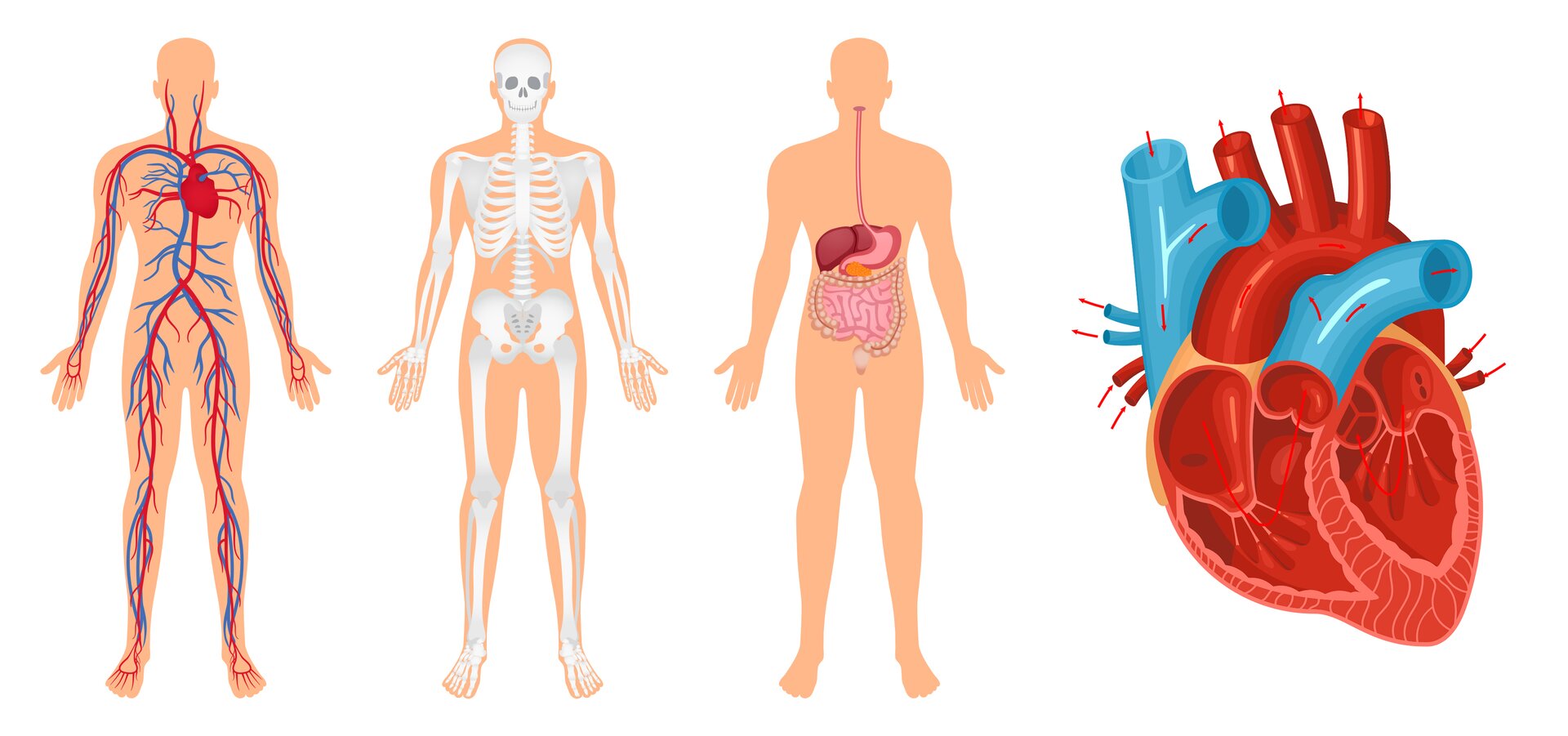
Hello, everyone! In today’s class I will tell you about human anatomy, which is the study of how the human body is built. The body is built of four limbslimbs [limb]limbs (arms and legs), a neck and a head, all of which are connected by the torsotorsotorso. All of it is covered by skin. On the inside, the body is mostly defined by a skeleton surrounded by fat, musclemusclemuscle, connective tissueconnective tissueconnective tissue and organs, amongamongamong other structures. The most important part of the skeletal systemskeletal systemskeletal system is the spinespinespine, inside which there are nerves, connecting the brain to the rest of the body. It is thanks to the nervous system that our bodies function and, among other things, our limbs do what we want them to.

There are a number of vitalvitalvital organs inside our body such as the brain, stomachstomachstomach, the intestinesintestinesintestines, liverliverliver, pancreaspancreaspancreas and spleenspleenspleen. The brain and the central nervous systemcentral nervous systemcentral nervous system are separated by the blood‑brain barrierblood‑brain barrierblood‑brain barrier, whose function is to keep the bacteria and other pathogenspathogens [pathogen]pathogens away from the brain.

The circulatory systemcirculatory systemcirculatory system is what distributesdistributes [distribute]distributes oxygenoxygenoxygen and keeps us alive. BloodbloodBlood moves through arteriesarteriesarteries and veinsveins [vein]veins because of the beating of the heart. To put it simply, blood low in oxygen is collected from tissuestissues [tissue]tissues and carried to the right side of the heart, from where it is sent to the lungs. It receives oxygen and is sent to the left side of the heart. From there it is pumped to the aorta, the body’s largest artery, and is sent to smaller arteries so it reaches tissue. Soon the process begins again. But blood doesn’t only carry oxygen - it also carries waste products and hormones. It is filtered in the kidneyskidneys [kidney]kidneys and liver.

Our outside appearance variesvaries [vary]varies largelylargelylargely, depending on heightheightheight, weightweightweight, shape and body proportions. But, as you can see, inside, we are all the same. Thank you for listening.

1 Źródło: Zdzisław Dudek, Luiza Kubalska, dostępny w internecie: https://www.medicalnewstoday.com/articles/organs-in-the-body#vital-organs [dostęp 23.06.2022], https://my.clevelandclinic.org [dostęp 23.06.2022], https://www.nhs.uk/conditions/spleen-problems-and-spleen-removal/ [dostęp 23.06.2022], https://en.wikipedia.org/wiki/Human_body [dostęp 23.06.2022], licencja: CC BY-SA 3.0.
Exercise 3
RHt51CiOF9LW9
Fill in the gaps using the words below.

  1. A 1. limb, 2. torso, 3. blood-brain barrier, 4. spine, 5. Nerves, 6. skeleton is an arm or a leg of a mammal.
  2. The limbs, head, and neck are linked with the 1. limb, 2. torso, 3. blood-brain barrier, 4. spine, 5. Nerves, 6. skeleton.
  3. The frame of bones that supports our body is the 1. limb, 2. torso, 3. blood-brain barrier, 4. spine, 5. Nerves, 6. skeleton, which is mostly covered by fat and muscle.
  4. A crucial part of the skeletal system is our 1. limb, 2. torso, 3. blood-brain barrier, 4. spine, 5. Nerves, 6. skeleton.
  5. 1. limb, 2. torso, 3. blood-brain barrier, 4. spine, 5. Nerves, 6. skeleton connect the brain to our body so that we can function.
  6. The 1. limb, 2. torso, 3. blood-brain barrier, 4. spine, 5. Nerves, 6. skeleton divides the brain and the central nervous system from one another.
Źródło: GroMar Sp. z o.o., licencja: CC BY-SA 3.0.
Exercise 4
RQtL0peCHi5nB
Read the text above. Then, choose the correct option in each statement. There is only one correct option for each statement.
  1. The circulatory systemspleenliver distributes oxygen that we need to survive.
  2. There is brainintestinesblood circulating in our veins and arteries.
  3. The pathogensheartbrain is responsible for pumping out blood to different parts of the body.
  4. HormonesTissuesPancreas are also transferred in blood.
  5. KidneysLegsArteries help clean blood.
Źródło: GroMar Sp. z o.o., licencja: CC BY-SA 3.0.

Słownik

among
among

/ əˈmʌŋ /

RkxHSe3mNHL751
Nagranie dźwiękowe

pośród

R1OVyPUbZO8Sh1
Nagranie dźwiękowe
arteries
arteries

/ ˈɑːtəriz /

R15dZJa4TqNSg1
Nagranie dźwiękowe

tętnice

R6QTp3QU8GAKO1
Nagranie dźwiękowe
artery
artery

/ ˈɑːtəri /

R1PIqNBGRzlwI1
Nagranie dźwiękowe

tętnica

R1RMYeikRUF0L1
Nagranie dźwiękowe
blood
blood

/ blʌd /

RaUv0Rxe8qfS91
Nagranie dźwiękowe

krew

R2w0jIfhpZqZb1
Nagranie dźwiękowe
blood‑brain barrier
blood‑brain barrier

/ blʌd ˈbreɪn ˈbæriə /

R1FOiGJzVSwWa1
Nagranie dźwiękowe

bariera krew‑mózg

RqjkcQAlMhsfJ1
Nagranie dźwiękowe
central nervous system

/ ˈsentrəl ˈnɜːvəs ˈsɪstəm /

RjXb9NRS0AogP1
Nagranie dźwiękowe

centralny układ nerwowy

RS8HDf2uHSHbt1
Nagranie dźwiękowe
circulatory system
circulatory system

/ ˌsɜːkjəˈleɪtəri ˈsɪstəm /

RzbHUTOUb01nJ1
Nagranie dźwiękowe

układ krążenia

R8AyXejAfst0D1
Nagranie dźwiękowe
connective tissue
connective tissue

/ kəˈnektɪv ˈtɪʃuː /

R12ZgJHFzg8671
Nagranie dźwiękowe

tkanka łączna

R1HYv3Qdo8O3D1
Nagranie dźwiękowe
distributes [distribute]

/ dɪˈstrɪbjuːts / / dɪˈstrɪbjuːt /

R18iITQmFrhgm1
Nagranie dźwiękowe

rozprowadza [rozprowadzać]

RrMc9vCqnyKxu1
Nagranie dźwiękowe
height
height

/ haɪt /

RCjNM8nzPpnSh1
Nagranie dźwiękowe

wzrost

RfUKa25ccz5ee1
Nagranie dźwiękowe
intestines
intestines

/ ɪnˈtestɪnz /

RXWbeFsBxIb5m1
Nagranie dźwiękowe

jelita

RsOmcaM5k5fLB1
Nagranie dźwiękowe
kidneys [kidney]
kidneys [kidney]

/ ˈkɪdnɪz / / ˈkɪdni /

ROstItgsiiz0k1
Nagranie dźwiękowe

nerki [nerka]

R13t12AdQjcEe1
Nagranie dźwiękowe
largely
largely

/ ˈlɑːdʒli /

RMQzrN1UffD1R1
Nagranie dźwiękowe

w dużym stopniu, głównie

RYdfCO4oWN5ZI1
Nagranie dźwiękowe
limbs [limb]
limbs [limb]

/ lɪmz /

R1bJCq33XZ1RO1
Nagranie dźwiękowe

kończyny [kończyna]

RatPjx9GKDrp21
Nagranie dźwiękowe
liver
liver

/ ˈlɪvə /

R15CiIq8TK1Eu1
Nagranie dźwiękowe

wątroba

R142cCM2Zm79H1
Nagranie dźwiękowe
mammal
mammal

/ ˈmæml̩ /

RveMYtn8lQJf51
Nagranie dźwiękowe

ssak

RMu8ukjaJNdnD1
Nagranie dźwiękowe
muscle
muscle

/ ˈmʌsl̩ /

RUqiKlF2neHmm1
Nagranie dźwiękowe

mięsień

RVp0sse6PH7mf1
Nagranie dźwiękowe
oxygen
oxygen

/ ˈɒksɪdʒən /

R1PxK7cBL3WPz1
Nagranie dźwiękowe

tlen

R18l2X2KQsSLN1
Nagranie dźwiękowe
pancreas
pancreas

/ ˈpæŋkrɪəs /

RF8ozgwqnBWcZ1
Nagranie dźwiękowe

trzustka

RsuhhLxsHJqA21
Nagranie dźwiękowe
pathogens [pathogen]

/ ˈpæthetathetaədʒənz /

R1Bu3ZMUNWxO71
Nagranie dźwiękowe

patogeny [patogen]

R9moie3oyWHa91
Nagranie dźwiękowe
skeletal system
skeletal system

/ ˈskelətl̩ ˈsɪstəm /

R1I8kHI93XA7x1
Nagranie dźwiękowe

układ kostny

R1FbYoj7euN7g1
Nagranie dźwiękowe
spine
spine

/ spaɪn /

R1QftFZwq8KlJ1
Nagranie dźwiękowe

kręgosłup

R1PXeJCgXlure1
Nagranie dźwiękowe
spleen
spleen

/ spliːn /

R1eCtlUOeLT411
Nagranie dźwiękowe

śledziona

R1QIWwvdj0YHJ1
Nagranie dźwiękowe
stomach
stomach

/ ˈstʌmək /

RyMBuO0vyo4Mb1
Nagranie dźwiękowe

żołądek, brzuch

RjDvdYISzW6MA1
Nagranie dźwiękowe
tissues [tissue]
tissues [tissue]

/ ˈtɪʃuːz / / ˈtɪʃuː /

Rk2XyCiEwuRDQ1
Nagranie dźwiękowe

tkanki [tkanka]

R1Zvfy71Vuj7z1
Nagranie dźwiękowe
torso
torso

/ ˈtɔːsəʊ /

R1UQFVgkckRub1
Nagranie dźwiękowe

tors

RyosupGmdHoWx1
Nagranie dźwiękowe
transplant
transplant

/ ˈtrænsplɑːnt /

RI4zd4D8heUCD1
Nagranie dźwiękowe

przeszczep

R1do9EPlxxJRk1
Nagranie dźwiękowe
varies [vary]
varies [vary]

/ ˈveərɪz // ˈveəri /

RkrLma5A5JX8I1
Nagranie dźwiękowe

różni się [różnić się]

R1GMZ0PvfrbKh1
Nagranie dźwiękowe
veins [vein]
veins [vein]

/ veɪnz / / veɪn /

R1Q5pdAseMYxR1
Nagranie dźwiękowe

żyły [żyła]

RTKKGChlqMjzw1
Nagranie dźwiękowe
vital
vital

/ ˈvaɪtl̩ /

RwuJO2rrhA6v91
Nagranie dźwiękowe

kluczowy

RSzs1sDY3ag6L1
Nagranie dźwiękowe
weight
weight

/ weɪt /

RKeWkWPTGZbDy1
Nagranie dźwiękowe

waga

R1TrjTILGCIGJ1
Nagranie dźwiękowe

Źródło: GroMar Sp. z o.o., licencja: CC BY‑SA 3.0

RIx9Io4GnO7MO
(Uzupełnij).
Źródło: GroMar Sp. z o.o., licencja: CC BY-SA 3.0.