bg‑azure

Do you agree that sometimes we hear but don’t really listen to other people? Listening requires more effort, doesn’t it? It involves comprehending and analysing the information we get. We all agree that active listening improves the quality of both your professional and family life. That’s why honing this skill should be taught equally with speaking. If you want to learn more about how to do it, do the tasks in this section of the material.

Czy zgodzisz się ze stwierdzeniem, że czasami słyszymy, ale nie słuchamy innych? Słuchanie wymaga od nas więcej wysiłku, ponieważ angażuje zrozumienie i analizę informacji, które uzyskujemy. Jednakże faktem jest, że słuchanie kształtuje i poprawia jakość życia zarówno prywatnego, jak i zawodowego. Dlatego rozwijanie tej umiejętności powinno być traktowane i nauczane na równi z wysławianiem się. Jeśli chcesz dowiedzieć się więcej o kształtowaniu umiejętności aktywnego słuchania, wykonaj zadania z tej części materiału.
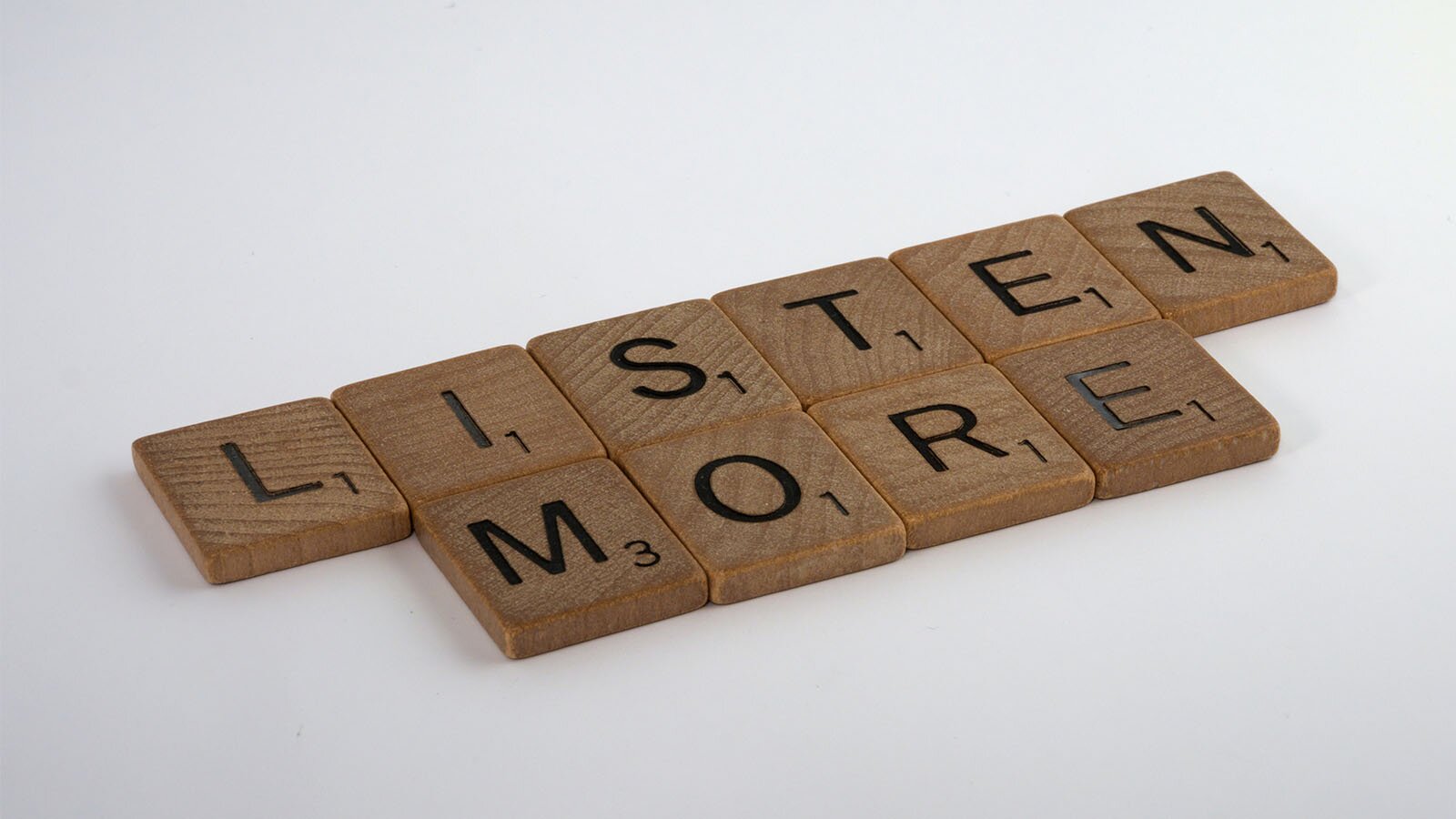
RMFz9ocaepnzm
Hear what people are saying
Usłysz, co mówią inni
Źródło: dostępny w internecie: https://unsplash.com/ [dostęp 17.09.2022], domena publiczna.
Exercise 1
RxXtAXuXrJc5u
Źródło: GroMar Sp. z o.o.
1
1
Exercise 2

Study the following questions and choose the correct answer.

R10SaDx22voEw
Źródło: GroMar Sp. z o.o., licencja: CC BY-SA 3.0.

Play the game to find out more about active listening!
There is one correct answer in each question.

R1akpSSa396VD1
Źródło: GroMar Sp. z o.o., licencja: CC BY-SA 3.0.
Exercise 2
RCucdVwIwLD0U
Match the halves of sentences related to active listening. An interrogated speaker Możliwe odpowiedzi: 1. you should admit it to your interlocutor and ask them to repeat the sentences you didn’t hear., 2. is a sign of attentive listening and understanding., 3. are as important as spoken words in constructive communication., 4. is asked a series of questions for a long time to reveal information., 5. may become a subpar one due to a hard day and exhaustion., 6. they give you support and cheer you on. Nonverbal cues such as gestures or facial expressions Możliwe odpowiedzi: 1. you should admit it to your interlocutor and ask them to repeat the sentences you didn’t hear., 2. is a sign of attentive listening and understanding., 3. are as important as spoken words in constructive communication., 4. is asked a series of questions for a long time to reveal information., 5. may become a subpar one due to a hard day and exhaustion., 6. they give you support and cheer you on. Nodding your head Możliwe odpowiedzi: 1. you should admit it to your interlocutor and ask them to repeat the sentences you didn’t hear., 2. is a sign of attentive listening and understanding., 3. are as important as spoken words in constructive communication., 4. is asked a series of questions for a long time to reveal information., 5. may become a subpar one due to a hard day and exhaustion., 6. they give you support and cheer you on. If you happen to have a lapse of attention Możliwe odpowiedzi: 1. you should admit it to your interlocutor and ask them to repeat the sentences you didn’t hear., 2. is a sign of attentive listening and understanding., 3. are as important as spoken words in constructive communication., 4. is asked a series of questions for a long time to reveal information., 5. may become a subpar one due to a hard day and exhaustion., 6. they give you support and cheer you on. Even an active listener Możliwe odpowiedzi: 1. you should admit it to your interlocutor and ask them to repeat the sentences you didn’t hear., 2. is a sign of attentive listening and understanding., 3. are as important as spoken words in constructive communication., 4. is asked a series of questions for a long time to reveal information., 5. may become a subpar one due to a hard day and exhaustion., 6. they give you support and cheer you on. When somebody urges you on Możliwe odpowiedzi: 1. you should admit it to your interlocutor and ask them to repeat the sentences you didn’t hear., 2. is a sign of attentive listening and understanding., 3. are as important as spoken words in constructive communication., 4. is asked a series of questions for a long time to reveal information., 5. may become a subpar one due to a hard day and exhaustion., 6. they give you support and cheer you on.
Źródło: GroMar Sp. z o.o., licencja: CC BY-SA 3.0.
Exercise 3
RsKaX3ne14doO
Based on the information from the quiz, complete the sentences with the missing words. The first letters are already given. 1. When I was telling my story to Jane I knew she wasn’t listening as she had a dTu uzupełnij lTu uzupełnij in her eyes. 2. Because my friend knows I love Spanish, he uTu uzupełnij me on to enrol in a language course. 3. I wanted my friend to listen to me but instead she started asking me hundreds of questions. I felt as if I was being iTu uzupełnij by her. 4. After a tiring day at school you may sometimes have a lTu uzupełnij of aTu uzupełnij. Don’t worry then, it’s natural; your head needs resting. 5. I don’t really know what to do this weekend. Can you pTu uzupełnij any iTu uzupełnij? You have always been very creative. 6. A good listener sTu uzupełnij with the speaker by showing their understanding, patience and attention.
Źródło: GroMar Sp. z o.o., licencja: CC BY-SA 3.0.
Exercise 4

As a part of your English homework, you were asked to explain what it takes to be an active listener and present it for the class next week. Make a note outlining three things that aren’t welcome when talking to others, which you will use during your presentation. Write 7‑8 sentences.

RdJvQA0ep2G4f
(Uzupełnij).
Źródło: GroMar Sp. z o.o., licencja: CC BY-SA 3.0.