by 2 - the number is divisible by 2 if the digit of unity is 0, 2, 4, 6, 8,
by 3 - the number is divisible by 3 if the sum of its digits is a number divisible by 3,
by 4 - the number is divisible by 4 if it contains two last digits divisible by four or whose two last digits are zeros,
by 5 - the number is divisible by 5 if the last digit of this number is 0 or 5,
by 6 - the number is divisible by 6 if it is divisible simultaneously by 2 and by 3,
by 9 - the number is divisible by 9 if the sum of its digits is divisible by 9,
by 10 - the number is divisible by 10 if the last digit of this number is 0,
by 25 - the number is divisible by 25 if its last two digits are divisible by 25 or the last two digits are zeros,
by 100 - the number is divisible by 100 if its last two digits are zeros.
Recall the most important divisibility rules of numbers. Think how, by not doing the division, one can check whether the number is divisible by 12, by 15 or by 18.
Make your hypotheses and then prove it by solving the following problems.
Task 1
The place of hundreds has been denoted as X in the number 57992X48. Enter a number in place of X, so that the number received is divisible by 12. Provide all the possible solutions.
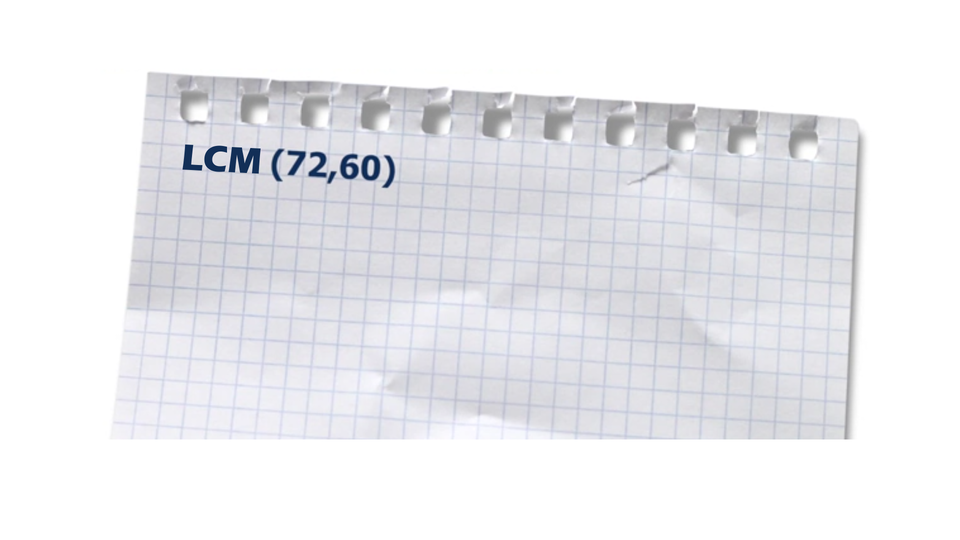
Observe the calculation of LCM and GCD of two numbers. Then do analogous calculation of LCM and GCD of numbers 324, 243, 289.
RLptDAIxpUEMt1
Pokaz multimedialny przedstawia sposób wyznaczania NWW i NWD dwóch liczb. Instrukcja obsługi z poziomu klawiatury: 1. Uruchomienie aplikacji - ENTER, 2. Na każdym ze slajdów czytany jest automatycznie tekst alternatywny po polsku, 3. Przy pierwszym uruchomieniu na pierwszym slajdzie, czytanie tekstu po angielsku - TAB, 4. Przejście między slajdami: do następnego slajdu - TAB, do poprzedniego slajdu - TAB + SHIFT, 5. Przejście do czytania napisu po angielsku - strzałka w górę + strzałka w dół (czyta tekst po angielsku widoczny na slajdzie).
Pokaz multimedialny przedstawia sposób wyznaczania NWW i NWD dwóch liczb. Instrukcja obsługi z poziomu klawiatury: 1. Uruchomienie aplikacji - ENTER, 2. Na każdym ze slajdów czytany jest automatycznie tekst alternatywny po polsku, 3. Przy pierwszym uruchomieniu na pierwszym slajdzie, czytanie tekstu po angielsku - TAB, 4. Przejście między slajdami: do następnego slajdu - TAB, do poprzedniego slajdu - TAB + SHIFT, 5. Przejście do czytania napisu po angielsku - strzałka w górę + strzałka w dół (czyta tekst po angielsku widoczny na slajdzie).
Think what the relationship between the product of two numbers, their least common multiplethe Least Common Multiple (LCM)least common multiple and the greatest common divisorthe Greatest Common Divisor (GCD)greatest common divisor is.
Compare your conclusions with the formula:
where: a and b - are positive natural numbersnatural numbersnatural numbers.
Use the formula to find two natural numbersnatural numbersnatural numbers, whose product is 9666, and their greatest common divisorthe Greatest Common Divisor (GCD)greatest common divisor is equal to 27.
Task 4
An extra task:
a) The number 408 is divisible by 17. Evaluate which of the numbers: K, L, M, N is also divisible by 17: K = 408 + 17 · 24, L = 12 · 408 - 17 · 15, M = 3 · 408 + 289 · 7, N = 4080 + 17 · 135.
b) Find the smallest natural number that is divisible by 2, 3 and 7, and whose remainder of dividing this number by 5 is 4.
Perform revision exercises.
Remember:
To check whether a given number is divisible by another, we use methods called divisibility rules.
The prime factorization can be used to calculate their least common multiplethe Least Common Multiple (LCM)least common multiple and their greatest common divisorthe Greatest Common Divisor (GCD)greatest common divisor.
The relationship between the product of two numbers, their least common multiplethe Least Common Multiple (LCM)least common multiple of the greatest common divisorthe Greatest Common Divisor (GCD)greatest common divisor is expressed by the formula:
where: a and b - are positive natural numbersnatural numbersnatural numbers.
Exercises
Exercise 1
R1PQ7HqOwC1AA
Wersja alternatywna ćwiczenia: Determine which sentences are true. Możliwe odpowiedzi: 1. LCM (33, 121) = 363, 2. GCD (24, 36, 98) = 4, 3. Numbers 18 and 25 are relatively prime numbers (coprime numbers)., 4. If m|a and m|b, thus m|(a + b) and m|(a – b), 5. The least prime number is the number 3., 6. The only even prime number is the number 2., 7. The number (540 + 3 · 1080) is divisible by 28., 8. The number 88795 is divisible by 15.
Wersja alternatywna ćwiczenia: Determine which sentences are true. Możliwe odpowiedzi: 1. LCM (33, 121) = 363, 2. GCD (24, 36, 98) = 4, 3. Numbers 18 and 25 are relatively prime numbers (coprime numbers)., 4. If m|a and m|b, thus m|(a + b) and m|(a – b), 5. The least prime number is the number 3., 6. The only even prime number is the number 2., 7. The number (540 + 3 · 1080) is divisible by 28., 8. The number 88795 is divisible by 15.
Determine which sentences are true.
LCM (33, 121) = 363
GCD (24, 36, 98) = 4
Numbers 18 and 25 are relatively prime numbers (coprime numbers).
If m|a and m|b, thus m|(a + b) and m|(a – b)
The least prime number is the number 3.
The only even prime number is the number 2.
The number (540 + 3 · 1080) is divisible by 28.
The number 88795 is divisible by 15.
zadanie
Source: GroMar, licencja: CC BY 3.0.
Exercise 2
Calculate:
a. The sum of 105 integers is an even number. What can the greatest amount of odd summands in this sum be?
b. Calculate LCM and GCD of numbers 152 and 120.
a. 104.
b. GCD (120, 152) = 8, LCM (120, 152) = 2280.
Exercise 3
Check the available sources for information on when the zero symbol was used for the first time.
Describe your findings in English.
RTVdAn6MMyzKt
Exercise 4
Wersja alternatywna ćwiczenia: Match Polish terms with their English equivalents. najmniejsza wspólna wielokrotność Możliwe odpowiedzi: 1. relatively prime numbers (coprime numbers), 2. composite numbers, 3. the Least Common Multiple (LCM), 4. the Greatest Common Divisor (GCD), 5. rules of divisibility, 6. prime numbers liczby względnie pierwsze Możliwe odpowiedzi: 1. relatively prime numbers (coprime numbers), 2. composite numbers, 3. the Least Common Multiple (LCM), 4. the Greatest Common Divisor (GCD), 5. rules of divisibility, 6. prime numbers liczby pierwsze Możliwe odpowiedzi: 1. relatively prime numbers (coprime numbers), 2. composite numbers, 3. the Least Common Multiple (LCM), 4. the Greatest Common Divisor (GCD), 5. rules of divisibility, 6. prime numbers cechy podzielności liczb Możliwe odpowiedzi: 1. relatively prime numbers (coprime numbers), 2. composite numbers, 3. the Least Common Multiple (LCM), 4. the Greatest Common Divisor (GCD), 5. rules of divisibility, 6. prime numbers liczby złożone Możliwe odpowiedzi: 1. relatively prime numbers (coprime numbers), 2. composite numbers, 3. the Least Common Multiple (LCM), 4. the Greatest Common Divisor (GCD), 5. rules of divisibility, 6. prime numbers największy wspólny dzielnik Możliwe odpowiedzi: 1. relatively prime numbers (coprime numbers), 2. composite numbers, 3. the Least Common Multiple (LCM), 4. the Greatest Common Divisor (GCD), 5. rules of divisibility, 6. prime numbers
Wersja alternatywna ćwiczenia: Match Polish terms with their English equivalents. najmniejsza wspólna wielokrotność Możliwe odpowiedzi: 1. relatively prime numbers (coprime numbers), 2. composite numbers, 3. the Least Common Multiple (LCM), 4. the Greatest Common Divisor (GCD), 5. rules of divisibility, 6. prime numbers liczby względnie pierwsze Możliwe odpowiedzi: 1. relatively prime numbers (coprime numbers), 2. composite numbers, 3. the Least Common Multiple (LCM), 4. the Greatest Common Divisor (GCD), 5. rules of divisibility, 6. prime numbers liczby pierwsze Możliwe odpowiedzi: 1. relatively prime numbers (coprime numbers), 2. composite numbers, 3. the Least Common Multiple (LCM), 4. the Greatest Common Divisor (GCD), 5. rules of divisibility, 6. prime numbers cechy podzielności liczb Możliwe odpowiedzi: 1. relatively prime numbers (coprime numbers), 2. composite numbers, 3. the Least Common Multiple (LCM), 4. the Greatest Common Divisor (GCD), 5. rules of divisibility, 6. prime numbers liczby złożone Możliwe odpowiedzi: 1. relatively prime numbers (coprime numbers), 2. composite numbers, 3. the Least Common Multiple (LCM), 4. the Greatest Common Divisor (GCD), 5. rules of divisibility, 6. prime numbers największy wspólny dzielnik Możliwe odpowiedzi: 1. relatively prime numbers (coprime numbers), 2. composite numbers, 3. the Least Common Multiple (LCM), 4. the Greatest Common Divisor (GCD), 5. rules of divisibility, 6. prime numbers
Match Polish terms with their English equivalents.
the Greatest Common Divisor (GCD), composite numbers, rules of divisibility, relatively prime numbers (coprime numbers), prime numbers, the Least Common Multiple (LCM)
najmniejsza wspólna wielokrotność
liczby względnie pierwsze
liczby pierwsze
cechy podzielności liczb
liczby złożone
największy wspólny dzielnik
RYjEysTDltzPL1
Interaktywna gra, polegająca na łączeniu wyrazów w pary w ciągu jednej minuty. Czas zaczyna upływać wraz z rozpoczęciem gry. Jeden ruch to odkrywanie najpierw jednej potem drugiej karty z wyrazem. Każdy wyraz jest odczytywany. Kolejny ruch to odkrywanie trzeciej i czwartej karty. W ten sposób odsłuchasz wszystkie wyrazy. Nawigacja z poziomu klawiatury za pomocą strzałek, odsłuchiwanie wyrazów enterem lub spacją. Znajdź wszystkie pary wyrazów.
Interaktywna gra, polegająca na łączeniu wyrazów w pary w ciągu jednej minuty. Czas zaczyna upływać wraz z rozpoczęciem gry. Jeden ruch to odkrywanie najpierw jednej potem drugiej karty z wyrazem. Każdy wyraz jest odczytywany. Kolejny ruch to odkrywanie trzeciej i czwartej karty. W ten sposób odsłuchasz wszystkie wyrazy. Nawigacja z poziomu klawiatury za pomocą strzałek, odsłuchiwanie wyrazów enterem lub spacją. Znajdź wszystkie pary wyrazów.
Match Polish terms with their English equivalents.
1_POL
4_ANG
1_ANG
5_ANG
5_POL
3_POL
2_POL
3_ANG
2_ANG
4_POL
Source: Zespół autorski Politechniki Łódzkiej, licencja: CC BY 3.0.