Neoclassicism
you will characterise the classicistic and rococorococo art
you will explain the phenomenon of patronagepatronage
you will indicate and describe the neoclassicisticneoclassicistic art heritage objects in Poland
Before the lesson
Search a source of your choice for information on rococo and make a short note concerning features of that style, especially in painting.
NeoclassicismNeoclassicism in Poland
The new style derived from fascination with classicalclassical antiquity. Its formation in the middle of the 18th century was influenced both by major archeological discoveries in Rome, Pompei and Herculaneum and the Enlightenment ideas spread by French encyclopedists, preaching the postulates of moral and social mission of the art. It coincided with the period of deep social and political changes initiated by the Great French Revolution. The fall of the absolute monarchy and the change of the status of power from „the one vested in by the God” to the civic opened the age of modernity.
Do you know the difference between the following terms: classical i classicistic? Match the terms with definitions.
antique, referring to ancient Greek or Roman culture; concordant with the rules of proportion, restraint, pursuing harmony; perfect, considered exemplar, antique art styled; relating to classicism
| classical | |
| classicistic |
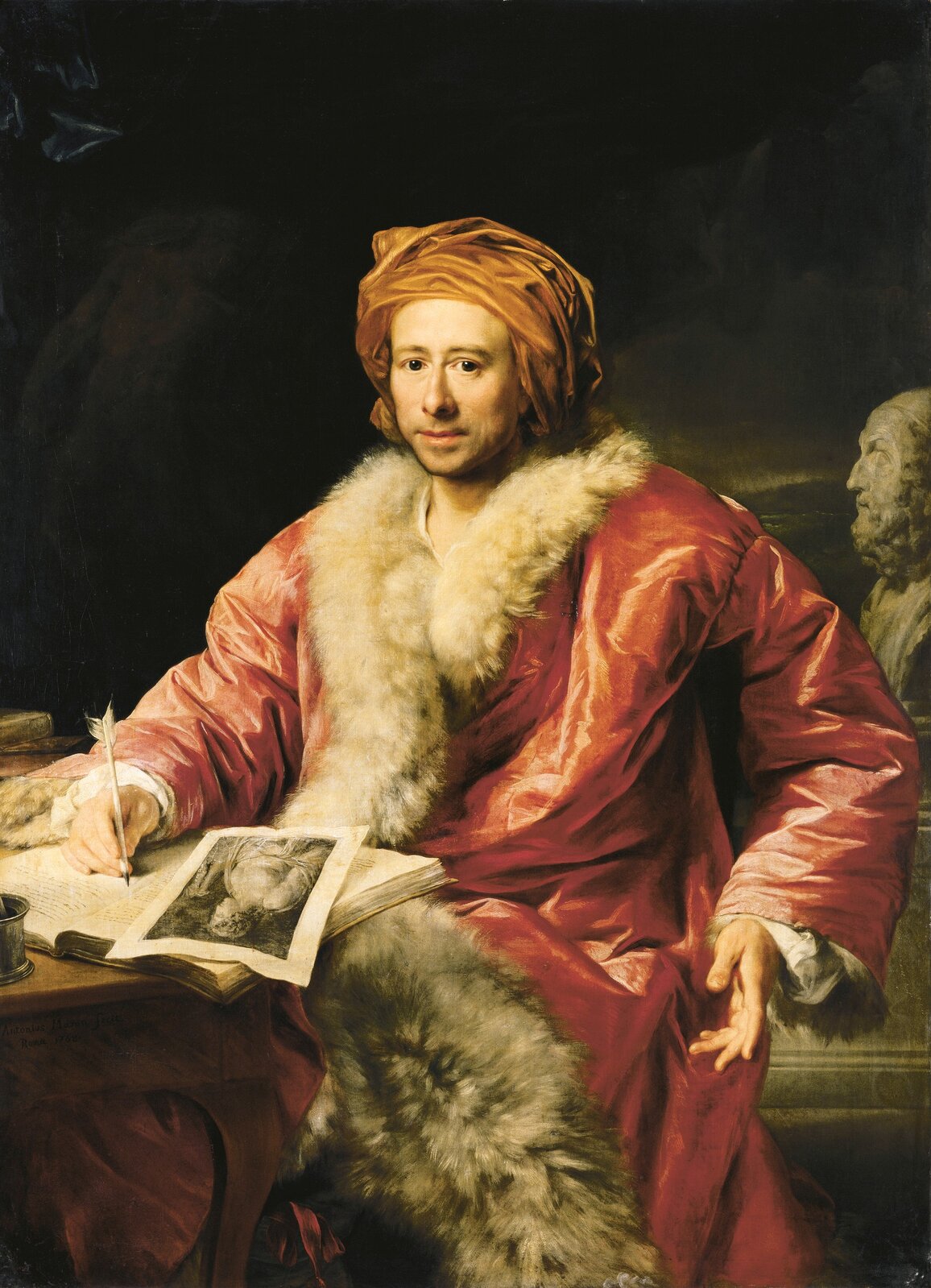
Johann Joachim Winckelmann (1717–1768) – German researcher of ancient art, coauthor and main theoretician of Neoclassicism, librarian and curator of collections of cardinals of Rome. Promoted knowledge on heritage objects discovered in Pompei and Herculaneum. Author of the first scientific study on ancient art entitled „Geschichte der Kunst des Alterthums” and published in 1764. Admirer of the Greek culture, father of history of art, who introduced the concept of style, and the method and language of the description of a piece of art.
Read the text of Johanna Joachim Winckelmann and list the postulates which constituted the basis of the 18th century classicismclassicism.
Recall or check in available sources what patronage was. Do you remember any ancient work in which its author addressed his/her patronpatron?
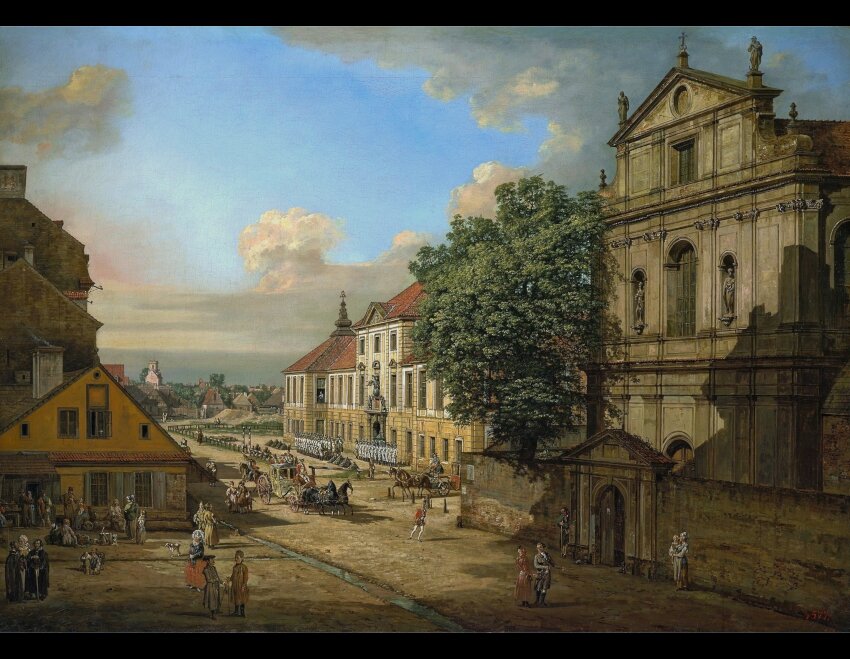
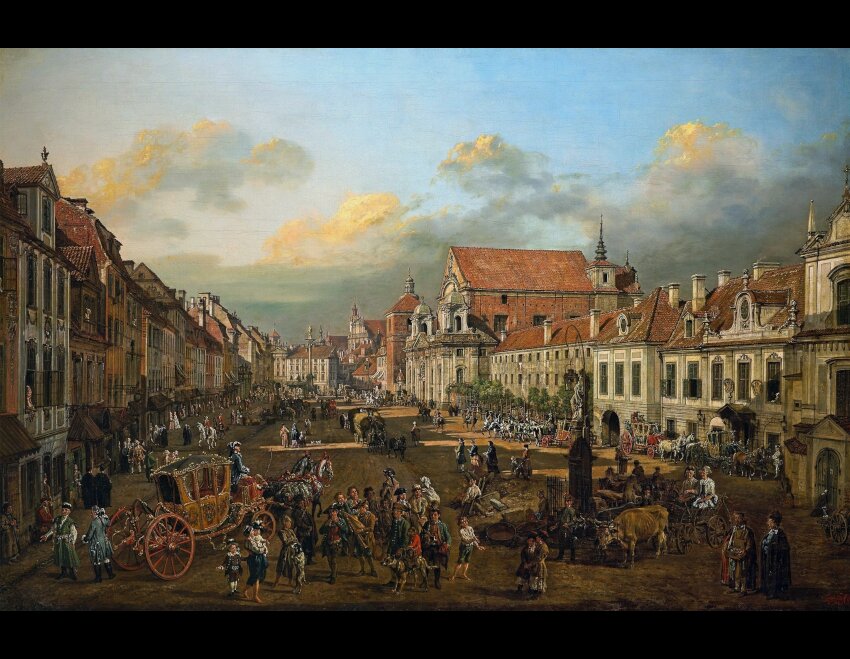
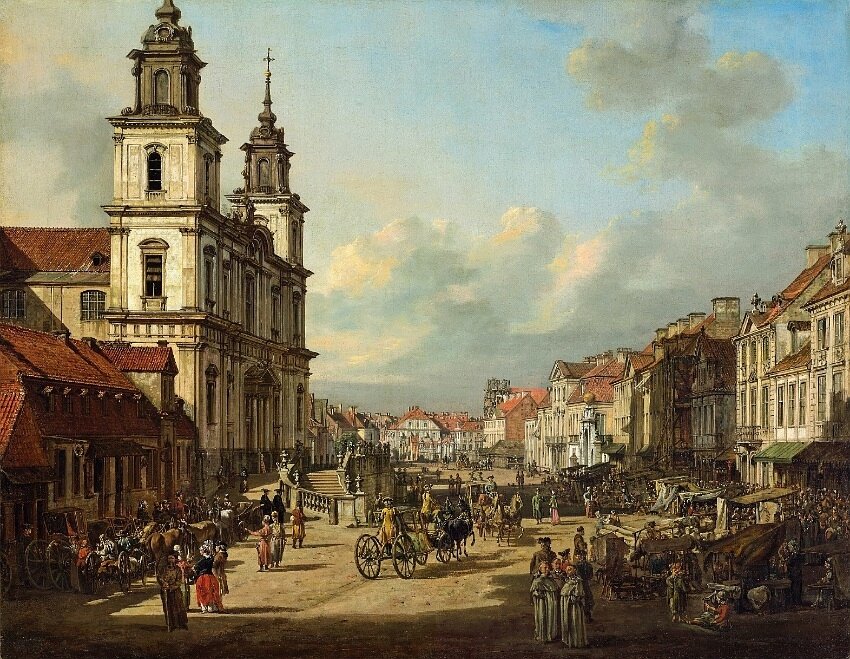
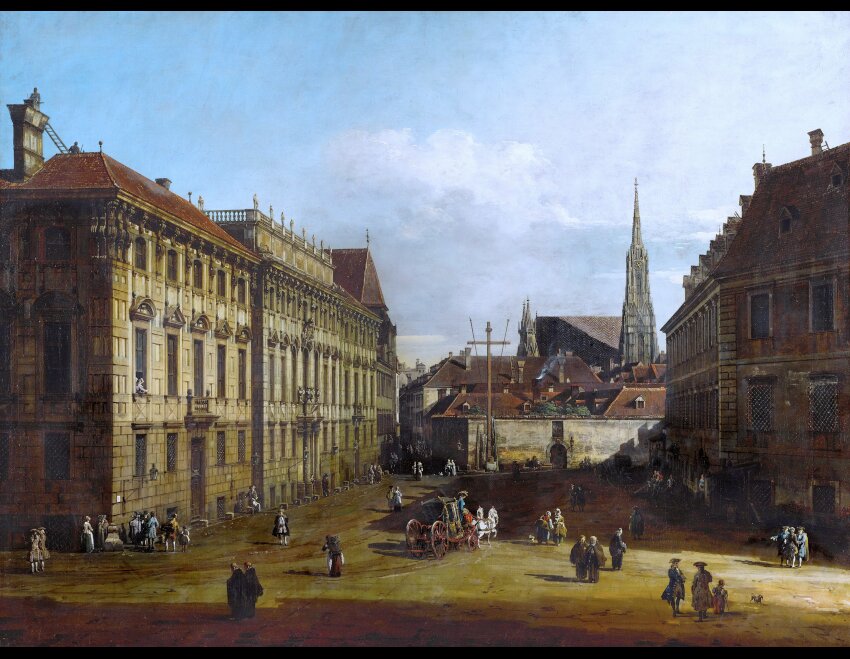
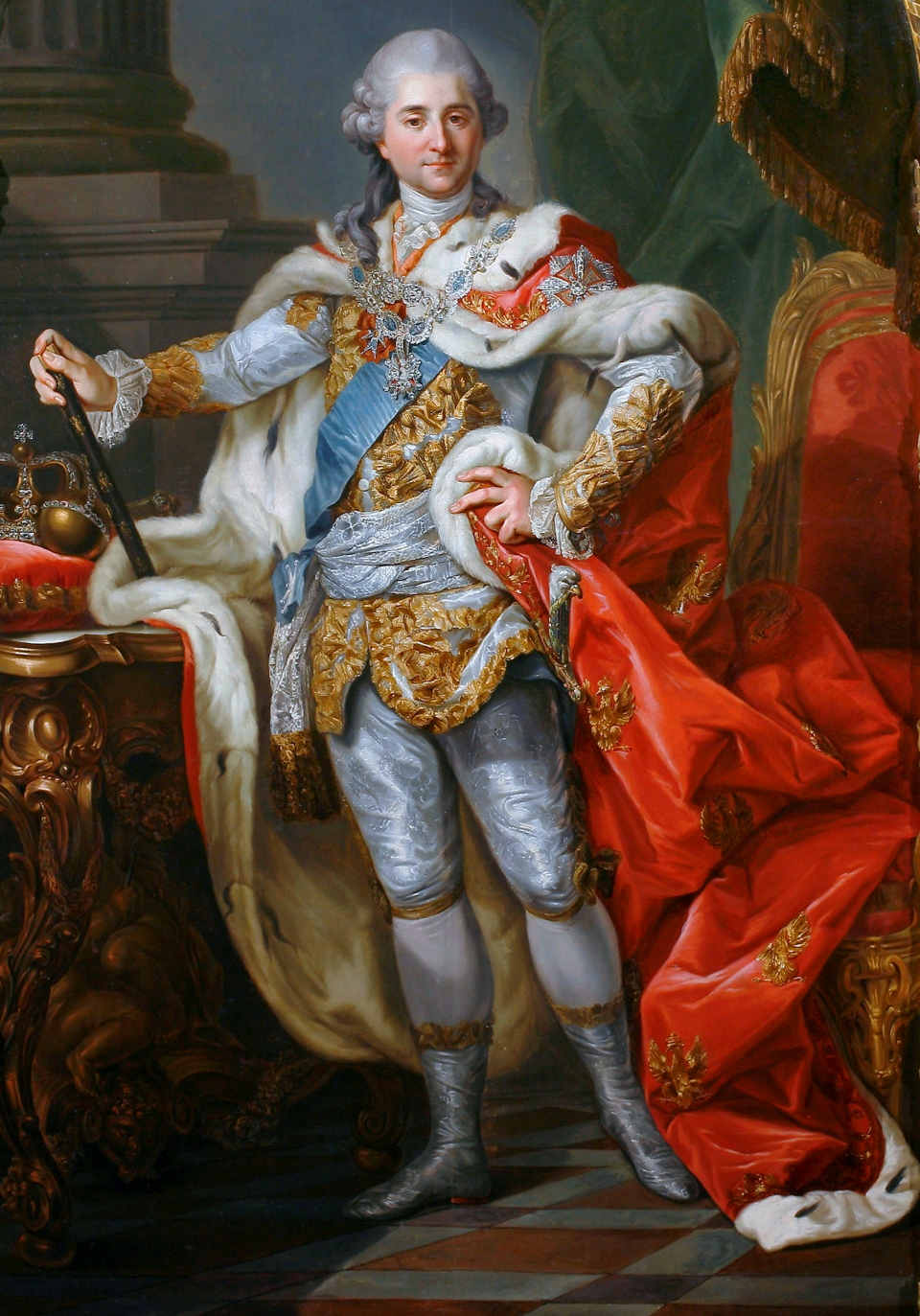
An Italian painter Marcello Bacciarelli was the aulic painter and artisctic advisor (counterpart of a minister of culture) of Stanisław August Poniatowski. He created plafonds and decorations of the Royal Castle in Warsaw and also numerous portraits of the king, his family and representatives of Polish nobility. Józef Maria Grassi (1757–1838), an Austrian painter, author of portraits of Józef Poniatowski and Tadeusz Kościuszko also worked for the court. Within the scope of architecture the royal patronage concentrated on three important objects: redevelopment and modernization of the Royal Castle, the Ujazdowski Castle and the Palace on the Isle in Łazienki.
Using Google Maps, plan a trip entitled: „Canaletto's Warsaw”, during which any person will be able to visit the places depicted in the artist's painings. Write a text encouraging others to participate in such a walk. Take a list of heritage sites worth attention into account.
Match the features with the correct art style.
subjects of social games (<i>fêtes galantes</i>), distant style of forms, major role of drawing, pastel colours, restraint, finesse, lightness and grace, richness of decorations, sublime subjects from the mythology, sensuality and eroticism, local colour assigned to a form, simplicity and readible composition, sophistication
| rococo | |
|---|---|
| neoclasicism |
Form a multiple answer question verifying the knowledge acquired during the today's lesson. Then exchange the questions with a classmate.
Question: ...
- ...
- ...
- ...
- ...
- ...
Keywords
classicism, neoclassicism, rococo, patronage
Glossary
klasycyzm
neoklasycyzm
klasyczny
klasycystyczny
rokoko
mecenat
mecenas
finezja
wdzięk
przepych
wyrafinowanie
powściągliwość
weduta