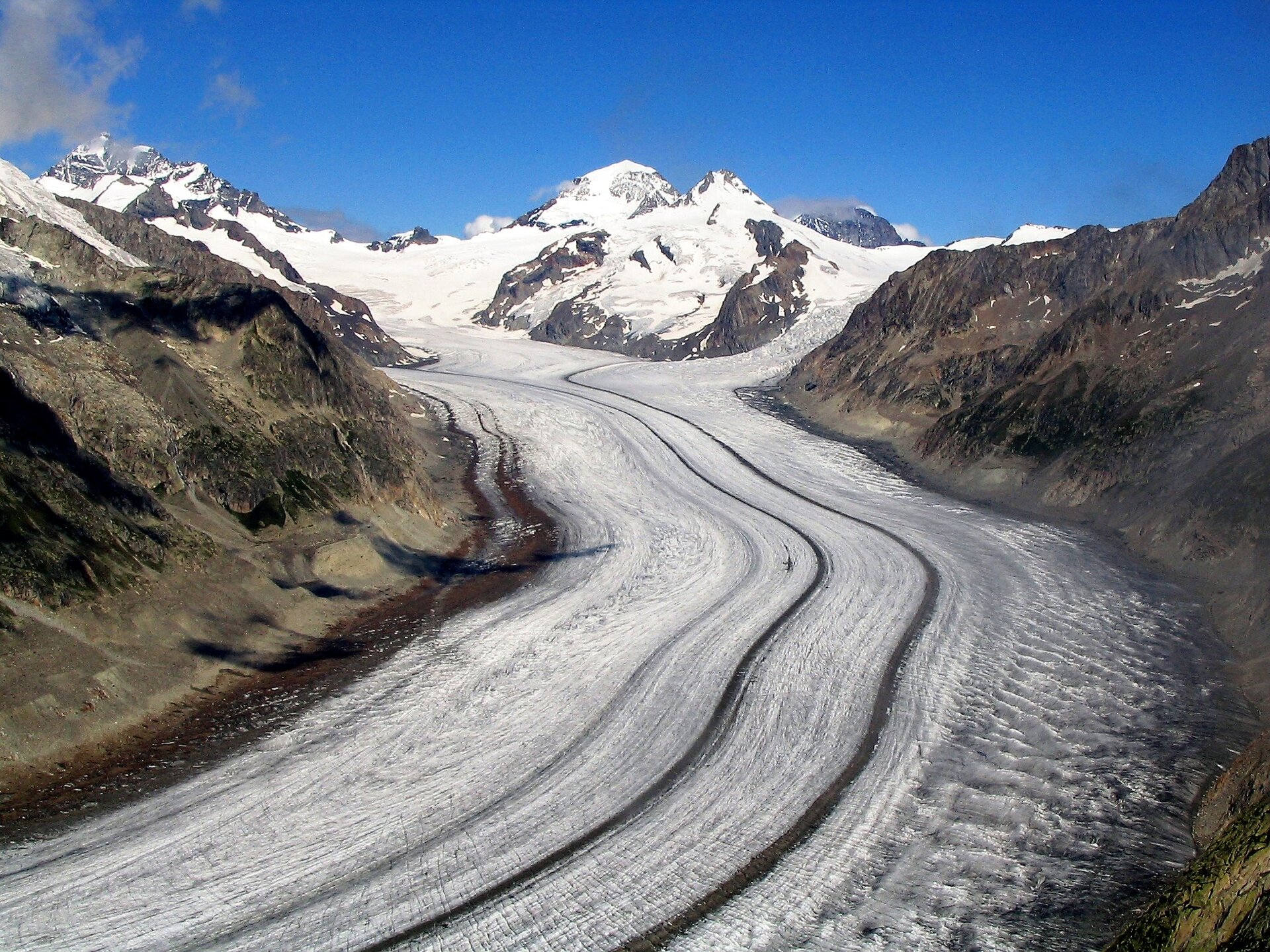
Zdjęcie przedstawia lodowiec Aletsch w Alpach - najdłuższy górski lodowiec alpejski. Jęzor lodowca przypomina szeroką, drogę z lodu schodzącą od szczytów górskich w dół.
The longest mountain glacier in the Alps – Aletsch (Switzerland), 23.6 km long and 700 m thick
Source: Dirk Beyer, licencja: CC BY-SA 3.0.
R1Xf7IQIZUK0g
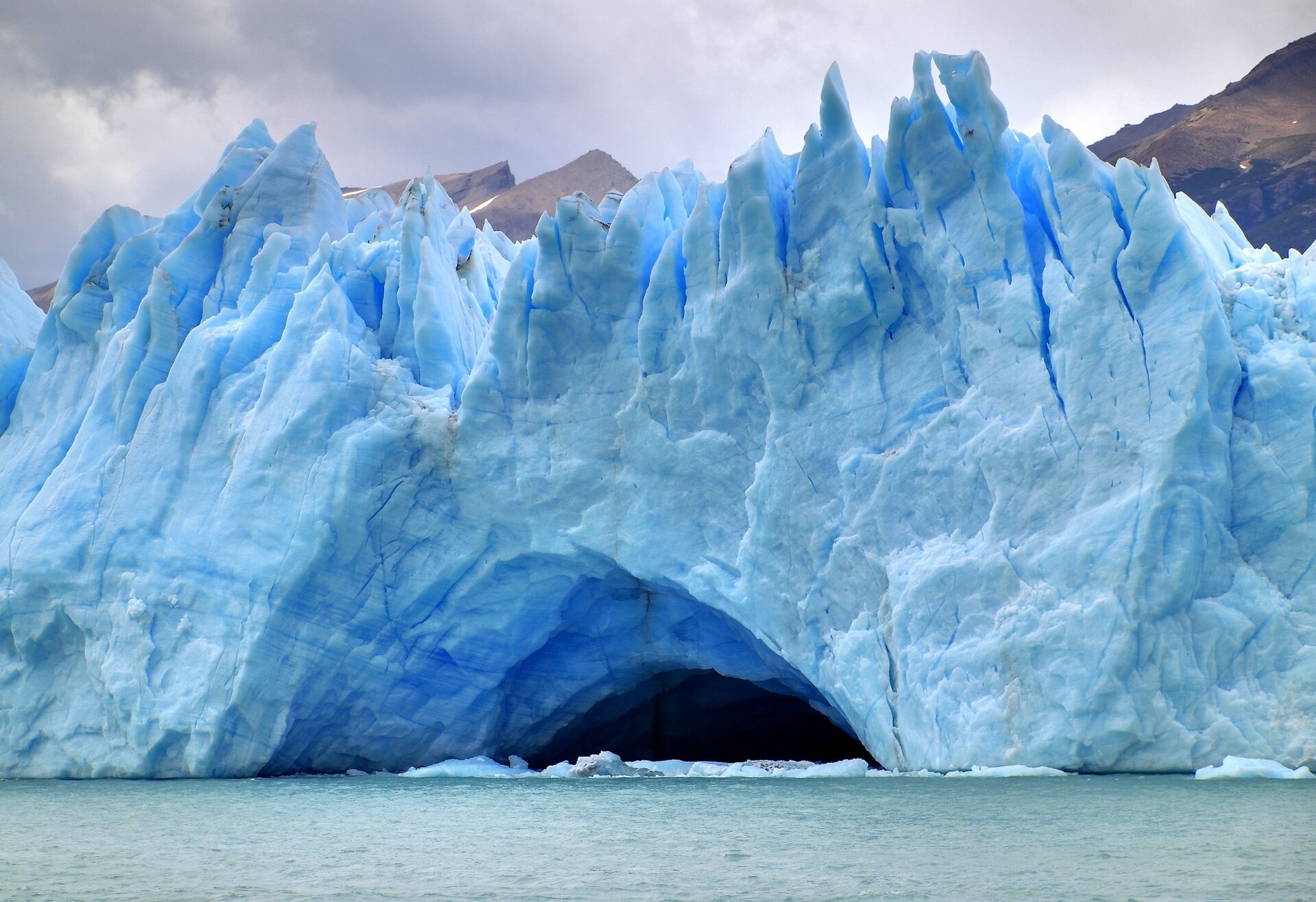
Zdjęcie przedstawia fragment lodowca z pionową ścianą. Podstawa lodowca znajduje się w wodzie. Lodowiec z przodu ma łukowate wejście do jaskini.
A Glacier cave on Perito Moreno Glacier, in Los Glaciares National Park, southern Argentina
Source: Martin St-Amant, licencja: CC BY-SA 3.0.
Rpj4o1oepa1wC
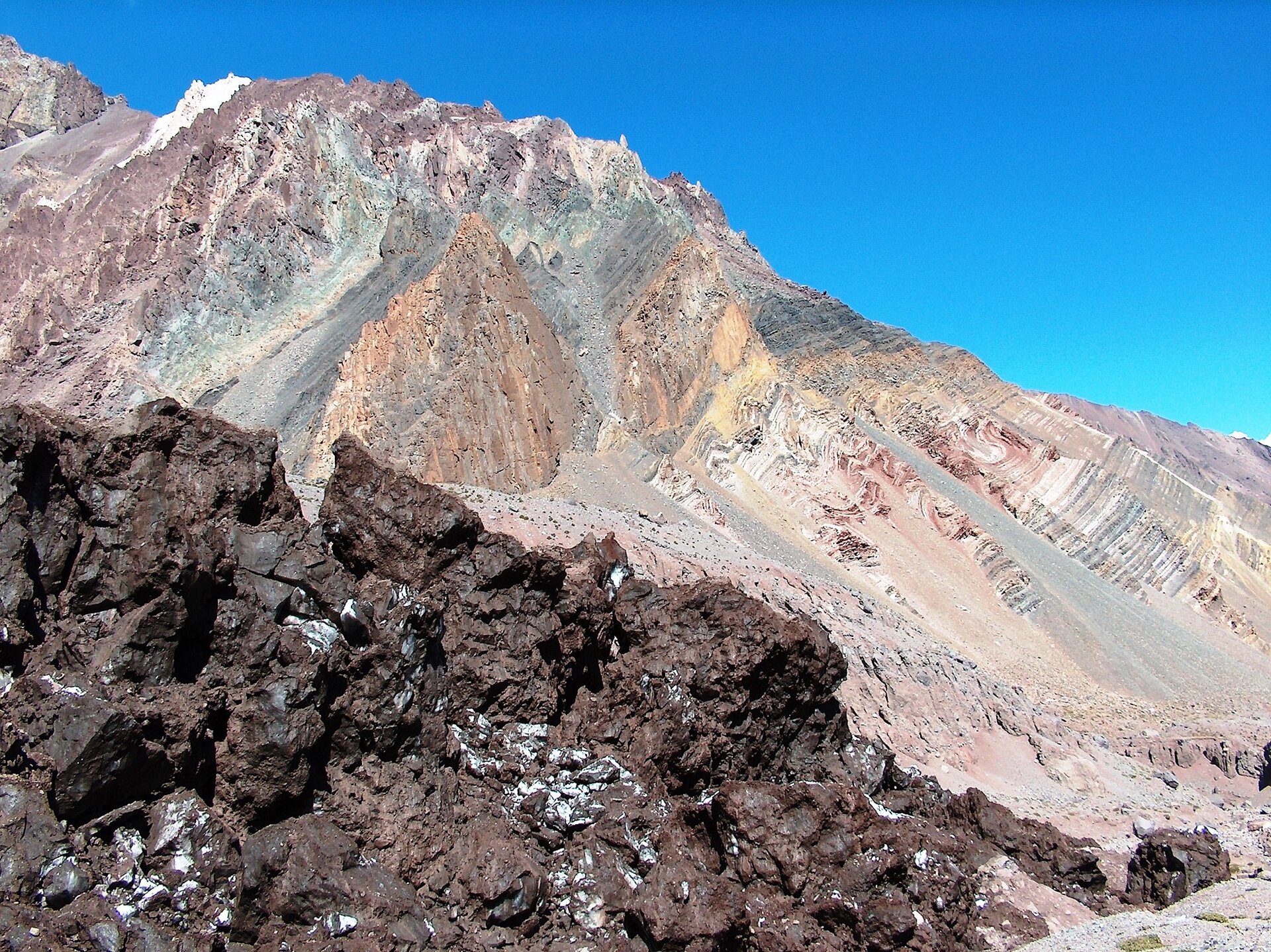
Na zdjęciu lodowiec w drodze na Aconcaguę. Lodowiec zbudowany jest z kamieni. W tle wysoka grań . Bezchmurne niebo.
Black glacier in Horcones Inferior Valley, Aconcagua Provincial Park, Argentina
Source: Apcbg, licencja: CC BY-SA 3.0.
RcPdL91Efti55
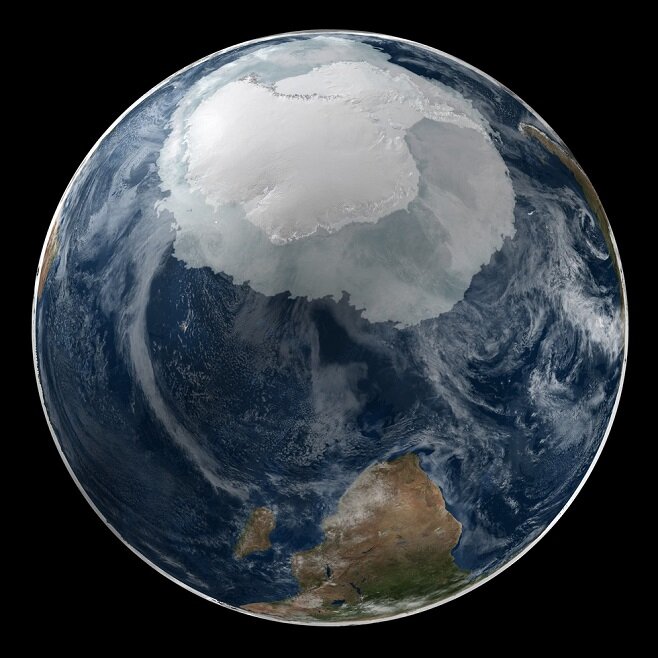
Na ilustracji kula ziemska sfotografowana z przestrzeni kosmicznej od strony bieguna południowego. Widoczne wody ląd na dole. Na górze kuli ziemskiej duża plama lodowcowa. To Antarktyda.
The largest ice sheet in the world – Antarctica
Source: NASA (https://commons.wikimedia.org), domena publiczna.
Glaciers and ice sheets are created in places where the average annual air temperature is below 0°C, where there are snowfalls, and, simultaneously, where the terrain is almost flat or even concave. The conventional line, above which snowfall during the year is higher than the loss of snow due to melting and evaporation, i.e., where there are conditions conducive to the creation of glaciers, is called the snow linesnow linesnow line.
In areas located above this line, the snow cover lies in the summer and is fed by new snowfalls in winter. Year after year, the snow cover gets thicker and thicker. Under the influence of gravity, a layer of snow is pressed and gradually turns into granular ice also known as firnfirnfirn, and, ultimately, into glacial ice. The area where this process occurs is called a firn fieldfirn fieldfirn field. Most often, firn fields form in upper parts of valleys or at the bases of mountain peaks. When a lot of ice has been created, it becomes partially malleable under the pressure of the higher layers, and starts to flow below the snow line in the form of glacier tongues. A firn field and the tongue that flows out of it are called a mountain glacier.
Task 1
Watch the animation showing the creation of the mountain glaciers titled The mountain glacier
In suitable climatic conditions (low temperature, more snowfall during the year than loss of snow due to melting and evaporation) and in areas with favorable terrain (concave or flat), many glaciers may come together in a huge massif called an ice sheetice sheetice sheet. Ice sheets can cover almost the whole continent, or a large part of it. In Pleistocene (2.6 million – 11.7 thousand years ago), vast areas of the northern hemisphere were repeatedly covered by ice sheets.
RZ53s0sooI7dn
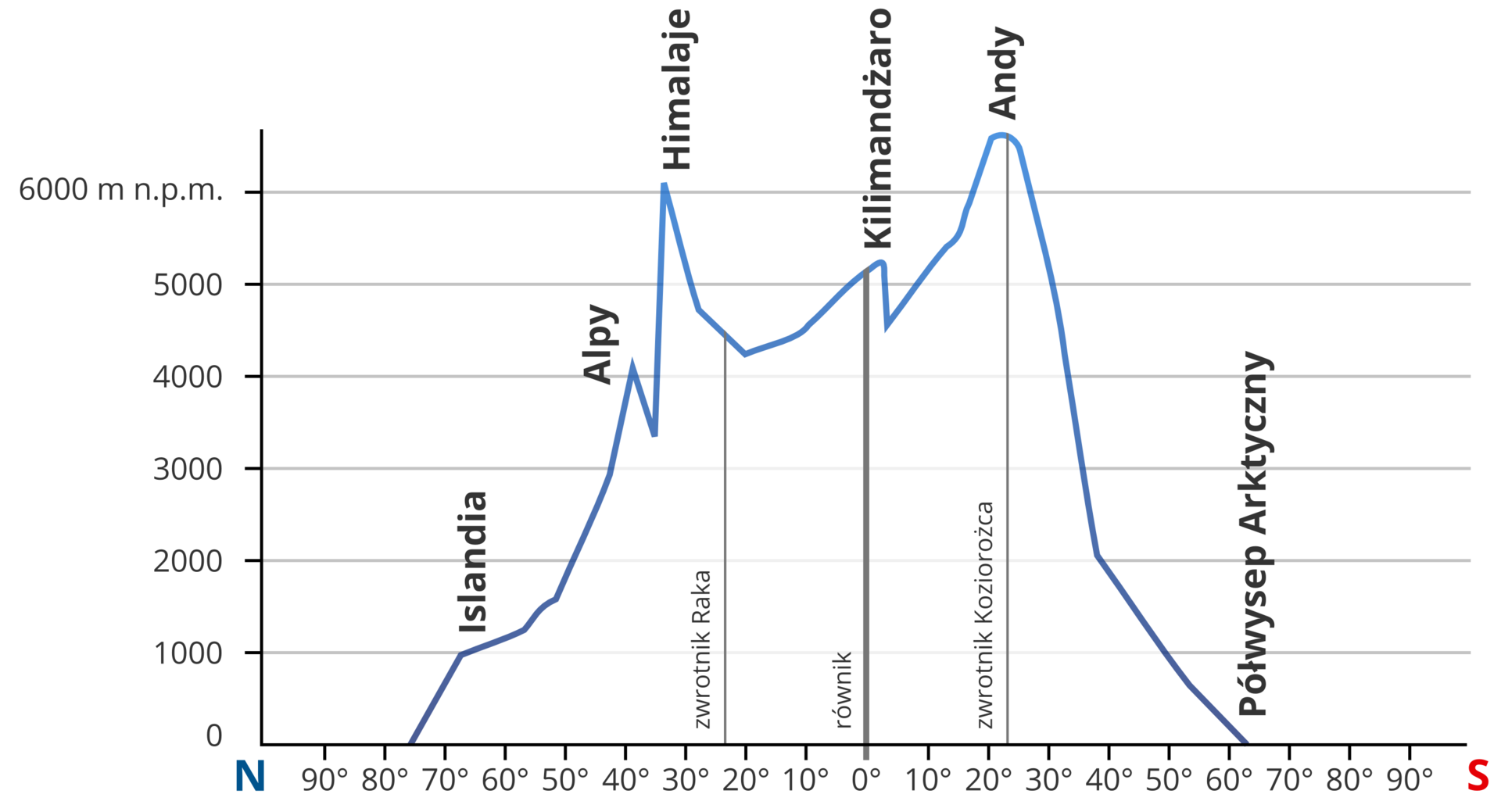
Na ilustracji wykres obrazujący, na jakich wysokościach przebiega granica wiecznego śniegu w rożnych szerokościach geograficznych. Z lewej strony wykresu, oś Y podziałka z wysokościami od zera do sześciu tysięcy metrów nad poziomem morza. Na osi poziomej X wykresu opisane szerokości geograficzne co dziesięć stopni od północy do południa. Pionowymi liniami zaznaczony równik i zwrotniki. Granica wiecznego śniegu przebiega od najniższego poziomu kolejno do najwyższego poziomu na Półwyspie Arktycznym, w Islandii (tysiąc metrów nad poziomem morza), Alpach (cztery tysiące metrów nad poziomem morza), Kilimandżaro (pięć tysięcy metrów nad poziomem morza), Himalajach, Andach. Granica wiecznego śniegu przebiega najwyżej na szerokościach zwrotnika Raka, Himalaje (sześć tysięcy metrów nad poziomem morza) i zwrotnika Koziorożca - w Andach (powyżej sześciu tysięcy metrów nad poziomem morza).
The snow line depending on the latitude
Source: Krzysztof Jaworski, licencja: CC BY 3.0.
Task 2
Based on what you have learned so far, describe the following issues.
R146ffFaJriVc
The snow line and its course at different latitudes (Uzupełnij)
Creation of glaciers and ice sheets (Uzupełnij)
Examples of glacier traces in Polish mountains (Uzupełnij).
The snow line and its course at different latitudes (Uzupełnij)
Creation of glaciers and ice sheets (Uzupełnij)
Examples of glacier traces in Polish mountains (Uzupełnij).
Currently, in polar areas, the snow line runs at a height of about 200–1000 m above sea level. It reaches the sea level only in Greenland and Antarctica. In the temperate zone, it occurs at a height of about 800–3200 m above sea level. In the tropical zone and in the Himalayas, it runs at 5000–6000 m above sea level, and on the equator it goes down to about 4500–5000 m above sea level.
RZCAH4572uwmo
Exercise 1
Mark the correct definition of the snow line. Możliwe odpowiedzi: 1. a conventional line above which snowfalls should be expected, even in summer, 2. a conventional line above which more snow comes than melts during the year, 3. a conventional line above which snow lies for at least 10 months a year, 4. a conventional line above which snow does not melt and does not evaporate
Mark the correct definition of the snow line. Możliwe odpowiedzi: 1. a conventional line above which snowfalls should be expected, even in summer, 2. a conventional line above which more snow comes than melts during the year, 3. a conventional line above which snow lies for at least 10 months a year, 4. a conventional line above which snow does not melt and does not evaporate
Mark the correct definition of the snow line.
a conventional line above which snowfalls should be expected, even in summer
a conventional line above which more snow comes than melts during the year
a conventional line above which snow lies for at least 10 months a year
a conventional line above which snow does not melt and does not evaporate
RF1gliagRX4td
Exercise 2
Match the pairs: English words and Polish definitions. firn field Możliwe odpowiedzi: 1. forma przejściowa między śniegiem a lodem, powstająca na skutek częściowego topienia i ponownego zamarzania śniegu oraz ciśnienia, jakie wywierają jego nadległe warstwy, 2. część lodowca znajdująca się powyżej granicy wiecznego śniegu, gdzie więcej śniegu przybywa, niż topnieje, 3. rozległa pokrywa lodowa zajmująca znaczną cześć lądu, a nawet cały kontynent ice sheet Możliwe odpowiedzi: 1. forma przejściowa między śniegiem a lodem, powstająca na skutek częściowego topienia i ponownego zamarzania śniegu oraz ciśnienia, jakie wywierają jego nadległe warstwy, 2. część lodowca znajdująca się powyżej granicy wiecznego śniegu, gdzie więcej śniegu przybywa, niż topnieje, 3. rozległa pokrywa lodowa zajmująca znaczną cześć lądu, a nawet cały kontynent firn Możliwe odpowiedzi: 1. forma przejściowa między śniegiem a lodem, powstająca na skutek częściowego topienia i ponownego zamarzania śniegu oraz ciśnienia, jakie wywierają jego nadległe warstwy, 2. część lodowca znajdująca się powyżej granicy wiecznego śniegu, gdzie więcej śniegu przybywa, niż topnieje, 3. rozległa pokrywa lodowa zajmująca znaczną cześć lądu, a nawet cały kontynent
Match the pairs: English words and Polish definitions. firn field Możliwe odpowiedzi: 1. forma przejściowa między śniegiem a lodem, powstająca na skutek częściowego topienia i ponownego zamarzania śniegu oraz ciśnienia, jakie wywierają jego nadległe warstwy, 2. część lodowca znajdująca się powyżej granicy wiecznego śniegu, gdzie więcej śniegu przybywa, niż topnieje, 3. rozległa pokrywa lodowa zajmująca znaczną cześć lądu, a nawet cały kontynent ice sheet Możliwe odpowiedzi: 1. forma przejściowa między śniegiem a lodem, powstająca na skutek częściowego topienia i ponownego zamarzania śniegu oraz ciśnienia, jakie wywierają jego nadległe warstwy, 2. część lodowca znajdująca się powyżej granicy wiecznego śniegu, gdzie więcej śniegu przybywa, niż topnieje, 3. rozległa pokrywa lodowa zajmująca znaczną cześć lądu, a nawet cały kontynent firn Możliwe odpowiedzi: 1. forma przejściowa między śniegiem a lodem, powstająca na skutek częściowego topienia i ponownego zamarzania śniegu oraz ciśnienia, jakie wywierają jego nadległe warstwy, 2. część lodowca znajdująca się powyżej granicy wiecznego śniegu, gdzie więcej śniegu przybywa, niż topnieje, 3. rozległa pokrywa lodowa zajmująca znaczną cześć lądu, a nawet cały kontynent
Match the pairs: English words and Polish definitions.
rozległa pokrywa lodowa zajmująca znaczną cześć lądu, a nawet cały kontynent, część lodowca znajdująca się powyżej granicy wiecznego śniegu, gdzie więcej śniegu przybywa, niż topnieje, forma przejściowa między śniegiem a lodem, powstająca na skutek częściowego topienia i ponownego zamarzania śniegu oraz ciśnienia, jakie wywierają jego nadległe warstwy
firn field
ice sheet
firn
Summary
The line above which there are conditions conducive to the creation of glaciers is called the snow line.
In suitable climatic conditions and in areas with favorable terrain, many glaciers may come together in a huge massif called an ice sheet.
Considerable areas of the Earth have many times been glaciated.
lód ziarnisty - forma przejściowa między śniegiem a lodem, powstająca na skutek częściowego topienia i ponownego zamarzania śniegu oraz ciśnienia, jakie wywierają jego nadległe warstwy