Przeczytaj
Did you know that Europe has a well‑developed network of long‑distance cycle routes? There are 17 routes, of a total length of 90,000 kilometres, which cross the whole continent from east to west, and from south to north. Have you ever been on a cycling holiday? What’s the longest distance you have covered? Read about four EuroVelo routes and decide if a holiday on a bike is your cup of tea.
Wiedziałeś/Wiedziałaś, że Europa ma świetnie rozwiniętą sieć długodystansowych szlaków rowerowych? To system ok. 90 tys km ścieżek, na które składa się 17 szlaków przecinających kontynent ze wschodu na zachód i z południa na północ. Byłeś/Byłaś kiedyś na rowerowych wakacjach? Jaki jest najdłuższy dystans, który kiedykolwiek przejechałeś/przejechałaś? Przeczytaj o czterech szlakach EuroVelo i zdecyduj, czy to coś dla ciebie.
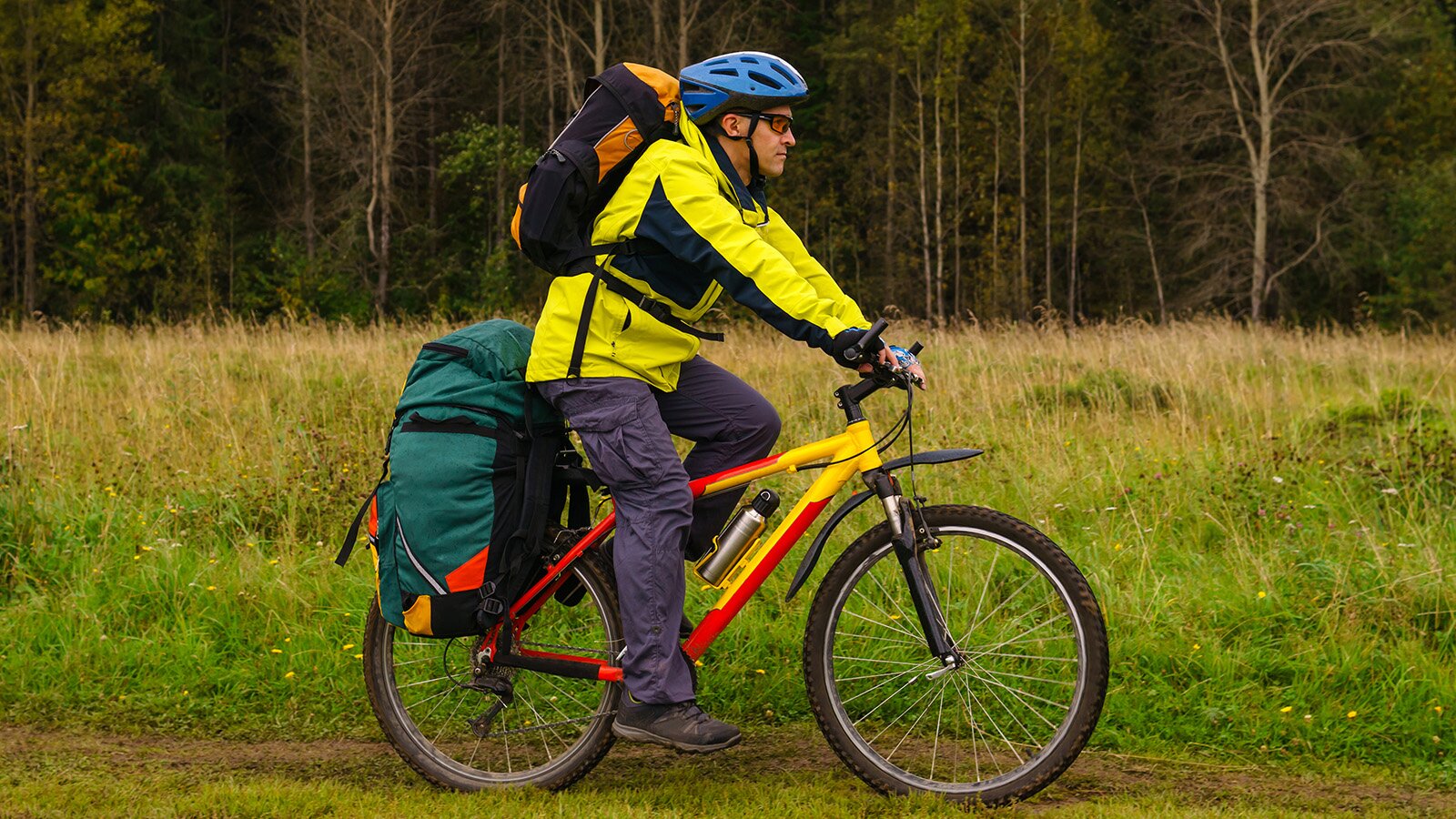
Match the parts of a bike with their translations.
Study the text and do the exercises below.
Discover Europe with EuroVeloEuroVelo is a network of 17 long distance cycle routes connecting places of cultural, historical, and natural interest all across Europe. Here are four of them.
A) The Baltic Sea Cycle Route is a 9,000‑km‑long scenic route that goes along the Baltic Sea coast crossing beautiful beaches, thick woodlands, and impressive cliffs. It is also cultural since you will visit 5 capitals. To mention just a few places of interest, you will be able to see the UNESCO World Heritage SiteUNESCO World Heritage Site shared by Lithuania and Russia, the amazing Curonian SpitCuronian Spit. This 98‑kilometre long sand‑dune spit separates the Curonian Lagoon from the Baltic Sea coast and offers breathtaking views. Cycling along this route you will be able to admire the highest moving sand dunesmoving sand dunes in Europe. They are between 35 and 60 metres high. For history buffshistory buffs the Hanseatic city of Lubeck with its landmark seven towers is an absolute must‑see. It’s equally famous for its marzipanmarzipan.
B) If you choose the East European Route you can start your trip in sunny Greece and finish at the northernmost pointnorthernmost point of Europe accessible by car, which is the North Cape. You will need a good variety of outdoor clothing in your pannierspanniers, as you will be exposed to all sorts of elementselements cycling 6,550 kilometres from the Mediterranean to the North Sea. Passing through Greece, don’t forget to consult the local oracleoracle, Pythia, whose seat has been in Delphi for centuries. Further north you will cycle through Belgrade, Skopje, the Tokaj Wine region, and the Wieliczka Salt MineSalt Mine. The last attraction is a whole underground infrastructure, including a chapel and many statues, carved in rock salt. You will have a chance to rest a bit from cycling while crossing the Gulf of Finland from Tallinn to Helsinki by ferry. Finland and Norway are areas with extensive woodlands and crystal clear lakes, so don’t forget your insect repellentinsect repellent as there are many hungry mosquitos there!
C) If volatile weathervolatile weather does not put you offput you off, the North Sea Cycle Route is for you. The diversity of landscapes and historical richness of this expedition will make up formake up for all the inconveniences which you may experience from the wind or rain. You’ll set offset off from the northernmost part of the United Kingdom, the Shetland Islands. This subarctic archipelagosubarctic archipelago has been inhabited since the Mesolithic period and offers unique archaeological sites such as Norse settlementsNorse settlements or prehistoric ruins of a temple. The islands are also packed with sites which are a photographer’s heaven. From there, you will cycle all along the British east coast down to the English Channel. Don’t spend too much time in the big cities on the way as they are easily reachable in the form of city breaks. Save time to explore the pristinepristine south‑west coast of Norway: small towns with white wooden houses, fishing villages, and a glittering seaglittering sea. And just like in Great Britain, here too you will experience some unforgettable close ups withclose ups with the forces of nature.
D) EuroVelo 2, the Capitals Route, takes cyclists across six European capitals and a huge part of history. From Dublin to Moscow you will explore the essence of the Old Continent’s culture. There are so many attractions to sightsee that you need to plan carefully. The terrain is very cyclist‑friendly as this route is mostly marked along local cycle paths or dirt roadsdirt roads on European lowlandslowlands. Most of these places nowadays have a fairly good network of cycle pathscycle paths. However, the further east you go, the more careful you need to be while cycling along with the motoristsmotorists as bikers are not always considered welcome participants in the local traffic. You will witness the differences between western and eastern Europe from the perspective of two wheels.
Źródło: Anna Posyniak‑Dutka , [na podstawie:] https://en.eurovelo.com/about-us [dostęp 10.02.2022], https://en.wikipedia.org/wiki/Curonian_Spit [dostęp 10.02.2022], https://www.youtube.com/watch?v=y4BPv1PfVEw [dostęp 10.02.2022], licencja: CC BY-SA 3.0.
Refer back to the text and categorise the attractions under the names of EuroVelo routes which offer the opportunity to visit them.
Answer the questions in 6–7 sentences each.
Have you ever been on a cycling holiday? If so, what kind of experience was it? If not, would you like to go on one?
Which of the routes described in the article would you be most interested in cycling along? Why?
Słownik
/ breɪks / / breɪk /
hamulce [hamulec] (a mechanism which slows down or stops a vehicle)
/ kləʊs ʌps wɪð / / kləʊs ˈʌp wɪð /
bliskie spotkania z [bliskie spotkanie z]
/ kʊˈrəʊnɪən spɪt /
Mierzeja Kurońska (a sand dune that separates the Curonian Lagoon from the Baltic Sea coast)
/ ˈsaɪkl̩ pɑːðz / / ˈsaɪkl̩ pɑːtheta /
ścieżki rowerowe [ścieżka rowerowa]
/ ˈdɜ:t rəʊdz / / ˈdɜ:t rəʊd /
drogi gruntowe [droga gruntowa] (a road not covered with asphalt)
/ ˈelɪmənts / / ˈelɪmənt /
żywioły natury [żywioł natury]
/ ˈɡlɪtərɪŋ siː /
skrzące się morze
/ ˈhændlbɑːz /
kierownica
/ ˈhɪstr̩i bʌfs / / ˈhɪstr̩i bʌf /
entuzjaści historii [entuzjasta/entuzjastka historii])
/ ˈɪnsekt rɪˈpelənt /
spray na owady
/ ˈlɒŋdɪstəns baɪkˈpækɪŋ trɪp /
długodystansowa wycieczka rowerowa z ekwipunkiem
/ ˈləʊləndz / / ˈləʊlənd /
niziny [nizina]
/ ˈmeɪk ˈʌp fɔː /
wynagradza [wynagradzać]
/ ˈmɑːzɪpæn /
marcepan
/ ˈməʊtərɪsts / / ˈməʊtərɪst /
kierowcy [kierowca]
/ ˈmuːvɪŋ ˈsænd djuːnz / / ˈmuːvɪŋ ˈsænd djuːn /
ruchome wydmy [ruchoma wydma] (a hill of sand that can change its location as a result of wind)
/ nɔːs ˈsetlmənts / / nɔːs ˈsetlmənt /
nordyjskie osady [nordyjska osada] (villages created by people who came from the Scandinavian Peninsula)
/ ˈnɔːðənməʊst pɔɪnt /
najdalej na północ wysunięty punkt
/ ˈɒrəkl̩ /
wyrocznia (a person believed to be in contact with gods and being able to predict the future)
/ ˈpænɪəz / / ˈpænɪə /
sakwy rowerowe [sakwa rowerowa]
/ ˈprɪstiːn /
nieskazitelnie czysty/czysta
/ ˈpʊt ju ɒf / / ˈpʊt ˈsʌmwʌn ɒf /
zniechęca cię [zniechęcać kogoś]
/ ˈsɒlt maɪn /
kopalnia soli
/ set ɒf /
zaczniesz podróż [zaczynać podróż]
/ ˈsʌbˈɑːktɪk ˌɑːkɪˈpeləɡəʊ /
podbiegunowy archipelag (a group of islands in the region immediately south of the Arctic Circle)
/ juːˈneskəʊ ˈwɜ:ld ˈherɪtɪdʒ saɪt /
Lista Światowego Dziedzictwa UNESCO (a list of natural and man‑made sites considered to be of great importance to mankind)
/ ˈvɒlətaɪl ˈweðə /
niestabilna pogoda
Źródło: GroMar Sp. z o.o., licencja: CC BY‑SA 3.0