Shaping the German frontier
to list the reasons of the Greater Poland Uprising Silesian Uprisings;
to explain the reasons why Poland lost the East Prussian plebiscite in Warmia and Masuria;
to indicate the German frontier after the hostilities.
On 26 December 1918, Ignacy Paderewski came to Poznań. This situation caused anti‑German representations, which transformed into uprising. The Poles managed to control almost all of the Greater Poland. The insurgent actions were stopped only after the intervention of France. The dispute about the next territory, the Upper Silesia, was expected to be solved through a plebiscite, however the tense social and political situation in this region resulted in three Silesian Uprisings. The final decision about the division of the Upper Silesia was taken by the Council of Ambassadorsthe Council of Ambassadors, which granted 30% of the disputable territories to Poland. In Warmia i Masuria, as a result of the plebiscites, only 3% of the society voted in favour of Poland. Finally, several towns located in this region have been incorporated into Poland.
Listen to the recording. Take a look behind the scenes of the Greater Poland Uprising. Why taking control of the airport in Lawica helped to create the Polish air forces?
The airport in the Lawica village was situated near Poznan (nowadays it is located within the city borders). It was the ultimate bastion of the German resistance in Poznan. The city was already liberated by the Greater Poland insurgents. The battle of the German military airport happened on January 6, 1919. Among Poles a key role played pilot sergeant Wiktor Pniewski. They knew that a huge amount of aviation equipment was stored there and proposed that Germans surrender the Ławica Airport. However, they did not intend to lay down their weapons. When Germans threatened to blow up one of the nearest forts, which was filled with air bombs, the decision about taking control over the airport was taken.
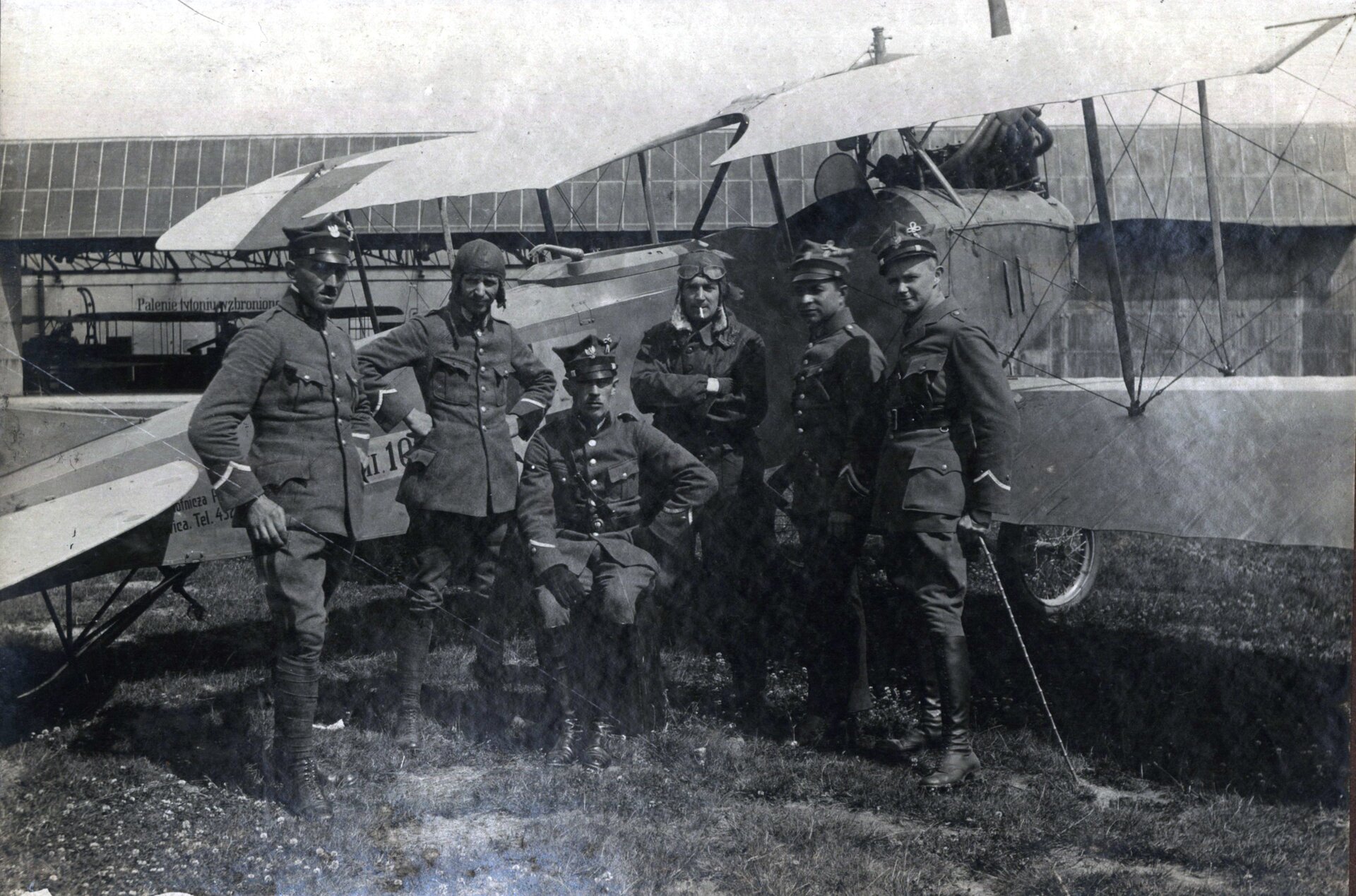
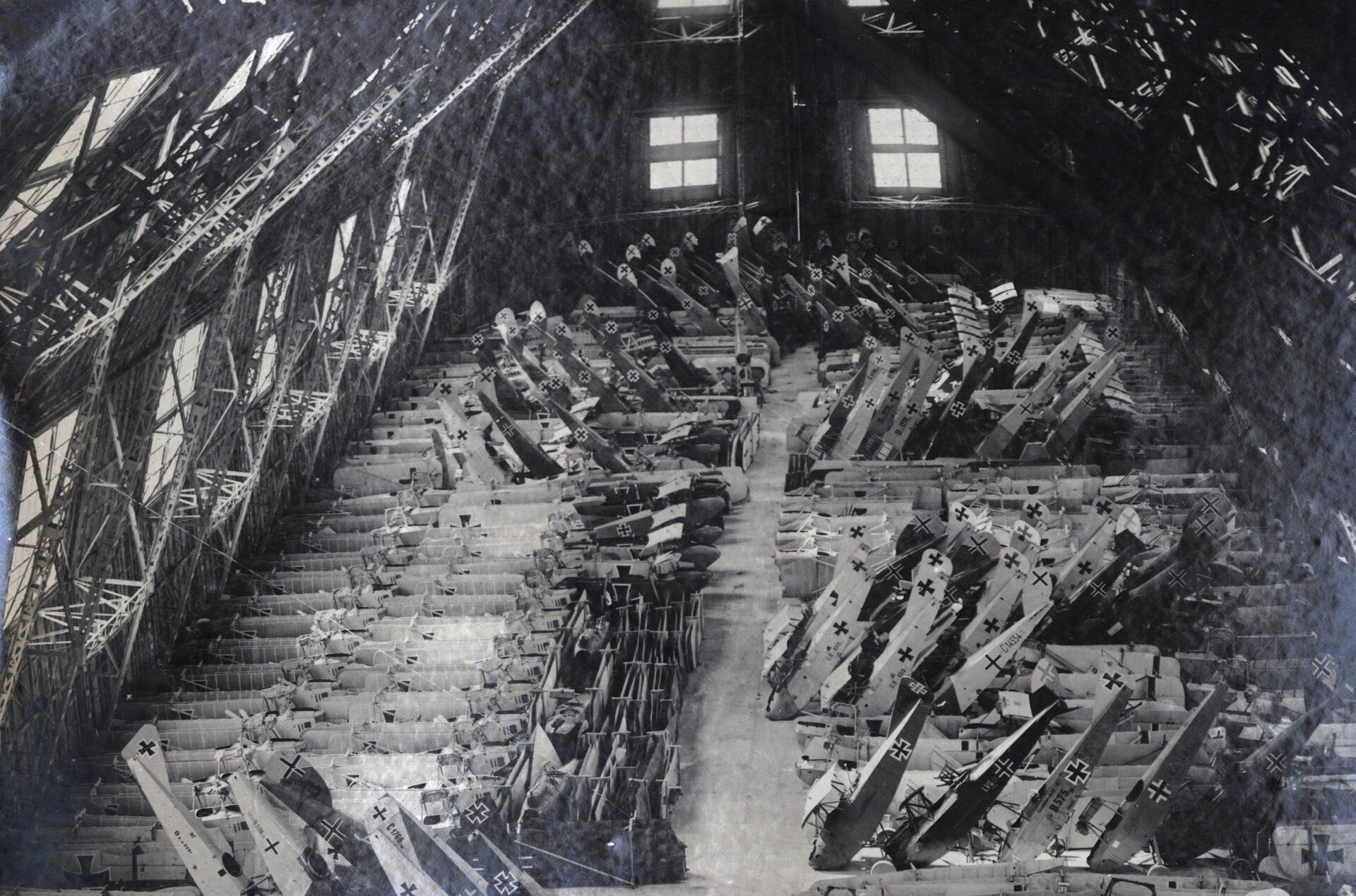
On the night between 5 and 6 January, the military unit under the command of lieutenant Andrzej Kopa set off to Ławica. The insurgents were supported by two 80‑millimeter cannons. In total, the number of the soldiers involved in the actions was not more than 400. The battle did not last long, but was carried out perfectly. The Poles fired their cannons at the airport in such a way not to destroy the stored equipment. The spoils of war went beyond their wildest expectations. After 20 minutes of fighting, the Poles took control over the equipment worth 200 million German marks! Dozens of aircrafts, thirty of which were suitable for immediate combat. At the same time, the insurgents took control of the Zeppelin's Hall in Winiary near Poznan - and inside, almost 215 planes. These were the greatest war trophies in the history of the Polish army.
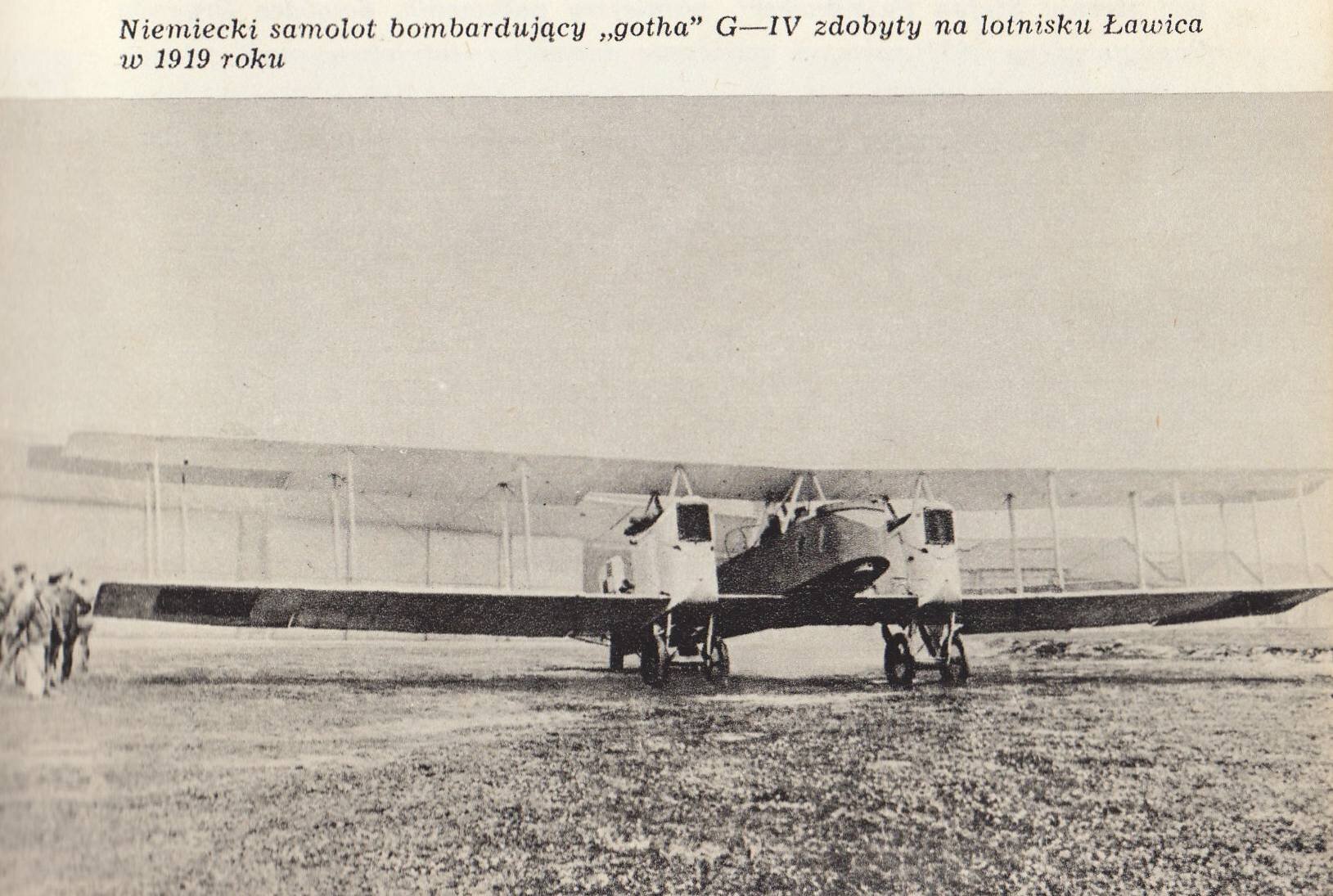
As a response to taking over the airport, the German planes staying in Frankfurt on the Oder attacked Poznan and Lawica over the next two days. Several people were killed, the air raids caused panic in the city. That is why on 9 January six Polish aviators, leaded by the sergeant Pniewski, with no permit of the command, organised with the taken over planes the air raid on the airport in Frankfurt. Within an hour, they dropped 900 kg of bombs, which destroyed the hangar, and ignited the fire. In this way, they stopped further bombing of Poznan by the Germans. However, Pniewski was harshly reprimanded by the members of the Supreme People's Council Executive. The authorities of the uprising did not want to provoke Germans too much.
Based on the article: The Greater Poland Uprising. How taking control of Lawica helped to create the air forces, Piotr Bojarski, Gazeta Wyborcza Poznań
The German revenge accelerated the organisational efforts of the Poles. On 7 January, the department of aviation was created at the General Command in Poznan, and the sergeant Pniewski was made responsible for the management of the airport in Lawica. In less than no time, they started to organise the insurgents air squadrons. Several hundred combat aircrafts and observation ballons became the basis of the independent Poland aviation. They started to assembly „the new” planes from the engines taken over, and the frames. Sergeant Pniewski recalled that „From the stock, four squadrons were created, and yet at the beiginning of January, I sent several dosen planes to Warsaw. Black crosses on the fuselages were covered with white and red chessboard”. In the middle of February, the Western allies forced Germans in Trewir to stop hostilities against Poland in the Greater Poland region. And on the taken over planes, yet with the Polish white and red chessboards, the pilots fought later for Lviv, and in the Polish‑Soviet war in 1920.
Match the facts with their direct causes.
The breakthrough in the war with the Red Army in August 1920, Disadvantageous result of the plebiscite of 20 March 1921, a call to arms by Wojciech Korfanty, a Polish plebiscite commissioner in the Upper Silesia, The arrival of Ignacy Paderewski to Poznan, enthusiastic welcome of the Poles; this caused hostile reactions of the German residents of the Greater Poland, The operation of grenzschutz, tension, caused by the local German administration
| The Greater Poland Uprising | |
| I Silesian Uprising | |
| II Silesian Uprising | |
| III Silesian Uprising |
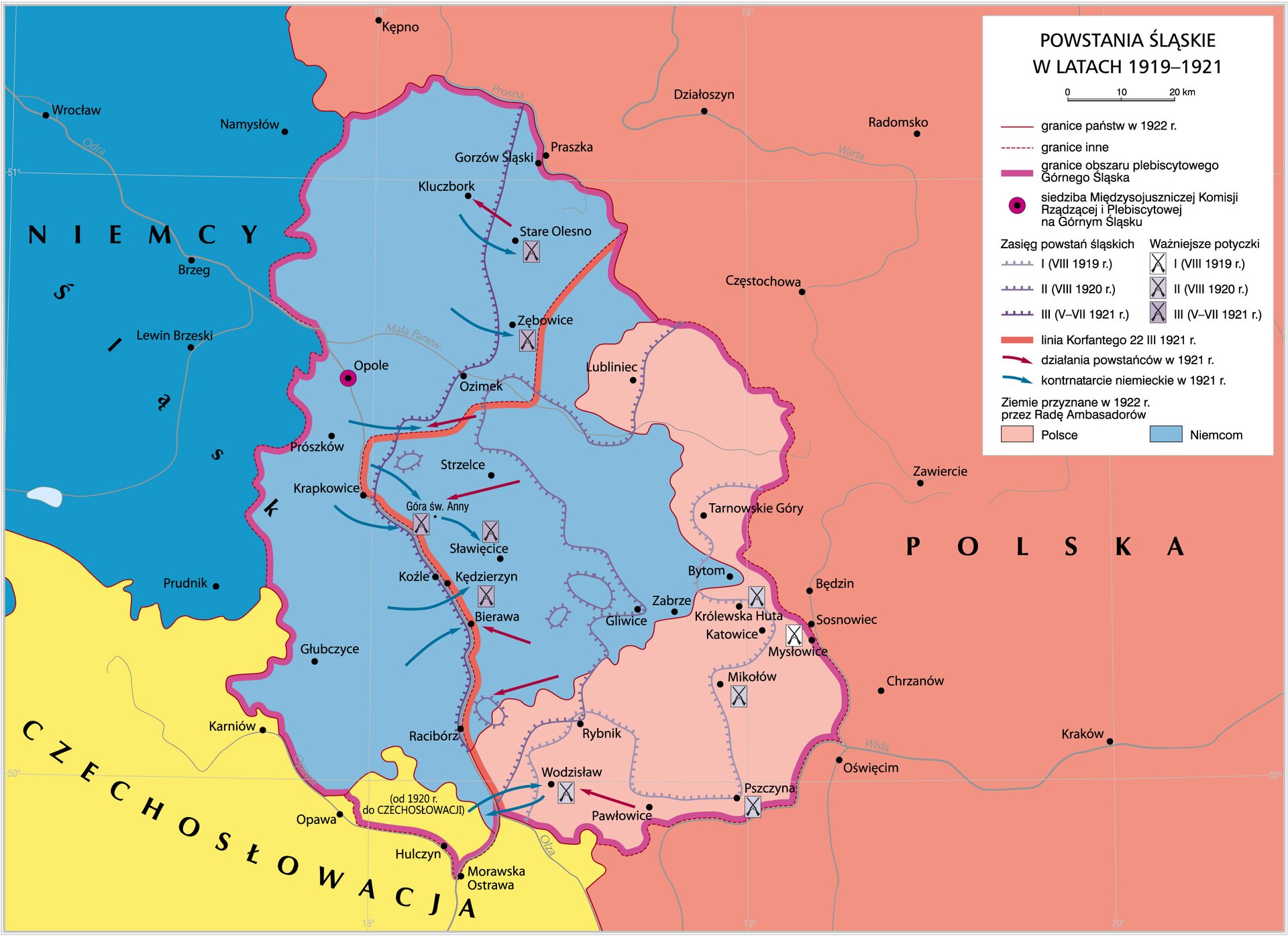
Fill the legend of the map with proper phrases.
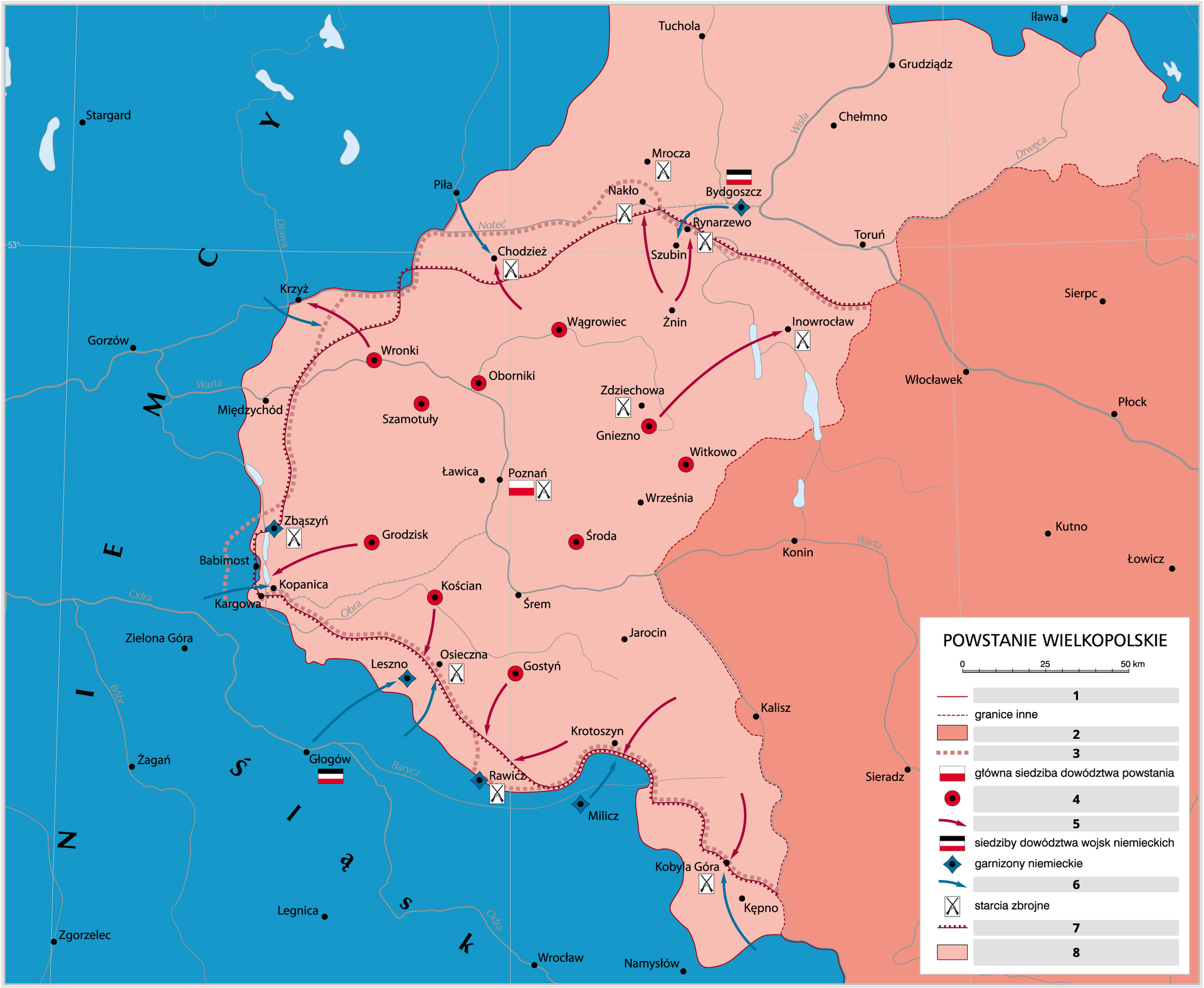
Match the description of the key with the numbers.
1, 2, 3, 4, 5, 6, 7, 8
| The key | Description |
|---|---|
| 1 | |
| 2 | |
| 3 | |
| 4 | |
| 5 | |
| 6 | |
| 7 | |
| 8 |
Describe which of the Silesian Uprisings had the greatest extend. Add the places of the biggest battles next to it. Which uprising was the longest? What were the results of particular uprisings for the local people?
What was the decisive factor on the final division of Upper Silesia after the World War I?
- III Silesian Uprising
- Plebiscite
- Paris Conference
The date of the plebiscite on Warmia, Powisle, Masuria was disadvantageous for Poland, because in that time:
- by-election the to the parliament of the Republic of Poland was held.
- the plebiscite in the Upper Silesia took place.
- The Bolshevik army threatened the capital, and the independence of Poland.
Analyse the words of the historician Włodzimierza Borejsza.
Dlaczego jedyne udane powstanie narodowe, wielkopolskie, jest zapomniane?Dawid zaatakował Goliata, kiedy ten był ledwo żywy. A kiedy olbrzym zaczął się zbierać, słabeusz skłonił mocarstwa do interwencji. Tak właśnie wygrywa się z pozycji słabszego. Ale taka logika nie leży w charakterze ułana i pewnie dlatego pamięć o tym powstaniu jest tak wyblakła”.
Source: W. Borejsza, Dlaczego jedyne udane powstanie narodowe, wielkopolskie, jest zapomniane?, [w:] Pomocnik Historyczny. 100 pytań na 100 lat historii Polski (1918-2018), 5/2018.
Which Polish uprising does the historician discuss?
- II Silesian Uprising in 1920
- III Silesian Uprising in 1921
- The Greater Poland Uprising in 1918
Key words
Silesian uprising, the Greater Poland Uprising, the frontiers
Glossary
batalion – największy pododdział taktyczny różnych rodzajów wojsk
eskadra – jednostka lotnictwa wojskowego składająca się z kilku lub kilkunastu samolotów;
Grenzschutz – powstała w latach 1918–1919 paramilitarna formacja ochotnicza działająca na wschodnich rubieżach Republiki Weimarskiej.
komisariaty plebiscytowe – dwa organy plebiscytowe: polski z Wojciechem Korfantym na czele w Bytomiu, oraz niemiecki, kierowany przez Kurta Urbanka, w Katowicach
kompania – jednostka wojskowa; pododdział wojska liczący od 60 do 110 żołnierzy, podoficerów i oficerów.
Konwencja górnośląska – polsko‑niemiecka konwencja, podpisana 15 maja 1922 w Genewie, która miała obowiązywać przez piętnaście najbliższych lat i ułatwić korzystanie przez obie strony z zasobów podzielonego okręgu przemysłowego; oprócz kwestii gospodarczych zapewniała Niemcom, którzy znaleźli się na terytorium II RP, i Polakom, którzy po podziale zamieszkiwali teren niemiecki, równouprawnienie, możliwość posługiwania się własnym językiem, także w życiu publicznym, zakładanie szkół, organizacji kulturalnych i politycznych; obie społeczności miały zachować lojalność wobec władz państwa, w którym mieszkają.
Linia demarkacyjna – linia oddzielająca walczące strony, ustalona na mocy porozumienia rozejmowego. Zwykle funkcjonuje do czasu ostatecznego ustalenia przebiegu granic.
Nagranie dostępne na portalu epodreczniki.pl
Nagranie słówka: Inter‑allies Governing and Plebiscite Committee with the headquarters in Katowice
Międzysojusznicza Komisja Rządząca i Plebiscytowa z siedzibą w Katowicach
Naczelna Rada Ludowa – (NRL), nielegalna organizacja polityczna założona w 1916 w Poznaniu przez polityków polskich z ziem zaboru pruskiego; przed 11 listopada 1918 jako Komitet Międzypartyjny lub Centralny Komitet Obywatelski, po 11 listopada 1918 działała jawnie;
Nagranie dostępne na portalu epodreczniki.pl
Nagranie słówka: the Supreme People's Council in the Upper Silesia
Naczelna Rada Ludowa na Górnym Śląsku – utworzony 30 VII 1921 organ administracyjny przedstawicielstwa ludności polskiej Górnego Śląska wobec Międzysojuszniczej Komisji Rządzącej i Plebiscytowej, Niemiec i Polski;
Płatowce – kadłub samolotu lub szybowca wraz ze skrzydłami, sterami i podwoziem, bez zespołów napędowych i wyposażenia
Rada Ambasadorów – (inaczej Konferencja Ambasadorów) - międzynarodowy organ wykonawczy kończącego I wojnę światową traktatu wersalskiego. Działała w latach 1920–1931.