How neoplasm is created? Carcinogens, treatment and prevention
illness is any change that involves disrupting the balance in the functioning of the body.
explain what cancer is;
describe how cancer develops;
give examples of cancer;
exchange factors that cause cancer;
describe the principles of cancer prevention.
How cancer is created?
Healthy cells are divided, for example, to replace worn or damaged cells. Neoplastic cells arise as a result of disorders of cell division. Neoplasms develop in various tissues and organs. Due to their features, neoplasms are divided into benign and malignant tumors.
Benign tumors develop slowly and do not grow into nearby tissues and organs. Cells of such tumors are similar to the tissue from which they originate. They form a solid structure surrounded by a connective tissue membrane, which is separated from the rest of the organ. The development of such a tumor may be stopped for a long time. Benign tumors do not form metastasesmetastases. They are not a threat to life and are usually completely curable. However, their development should be observed, as they can transform into malignant tumors under unfavorable conditions.
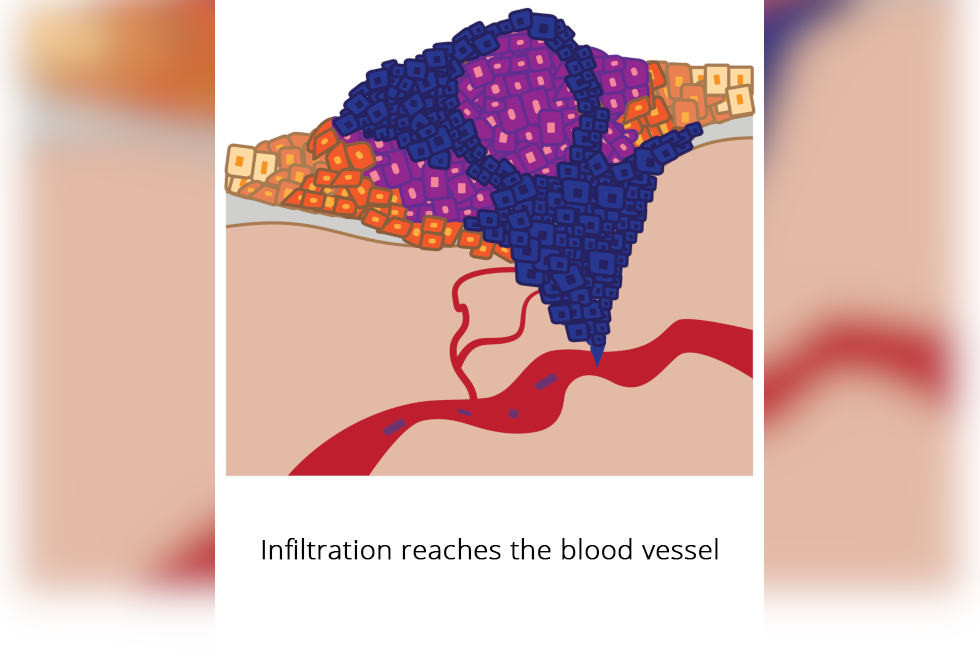
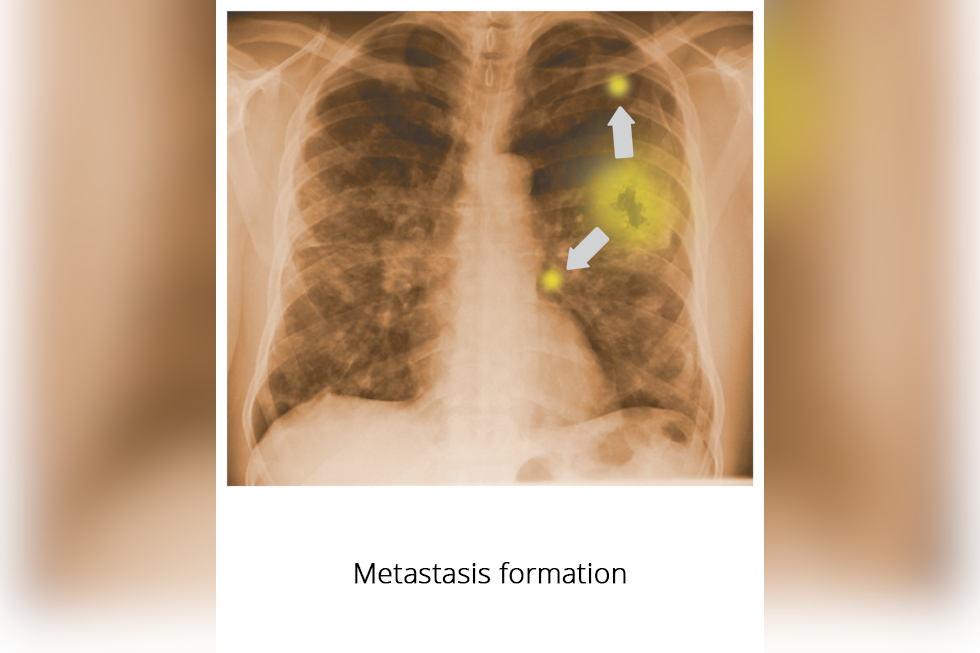
Malignant tumors develop rapidly and often without visible symptoms. They form irregular structures that penetrate neighboring tissues and organs. They surround themselves with blood vessels that provide them with nutrients. Their cells divide frequently, causing rapid growth of the tumor. Malignant tumor cells can roam the entire body and give rise to new tumors in distant organs – tumor metastasis. Such cancers are very dangerous to life.
Due to the origin of the tissue from which they arise, tumors are divided into epithelial and non‑epithelial. Cancer is a specific type of malignant disease originating from epithelial tissues.
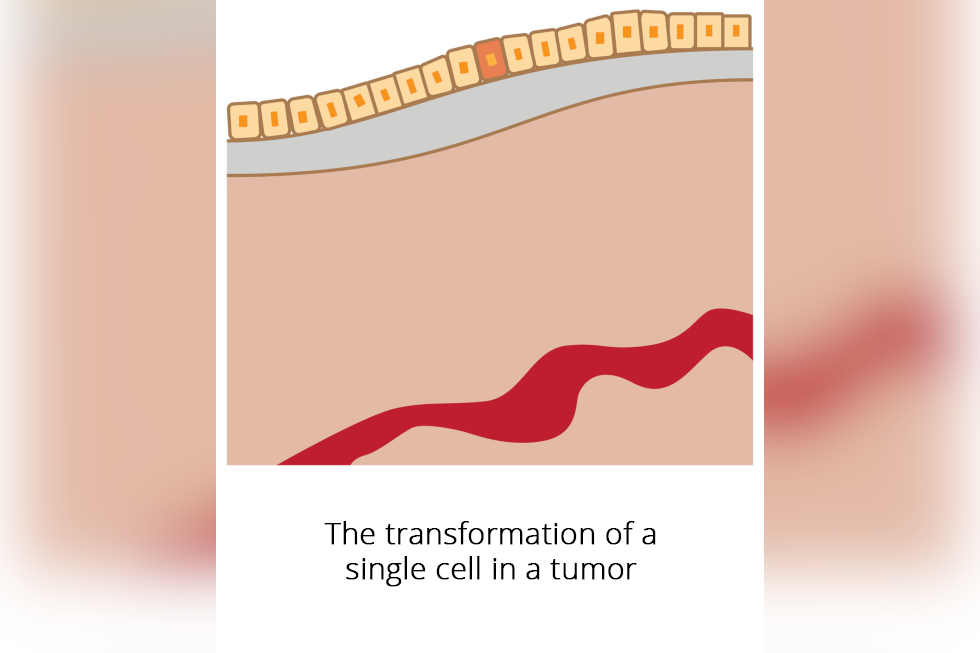
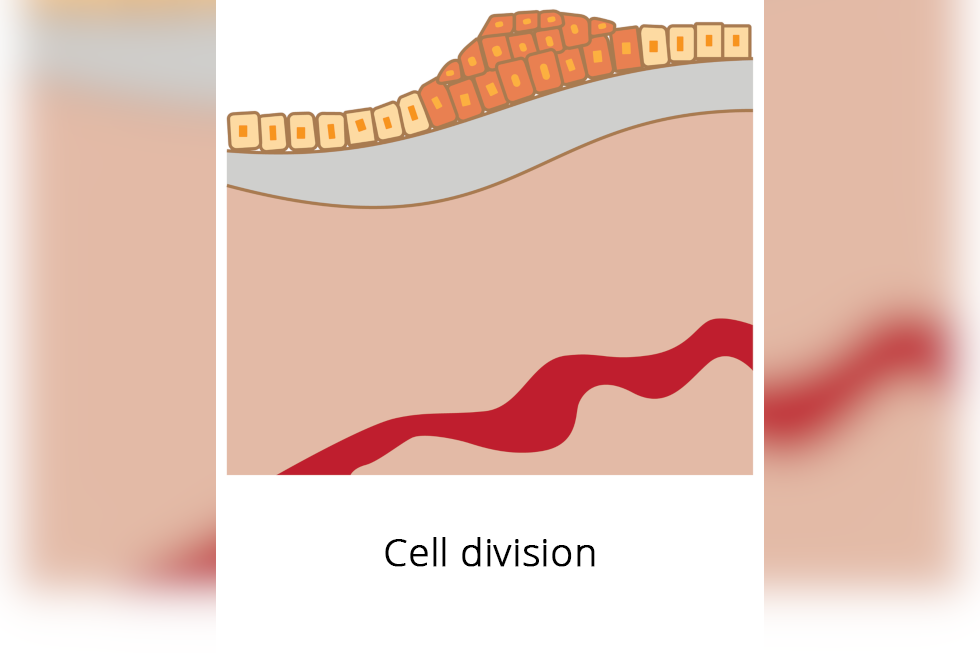
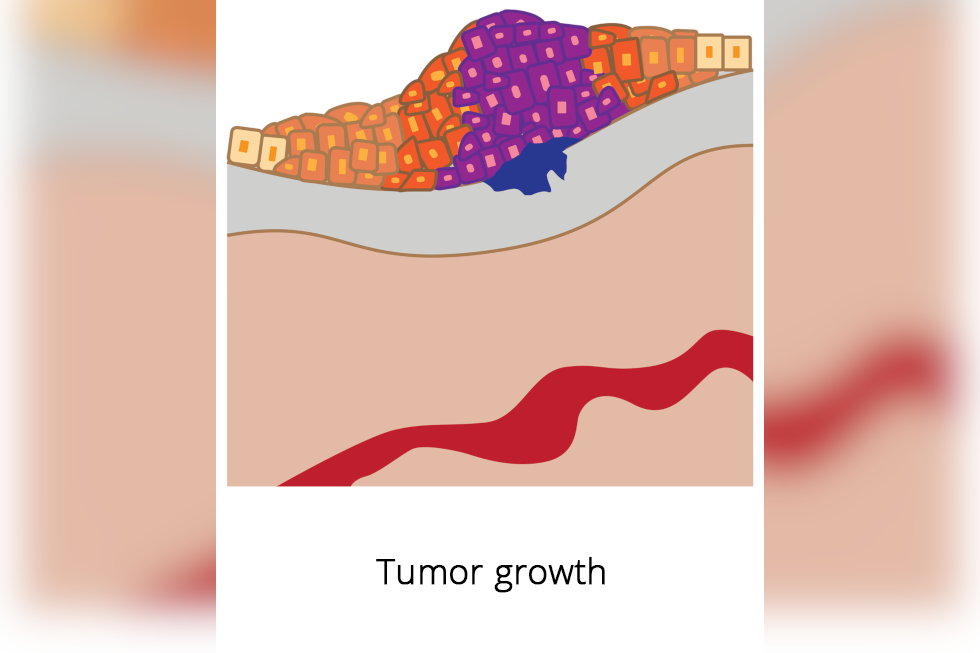
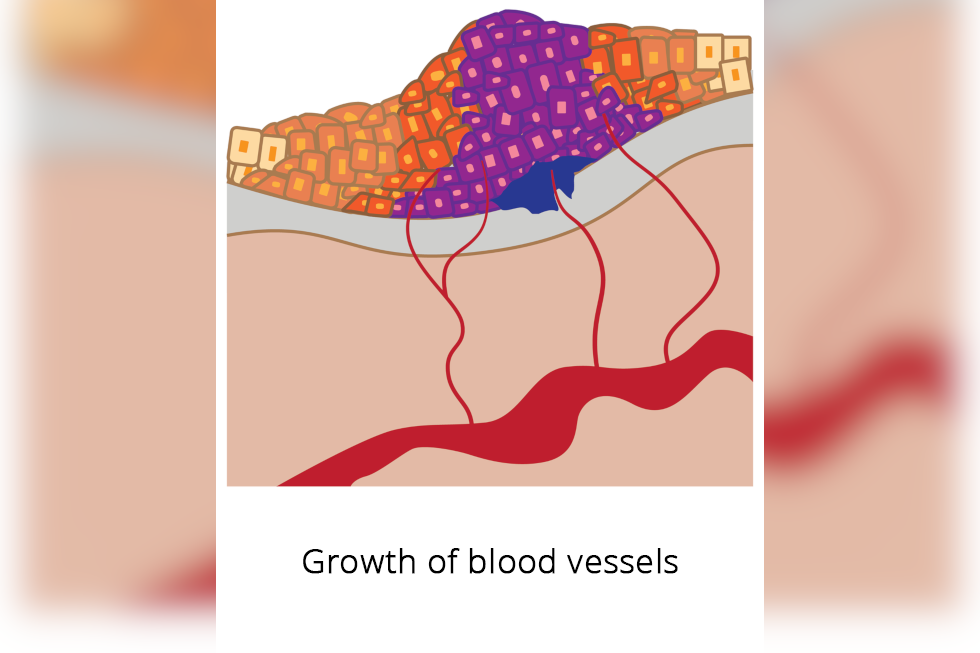
Cancers | |||
benign | malignant | ||
epithelial | non‑epithelial | epithelial – cancers | non‑epithelial |
papilloma | myoma | glandular cancer – breast cancer | melanoma – tumor of pigment cells |
adenoma | lipoma | squamous cell carcinoma – lung cancer | sarcoma – muscle tissue tumor |
cystoma | fibroma | lymphoma – cancer of the lymphatic system | |
angioma | leukemia – bone marrow cell tumor | ||
Carcinogenic factors
Carcinogenic factorsCarcinogenic factors are environmental stimuli that contribute to the development of neoplasia. Some of them directly damage cell DNA, others do not damage DNA, but can accelerate the growth of neoplastic cells.
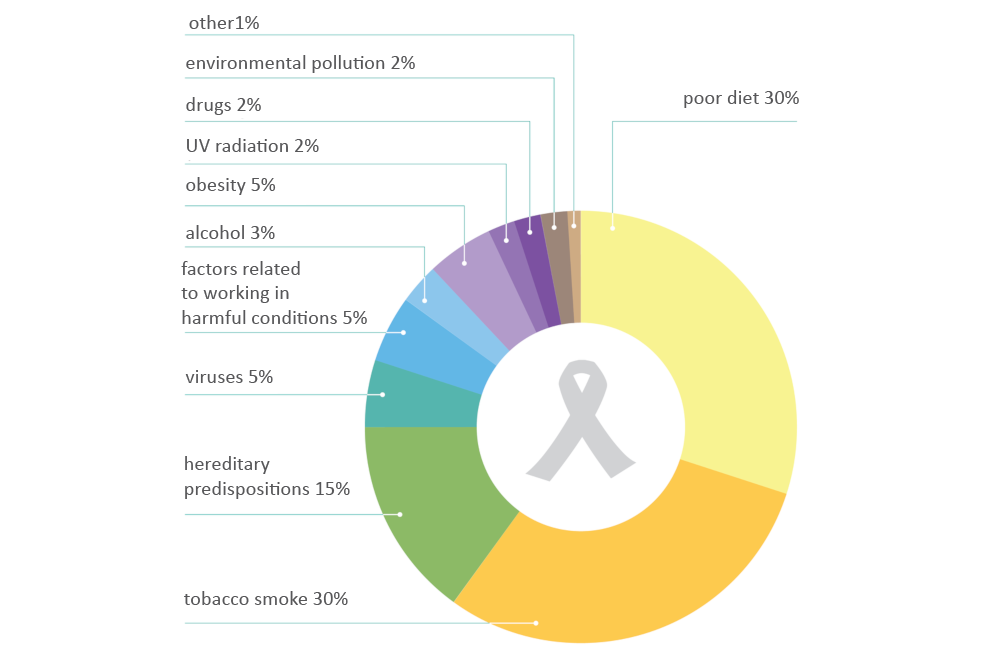
The highest risk associated with cancer is caused by smoking. There are about 70 tar substances in tobacco smoke, which are carcinogenic, mainly in the respiratory system. The second most common cause of cancer is poor nutrition. Alcohol abuse and the consumption of smoked, fried, salt‑rich foods and preservatives, increase the likelihood of developing gastrointestinal cancers. Carcinogenic agents are also viruses. Untreated HBV and HCV infections can lead to liver cancer. HPV is the cause of cervical cancer.
Excessive skin exposure to UV radiation can cause melanoma. Chemical substances contained in automotive exhaust fumes, plant protection chemicals, adhesives and varnishes used, among others for the production of furniture or asbestos, until recently used for roofing, also have carcinogenic properties.
Cancer is not a hereditary disease, but in the family may be inherited a tendency to such diseases. If you inherit from your parents a trait that is responsible for the ease of converting healthy cells into cancer cells, then the risk of getting sick increases.
Treatment and prevention of cancer
Cancer diseases are a serious social problem. The obvious way to prevent deaths from cancer is to prevent cancer development and to effectively treat these diseases. OncologyOncology uses several methods to fight cancer. The most common is surgical treatment, consisting in the removal of the tumor with the surrounding tissues. Other means are radiotherapy, i.e. irradiation of cancer cells with a strong dose of ionizing radiation, and chemotherapy – using synthetic chemical compounds that inhibit the development of cancer cells.
The research results indicate that the risk of cancer is clearly lower if contact with carcinogens is avoided. It is also important to undergo periodic control tests, the aim of which is to detect even the earliest cancerous changes. These include, for example, self‑examination of the skin, breasts and testicles, and for people who smoke tobacco – annual chest X‑rays. If there have been cases of a specific type of cancer in the family, e.g. breast, urinary bladder, pancreas, its members are in the high risk group and should perform regular tests. The risk group is also people of a certain age in whom a given type of cancer is most common. An example are people over 50 - women at risk of breast cancer and men at risk of prostate cancer.
Pap smears are based on a microscopic evaluation of smear taken from the cervix. It is necessary to have one for the first time after 3 years from the beginning of sexual intercourse and to do it every year. Early detection of lesions enables diagnosis of pre‑cancerous cervical disease and rapid treatment. The main cause of cervical cancer is infection with some strains of human papillomavirus – HPV. The disease can be asymptomatic for many years without causing pain. The risk of cervical cancer is reduced by the HPV vaccine. It is most effective if the vaccination takes place before sexual intercourse. In Poland, it is recommended for girls and young women aged 13‑26.
Disturbing symptoms with which to report to the doctor:
change of voice, persistent hoarseness, cough lasting longer than a month, recurrent infections of the lower respiratory tract, feeling of breathlessness and chest pain;
epigastric pain, loss of appetite, weight loss, vomiting, difficulty swallowing;
alternating diarrhea and constipation, blood in the stool;
headaches, balance disorders, visual disturbances, limb paresis;
enlarged lymph nodes, liver, spleen, night sweats;
change in size, color and shape of birthmarks and warts combined with itching, bleeding or unusual discharge;
changes in the shape and color of the breast nipple (also in men!), non‑healing skin ulcers in the breast.
Select in the list below all factors that can trigger or accelerate the development of cancer.
- wrong diet
- too much physical exertion
- environmental pollution
- hereditary factors
- work in a sitting position
- alcohol and drug consumption
Check whether the name of the cancer, the group of people who should undergo preventive examinations more often and the test method match.
|
lung cancer
|
smokers
|
Chest x-ray
|
|
malignant melanoma
|
women over 40 years old
|
imaging of the abdominal cavity
|
|
liver cancer
|
women who have sex for at least 3 years
|
mammography
|
|
breast cancer
|
people who have had an infection with the hepatitis virus
|
dermatologist consultation
|
|
cervical cancer
|
people exposed to UV radiation
|
Pap smear
|
Summary
Neoplasm is a group of cells that multiply in an uncontrolled way to form a tumor.
Neoplasm can be benign and malignant.
The most dangerous carcinogens include tobacco smoke, UV radiation and some viruses.
All disturbing symptoms of a health disorder should be consulted with a physician.
Early diagnosis of cancer gives you a chance of a complete cure.
Keywords
cancer, carcinogens, tumor
Glossary
czynniki rakotwórcze – czynniki, które zwiększają ryzyko powstawania chorób nowotworowych; należą do nich czynniki chemiczne, fizyczne i biologiczne
nowotwór – nieprawidłowo rozwijająca się tkanka, która powstała w wyniku niekontrolowanych podziałów komórek; wyróżnia się nowotwory łagodne i złośliwe
onkologia – dziedzina medycyny, która zajmuje się rozpoznawaniem i leczeniem chorób nowotworowych
przerzut nowotworowy – wtórny guz nowotworowy, który powstał z komórek guza wcześniej powstałego