Przeczytaj
The road to American independence wasn’t easy, but it was definitely worth it. Today, Americans celebrate their freedom from Great Britain louder than any other nation. What did they do to gain independence? Read the text below to find out.
Droga do amerykańskiej niepodległości nie była łatwa, ale na pewno warto było ją przebyć. Dziś Amerykanie świętują uniezależnienie od Wielkiej Brytanii głośniej niż jakikolwiek inny kraj. Co zrobili, by zdobyć niepodległość? Tego dowiesz się z poniższego tekstu.
Match words with their definitions.
Połącz wyrazy z definicjami.
Read the text below and choose an alternative title.
Przeczytaj poniższy tekst i wybierz dla niego alternatywny tytuł.
The United States and IndependenceThe Fourth of JulyThe Fourth of July is the biggest celebration in the United States. On that date, Americans gained their independencegained their independence from Great Britain. However, it wasn’t easy. Perhaps that’s why the nation loves its free country so much. How did they become independent?
Back in the 18th century, there was no United States. There were 13 British coloniescolonies. They didn’t like British rulerule. What was their biggest problem? They had no vote in the parliamentparliament. At the same time, the Crownthe Crown wanted them to pay taxespay taxes. Because of that, the colonists started to fight. In 1773, during the Boston Tea PartyBoston Tea Party, the colonists from Massachusetts threw a lot of tea into the Boston Harbor. In other words, colonists rebelledrebelled against Great Britain. They didn’t want to pay the tea taxtea tax without representation in the British Parliament.
Great Britain didn’t like the Boston Tea Party. Now, there was an open fight between the colonists and the Crown. We call it the Revolutionary WarRevolutionary War. Because of the war, the colonists had to meet and decide what to do. In 1774, they sent a group of important people to Philadelphia. Among them was George Washington, one of the American Founding FathersFounding Fathers. During the meeting, called the First Continental CongressFirst Continental Congress, the group created a famous saying “no taxation without representationno taxation without representation.” They decided to keep fighting until they had representation in the parliament. They also agreed to meet again in 1775.
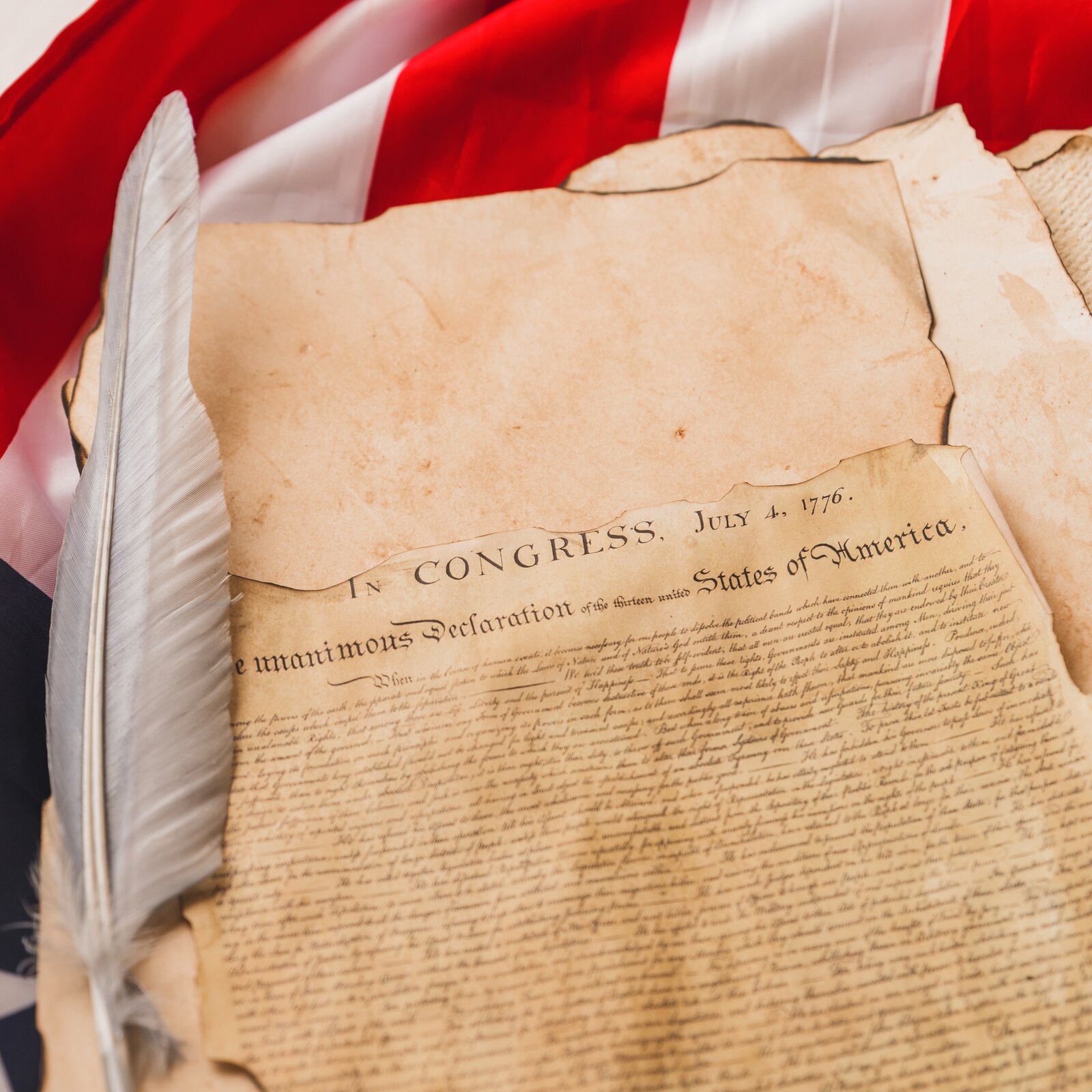
Colonists met again during the Second Continental CongressSecond Continental Congress in 1775. But it was only in 1776 when true changes happened. This time, one of the colonists, Richard Henry Lee, said the colonies should announce their independenceannounce their independence from Great Britain. But first, the group wrote a document with the reasons for their break from the British. Some of the document's authors were John Adams, Benjamin Franklin, and Thomas Jefferson. They were the Founding Fathers like George Washington. They called the document the Declaration of IndependenceDeclaration of Independence. Congress approved it on 4th July, 1776.
The Declaration of Independence was the first step towards a new country – the United States of America. That is why, to this day, Americans celebrate the Fourth of July.
Źródło: Zuzanna Kościuk, licencja: CC BY-SA 3.0.
Search for the information in the text and decide if the following sentences are true or false.
Odszukaj informacje w tekście, a następnie zdecyduj, czy podane zdania są prawdziwe, czy fałszywe.
TRUEFALSE
2. The Boston Tea Party was an act of rebellion against British taxes.
TRUEFALSE
3. During the Second Continental Congress, the delegates created a famous slogan.
TRUEFALSE
4. The person who talked of gaining independence from Great Britain was Richard Henry Lee.
TRUEFALSE
5. The people who drafted the Declaration were John Adams, Benjamin Franklin, and George Washington.
TRUEFALSE
6. The Declaration of Independence made a new country.
TRUEFALSE
Źródło: Zuzanna Kościuk, licencja: CC BY-SA 3.0.
Search in the text and drag the words to fill in the gaps.
Odszukaj potrzebne wyrazy w tekście, a następnie przeciągnij je w odpowiednie luki.
2. In other words, colonists 1. independence, 2. Crown, 3. representation, 4. rebelled, 5. delegates, 6. colonies, 7. taxation, 8. taxes against Great Britain.
3. In 1774, they sent a group of colonial 1. independence, 2. Crown, 3. representation, 4. rebelled, 5. delegates, 6. colonies, 7. taxation, 8. taxes to Philadelphia.
4. The delegates created a famous slogan “no 1. independence, 2. Crown, 3. representation, 4. rebelled, 5. delegates, 6. colonies, 7. taxation, 8. taxes without 1. independence, 2. Crown, 3. representation, 4. rebelled, 5. delegates, 6. colonies, 7. taxation, 8. taxes.”
5. Richard Henry Lee proposed that the 1. independence, 2. Crown, 3. representation, 4. rebelled, 5. delegates, 6. colonies, 7. taxation, 8. taxes announce their 1. independence, 2. Crown, 3. representation, 4. rebelled, 5. delegates, 6. colonies, 7. taxation, 8. taxes from Great Britain.
Słownik
/ əˈnaʊns ðeər ˌɪndɪˈpendəns /
ogłosić swoją niepodległość
/ ˈbɒstən ˈti: pɑ:ti /
„herbatka” bostońska (protest polityczny amerykańskich kolonistów przeciwko Wielkiej Brytanii, który miał miejsce w 1773 roku)
/ tʃests / / tʃest /
skrzynie [skrzynia]
/ kəˈləʊnɪəl ˈdelɪɡeɪts /
reprezentanci wysłani przez poszczególne stany na Kongres Kontynentalny
/ ˈkɒlənɪz / / ˈkɒləni /
kolonie [kolonia]
/ ˈkɒlənɪsts / / ˈkɒlənɪst /
osadnicy [osadnik/osadniczka]
/ ˌdekləˈreɪʃn̩ əv ˌɪndɪˈpendəns /
Deklaracja Niepodległości (akt prawny uzasadniający uniezależnienie się 13 amerykańskich kolonii od króla Wielkiej Brytanii, Jerzego III)
/ ˈdrɑːftɪd ə ˈdɒkjʊment / / drɑːft ə ˈdɒkjʊment /
sporządzili/sporządziły dokument [sporządzić dokument], przygotowali/przygotowały dokument [przygotować dokument]
/ ˈfɜ:st ˌkɒntɪˈnentl̩ ˈkɒŋɡres /
I Kongres Kontynentalny (spotkanie delegatów z 13 amerykańskich stanów, które odbyło się w 1774 roku)
/ ˈfaʊndɪŋ ˈfɑːðəz /
ojcowie założyciele (w tym przypadku: osoby, które podpisały Deklarację Niepodległości, Konstytucję Stanów Zjednoczonych lub oba te akty prawne)
/ ˈfri: ˈkʌntri /
wolny kraj
/ ɡeɪnd ðeər ˌɪndɪˈpendəns / / ɡeɪn ˌɪndɪˈpendəns /
uzyskali/uzyskały niepodległość [uzyskać niepodległość]
/ ˈneɪʃn̩ /
naród
/ ˈnəʊ tækˈseɪʃn̩ wɪðˈaʊt ˌreprɪzenˈteɪʃn̩ /
żadnego opodatkowania bez właściwego reprezentowania (slogan utworzony przez delegatów podczas I Kongresu Kontynentalnego)
/ ˈaʊtbreɪks əv rɪˈzɪstəns /
wybuchy oporu [wybuch oporu]
/ ˈpɑːləmənt /
parlament
/ ˈpeɪ ˈtæksɪz /
płacić podatki
/ prəˈpəʊzd / / prəˈpəʊz /
zaproponował/zaproponowała [proponować]
/ rɪˈbeld / / rɪˈbel /
zbuntowali się/zbuntowały się [zbuntować się]
/ ˌrevəˈluːʃənri wɔː /
wojna o niepodległość Stanów Zjednoczonych, rewolucja amerykańska
/ ruːl /
panowanie, rządzenie, władza
/ ˌsekənd ˌkɒntɪˈnentl̩ ˈkɒŋɡres /
II Kongres Kontynentalny
/ steɪt /
stan (nazwa części składowej federacji takiej jak Stany Zjednoczone)
/ ˈti: tæks /
podatek na herbatę
/ ðə kraʊn /
korona; rząd kraju, któremu przewodniczy król lub królowa
/ ðə ˈfɔːtheta əv dʒuːˈlaɪ /
4 lipca (w USA jest to Dzień Niepodległości Stanów Zjednoczonych)
/ ˈvaɪələns /
przemoc, agresywne zachowanie
Źródło: GroMar Sp. z o.o., licencja: CC BY‑SA 3.0