October 24, 1929, went down in economic history as Black Thursday. After the crash on Wall Street, the world economy entered a period called the Great Depression in the US, and the Great Economic Crisis in other countries. Production fell sharply and unemployment rose. The prices of agricultural commodities fell too. As a result of the continuing crisis, the economic policies of the affected countries were changed significantly, making it possible to overcome the collapse. In 1933, thanks to the New Deal policy implemented by US President Roosevelt, the situation on the American market began to improve. The first stage of the program’s implementation was to organize public works. The army was modernized. In order to increase the attractiveness of American goods on foreign markets, the value of the dollar was reduced. Also, social legislation was introduced. The US decided to increase its budget deficit and reduced its expenditure on administration.
Task 1
Explain the term ‘price scissors’. What did it do?
ROs2ilRzb5kGI1
Exercise 1
Ilustracja przedstawiająca szkic pod tytułem " Zakupy przez szybę". Para dorosłych osób ogląda witrynę sklepową. Dlaczego artysta nadał taki tytuł? Proponowane odpowiedzi: 1. The high prices of industrial products led to a reduction in consumption. 2. Two customers, who are a couple, want to buy a window, so they wonder which one to choose. 3. A couple wants to buy a bed, so they wonder which one to choose. 4. A couple looks at the window display for so long that the child standing next to them feels bored. 5. In times of crisis, many people in cities can only afford to watch window displays.
Ilustracja przedstawiająca szkic pod tytułem " Zakupy przez szybę". Para dorosłych osób ogląda witrynę sklepową. Dlaczego artysta nadał taki tytuł? Proponowane odpowiedzi: 1. The high prices of industrial products led to a reduction in consumption. 2. Two customers, who are a couple, want to buy a window, so they wonder which one to choose. 3. A couple wants to buy a bed, so they wonder which one to choose. 4. A couple looks at the window display for so long that the child standing next to them feels bored. 5. In times of crisis, many people in cities can only afford to watch window displays.
Window Shopping
Source: David Bekker, licencja: CC 0.
Task 2
Listen to the program and learn what the ‘Polish version’ of the Great Depression was like. Which social group in Poland did it affect the most?
Richard M. WattBitter glory. Poland and its fate 1918–1939
RYv1Oc6eCgIgE1
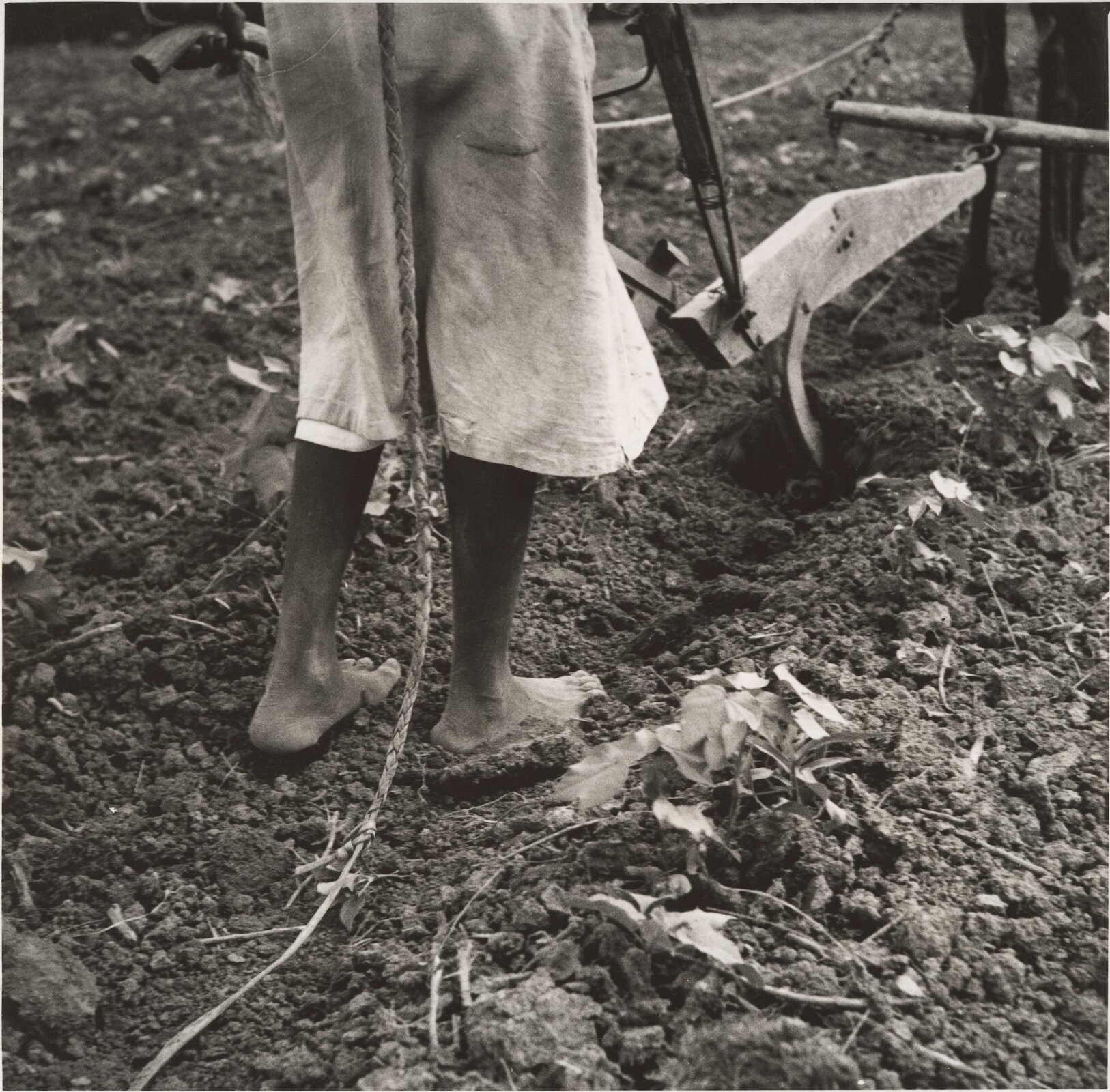
Fotografia czarno-biała przedstawiająca nogi osoby żyjącej w ubóstwie oraz pchany przez nią pług.
In the terrible times of the crisis, there was no difference between rural poverty in Alabama and Poland – in both cases it meant balancing on the verge of biological survival.
Source: Dorothea Lange, Alabama Plow Girl, licencja: CC 0.
“The global depression of the 1930s did not begin simultaneously in all countries. In Poland, the first signs of recession were already visible in the first quarter of 1929. Suddenly, there was a significant decrease in activity in all branches of industry. [...] Even more ominous was the fall in the prices of agricultural products on the international market. In Poland, where the vast majority of the population lived off agriculture, this, of course, caused a very serious crisis. The cost of production of food was so close to the selling price that even a slight decrease in the selling price had to cause serious problems. Farmers could not store their crops while waiting for the prices to rise. They had to sell them right away to repay the loans taken for sowing. When they sold at a loss, they had to reduce their already‑low living expenses.
For Polish farmers, who suddenly faced a catastrophic market situation, and for Polish workers, who were threatened with unemployment or shorter working hours, life suddenly became gloomy and terrifying. Initially, nobody suspected that this was the beginning of a global economic disaster that would last for years and worsen even further. In the years 1929‑1930, it was believed that these were only temporary problems that would soon pass. Poles hoped that before this would happen, the government would find some way to help the people. [...]
All social classes were severely affected during the Great Depression. But, as usual during an economic depression, the worst was the fate of the farmers. Prices of agricultural products fell so sharply that indescribable poverty took hold of the countryside. In 1928, farmers received 51 złoty for 100 kilograms of wheat, while between 1933 and 1934 the price dropped to 18 złoty. [...] Prices of agricultural products fell by 60 percent on average, while prices of industrial products fell by only 30 percent. [...] Farmers earned less than one dollar per hectare of land that they farmed. Small farms did not provide any income. All crops made losses. It is estimated that the income of an average Polish peasant family in this period was less than two cents a day.
The problems did not stop there. In the countryside, there were more and more mouths to feed. The only option of the unemployed was to return from the cities to their home villages and live with relatives who did not need additional manpower. Emigration became impossible, and many countries sent back Poles who took the jobs of their local people. Money transfers from abroad – an almost invisible trickle of cash that saved the lives of many peasant families – practically stopped coming.
During the Great Depression, money in the Polish countryside nearly went out of circulation. There was not enough of it even to buy ordinary kitchen salt. Farmers used gray rock salt and kept boiled water for reuse. Most farmers had only one shirt, one pair of trousers and shoes – the rest of the clothes were altered so that they could be worn by children. In winter, many children wore cotton bags stuffed with hay.
The situation of industrial workers was not much better, but at least some of them were receiving unemployment benefits, which, for some time, mitigated the effects of job loss. Between 1929 and 1932, the number of employees of large and medium‑sized industrial plants fell from 844 to 534 thousand. But this is only part of the story. Many laborers worked part‑time [...] and average wages fell by 15 percent. [...]
It is estimated that there were 1,200,000 workers in Poland at that time who normally worked in mines or factories [...]. In 1936, almost half of them were unemployed, and 150 thousand worked only from two to four days a week. The typical hourly rate was 0.71 złoty, or 12 cents. [...] The standard of living, so low before, deteriorated dramatically even further. [...] Between 1929 and 1934, consumptionconsumptionconsumption of such a basic article as matches decreased by 60 percent, sugar by 20 percent, tobacco by 30 percent, textiles by 20 percent [...]. The consumption of all necessities fell dramatically. [...] Few countries suffered from the Great Depression as much as Poland did”.
watt Source: Richard M. Watt, Bitter glory. Poland and its fate 1918–1939, Warszawa 1991, s. 264–269.
Task 3
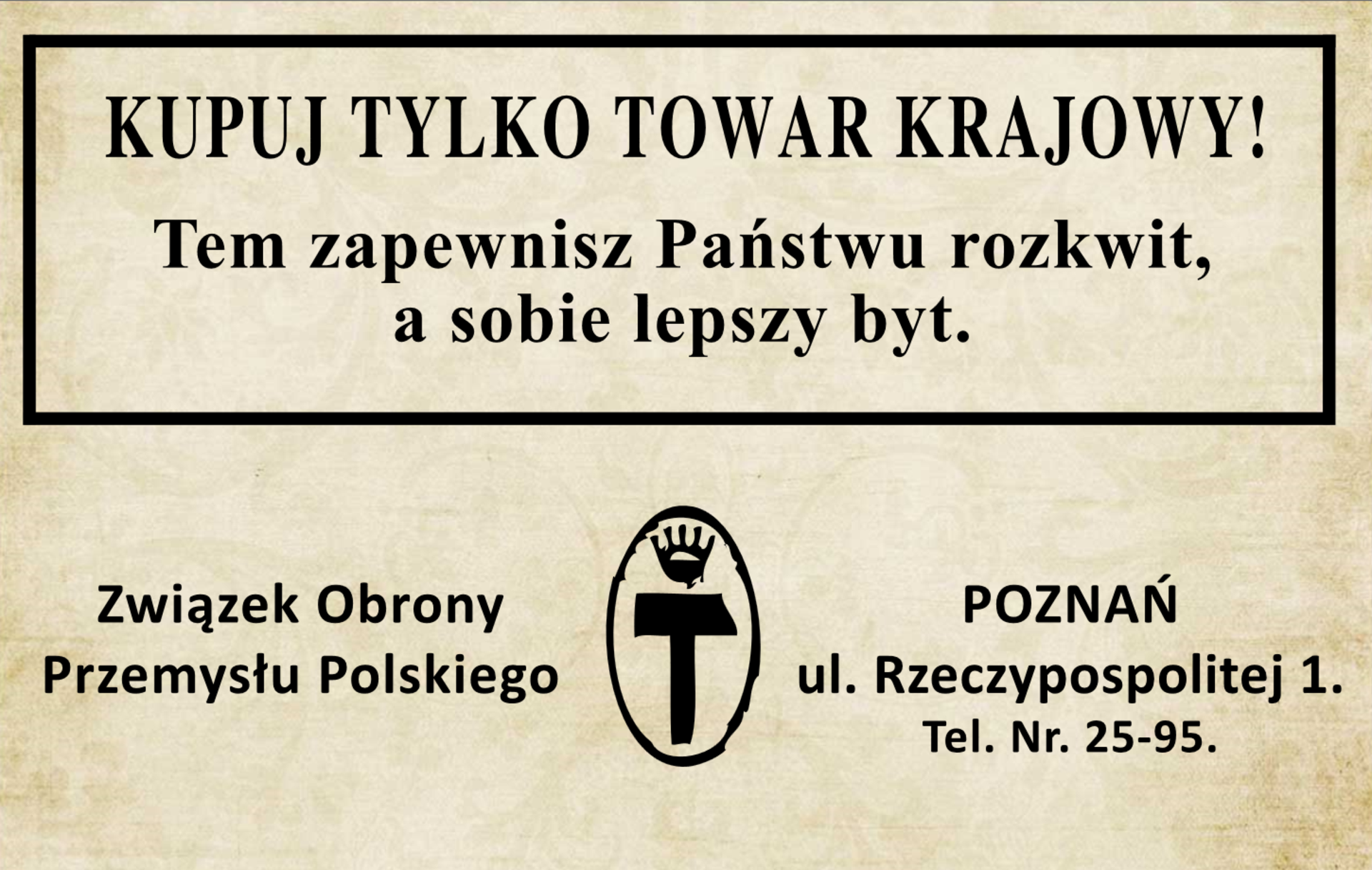
Above, there is an example of an advertisement for Polish products. In Western countries, the promotion of domestic goods looked similar. What did the advertisers point out and how did they encourage buyers to buy domestic products?
R10E3kqnTl3wY
Ilustracja przedstawiająca reklamę dla produktów krajowych. Wyraźny napis w ramce głosi: Kupuj tylko towar krajowy! Ten zapewnisz Państwu rozkwit, a sobie lepszy byt. Poniżej napis Związek Obrony Przemysłu Polskiego, jego logo i adres.
An advertisement for domestic products
Source: licencja: CC 0.
R1aZmQ2AlZnFU
Exercise 2
Revise what you have learned. The Great Depression was started by a stock exchange crash in 1. New York City, 2. New Deal, 3. interventionism, 4. Franklin Delano Roosevelt, 5. NSDAP, 6. Adolf Hitler, 7. fell, 8. John M. Keynes, 9. John Steinbeck, 10. Thursday. The day of crash was dubbed Black 1. New York City, 2. New Deal, 3. interventionism, 4. Franklin Delano Roosevelt, 5. NSDAP, 6. Adolf Hitler, 7. fell, 8. John M. Keynes, 9. John Steinbeck, 10. Thursday. The crisis in industry was manifested, among other things, by a reduction in production, which resulted in massive unemployment. In agriculture, prices of agricultural products 1. New York City, 2. New Deal, 3. interventionism, 4. Franklin Delano Roosevelt, 5. NSDAP, 6. Adolf Hitler, 7. fell, 8. John M. Keynes, 9. John Steinbeck, 10. Thursday sharply. The social consequences of this crisis were described in the novel The Grapes of Wrath by 1. New York City, 2. New Deal, 3. interventionism, 4. Franklin Delano Roosevelt, 5. NSDAP, 6. Adolf Hitler, 7. fell, 8. John M. Keynes, 9. John Steinbeck, 10. Thursday. Governments of the affected countries started a fight against the crisis. Most countries decided to interfere with the free market economy by applying the so-called state 1. New York City, 2. New Deal, 3. interventionism, 4. Franklin Delano Roosevelt, 5. NSDAP, 6. Adolf Hitler, 7. fell, 8. John M. Keynes, 9. John Steinbeck, 10. Thursday. One of its originators was the British economist 1. New York City, 2. New Deal, 3. interventionism, 4. Franklin Delano Roosevelt, 5. NSDAP, 6. Adolf Hitler, 7. fell, 8. John M. Keynes, 9. John Steinbeck, 10. Thursday, and the implementer – the American president 1. New York City, 2. New Deal, 3. interventionism, 4. Franklin Delano Roosevelt, 5. NSDAP, 6. Adolf Hitler, 7. fell, 8. John M. Keynes, 9. John Steinbeck, 10. Thursday. The program of reforms he proposed was dubbed the 1. New York City, 2. New Deal, 3. interventionism, 4. Franklin Delano Roosevelt, 5. NSDAP, 6. Adolf Hitler, 7. fell, 8. John M. Keynes, 9. John Steinbeck, 10. Thursday. The economic crisis in industrialized countries lasted until 1933, and in agricultural countries – until 1935. One of the socio-political consequences of the crisis was the increase in the popularity of fascist parties. For example, in 1933, the 1. New York City, 2. New Deal, 3. interventionism, 4. Franklin Delano Roosevelt, 5. NSDAP, 6. Adolf Hitler, 7. fell, 8. John M. Keynes, 9. John Steinbeck, 10. Thursday party came to power in Germany. 1. New York City, 2. New Deal, 3. interventionism, 4. Franklin Delano Roosevelt, 5. NSDAP, 6. Adolf Hitler, 7. fell, 8. John M. Keynes, 9. John Steinbeck, 10. Thursday, who was the leader of this party, became the Chancellor.
Revise what you have learned. The Great Depression was started by a stock exchange crash in 1. New York City, 2. New Deal, 3. interventionism, 4. Franklin Delano Roosevelt, 5. NSDAP, 6. Adolf Hitler, 7. fell, 8. John M. Keynes, 9. John Steinbeck, 10. Thursday. The day of crash was dubbed Black 1. New York City, 2. New Deal, 3. interventionism, 4. Franklin Delano Roosevelt, 5. NSDAP, 6. Adolf Hitler, 7. fell, 8. John M. Keynes, 9. John Steinbeck, 10. Thursday. The crisis in industry was manifested, among other things, by a reduction in production, which resulted in massive unemployment. In agriculture, prices of agricultural products 1. New York City, 2. New Deal, 3. interventionism, 4. Franklin Delano Roosevelt, 5. NSDAP, 6. Adolf Hitler, 7. fell, 8. John M. Keynes, 9. John Steinbeck, 10. Thursday sharply. The social consequences of this crisis were described in the novel The Grapes of Wrath by 1. New York City, 2. New Deal, 3. interventionism, 4. Franklin Delano Roosevelt, 5. NSDAP, 6. Adolf Hitler, 7. fell, 8. John M. Keynes, 9. John Steinbeck, 10. Thursday. Governments of the affected countries started a fight against the crisis. Most countries decided to interfere with the free market economy by applying the so-called state 1. New York City, 2. New Deal, 3. interventionism, 4. Franklin Delano Roosevelt, 5. NSDAP, 6. Adolf Hitler, 7. fell, 8. John M. Keynes, 9. John Steinbeck, 10. Thursday. One of its originators was the British economist 1. New York City, 2. New Deal, 3. interventionism, 4. Franklin Delano Roosevelt, 5. NSDAP, 6. Adolf Hitler, 7. fell, 8. John M. Keynes, 9. John Steinbeck, 10. Thursday, and the implementer – the American president 1. New York City, 2. New Deal, 3. interventionism, 4. Franklin Delano Roosevelt, 5. NSDAP, 6. Adolf Hitler, 7. fell, 8. John M. Keynes, 9. John Steinbeck, 10. Thursday. The program of reforms he proposed was dubbed the 1. New York City, 2. New Deal, 3. interventionism, 4. Franklin Delano Roosevelt, 5. NSDAP, 6. Adolf Hitler, 7. fell, 8. John M. Keynes, 9. John Steinbeck, 10. Thursday. The economic crisis in industrialized countries lasted until 1933, and in agricultural countries – until 1935. One of the socio-political consequences of the crisis was the increase in the popularity of fascist parties. For example, in 1933, the 1. New York City, 2. New Deal, 3. interventionism, 4. Franklin Delano Roosevelt, 5. NSDAP, 6. Adolf Hitler, 7. fell, 8. John M. Keynes, 9. John Steinbeck, 10. Thursday party came to power in Germany. 1. New York City, 2. New Deal, 3. interventionism, 4. Franklin Delano Roosevelt, 5. NSDAP, 6. Adolf Hitler, 7. fell, 8. John M. Keynes, 9. John Steinbeck, 10. Thursday, who was the leader of this party, became the Chancellor.
Revise what you have learned.
Adolf Hitler, New Deal, Franklin Delano Roosevelt, John Steinbeck, NSDAP, New York City, Thursday, John M. Keynes, fell, interventionism
The Great Depression was started by a stock exchange crash in ................................................... The day of crash was dubbed Black ................................................... The crisis in industry was manifested, among other things, by a reduction in production, which resulted in massive unemployment. In agriculture, prices of agricultural products .................................................. sharply. The social consequences of this crisis were described in the novel The Grapes of Wrath by ................................................... Governments of the affected countries started a fight against the crisis. Most countries decided to interfere with the free market economy by applying the so-called state ................................................... One of its originators was the British economist .................................................., and the implementer – the American president ................................................... The program of reforms he proposed was dubbed the ................................................... The economic crisis in industrialized countries lasted until 1933, and in agricultural countries – until 1935. One of the socio-political consequences of the crisis was the increase in the popularity of fascist parties. For example, in 1933, the .................................................. party came to power in Germany. .................................................., who was the leader of this party, became the Chancellor.
Rz9Ehd2Vio6C5
Exercise 3
Match the pairs: English words with Polish definition. Autarky Możliwe odpowiedzi: 1. są jednym z podstawowych wskaźników pokazujących zmiany poziomu cen, a także możliwości nabywcze rolników, 2. samowystarczalność gospodarcza, ekonomiczny cel polityki gospodarczej państwa lub grupy państw., 3. system polityki gospodarczej państwa polegający na jego bezpośrednim oddziaływaniu na gospodarkę., 4. antykryzysowa polityka społeczno‑gospodarcza, realizowana w USA przez administrację prezydenta F.D. Roosevelta w latach 1933–39, 5. wydatki ponoszone przez gospodarstwa domowe na zakup dóbr i usług State interventionism Możliwe odpowiedzi: 1. są jednym z podstawowych wskaźników pokazujących zmiany poziomu cen, a także możliwości nabywcze rolników, 2. samowystarczalność gospodarcza, ekonomiczny cel polityki gospodarczej państwa lub grupy państw., 3. system polityki gospodarczej państwa polegający na jego bezpośrednim oddziaływaniu na gospodarkę., 4. antykryzysowa polityka społeczno‑gospodarcza, realizowana w USA przez administrację prezydenta F.D. Roosevelta w latach 1933–39, 5. wydatki ponoszone przez gospodarstwa domowe na zakup dóbr i usług Consumption Możliwe odpowiedzi: 1. są jednym z podstawowych wskaźników pokazujących zmiany poziomu cen, a także możliwości nabywcze rolników, 2. samowystarczalność gospodarcza, ekonomiczny cel polityki gospodarczej państwa lub grupy państw., 3. system polityki gospodarczej państwa polegający na jego bezpośrednim oddziaływaniu na gospodarkę., 4. antykryzysowa polityka społeczno‑gospodarcza, realizowana w USA przez administrację prezydenta F.D. Roosevelta w latach 1933–39, 5. wydatki ponoszone przez gospodarstwa domowe na zakup dóbr i usług New Deal Możliwe odpowiedzi: 1. są jednym z podstawowych wskaźników pokazujących zmiany poziomu cen, a także możliwości nabywcze rolników, 2. samowystarczalność gospodarcza, ekonomiczny cel polityki gospodarczej państwa lub grupy państw., 3. system polityki gospodarczej państwa polegający na jego bezpośrednim oddziaływaniu na gospodarkę., 4. antykryzysowa polityka społeczno‑gospodarcza, realizowana w USA przez administrację prezydenta F.D. Roosevelta w latach 1933–39, 5. wydatki ponoszone przez gospodarstwa domowe na zakup dóbr i usług price scissors Możliwe odpowiedzi: 1. są jednym z podstawowych wskaźników pokazujących zmiany poziomu cen, a także możliwości nabywcze rolników, 2. samowystarczalność gospodarcza, ekonomiczny cel polityki gospodarczej państwa lub grupy państw., 3. system polityki gospodarczej państwa polegający na jego bezpośrednim oddziaływaniu na gospodarkę., 4. antykryzysowa polityka społeczno‑gospodarcza, realizowana w USA przez administrację prezydenta F.D. Roosevelta w latach 1933–39, 5. wydatki ponoszone przez gospodarstwa domowe na zakup dóbr i usług
Match the pairs: English words with Polish definition. Autarky Możliwe odpowiedzi: 1. są jednym z podstawowych wskaźników pokazujących zmiany poziomu cen, a także możliwości nabywcze rolników, 2. samowystarczalność gospodarcza, ekonomiczny cel polityki gospodarczej państwa lub grupy państw., 3. system polityki gospodarczej państwa polegający na jego bezpośrednim oddziaływaniu na gospodarkę., 4. antykryzysowa polityka społeczno‑gospodarcza, realizowana w USA przez administrację prezydenta F.D. Roosevelta w latach 1933–39, 5. wydatki ponoszone przez gospodarstwa domowe na zakup dóbr i usług State interventionism Możliwe odpowiedzi: 1. są jednym z podstawowych wskaźników pokazujących zmiany poziomu cen, a także możliwości nabywcze rolników, 2. samowystarczalność gospodarcza, ekonomiczny cel polityki gospodarczej państwa lub grupy państw., 3. system polityki gospodarczej państwa polegający na jego bezpośrednim oddziaływaniu na gospodarkę., 4. antykryzysowa polityka społeczno‑gospodarcza, realizowana w USA przez administrację prezydenta F.D. Roosevelta w latach 1933–39, 5. wydatki ponoszone przez gospodarstwa domowe na zakup dóbr i usług Consumption Możliwe odpowiedzi: 1. są jednym z podstawowych wskaźników pokazujących zmiany poziomu cen, a także możliwości nabywcze rolników, 2. samowystarczalność gospodarcza, ekonomiczny cel polityki gospodarczej państwa lub grupy państw., 3. system polityki gospodarczej państwa polegający na jego bezpośrednim oddziaływaniu na gospodarkę., 4. antykryzysowa polityka społeczno‑gospodarcza, realizowana w USA przez administrację prezydenta F.D. Roosevelta w latach 1933–39, 5. wydatki ponoszone przez gospodarstwa domowe na zakup dóbr i usług New Deal Możliwe odpowiedzi: 1. są jednym z podstawowych wskaźników pokazujących zmiany poziomu cen, a także możliwości nabywcze rolników, 2. samowystarczalność gospodarcza, ekonomiczny cel polityki gospodarczej państwa lub grupy państw., 3. system polityki gospodarczej państwa polegający na jego bezpośrednim oddziaływaniu na gospodarkę., 4. antykryzysowa polityka społeczno‑gospodarcza, realizowana w USA przez administrację prezydenta F.D. Roosevelta w latach 1933–39, 5. wydatki ponoszone przez gospodarstwa domowe na zakup dóbr i usług price scissors Możliwe odpowiedzi: 1. są jednym z podstawowych wskaźników pokazujących zmiany poziomu cen, a także możliwości nabywcze rolników, 2. samowystarczalność gospodarcza, ekonomiczny cel polityki gospodarczej państwa lub grupy państw., 3. system polityki gospodarczej państwa polegający na jego bezpośrednim oddziaływaniu na gospodarkę., 4. antykryzysowa polityka społeczno‑gospodarcza, realizowana w USA przez administrację prezydenta F.D. Roosevelta w latach 1933–39, 5. wydatki ponoszone przez gospodarstwa domowe na zakup dóbr i usług
Match the pairs: English words with Polish definition.
są jednym z podstawowych wskaźników pokazujących zmiany poziomu cen, a także możliwości nabywcze rolników, samowystarczalność gospodarcza, ekonomiczny cel polityki gospodarczej państwa lub grupy państw., wydatki ponoszone przez gospodarstwa domowe na zakup dóbr i usług, antykryzysowa polityka społeczno‑gospodarcza, realizowana w USA przez administrację prezydenta F.D. Roosevelta w latach 1933–39, system polityki gospodarczej państwa polegający na jego bezpośrednim oddziaływaniu na gospodarkę.
nożyce cenowe – są jednym z podstawowych wskaźników pokazujących zmiany poziomu cen, a także możliwości nabywcze rolników; w okresach kryzysów agrarnych, gdy rolnicy w celu uzyskania gotówki zwiększali produkcję (podaż), pogłębiając tym spadek cen, podczas gdy ceny produktów (przemysłowych i innych) przez nich kupowanych ulegały obniżce dużo mniejszej (tzw. rozwieranie się nożyc cen).