At the source of knowledge
you will characterise the dictionaries: the Polish language dictionarydictionary, the comprehensive Polish language dictionarycomprehensive Polish language dictionary (słownik poprawnej polszczyzny), the spellingspelling dictionary, the dictionary of idioms, the dictionary of foreign termsdictionary of foreign terms and the thesaurus
you will talk about online dictionaries
you will recognise abbreviations in the dictionary entries
What dictionaries do you know? Which dictionaries do you use most often and at what occasion?
In which dictionary will you find the following entries? Find pairs.
słownik języka polskiego, słownik poprawnej polszczyzny, słownik ortograficzny
| książę 1. «niekoronowany władca państwa lub jego części» 2. «członek rodziny panującej» 3. «członek arystokratycznego rodu mającego tytuł z nadania» 4. «ktoś wyróżniający się szczególnie w jakiejś dziedzinie». | |
| książę księcia, księciu, księciem, W. książę; książęta, książąt (skróty: ks.,x.): książę regent, ale: Przylądek Księcia Walii, Wyspa Księcia Edwarda, Wyspa Księcia Walii | |
| książę m, D. księcia [wym. ksieńcia], CMs. księciu, N. księciem, W. książę, daw. odm. jak n IV, D. książęcia, CMs. książęciu, N. książęciem, W. książę, Im M. książęta [wym. książetna], D. książąt • W liczbie mnogiej łączy się z liczebnikami głównymi, męskoosobowymi, rzadko z liczebnikami zbiorowymi: Dwaj, trzej książęta, siedmiu książąt, rzad. dwoje, troje, siedmioro książąt. |
Do you know what do the different abbreviationsabbreviations and symbols in the dictionary entries mean?
Using information from exercise 1, create the correct forms.
1. Liczba mnoga rzeczownika książę: .......................
2. Forma rzeczownika książę z liczebnikiem siedmiu: .....................
3. Forma celownika w liczbie pojedynczej: .................
4. Forma dopełniacza w liczbie mnogiej: .....................
5. Forma wołacza w liczbie pojedynczej: .....................
In which situations will you use a thesaurusthesaurus or a dictionary of foreign words?
In which dictionary can you find the following Polish entries? Find pairs.
dictionary of idioms, thesaurus, dictionary of foreign terms
| kwiat «coś» pasuje jak kwiatek do kożucha • posp. wcale nie pasuje, jest niewłaściwe, nie na miejscu, nieodpowiednie. | |
| narcystyczny - odnoszący się do narcyzmu. | |
| egoista: Egoista w postępowaniu; samolub: Nikt nie lubi samolubów. |
Idioms (or set phrases) can not be modified as they are fixed expressions. It is worth taking a look into the dictionary of idiomsdictionary of idioms to avoid mistakes.
Play idiomatic charades. Choose one idiom from a dictionary and draw it for your colleague to guess. Repeat the exercise with different idioms.
Let’s summarise everything that you have learned about different dictionaries. Which one would you choose to find the meaningmeaning of a given word? Which dictionary gives the right pronunciation? In which dictionary you will find the declensiondeclension?
What dictionary will you use? Find pairs.
Polish language dictionary., dictionary if idioms., comprehensive Polish language dictionary., the dictionary of foreign terms., spelling dictionary., thesaurus.
| If you want to know the meaning and the origin of the borrowed words you will use... | |
| If you want to check the correct form of a Polish word you will use... | |
| If you want to check the spelling of a word you will use... | |
| If you want to know what in what collocations does the word appear you will use... | |
| If you want to find the synonym of a word you will use... | |
| If you want to check the meaning of a Polish word you will use... |
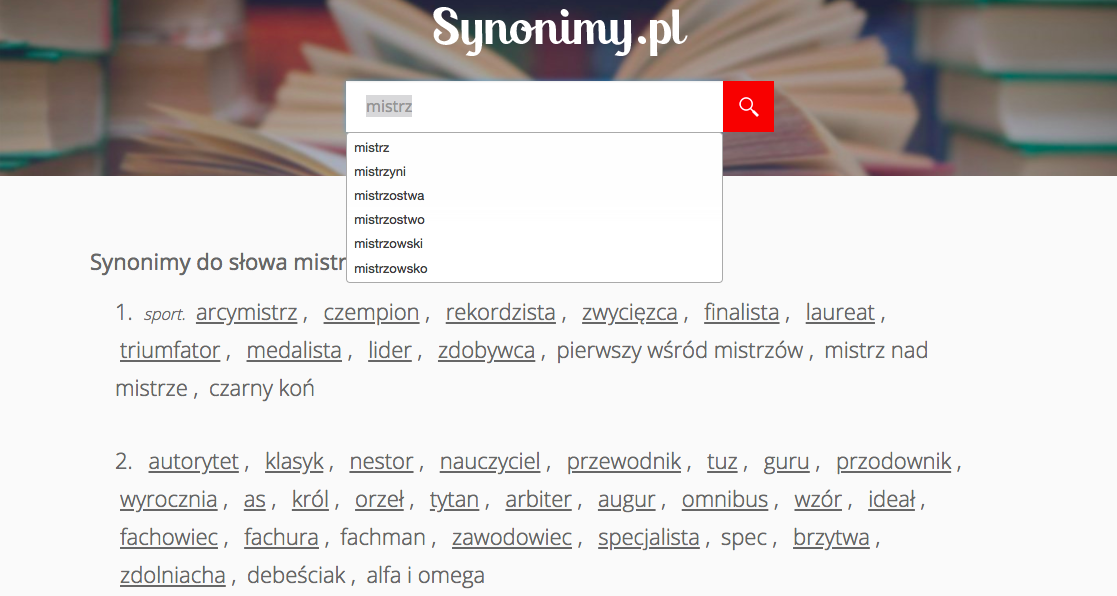

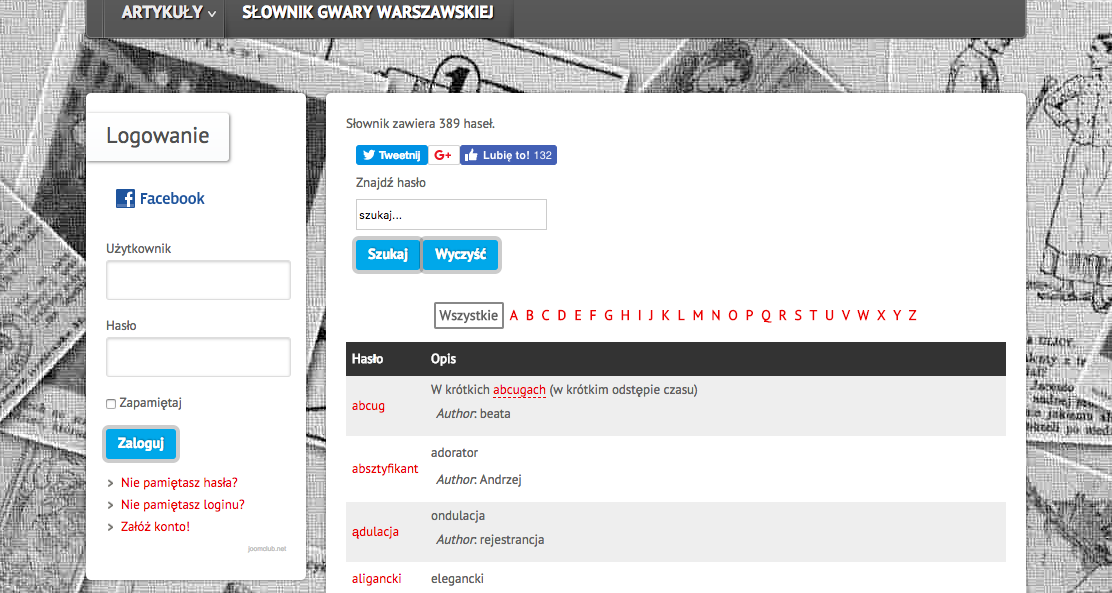
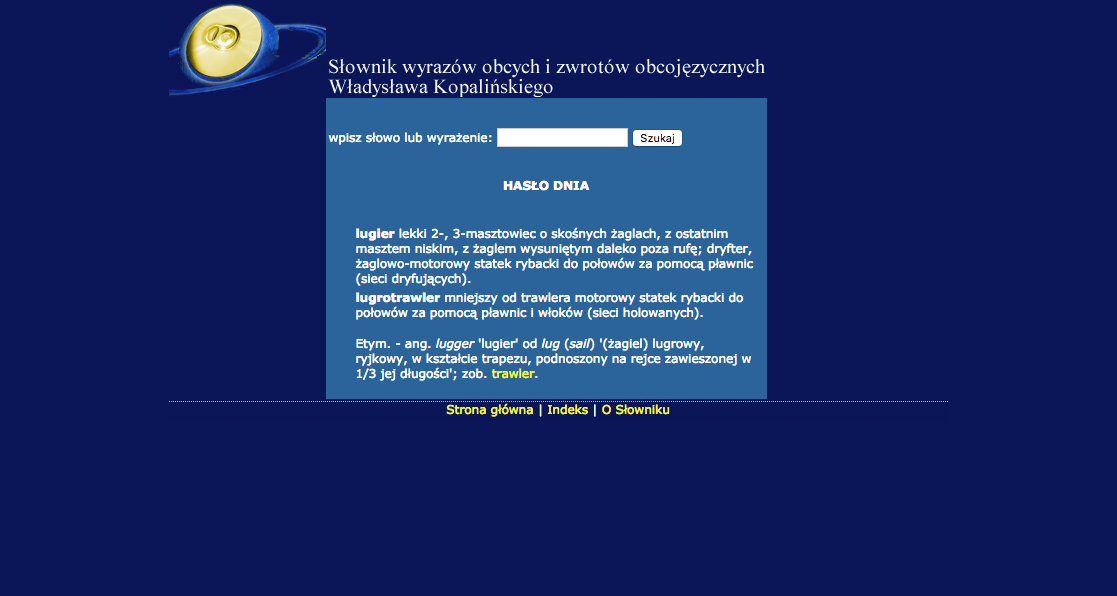
If you do not have a traditional dictionary, you can always use the electronic version (i.e. Słownik języka polskiego PWN). On‑line dictionaries are easy to use, as you do not have to look for the word yourself, just write it in the search engine. However, it is worth to practice using the traditional dictionaries as well.
Find on the Internet the online versions of dictionaries presented today. Try to find different entries. Write the website addresses in your notebook, so that you can use them in the future. You can also add them to your bookmarks.
How was this lesson? Did you like it? Finish selected sentences.
Keywords
dictionary, information search, definition
Glossary
słownik
słownik wyrazów obcych
słownik poprawnej polszczyzny
słownik ortograficzny
słownik synonimów lub inaczej: słownik wyrazów bliskoznacznych
słownik języka polskiego
słownik idiomów lub frazeologizmów
słownik rymów
skrót
definicja (słownikowa)
pisownia
znaczenie
deklinacja, odmiana wyrazu przez przypadki i liczby
kolejność alfabetyczna
fleksja, odmiana czasownika przez osoby i liczby