Everything that surrounds us, except for man‑made products, is colloquially referred to as nature. Elements of the non‑living environment and all of its species are referred to as an ecosystemecosystemecosystem. All ecosystem elements are interdependent and affect each other.
RAOfk31s3N8Ln
Ilustracja przestawia składniki ekosystemu w formie dwóch brązowych ramek, jedna nad drugą. W każdej z lewej jest fotografia, z prawej opis na beżowym tle. Górna ramka: stadko siedmiu danieli w lesie. Są jasnobrązowe w białe plamy. Samice pasą się na trawie pokrytej liśćmi, pod drzewem. Jedna stoi bokiem, patrzy w stronę obserwatora. Samiec z rozłożystym porożem stoi z tyłu. Podpis: group of interdependent species, mutual interspecies and intraspecies dependencies, environmental impact of organisms. Dolna ramka: szare i brązowe skały w tle, bliżej liczne jasnobrązowe kamienie na piasku. Podpis: impact of non-living environment factors on the population, non-living environment factors, area inhabited by the population
Ecosystem elements
Source: Dariusz Adryan, tpsdave, weggelaar, http://pixabay.com, licencja: CC BY 3.0.
Ecosystems can be divided into land (field, forest or meadow ecosystems) and aquatic (sea, lake or river ecosystems). Other division criteria apply to natural (such as forest or lake) ecosystems and artificial (e.g. field or pond) ecosystems.
RwiYi8bLgJYPy
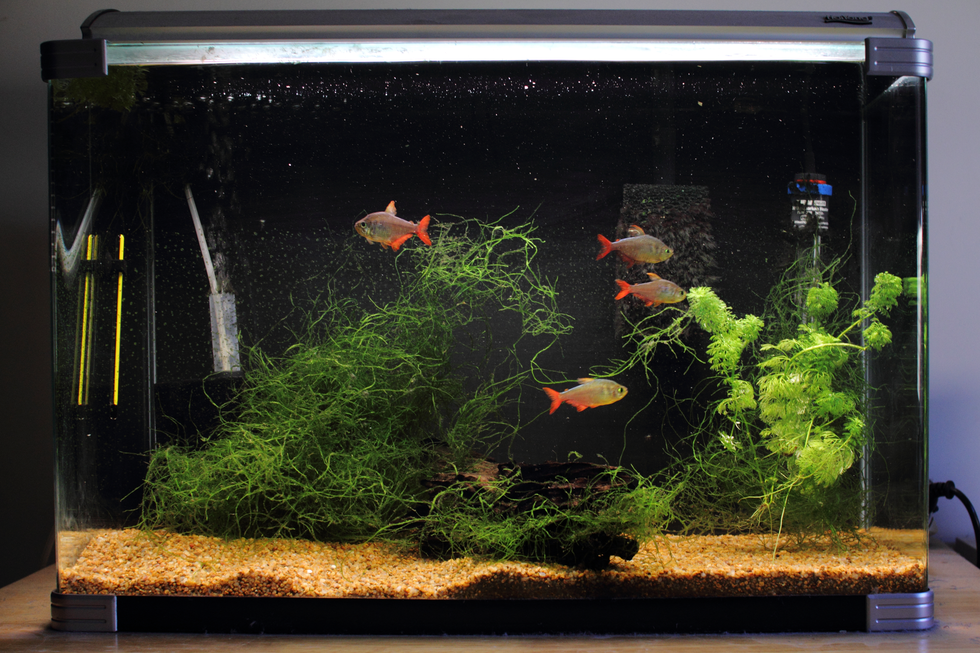
Fotografia przedstawia podświetlone akwarium. Z boku szare urządzenie napowietrzające. Na dnie piasek, kawałek kory, liczne splątane rośliny wodne. Między nimi pływają 4 rybki z czerwonymi płetwami i ogonami. Akwarium to ekosystem sztuczny.
Aquarium is an artificial ecosystem
Source: Robert Howie, www.flickr.com, licencja: CC BY-SA 2.5.
Rae0KljHo9gLd
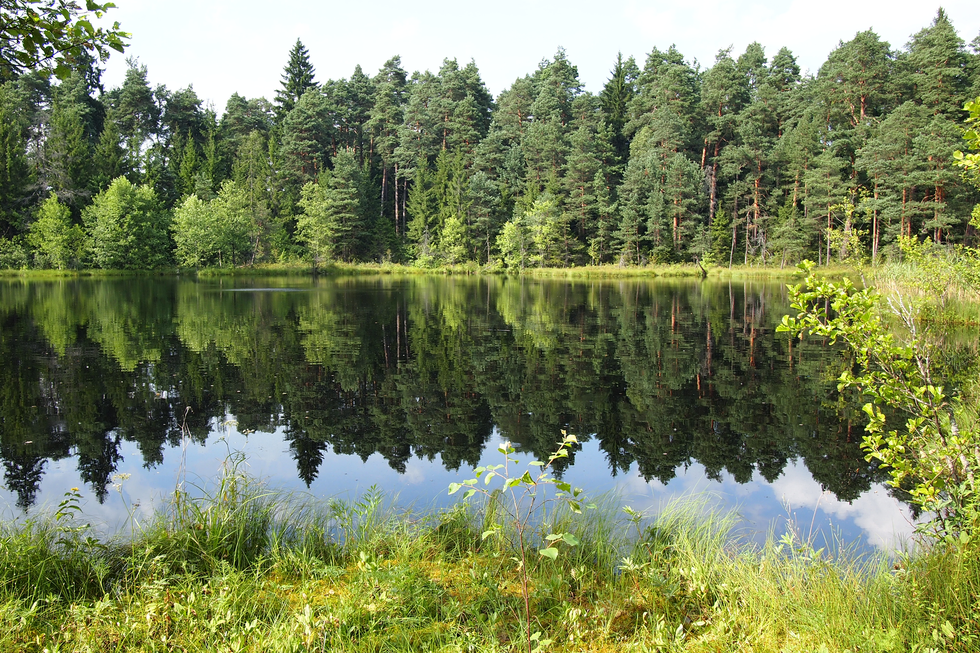
Fotografia przestawia jezioro w lesie. W wodzie odbija się błękitne niebo i zielone drzewa. Z przodu fragment brzegu porośnięty trawą. Jezioro to ekosystem naturalny. małą liczbą gatunków. Slajd 4 to Akwarium jako ekosystem sztuczny.
Lake is a natural aquatic ecosystem
Source: tomasz przechlewski, www.flickr.com, licencja: CC BY 2.0.
RBtuqMGD1QqUI
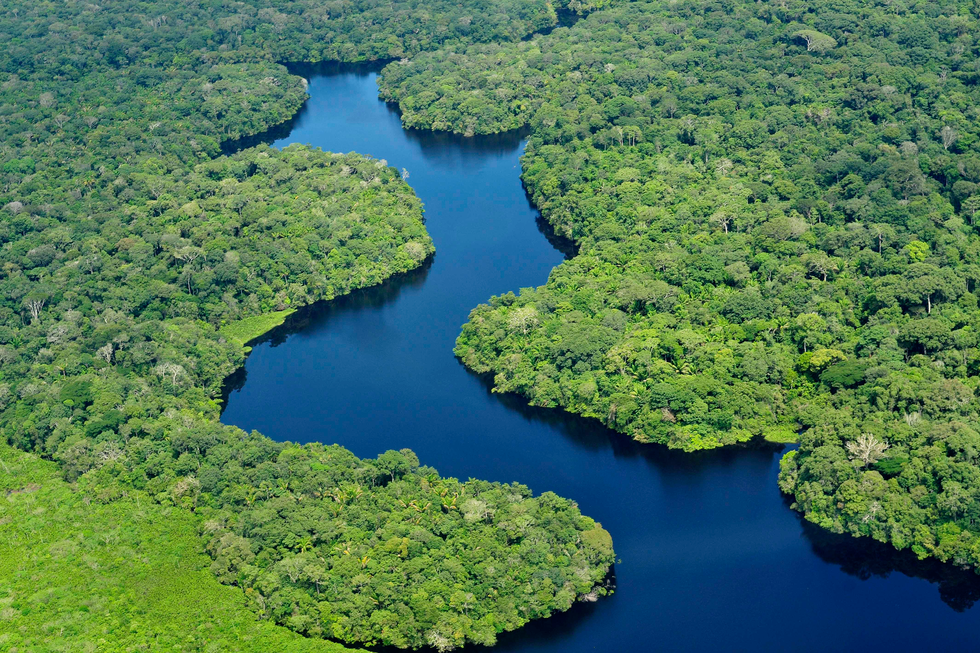
Fotografia lotnicza przestawia zielony las równikowy. Drzewa rosną gęsto, mają zwarte korony. Miedzy drzewami błękitna rzeka. Naturalny ekosystem wiecznie zielonego lasu równikowego tworzy niezliczona ilość gatunków. ekosystem sztuczny.
Ecosystem of an evergreen equatorial forest and the Amazon River
Source: CIAT, www.flickr.com, licencja: CC BY-SA 2.0.
RLCJg9ZCSmiGp
Fotografia przedstawia duże pole żółto kwitnącego rzepaku. W tle wzgórza pokryte lasem. Pole uprawne to ekosystem sztuczny z małą liczbą gatunków.
Agricultural field is an example of an artificially shaped terrestrial ecosystem with a relatively small number of species
Source: Archangel12, www.flickr.com, licencja: CC BY 2.0.
The science of ecosystems and dependencies between their elements is ecologyecologyecology. Ecologists are interested in both individual species (populations) and groups of populations of various species inhabiting a specific area and with food dependencies. Ecology allows us to know rules of functioning of nature on a more complex level than the level of functioning of individual organisms.
Task 1
Determine whether the activities below are tasks of ecologists:
searching in a tropical forest for natural enemies of a specific ant species,
comparing the number of species inhabiting two peat bogs,
describing the structure of a newly discovered beetle species,
undertaking actions to protect nature.
Interdependencies between non‑living and living elements of nature
The number and type of organisms inhabiting a given area depends, among others, on from the climate, that is why specific types of ecosystems exist in specific climate zones. One abiotic factor, which is of great importance especially to plants, is insolation which is mainly affected by cloudiness and the altitude of the Sun above the horizon. In turn, large precipitation facilitates the existence of ecosystems rich in species, while small precipitation is typical of the opposite ecosystems. The type of substrate is also important for organisms of a given ecosystem. Where rocks are permeable, the groundwater table is deep under the surface and plants need long roots to reach it. The substrate sometimes contains not enough mineral salts and sometimes its salt content is too high for most plant species to live.
In water ecosystems, for example, water temperature and waiving, and oxygen content, which depends on them, are of key importance. Oxygen‑rich streams and cold sea waters are inhabited by other species than warm and standing waters. Water salinity determines the diversity of environments of land (freshwater) and marine reservoirs, and thus their species composition.
RXwJoxKF2dFLh
Infografika składa się z 3 części. Po środku znajduje się schemat ekosystemu lasu. Po prawej stronie wymienione są czynniki środowiska nieożywionego takie jak pora roku i nasłonecznienie. NON-LIVING ENVIRONMENT FACTORS, season, insolation, air temperature, precipitation, topography, substrate, availability of water, wind. Po lewej stronie wymienione są czynniki środowiska ożywionego, takie jak zagęszczenie osobników i dostępność pokarmu. LIVING ENVIRONMENT FACTORS, availability of food, number and density of different populations, interspecies and intraspecies competition, presence of parasites, presence of predators
Factors affecting the population
Source: Andrzej Bogusz, licencja: CC BY 3.0.
Organisms also affect the environment. The first plants played a huge role in shaping the nature of Earth. They released oxygen, i.e. a by‑product of photosynthesis which had previously been absent in the air, into the atmosphere. The change in the composition of the atmosphere enabled the emergence and growth of aerobic organisms. Another example of the significant impact of organisms on the environment is the deposition of shells of aquatic microorganisms on the bottom of reservoirs, lasting millions of years. These sediments formed limestone deposits. In turn, remains of large ferns formed coal, while remains of plants and animals - oil deposits.
Plants and lichens are responsible for the biological erosion of rocks and increasing the thickness of the soil layer. Forests and peat bogs, which are capable of collecting water, mitigate temperature fluctuations and increase air humidity. Plants overgrow lakes and make them shallower, strengthen dunes and rock landslides. Microorganisms decomposing organic remains release chemical compounds and elements into the environment.
Task 2
Wymień elementy ekosystemu w akwarium, podziel je na żywe i nieożywione. Wskaż współzależności między nimi.
Wymień elementy ekosystemu w akwarium, podziel je na żywe i nieożywione. Wskaż współzależności między nimi.
Observe life in an aquarium. List elements of this ecosystem, divide them into living and non‑living elements. Indicate interdependencies between them.
Task 3
Before watching the film „Exemplary ecosystem”, write down your research question and hypothesis. Watch the film and write down your observations and, finally, conclusions.
R1bQWk2553BxQ
Wykonaj ćwiczenie zgodnie z poleceniem.
Wykonaj ćwiczenie zgodnie z poleceniem.
Film analysis:
R14y2v3VmBwfn
Film przedstawia przykładowy ekosystem, exemplary ecosystem. W lesie, na polanie pasą się sarny. Pojawia się tekst: An ecosystem is a conventionally isolated fragment of nature consisting of elements of animate and inanimate interrelated relations that maintain in a dynamic equilibrium.
Film przedstawia przykładowy ekosystem, exemplary ecosystem. W lesie, na polanie pasą się sarny. Pojawia się tekst: An ecosystem is a conventionally isolated fragment of nature consisting of elements of animate and inanimate interrelated relations that maintain in a dynamic equilibrium.
Film przedstawia przykładowy ekosystem, exemplary ecosystem. W lesie, na polanie pasą się sarny. Pojawia się tekst: An ecosystem is a conventionally isolated fragment of nature consisting of elements of animate and inanimate interrelated relations that maintain in a dynamic equilibrium.
R1CkC7jHmBL51
Exercise 1
Group appropriately biotic factors Możliwe odpowiedzi: 1. species composition of fauna, 2. species composition of flora, 3. water temperature, 4. substrate permeability, 5. insolation, 6. climate, 7. presence of pathogens, 8. ease of getting food, 9. oxygen content in water, 10. mineral salt content in the soil, 11. presence of parasites, 12. salinity of water. abiotic factors Możliwe odpowiedzi: 1. species composition of fauna, 2. species composition of flora, 3. water temperature, 4. substrate permeability, 5. insolation, 6. climate, 7. presence of pathogens, 8. ease of getting food, 9. oxygen content in water, 10. mineral salt content in the soil, 11. presence of parasites, 12. salinity of water
Group appropriately biotic factors Możliwe odpowiedzi: 1. species composition of fauna, 2. species composition of flora, 3. water temperature, 4. substrate permeability, 5. insolation, 6. climate, 7. presence of pathogens, 8. ease of getting food, 9. oxygen content in water, 10. mineral salt content in the soil, 11. presence of parasites, 12. salinity of water. abiotic factors Możliwe odpowiedzi: 1. species composition of fauna, 2. species composition of flora, 3. water temperature, 4. substrate permeability, 5. insolation, 6. climate, 7. presence of pathogens, 8. ease of getting food, 9. oxygen content in water, 10. mineral salt content in the soil, 11. presence of parasites, 12. salinity of water
Group appropriately
oxygen content in water, insolation, mineral salt content in the soil, presence of parasites, presence of pathogens, water temperature, substrate permeability, climate, salinity of water, species composition of fauna, ease of getting food, species composition of flora
biotic factors
abiotic factors
Summary
Every ecosystem is an abiotic environment together with all its populations of different species, and processes and dependencies between them, and between them and the non‑living environment.
The environment of every ecosystem affects individuals of specific species which change the environment.
ekosystem – umownie wydzielony fragment przyrody składający się z elementów ożywionych i nieożywionych powiązanych ze sobą zależnościami, utrzymujący się w dynamicznej równowadze