Hitler's state
about the organisation, culture and economy of the Third Reich;
about the characteristics of the National Socialist system;
about the main stages in the process of Hitler gaining power.
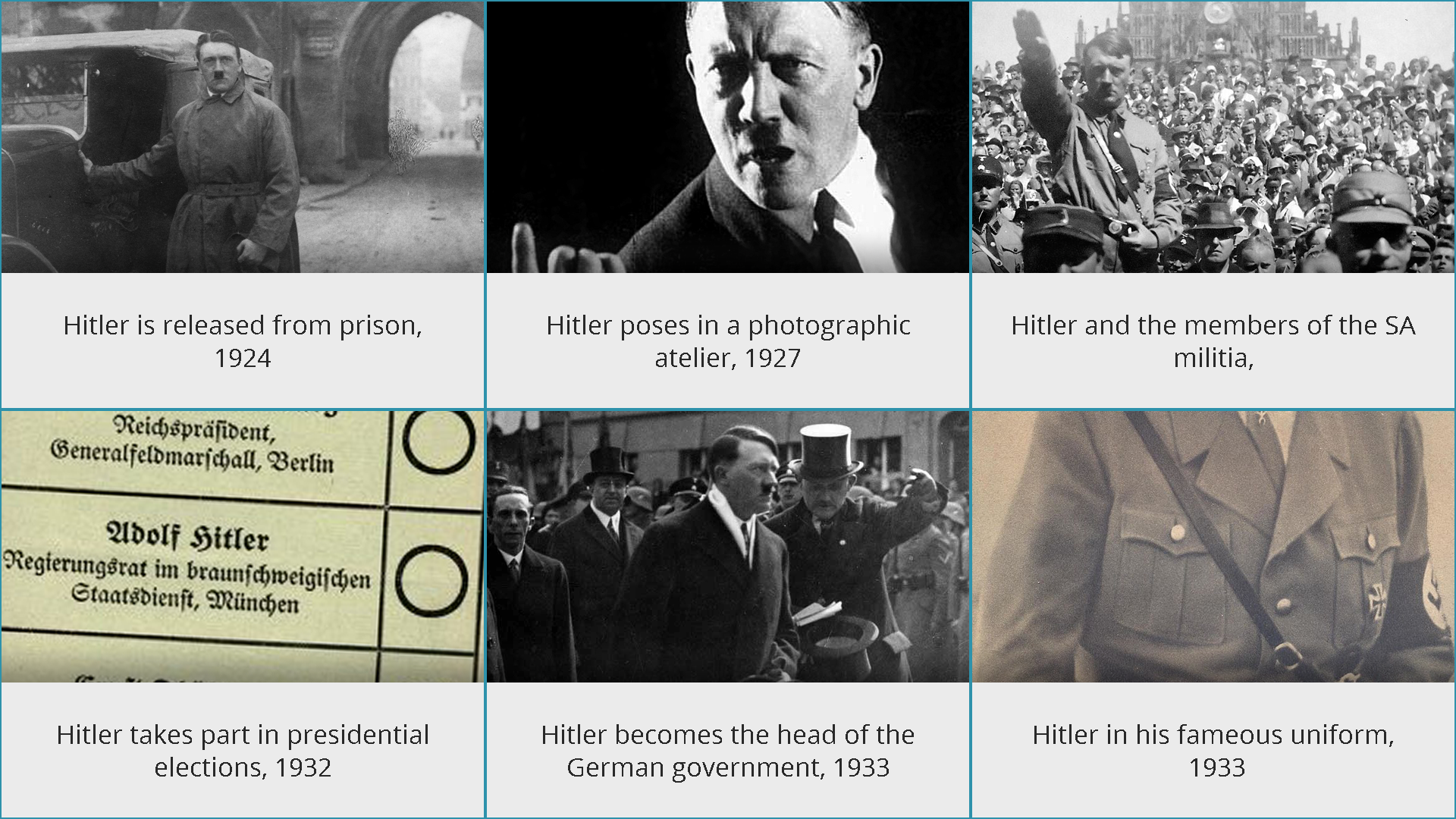
Adolf Hitler wrote a book entitled Mein Kampf in which he presented his views, which would later form the basis of the Third Reich’s ideology called National Socialism (NazismNazism). His opportunity to assume power came with the political promotion (entry into parliament) of the Nazi Party (NSDAPNSDAP. Although Hitler lost the presidential election, in January 1933 President Hindenburg made him the chancellor of Germany. Soon enough, Hitler started repressing his opponents. Concentration camps were set up, and Hitler’s political opposition, unionists and clergymen were the first to be sent there. The most severe repressions were suffered by German Jews. In pursuit of his idea of a racially homogenous nation, in 1935 Hitler passed the Nuremberg Laws, which deprived Jewish people of most of their civil rights. The apogee of the anti‑Semitic policy was the so‑called Kristallnacht (Crystal Night), which took place on the night of the 9–10 November 1938. During that night, tens of Jewish people were killed and hundreds were assaulted. Almost 300 synagogues were burnt down. The propagandapropaganda machine was activated and continued to function very efficiently throughout the existence of the Third Reich. Hitler made effort to quash any opposition within his party. In 1934, during the so‑called the Night of the Long Knives, he had the leaders of the SA murdered. Thus, the SS became the most important military organization of the Nazis with Heinrich Himmler as its leader. The state has been fully controlled over all areas of life. Political Police - Gestapo watched over order and security in the Third Reich. Hitler fully subjected society to the Nazi ideology. State supervision encompassed culture as well, which was also meant to support National Socialist concepts. Moreover, the state took control of the economy.
Read the passage from the encyclopaedia entry and put the illustrations below in order.
Hitler, Adolf. Born 1889, died 1945. Leader of the National Socialist movement, founder of the NSDAPNSDAP, and dictator of the Third Reich. Following a failed attempt to take power in 1923 (the Munich Putsch), Hitler spent a few months in jail, where he wrote Mein Kampf (My Struggle, v. 1–2, 1925–27). In his book, regarded as the bible of NazismNazism, Hitler formulated his chauvinistic, extremely anti‑Semitic vision of German hegemony in Europe, which was filled with hate towards communists. With the support of the powerful German industrial sector and a vast majority of German society, who were anxious about the mass unemployment and the spectre of confusion in the country (elections in July and November 1932), in 1933 Hitler was nominated by President P. von Hindenburg for the office of the Reich’s chancellor. In 1934, after the death of Hindenburg, Hitler combined the functions of the chancellor and president and assumed the title of the leader (führer) of the nation and head of state, and introduced personal dictatorship based on the NSDAPNSDAP machine and police terror.
Source: Encyklopedia Szkolna WSiP. Historia, Warsaw 2004, pp. 286–287.
Do the jigsaw puzzle by putting the events and their descriptions in order.
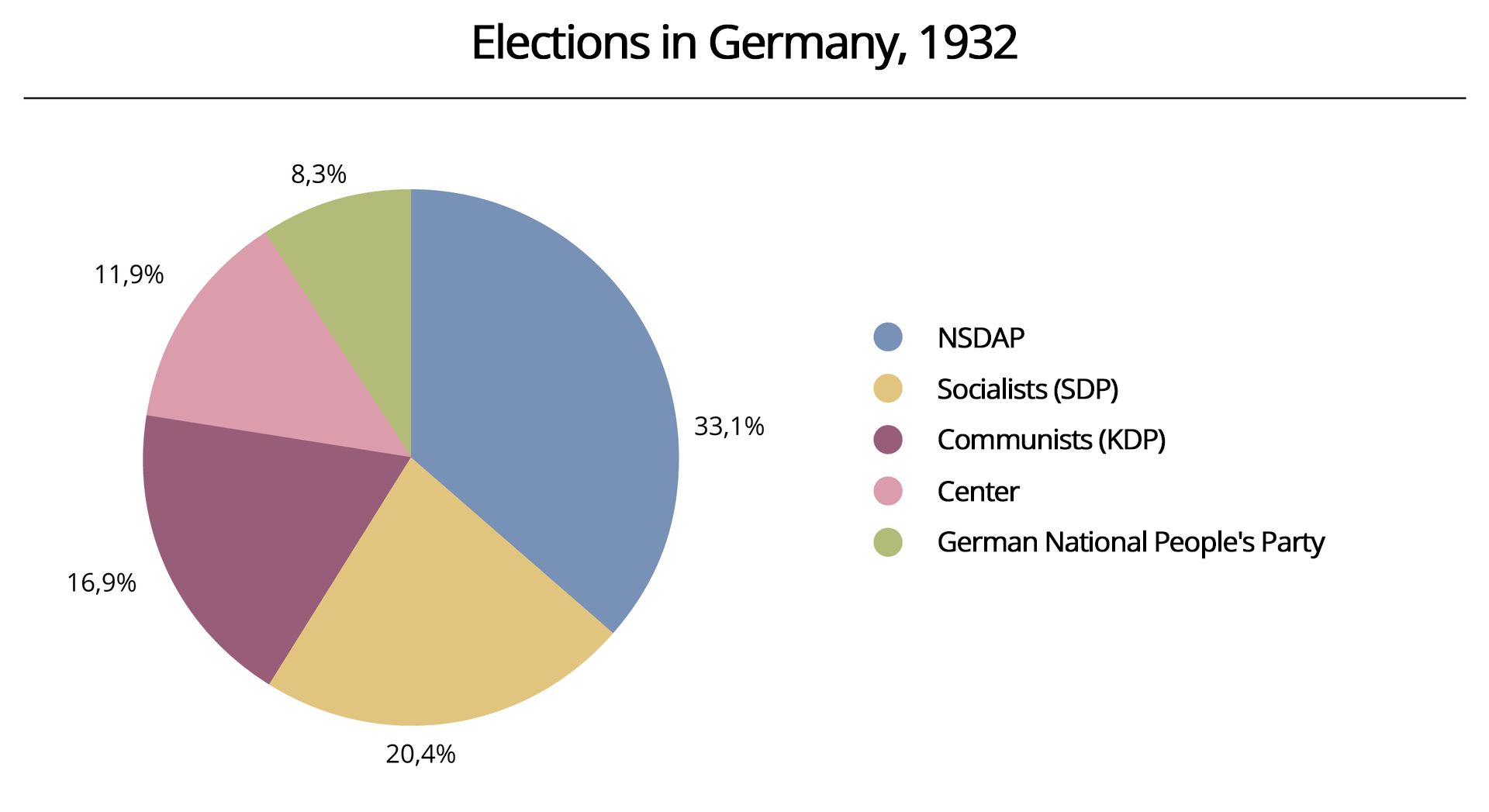
Why do you think Hitler lost the elections in 1923 (although his programme was similar), while at the beginning of 1930s the majority of German society voted for his party?
Familiarize yourself with the text and answer the question. What limitations did the decree on the Protection of People and State introduce with regard to civil rights?
- Political pluralism was limited.
- The freedom of speech was limited.
- All offences were punishable by death.
- Only pro-government press was available.
- Punishments were made stricter.
Read the text and write down a definition of a “country in a state of emergency” with regard to interwar Germany ruled by Hitler.
What can the effects of limiting civil rights be? Why did Hitler prefer a plebiscite to elections?
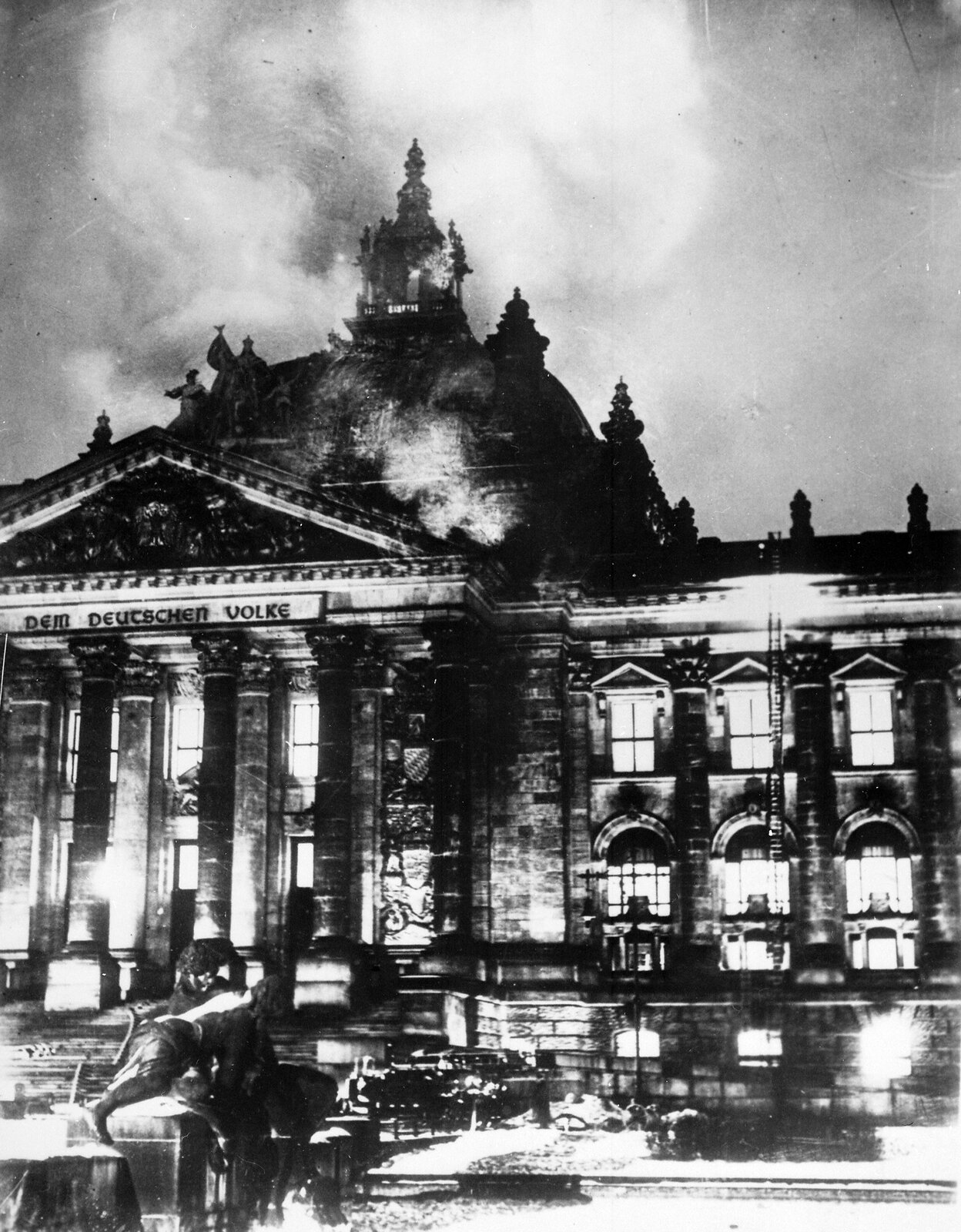
In February 1933, the seat of the government, the Reichstag, was burned down. It was probably set on fire purposefully, but the NSDAPNSDAP led by Hitler successfully pushed the view that this act of vandalism was a signal for communist armed riots to rise against the German state. The way in which this incident was used (an unambiguous interpretation thereof was forced upon public opinion) was a critical step towards the NSDAPNSDAP’s complete usurpation of power in the Weimar Republic and the transformation of the parliamentary republic into a one‑partyone‑party totalitariantotalitarian police state. How was this done? Adolf Hitler and Franz von Papen convinced Paul von Hindenburg, the president of the Reich who was shocked by the fire, to sign the Decree for the Protection of People and State on 28 February. This document “temporarily” suspended the basic civil rights guaranteed by the constitution of the Weimar Republic of 1919 a week before the elections.
The decree did not violate the constitution, which provided for so‑called emergency states. It suspended the freedom of publications, secrecy of correspondence, freedom of assembly, personal inviolability of citizens and their flats, allowed so‑called preventive arrest, that is police (and auxiliary police) interventions without a court order, and, most importantly, it suspended citizens’ right to bring a case to court. The crucial decision was the entrustment of the decree’s implementation to the Reich’s minister of the interior, not to the minister of war. Thanks to this decision, the state of emergency was of a police, not a military nature (which the constitution provided for). As of the publication of the decree (whose term was successively extended in following years) until 1945, Germany was in a state of emergency.
Hitler and his people, equipped with powerful tools to break any social resistance, easily and remorselessly reached for absolute power. In November 1933, the Nazis used special powers of attorney issued by their leader as the chancellor to rig the elections in which they fraudulently gained over 90% of votes. As a consequence, the Reichstag was labelled the “best paid male chorus in the world”. This was its last performance. No elections followed the death of President Hindenburg in August 1934. Adolf Hitler took over the presidential powers and society approved it in a plebiscite.
[based on a Wikipedia entry, Encyklopedia PWN]
Use online resources to explain the following terms:
Hitlerjugend
National Socialist Women’s League
Reich Labour Service
Reichsnährstand
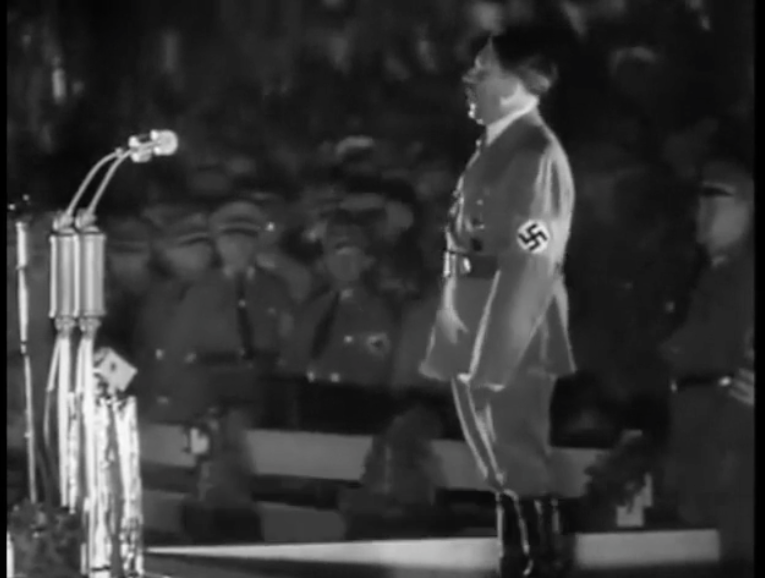
Film dostępny na portalu epodreczniki.pl
Film przedstawiający przemówienie Adolfa Hitlera. Jest to mężczyzna w średnim wieku, z niewielkim wąsem. Ubrany jest w mundur z przepaską z symbolem swastyki. Wygłasza przemowę w języku niemieckim, na otwartej przestrzeni, skierowaną do zgromadzonych tłumów. Hitler energicznie gestykuluje i wykrzykuje. Po zakończonej przemowie rozemocjonowany tłum skanduje nazistowskie pozdrowienie "sieg heil".
Source: Pierwsze rozporządzenie wykonawcze do Ustawy o obywatelstwie Rzeszy z 14 listopada 1935, dostępny w internecie: http://www.gimnazjum1.turek.net.pl/konspekty/zbior.doc [dostęp 4.08.2015 r.].
Read the passage from the 1935 law and the implementing regulation thereto.
§ 3. Only the Reich citizen, as possessing full political rights, has the right to vote and the right to hold a public office. [...]
§ 4. (1) A Jew can not be a citizen of the Reich. He does not have the right to vote; he can not hold a public office.
(2) Officials of the Jews shall retire on December 31, 1935.
§ 5. (1) A Jew is a person having among relatives of the second degree (grandparents) preliminary relatives of at least three ancestors of racial Jewish background.
(2) A Jew is also a person of a German subject, a cross‑breeding grandson of two Jewish ancestors [...].
List the criteria used to establish whether somebody was of Jewish descent. Which parts of life did they regard? Why are they of an oppressive nature? Why are they contrary to human rights?
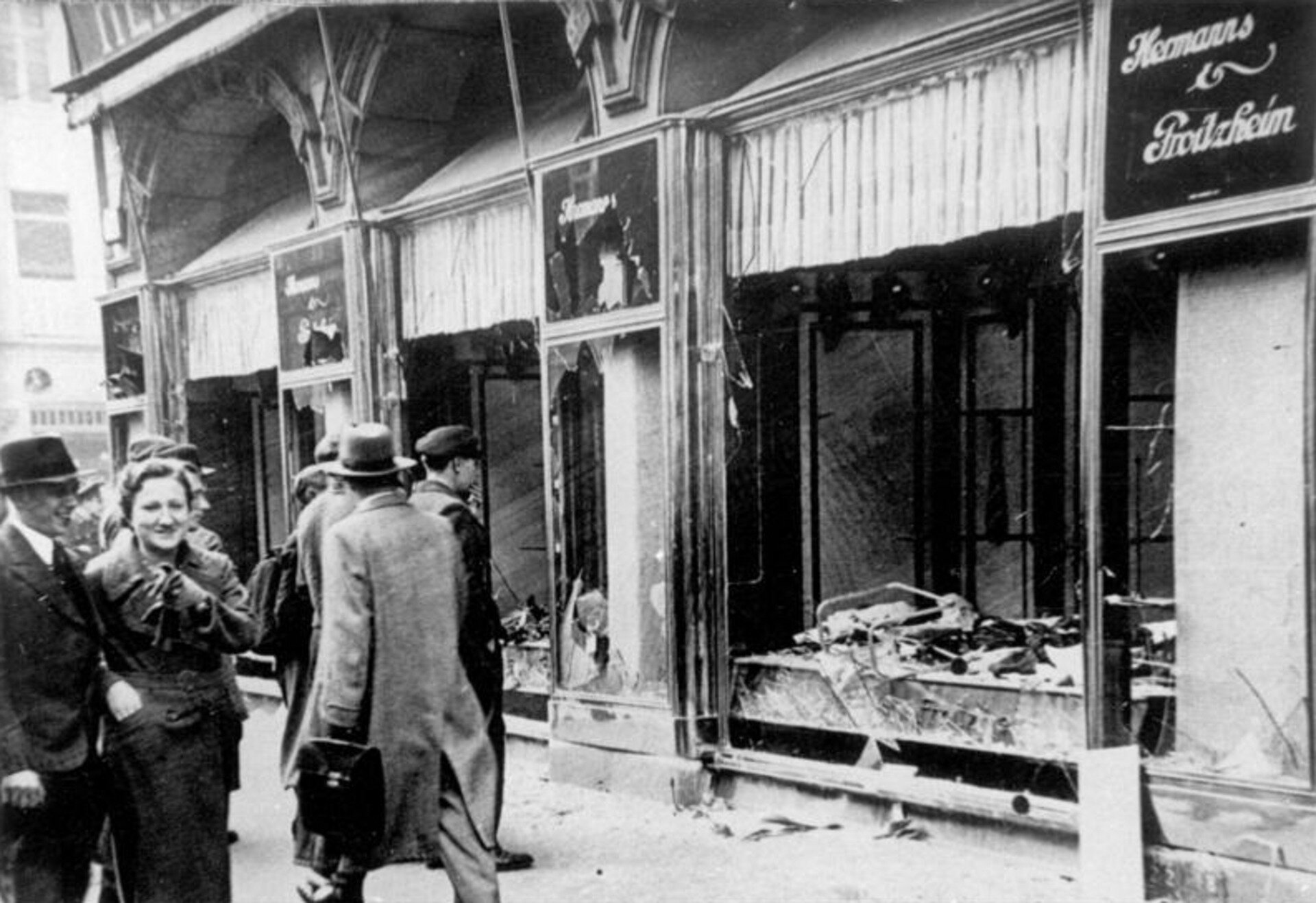
Explain the origin of the term Kristallnacht.
- The name comes from the broken glass of shop windows.
- It was hailing that night, and the streets were covered with ice pellets.
- The pavements were covered with ice.
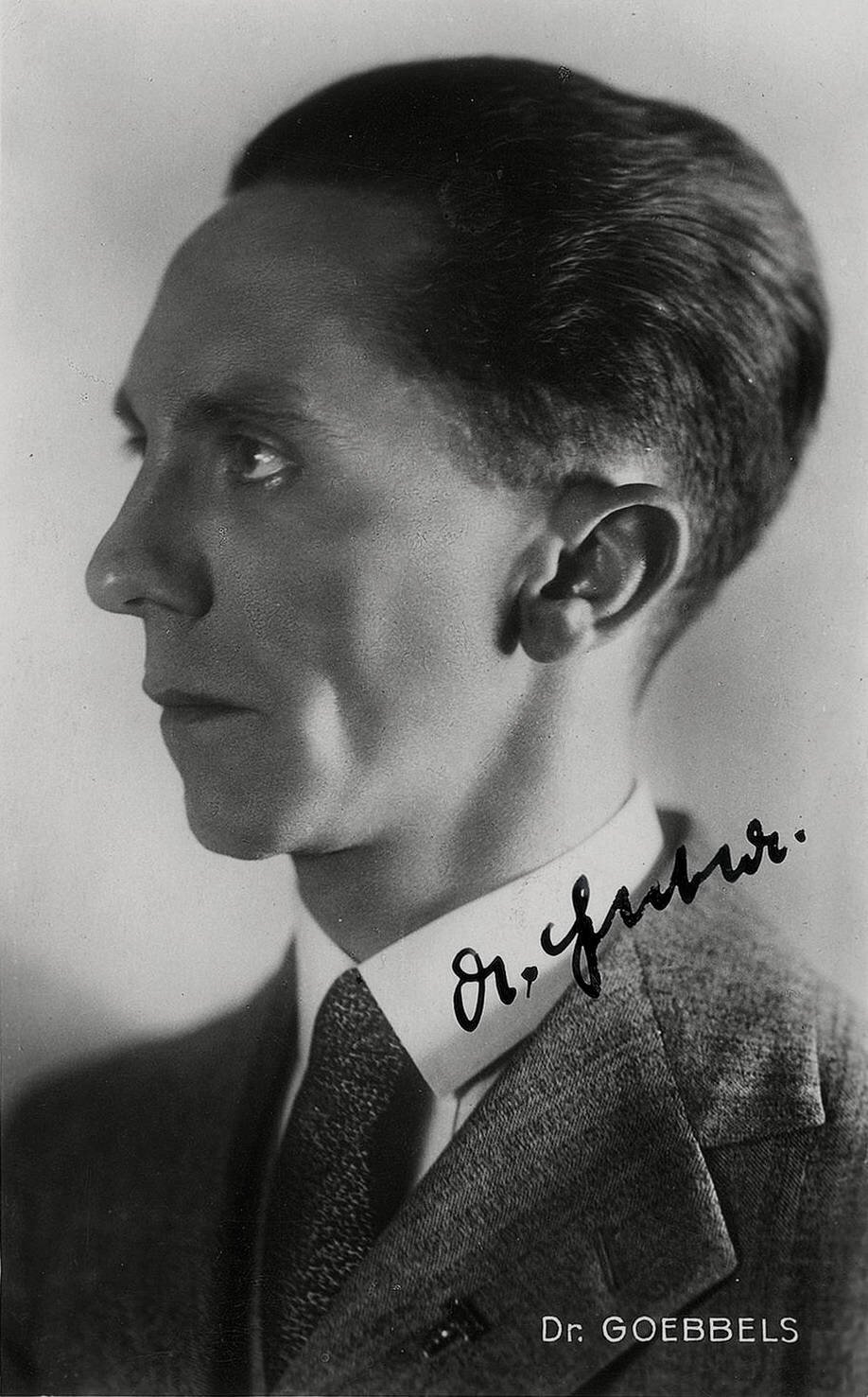
Check online who Joseph Goebbels was.
What do you think he meant when he said “Ordinary propagandapropaganda has not much to do with being objective, and even less with the truth” or “If you repeat a lie often enough, it becomes the truth”?
Listen to the broadcast. Learn about the circumstances in which the Third Reich organised the Olympics in Berlin in 1936. Why do you think Germans, for the first time in the history of modern Olympics, dared to misappropriate a great sports event for political purposes? Did they achieve what they wanted?
“In 1934, fascist Germany, which did not try to hide its racial discrimination, applied to organise the Olympic Gamesapplied to organise the Olympic Games. After the Berlin Olympics, Baron Pierre de CoubertinBaron Pierre de Coubertin [...] wrote: “What is the difference between the promotion of tourism – like during the Olympics of 1932 in Los Angeles – and the promotion of a political regime? The most important thing is that the Olympic movement made a step forward...”. [...] Dr Theodor Lewald, the head of the Olympic organisation committee, a subordinate and official of GoebbelsGoebbels, offered the baron 10,000 Marks and 12,300 Swiss francs to choose Berlin. Pierre de Coubertin took the offer. […] In 1936, 10,000 Marks was the equivalent of 350,000 modern‑day dollars, and 12,300 Swiss francs was approximately 550,000 dollars. [...] There are no doubts that the money was a bribe, as otherwise Lewald would not have tried to convince Coubertin to lie to Baillet‑LatouremBaillet‑Latourem [...].
Since the Frenchman took the Nazi “silver coins” and had to keep this fact secret, he had to do what was asked of him. The Nazis, who had Coubertin in their pocket, gained full control over the games. Not only were the games now organised by the state, but also they were organised according to the NSDAPNSDAP’s, not the IOC’s, rules. Soon, 4,000 sportspeople were about to take part in the festival of sport and NazismNazism.
[...] Let’s go back to the Olympics of 1896. There was not much competition (e.g. athletics, in which only men took part, included 100 m, 400 m, 800 m, and 1500 m races, a marathon and a hurdle race about 110), which quite limited the number of victorious countries. This gave rise to the idea to honour not only the best champion, but first three champions. [...] Why was it not decided to have two winners? It was a matter of symmetry, especially in the light of harmonious Greek buildings, which immediately drew the attention of Georgios Averoff, the biggest sponsor of the event. [...]. Why medals, not the traditional laurel wreath? This was a categorical request of baron Pierre de Coubertin who was deeply rooted in the military tradition. [...] Why gold, silver and bronze were chosen, if platinum is more valuable than gold and pure zinc is more valuable than bronze? As Averoff explained to Coubertin, because power is measured in gold, [...] and bronze is what the monuments on the streets of Paris were made of. Of course, there was no response to such dictum. The tradition remained.[...]
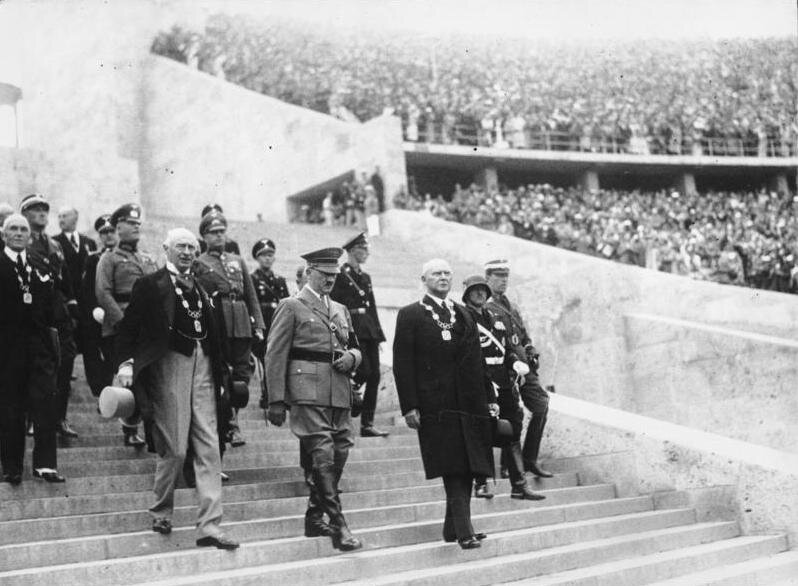
He changed the category from the antique question of who is THE BEST to an everyday, conflicting question of who is BETTER. This is how score tables entered the realm of sport. They not only [...] refer to individual sportspeople, but entire nations, their fitness and power. When the pride of the entire society is at stake, everything radically changes. [That is why when] Jessie Owens, a black sportsman, [...] won with his memorable jump of 8 m 6 cm, Hitler left the VIP box early to avoid shaking his hand. [...] It was already a rule that sport was an international battle, and it surely remains in force. [...] Was Pierre de Coubertin aware of the hell he raised? It seems so. [...] The baron thought that by creating an excuse for a fight he would prevent murderous military confrontations. He did not think that they not only thought that they would not eliminate each other, but that they would strengthen each other.
[...] Following the Berlin Olympics, the successor of Coubertin, Avery Brundage [...], commented on the successes of German contestants of 1936 in Berlin as follows : „The United States could learn from the Germans and their perfect national organisation, intensive training and almost superhuman will to win.[...] We also have to [...] root communism out. [...] We also have to take measures to stop the decline of patriotism”.
[selected passages from: Ludwik Stomma, Historie niedocenione, Warsaw 2011, p. 163‑175.]
Keywords
IndictrinationIndictrination, NazismNazism, propaganda, totalitarianism
Glossary
SA – Oddziały Szturmowe NSDAP. Paramilitarna organizacja, której zadaniem była ochrona zebrań partii nazistowskiej. Po dojściu Hitlera do władzy współodpowiedzialna za represje polityczne i terror. Straciła znaczenie po tzw. nocy długich noży.
SS – die Schutzstaffe, dosłownie oddział ochronny. Paramilitarne formacje nazistowskie odpowiedzialne za masową eksterminacje narodów i organizacje terroru na podbitych terenach.
Noc długich noży – przeprowadzona 29/30 czerwca 1934 r. akcja rozprawy z przeciwnikami Adolfa Hitlera wewnątrz ruchu nazistowskiego. W jej wyniku oficjalnie śmierć poniosło 77 osób, w tym liczni przywódcy SA.
Gestapo – Tajna Policja Państwowa w III Rzeszy. Była jednym z najkrwawszych wykonawców nazistowskiego terroru na okupowanych terenach. Na jej czele stał Heinrich Himmler.
Indoktrynacja – wpajanie określonych poglądów i przekonań przy jednoczesnym ograniczeniu innych źródeł informacji.
Eugenika – pojęcie wprowadzone pod koniec XIX w. Dotyczyło selektywnego rozmnażania zwierząt (w tym ludzi). Miało służyć ulepszeniu gatunków poprzez uwzględnienie cech dziedzicznych. Eugenika pozytywna zachęcała do częstszego reprodukowania (odtwarzania) się najlepszych osobników; negatywna zniechęcała do reprodukcji osobników mniej wartościowych.
Nazizm – (narodowy socjalizm) – ideologia skrajnego nacjonalizmu i rasizmu stworzona przez Hitlera. Niemiecka odmiana faszyzmu.
NSDAP – Narodowosocjalistyczna Niemiecka Partia Robotników, niemiecka partia faszystowska, od pierwszego słowa jej nazwy powstały terminy: narodowy socjalizm, nazizm.
Propaganda – celowe działania zmierzające do ukształtowania określonych poglądów i zachowań zbiorowości lub jednostki, wykorzystujące manipulację (działające na emocje), czasami fałszywą argumentację. Kiedy propaganda zmierza do upowszechnienia i utrwalenia postaw społecznych poprzez narzucenie lub zmuszenie odbiorców do przyjęcia określonych treści, wtedy stanowi jeden z elementów indoktrynacji.
System monopartyjny – system zakładający legalne działanie tylko jednej partii politycznej, sprawującej pełnię władzy w państwie; nie przewiduje on możliwości istnienia opozycji i zmiany ekip rządzących.
Totalitaryzm – system rządów (także: wspierająca go ideologia) charakterystyczny dla XX‑wiecznych państw, w których splotły się procesy modernizacyjne, kryzys lub niedostatek demokracji i ambicje mocarstwowe; cechuje go oficjalna, obowiązująca wszystkich radykalna ideologia, cenzura i centralnie kierowana propaganda; rządy monopartii; terror na ogromną skalę przy pomocy tajnej policji; wyraźnie zdefiniowany wróg wewnętrzny i zewnętrzny; sterowane poparcie społeczne; monumentalizm w sztuce, nihilistyczny lub bardzo wybiórczy stosunek do tradycji.