Przeczytaj
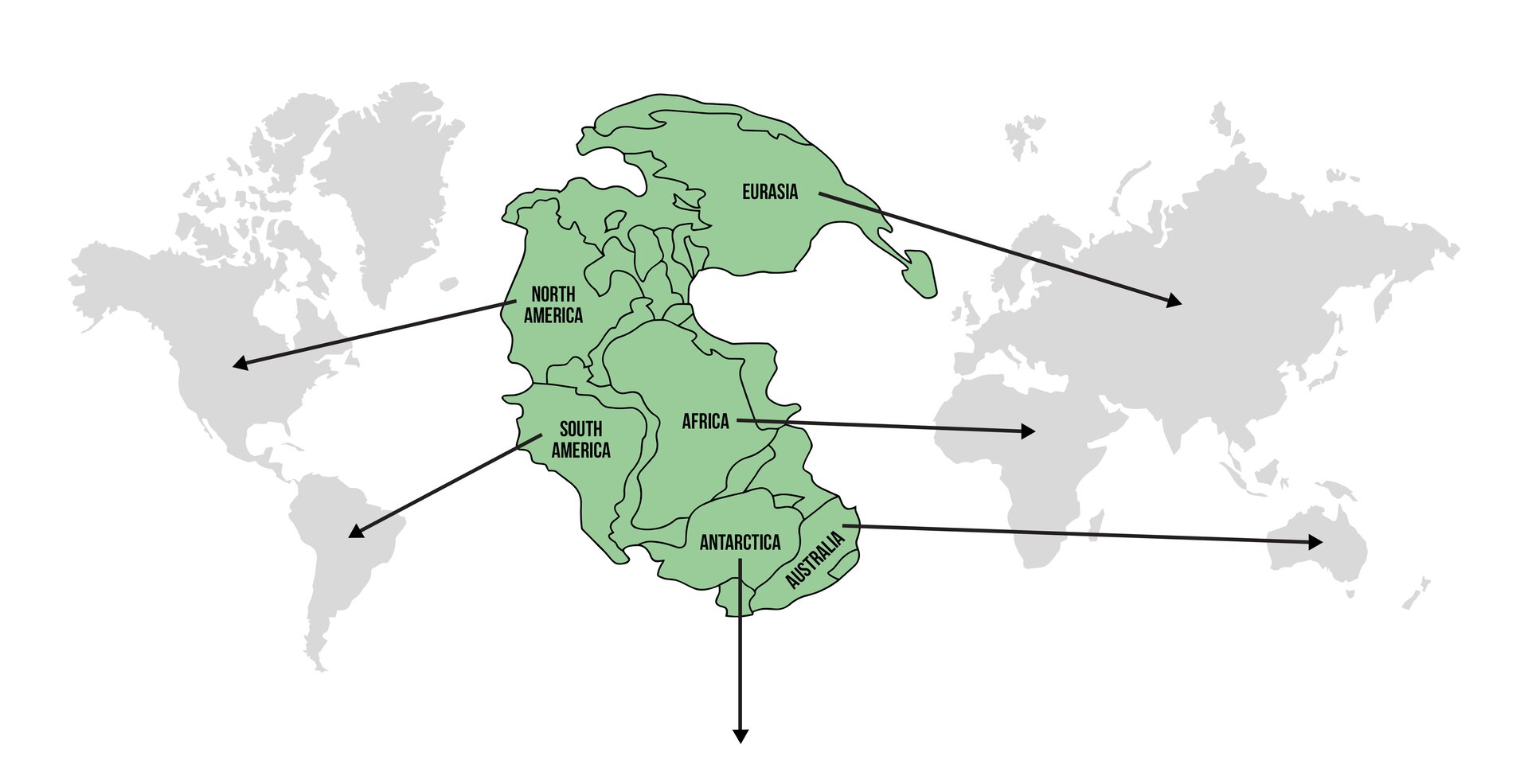
Pangea is neither the first nor last supercontinent in the history of our planet. The continents as we know them nowadays will not look the same in 250‑300 million years from now. It’s because they are undergoing the process of continental drift. Thanks to modern science, we now have methods to look back as well as into the future of the continents on the Earth. Read the text to learn more about the formation, conditions, and split of Pangea.
Pangea nie była ani pierwszym, ani ostatnim superkontynentem na naszej planecie. Kontynenty, które widzimy na współczesnych mapach, nie będą wyglądały tak samo za 250–300 mln lat, ponieważ cały czas wędrują. Dzięki zdobyczom nowoczesnej nauki możemy nie tylko zbadać przeszłość, lecz także zajrzeć w przyszłość największych lądów Ziemi. Zapoznaj się z tekstem, żeby dowiedzieć się więcej o powstaniu Pangei, panujących na niej warunkach oraz jej rozpadzie.
Planet Earth is built of layers. Match the names of them with their translations.
Study the text and do the exercises below.
Pangea Means "All Land"What was Pangea?
The oldest supercontinent known to scientists formed 1 billion years ago and was given the name RodiniaRodinia. Pangea was the most recent supercontinent in our planet’s 4.5‑billion year history. The formation of Pangea started around 300 million years ago and after about 100 million years, it started to separate again. The name, which in ancient Greek means all land, adequately describes its nature, as the landmasslandmass comprisedcomprised almost all Earth’s continents. The only piece of land which was not part of Pangea was CathayasiaCathayasia, nowadays North and South China.
How was it formed?
In the early 20th century, Alfred Wegener, a German climatologist, geologist, and geophysicist, put forward a theoryput forward a theory of continental driftcontinental drift. Having studied the maps of the world he noticed that continents’ coastlinescoastlines seemed to fit together like pieces of a jigsaw puzzle. He suggested that all continents used to form a single landmass in the past, which then broke upbroke up and the elements of it moved around the globe to their current positions. He gathered plenty of evidence supporting the theory of a single supercontinent, but he found it challenging to explain why continents moved in the first place. In modern science, continental drift theory has been replaced by the science of plate tectonicsplate tectonics. The whole theory is based on the premisepremise that the Earth is covered by a rocky shell, called the mantlemantle, on the surface of which several platesplates constantly slide and change their locations. According to this theory, plates can shift away from one anothershift away from one another and collidecollide, which leads to the creation of mountain ranges, and rub against one anotherrub against one another, which results in seismic activityseismic activity.
What’s the evidence that Pangea ever existed?
Although initially Wegener’s theory was not very popular, with time more and more evidence was gathered which supported his thesis. First of all, it’s evident even to an untrained eye that continents must have been parts of a bigger whole. Secondly, geologic recordsgeologic records indicate that certain resource depositsresource deposits, such as coal, spanning across nowadays remote locationsremote locations show an extremely similar compositioncomposition. Thirdly, there are fossil recordsfossil records which show that identical plants and animals are found in different, far‑flung regionsfar‑flung regions of the world. One such example is the discovery of remains of the same land reptile called mesosaurus in nowadays South America and Africa. It was a freshwater reptilefreshwater reptile, so it’s highly unlikely that it swam across a salty water ocean, and scientists reached a conclusionreached a conclusion that these two continents must have been one landmass in the past.
What was the world like about 200 million years ago?
The whole of Pangea was surrounded by the Panthalassa OceanPanthalassa Ocean. Since it was such a huge area, its climate varied significantly between different parts. In the north, in the area of today’s North America, Europe, and Asia, it was initially very hot and humidhumid, and subsequently hot and dry. That created favourable conditionsfavourable conditions for the formation of coal. The south part, on the flip side, underwent an ice age at some point. Although Pangea was a place of lavish vegetationlavish vegetation and numerous species of animals thrivedthrived in its area, it also witnessed the so‑called Great DyingGreat Dying, a mass extinction event which resulted in around 70% of terrestrial speciesterrestrial species disappearing altogether.
Źródło: Anna Posyniak‑Dutka, [na podstawie:] https://www.livescience.com/38218-facts-about-pangaea.html [dostęp 12.07.2022], https://www.thoughtco.com/what-is-pangea-1435303 [dostęp 12.07.2022], https://volcano.oregonstate.edu/pangaea-present-lesson-2 [dostęp 12.07.2022], https://www.worldatlas.com/what-is-pangaea.html [dostęp 12.07.2022], https://www.geolsoc.org.uk/Education-and-Careers/Ask-a-Geologist/Continents-Supercontinents-and-the-Earths-Crust/Break-up-of-Pangaea [dostęp 12.07.2022], https://education.nationalgeographic.org/resource/continental-drift [dostęp 12.07.2022], licencja: CC BY-SA 3.0.
a) Rodinia is older than Pangea.
b) Pangea consisted of all Earth’s continents.
c) Greek was spoken in Pangea.
2. Which sentence is NOT true about the continental drift theory?
a) An ancient supercontinent disintegrated into continents we know nowadays.
b) The science of plate tectonics has taken its place.
c) It explained the mechanisms behind the movement of the continents.
3. Which sentence is NOT true about the movement of tectonic plates?
a) It can cause the formation of new mountains.
b) It occurs on the surface of the mantle.
c) It only happens in the parts of the Earth covered with rocks.
4. Which information proves the existence of Pangea?
a) Coal deposits.
b) Fossilised plants and animals.
c) All of the above.
5. Pangea
a) was washed by three different oceans from different sides.
b) was partially covered with ice at some point.
c) provided excellent living conditions for animals throughout its existence.
a) crashed
b) consisted of
2. Alfred Wegener put forward a theory of continental drift.
a) suggested
b) debunked
3. The theory is based on the premise that the Earth is covered by a rocky shell.
a) assumption
b) rule
4. Scientists reached a conclusion that these two continents must have been one landmass in the past.
a) achieved a goal
b) deducted
5. That created favourable conditions for the formation of coal.
a) good circumstances
b) detrimental situation
Based on the text, describe the evidence scientists have gathered which supports the theory that Pangea existed. Write 4–5 sentences.
Słownik
/ ˌæpəˈleɪʃənz /
Appalachy (a mountain range in eastern to northeastern North America)
/ ˈbeɪsn̩z / / ˈbeɪsn̩ /
baseny [basen] (a natural depression in the Earth’s surface filled with water)
/ ˈbreɪˌkəp /
rozpad
/ brəʊk ʌp / / ˈbreɪk ˈʌp /
rozpadł/rozpadła się [rozpaść się] (disintegrate into smaller pieces)
/ ˈkeɪm ˈɪntə ɪɡˈzɪstəns / / ˈkʌm ˈɪntə ɪɡˈzɪstəns /
pojawił/pojawiła się [pojawić się]
/ kaˈthetaeɪʒə /
Katazja (a microcontinent that was not part of Pangea, it covered the area of modern China)
/ ˈkəʊstlaɪnz / / ˈkəʊstlaɪn /
linie brzegowe [linia brzegowa] (the shape of land as marked by its border with the seas or oceans)
/ kəˈlaɪd /
zderzać się
/ ˌkɒmpəˈzɪʃn̩ /
skład (ingredients found in something)
/ kəmˈpraɪzd / / kəmˈpraɪz /
obejmował/obejmowała, zawierał/zawierała [obejmować, zawierać] (to include or consist of)
/ ˌkɒntɪˈnentl̩ drɪft /
wędrówka kontynentów (the hypothesis which assumes that Earth’s continents have been moving in relation to one another)
/ krʌst /
skorupa ziemska (the outermost layer of the earth)
/ dɪsˌɪntɪˈɡreɪʃn̩ /
rozpad
/ ɪˈrəʊd /
ulec erozji (to be gradually worn away by natural forces such as wind, water, solar radiation, etc.)
/ fɑː ˈflʌŋ ˈriːdʒənz / / fɑː ˈflʌŋ ˈriːdʒən /
odległe regiony [odległy region] (a remote area)
/ ˈfeɪvərəbl̩ kənˈdɪʃn̩z /
sprzyjające warunki (circumstances which make something easier to happen)
/ ˈfɒsl̩ ˈrekɔːdz / / ˈfɒsl̩ ˈrekɔːd /
dowody w postaci skamieniałości [dowód w postaci skamieniałości] (organic matter changed into rock as a result of physical and chemical process, which now is used to track the history of something)
/ ˈfreʃwɔːtə ˈreptaɪl /
gad słodkowodny (an air‑breathing vertebrate such as turtle, lizard, snake, or crocodile which live in or near water with low concentration of salt)
/ ˌdʒɪəˈlɒdʒɪkl̩ rɪˈkɔːdz / / ˌdʒɪəˈlɒdʒɪkl̩ rɪˈkɔːd /
dowody w postaci znalezisk geologicznych [dowód w postaci znaleziska geologicznego] (a kind of rock or mineral which now is used to track the history of something)
/ ˌɡleɪsiˈeɪʃn̩ /
zlodowacenie (the process or state of being covered by glaciers or ice sheets)
/ ɡɒnˈdwɑːnə /
Gondwana (the southern supercontinent that broke up from Pangea)
/ ˌgreɪt ˈdaɪɪŋ /
masowe wymieranie (an extinction event that took place during the existence of Pangea)
/ ˈhjuːmɪd /
wilgotny/wilgotna
/ ˈaɪs kæps / / ˈaɪs kæp /
czapy lodowe [czapa lodowa] (ice that covers a large area of land)
/ ˈlændˌmæs /
ląd, kontynent
/ lɔːˈreɪʒə /
Laurazja (the northern supercontinent that broke up from Pangea)
/ ˈlævɪʃ ˌvedʒɪˈteɪʃn̩ /
bujna roślinność
/ ˈmæntl̩ /
płaszcz Ziemi (the layer of the Earth between the outer core and crust)
/ ˈmæntl̩ kənˈvekʃn̩ ˈfɔːsɪz /
siły pochodzące z konwekcji w płaszczu Ziemi (a very slow movement of the Earth’s mantle caused by currents carrying heat from core to the planet's come to the surface)
/ mɜːdʒ təˈɡeðə /
scalić się
/ ˌmaʊntɪn ˈreɪndʒɪz / / ˌmaʊntɪn reɪndʒ /
łańcuchy górskie [łańcuch górski] (a system of mountains that stretches over a long distance)
/ pænˈdʒiːə /
Pangea (an ancient supercontinent)
/ ˌpanthetaəˈlasə ˈəʊʃn̩ /
ocean Panthalassa (the ocean which surrounded Pangea)
/ ˈpleɪt tekˈtɒnɪks /
tektonika płyt (a theory that provides explanation how landforms are created as a result of Earth's subterranean movements)
/ pleɪts / / pleɪt /
płyty [płyta] (a huge slab of rock which can consist of continental and oceanic lithosphere)
/ ˈpremɪs /
założenie
/ ˈpʊt ˈfɔːwəd ə ˈthetaɪəri / / ˈpʊt ˈfɔːwəd ə ˈthetaɪəri /
przedstawił/przedstawiła teorię, zaproponował/zaproponowała teorię, [przedstawić teorię, zaproponować teorię]
/ riːtʃt ə kənˈkluːʒn̩ / / riːtʃ ə kənˈkluːʒn̩ /
wyciągnęli wniosek [wyciągnąć wniosek]
/ rɪˈməʊt ləʊˈkeɪʃn̩z / / rɪˈməʊt ləʊˈkeɪʃn̩ /
odległe miejsca [odległe miejsce]
/ rɪˈzɔːs dɪˈpɒzɪts / / rɪˈzɔːs dɪˈpɒzɪt /
złoża surowców [złoże surowca] (a place where lots of a given mineral or another resource can be found)
/ rɪft /
ryft (a place where the lithosphere breaks and is being pulled apart)
/ rɪft ˈprəʊsesɪz / / rɪft ˈprəʊses /
procesy ryftowe [proces ryftowy] (a process as a result of which the Earth’s crust breaks and its parts shift away from each other)
/ rə(ʊ)ˈdɪnɪə /
Rodinia (the oldest supercontinent known to scientists)
/ rəʊˈteɪt ˈklɒkwaɪz /
obracać się zgodnie z ruchem wskazówek zegara
/ ˈrʌb əˈɡenst wʌn əˈnʌðə /
ocierać się o siebie
/ ˈsaɪzmɪk ækˈtɪvəti /
aktywność sejsmiczna (earthquakes occurring in a given place)
/ ˈʃæləʊ ˈtrɒpɪkl̩ siːz / / ˈʃæləʊ ˈtrɒpɪkl̩ siː /
płytkie morza tropikalne [płytkie morze tropikalne] (a not very deep sea in a hot and humid area)
/ ʃɪft əˈweɪ frəm wʌn əˈnʌðə /
oddalać się od siebie
/ səbˈmɜːdʒd / / səbˈmɜːdʒ /
zanurzony/zanurzona [zanurzyć]
/ ˈsʌbsɪkwəntli /
następnie
/ təˈrestrɪəl ˈspiːʃiːz / / təˈrestrɪəl ˈspiːʃi /
gatunki lądowe [gatunek lądowy] (kinds of animals or plants whose main habitat is land)
/ thetaraɪvd / / thetaraɪv /
świetnie się rozwijali/rozwijały [świetnie się rozwijać]
/ trʌɪˈasɪk ˈpɪərɪəd /
trias (a geologic period which spans 50.6 million years from the end of the Permian Period 251.902 million years ago, to the beginning of the Jurassic Period 201.36 million years ago)
Źródło: GroMar Sp. z o.o., licencja: CC BY‑SA 3.0