In the years 1409–1411 there was a war of Poland and Lithuania with the state of the Teutonic Order. On 15 July 1410, the Battle of Grunwald was fought. It was one of the biggest battles of the Middle Ages. The combined Polish‑Lithuanian‑Russian army, supported by the Masovian, Moldovan and Tatar troops and mercenaries from the Czech Republic, won a devastating victory over the Teutonic Knights (supported by knights from Western Europe, the dukes from Lower Silesia and Western Pomerania, Polish knights from the Polish lands seized by the Order, and numerous mercenaries from German countries). The Grand Master of the Teutonic Order – Ulrich von Jungingen, all major dignitaries and many brothers‑knights died in this battle. The power of the Order was broken and it never returned to its former glory. However, the Polish king did not win the Teutonic Knights' capital – Malbork, and the victory was not used properly. The war was ended with the Peace of Thorn in 1411.
Task 1
Read the text carefully and answer the questions:
What kind of a state was the state of Teutonic Knights?
What did the Teutonic Knights accuse Jagiełło of?
Why was there a conflict between the Teutonic Knights with Poland and Lithuania?
Name allies of the Teutonic Knights and Poles.
What was the reason for the great war with the Teutonic Order?
At the end of the 14th century the state of the Teutonic Order was very strong and economically well developed. However, the union of Poland and Lithuania worried the Teutonic Knights. The baptism of Lithuania undermined the sense of their Christian mission in these areas. The Order convinced the European courts that Jagiełło was still a pagan. It also decided to drive a wedge between Jagiełło and Lithuania. The direct cause of the outbreak of the war was the case of SamogitiaSamogitiaSamogitia. (…) it was a Lithuanian land that separated the state of the Teutonic Order in Prussia from the territories in Livonia. Vytautas, the Grand Duke of Lithuania, formed an alliance with the Teutonic Knights and gave them this land. The Order did not keep its word and did not support the Duke in the fight against the Tartars. Then, Vytautas formed an alliance with Jagiełło and supported the anti‑Teutonic uprising in Samogitia.
R1V5kkn3M8Orj1
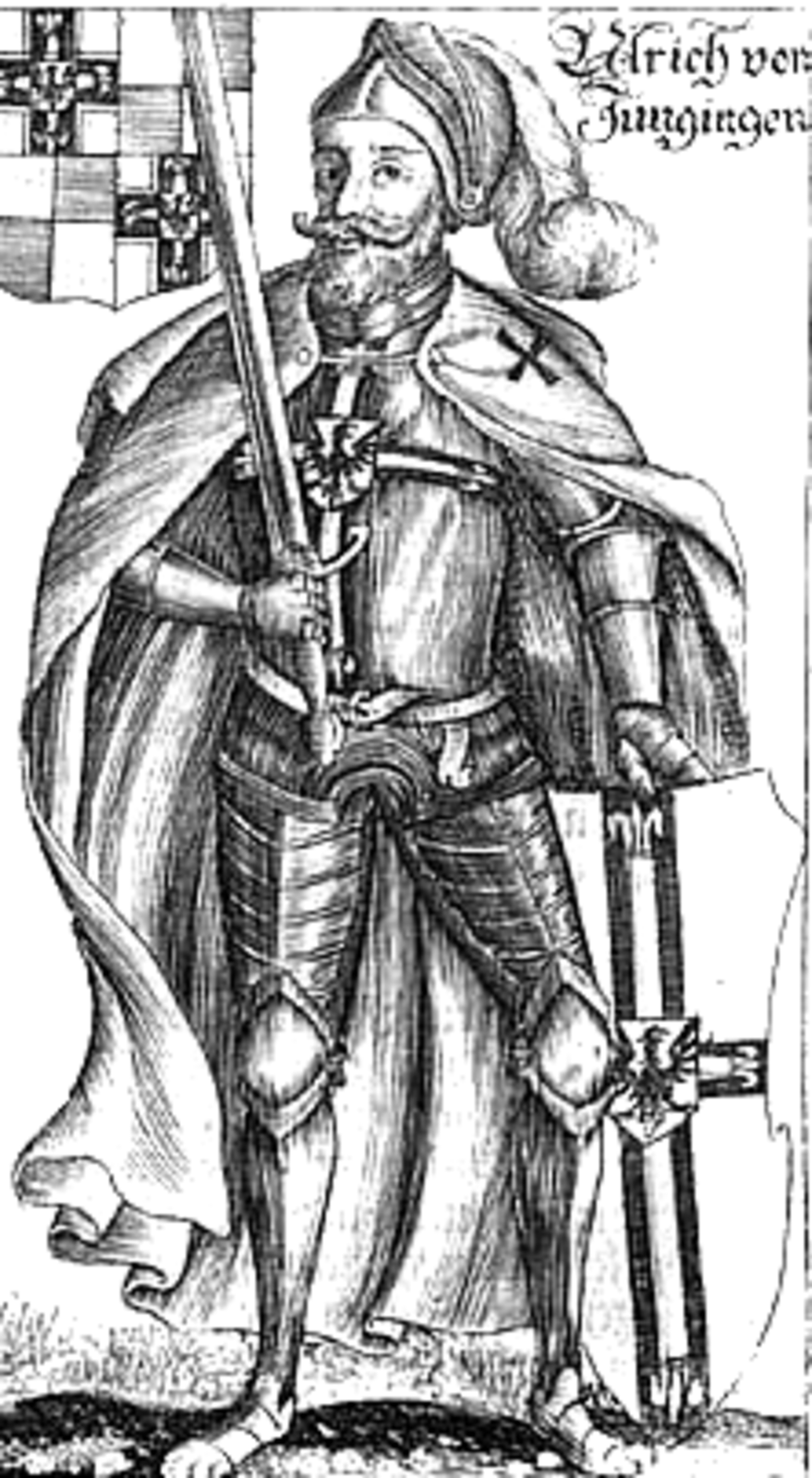
Ilustracja przedstawiająca Ulricha von Jungingena. To rycerz w zbroi i hełmie, trzymający w prawej ręce miecz ostrzem do góry, a w lewej opartą o ziemię tarczę z krzyżem. na ramionach ma narzucony płaszcz.
Ulrich von Jungingen
Source: domena publiczna.
Both sides were preparing for the war. The Grand Master of the Teutonic Knights, Ulrich von Jungingen, decided to declare war to the Polish‑Lithuanian side in the summer of 1409. Historians called this war a “great war”. Initially, the warfare was not very intense. As winter was coming, the warring parties entered into an armisticearmisticearmistice until the beginning of the following summer. During the armistice, energetic war preparations continued. Władysław Jagiełło and Vytautas managed to convince Tartars and the ruler of Moldova to fight against the Teutonic Knights. The Grand Master of the Teutonic Knights was promised support by the Czech and Hungarian rulers. He could also count on the help of knights from Western Europe, who were convinced that they would fight the pagans.
Task 2
Read an extract of Jan Długosz's chroniclechroniclechronicle.
Jan DługoszYearbooks, the chronicles of the famous Kingdom of Poland
Jogaila, the Great Duke of Lithuania, after setting off to become the ruler of the Kingdom of Poland and marry the Queen Jadwiga, with his brothers and big courtly retinue, accompanied by numerous carriages filled with treasures, paraphernalia and adornments, finally arrived in Poland. He was guided by Polish envoys through Lublin, where he purposefully stayed a few days, in order for the news of his arrival to be spread out between the lords. From Lublin he slowly headed for Kraków. [...] He arrived in Kraków on Tuesday, 12th February, and surrounded by numerous lords of Lithuania and Ruthenia, with great splendor he celebrated his entrance into the city. From there he was later lead into the castle, straight to Queen Jadwiga, who welcomed him in her regal chambers, accompanied by ladies‑in‑waiting and other women. Jogaila, after examining her beauty in admiration (during the time under consideration there was no woman of greater beauty than the Queen’s, or so it was said), the next day sent her [...] very expensive gifts of gold, silver, jewels and clothes.
dlugosz Source: Jan Długosz, Yearbooks, the chronicles of the famous Kingdom of Poland, tłum. Karol Mecherzyński, Kraków 1878-1887.
Task 3
Własnymi słowami zdefiniuj wybrane terminy ze słownika.
Własnymi słowami zdefiniuj wybrane terminy ze słownika.
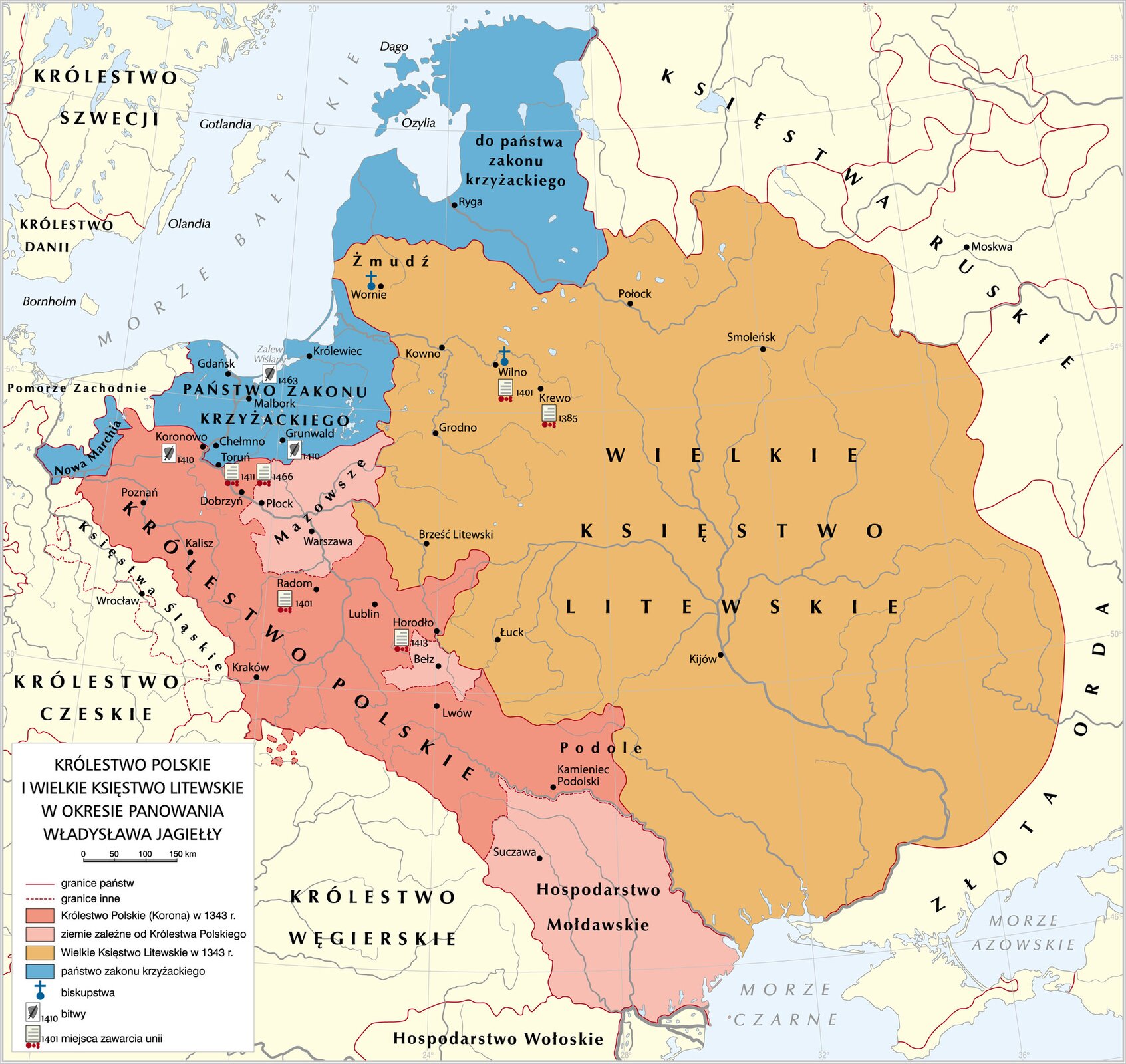
Show on the map Samogitia, Malbork and Grunwald.
R7Rv2AOeRMprx
Kingdom of Poland and the Grand Duchy of Lithuania during the reign of Władysław Jagiełło
Source: Krystian Chariza i zespół.
R1aimrYjtUBrx
Exercise 1
Match commander to the army. Vytautas Możliwe odpowiedzi: 1. The Grand Duchy of Lithuania, 2. The state of the Teutonic Order, 3. Kingdom of Poland Władysław Jagiełło Możliwe odpowiedzi: 1. The Grand Duchy of Lithuania, 2. The state of the Teutonic Order, 3. Kingdom of Poland Ulrich von Jungingen Możliwe odpowiedzi: 1. The Grand Duchy of Lithuania, 2. The state of the Teutonic Order, 3. Kingdom of Poland
Match commander to the army. Vytautas Możliwe odpowiedzi: 1. The Grand Duchy of Lithuania, 2. The state of the Teutonic Order, 3. Kingdom of Poland Władysław Jagiełło Możliwe odpowiedzi: 1. The Grand Duchy of Lithuania, 2. The state of the Teutonic Order, 3. Kingdom of Poland Ulrich von Jungingen Możliwe odpowiedzi: 1. The Grand Duchy of Lithuania, 2. The state of the Teutonic Order, 3. Kingdom of Poland
Match commander to the army.
The state of the Teutonic Order, The Grand Duchy of Lithuania, Kingdom of Poland
Vytautas
Władysław Jagiełło
Ulrich von Jungingen
1
Task 4
Read the information on the picture of the manuscript of „BogurodzicaBogurodzicaBogurodzica” and listen to the song.
R2vr4BbpaPbXK
Ilustracja przedstawiająca rękopis Bogurodzicy z 1408 roku przechowywany w Bibliotece Jagiellońskiej w Krakowie. 1. Manuscript The picture shows a manuscript of the song "Bogurodzica” of 1408, which can be seen in the Jagiellonian Library in Kraków., 2. The oldest song "Bogurodzica" is the oldest known song in Polish, with a preserved lyrics and melody., 3. The first anthem Bogurodzica can be considered the first Polish national anthem - it was sung during important ceremonies, as well as before battles., 4. Before the battle Bogurodzica was also sung during the Battle of Grunwald., 5. Three people There are three people in the lyrics of the song: God, Mary and John the Baptist., 6. Content The song contains a request to God, through Mary, for the needed graces.
Ilustracja przedstawiająca rękopis Bogurodzicy z 1408 roku przechowywany w Bibliotece Jagiellońskiej w Krakowie. 1. Manuscript The picture shows a manuscript of the song "Bogurodzica” of 1408, which can be seen in the Jagiellonian Library in Kraków., 2. The oldest song "Bogurodzica" is the oldest known song in Polish, with a preserved lyrics and melody., 3. The first anthem Bogurodzica can be considered the first Polish national anthem - it was sung during important ceremonies, as well as before battles., 4. Before the battle Bogurodzica was also sung during the Battle of Grunwald., 5. Three people There are three people in the lyrics of the song: God, Mary and John the Baptist., 6. Content The song contains a request to God, through Mary, for the needed graces.
Manuscript of the Mother of God from 1408, kept at the Jagiellonian Library in Krakow
Letter of King Władysław Jagiełło to his wife Anna, written after the Battle of Grunwald
RHY8qeojkK1Nb1
Ilustracja przedstawiająca Władysława Jagiełłę. To starszy mężczyzna w koronie na głowie, ubrany w futrzany płaszcz z szerokim kołnierzem, z dużym haftem na ramieniu. Przy lewej ręce widać głowicę miecza.
Władysław Jagiełło
Source: Jan Matejko, domena publiczna.
R1W9ioogP8XMI1
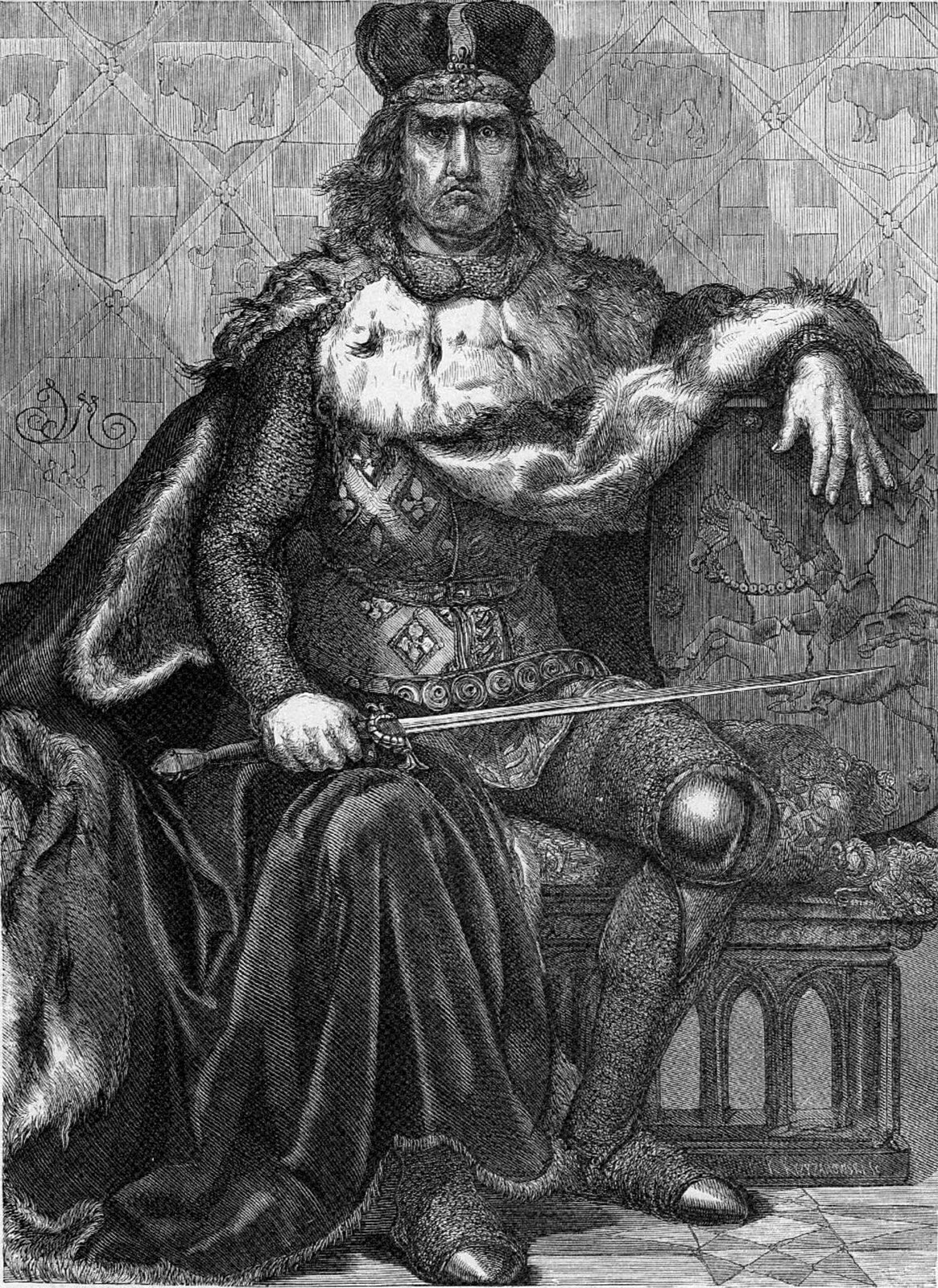
Ilustracja przedstawiająca postać Vytautasa, czyli Witolda. Książę litewski siedzi, na kolanach trzyma miecz, lewą rękę ma oparta na tarczy z godłem Litwy. Oprócz zbroi nosi futrzany długi płaszcz i nakrycie głowy przypominające koronę.
Vytautas
Source: Kazimierz Władysław Wójcicki, domena publiczna.
On Tuesday, the day of the Dispersion of the Apostles, the Grand Master with all his might approached our army, wanted to initiate a fight with us (...) When we were looking at each other, the Grand Master and marshal sent two swords towards us with the following words: You should know, Your Majesty and Vytautas, that on this hour we will fight a battle against you, and we gift you these swords to help you out...
To which we replied kindly: The swords which you sent us we accept and, in the name of Christ who bends the necks of those who gloat, we will fight against you... After what we began the battle, having our armies prepared. In that battle, among a great number of deaths, we suffered little loss (...) we killed the Grand Master and the Marshal von Schwartzburg and many of their allies, others we forced to fly and started persecuting them personally. We persecuted them for two miles, and in lakes and rivers (...) the runaways drowned in great numbers, others were killed, so that very few of them managed to escape.
list Source: Letter of King Władysław Jagiełło to his wife Anna, written after the Battle of Grunwald.
R6Gv1jjvUnNrN
Exercise 2
Tick the correct statements. Możliwe odpowiedzi: 1. The Teutonic Knights gave two swords to Jagiełło and Vytautas., 2. King Jagiełło did not accept the gift., 3. The Master of the Teutonic Order died in battle., 4. The losses of the Teutonic Knights were minor.
Tick the correct statements. Możliwe odpowiedzi: 1. The Teutonic Knights gave two swords to Jagiełło and Vytautas., 2. King Jagiełło did not accept the gift., 3. The Master of the Teutonic Order died in battle., 4. The losses of the Teutonic Knights were minor.
Tick the correct statements.
The Teutonic Knights gave two swords to Jagiełło and Vytautas.
King Jagiełło did not accept the gift.
The Master of the Teutonic Order died in battle.
The losses of the Teutonic Knights were minor.
Task 6
Ułóż trzy pytania quizowe odnoszące się do abstraktu i daj je do rozwiązania swoim kolegom i koleżankom.
Ułóż trzy pytania quizowe odnoszące się do abstraktu i daj je do rozwiązania swoim kolegom i koleżankom.
Watch the film about the painting Battle of Grunwald by Jan Matejko (find it in the linked chapter). Pay attention to which elements of the image have been interpreted.
Ra1I9U9yAfpnb1
Exercise 3
Match the terms with definitions. Malbork Możliwe odpowiedzi: 1. a work by Jan Długosz containing illustrations and descriptions of 56 Teutonic banners, 2. a meeting room for the friars, where the most important decisions were made, 3. the capital of the Teutonic Knights State, 4. knight of King Władysław II Jagiełło, conqueror of the grand master Ulrich von Jungingen, 5. Polish knight, participant of the Battle of Grunwald, model of knightly virtues, 6. a cease-fire and cessation of military activities, 7. head of the religious house in the knights' order, provincial governor, 8. a historical region situated on the Daugava River and the Gulf of Riga, inhabited by the Balkans armistice Możliwe odpowiedzi: 1. a work by Jan Długosz containing illustrations and descriptions of 56 Teutonic banners, 2. a meeting room for the friars, where the most important decisions were made, 3. the capital of the Teutonic Knights State, 4. knight of King Władysław II Jagiełło, conqueror of the grand master Ulrich von Jungingen, 5. Polish knight, participant of the Battle of Grunwald, model of knightly virtues, 6. a cease-fire and cessation of military activities, 7. head of the religious house in the knights' order, provincial governor, 8. a historical region situated on the Daugava River and the Gulf of Riga, inhabited by the Balkans Livonia Możliwe odpowiedzi: 1. a work by Jan Długosz containing illustrations and descriptions of 56 Teutonic banners, 2. a meeting room for the friars, where the most important decisions were made, 3. the capital of the Teutonic Knights State, 4. knight of King Władysław II Jagiełło, conqueror of the grand master Ulrich von Jungingen, 5. Polish knight, participant of the Battle of Grunwald, model of knightly virtues, 6. a cease-fire and cessation of military activities, 7. head of the religious house in the knights' order, provincial governor, 8. a historical region situated on the Daugava River and the Gulf of Riga, inhabited by the Balkans commanderr Możliwe odpowiedzi: 1. a work by Jan Długosz containing illustrations and descriptions of 56 Teutonic banners, 2. a meeting room for the friars, where the most important decisions were made, 3. the capital of the Teutonic Knights State, 4. knight of King Władysław II Jagiełło, conqueror of the grand master Ulrich von Jungingen, 5. Polish knight, participant of the Battle of Grunwald, model of knightly virtues, 6. a cease-fire and cessation of military activities, 7. head of the religious house in the knights' order, provincial governor, 8. a historical region situated on the Daugava River and the Gulf of Riga, inhabited by the Balkans Zawisza Czarny Możliwe odpowiedzi: 1. a work by Jan Długosz containing illustrations and descriptions of 56 Teutonic banners, 2. a meeting room for the friars, where the most important decisions were made, 3. the capital of the Teutonic Knights State, 4. knight of King Władysław II Jagiełło, conqueror of the grand master Ulrich von Jungingen, 5. Polish knight, participant of the Battle of Grunwald, model of knightly virtues, 6. a cease-fire and cessation of military activities, 7. head of the religious house in the knights' order, provincial governor, 8. a historical region situated on the Daugava River and the Gulf of Riga, inhabited by the Balkans chapter house Możliwe odpowiedzi: 1. a work by Jan Długosz containing illustrations and descriptions of 56 Teutonic banners, 2. a meeting room for the friars, where the most important decisions were made, 3. the capital of the Teutonic Knights State, 4. knight of King Władysław II Jagiełło, conqueror of the grand master Ulrich von Jungingen, 5. Polish knight, participant of the Battle of Grunwald, model of knightly virtues, 6. a cease-fire and cessation of military activities, 7. head of the religious house in the knights' order, provincial governor, 8. a historical region situated on the Daugava River and the Gulf of Riga, inhabited by the Balkans Mszczuj of Skrzynno Możliwe odpowiedzi: 1. a work by Jan Długosz containing illustrations and descriptions of 56 Teutonic banners, 2. a meeting room for the friars, where the most important decisions were made, 3. the capital of the Teutonic Knights State, 4. knight of King Władysław II Jagiełło, conqueror of the grand master Ulrich von Jungingen, 5. Polish knight, participant of the Battle of Grunwald, model of knightly virtues, 6. a cease-fire and cessation of military activities, 7. head of the religious house in the knights' order, provincial governor, 8. a historical region situated on the Daugava River and the Gulf of Riga, inhabited by the Balkans Banderia Prutenorum Możliwe odpowiedzi: 1. a work by Jan Długosz containing illustrations and descriptions of 56 Teutonic banners, 2. a meeting room for the friars, where the most important decisions were made, 3. the capital of the Teutonic Knights State, 4. knight of King Władysław II Jagiełło, conqueror of the grand master Ulrich von Jungingen, 5. Polish knight, participant of the Battle of Grunwald, model of knightly virtues, 6. a cease-fire and cessation of military activities, 7. head of the religious house in the knights' order, provincial governor, 8. a historical region situated on the Daugava River and the Gulf of Riga, inhabited by the Balkans
Match the terms with definitions. Malbork Możliwe odpowiedzi: 1. a work by Jan Długosz containing illustrations and descriptions of 56 Teutonic banners, 2. a meeting room for the friars, where the most important decisions were made, 3. the capital of the Teutonic Knights State, 4. knight of King Władysław II Jagiełło, conqueror of the grand master Ulrich von Jungingen, 5. Polish knight, participant of the Battle of Grunwald, model of knightly virtues, 6. a cease-fire and cessation of military activities, 7. head of the religious house in the knights' order, provincial governor, 8. a historical region situated on the Daugava River and the Gulf of Riga, inhabited by the Balkans armistice Możliwe odpowiedzi: 1. a work by Jan Długosz containing illustrations and descriptions of 56 Teutonic banners, 2. a meeting room for the friars, where the most important decisions were made, 3. the capital of the Teutonic Knights State, 4. knight of King Władysław II Jagiełło, conqueror of the grand master Ulrich von Jungingen, 5. Polish knight, participant of the Battle of Grunwald, model of knightly virtues, 6. a cease-fire and cessation of military activities, 7. head of the religious house in the knights' order, provincial governor, 8. a historical region situated on the Daugava River and the Gulf of Riga, inhabited by the Balkans Livonia Możliwe odpowiedzi: 1. a work by Jan Długosz containing illustrations and descriptions of 56 Teutonic banners, 2. a meeting room for the friars, where the most important decisions were made, 3. the capital of the Teutonic Knights State, 4. knight of King Władysław II Jagiełło, conqueror of the grand master Ulrich von Jungingen, 5. Polish knight, participant of the Battle of Grunwald, model of knightly virtues, 6. a cease-fire and cessation of military activities, 7. head of the religious house in the knights' order, provincial governor, 8. a historical region situated on the Daugava River and the Gulf of Riga, inhabited by the Balkans commanderr Możliwe odpowiedzi: 1. a work by Jan Długosz containing illustrations and descriptions of 56 Teutonic banners, 2. a meeting room for the friars, where the most important decisions were made, 3. the capital of the Teutonic Knights State, 4. knight of King Władysław II Jagiełło, conqueror of the grand master Ulrich von Jungingen, 5. Polish knight, participant of the Battle of Grunwald, model of knightly virtues, 6. a cease-fire and cessation of military activities, 7. head of the religious house in the knights' order, provincial governor, 8. a historical region situated on the Daugava River and the Gulf of Riga, inhabited by the Balkans Zawisza Czarny Możliwe odpowiedzi: 1. a work by Jan Długosz containing illustrations and descriptions of 56 Teutonic banners, 2. a meeting room for the friars, where the most important decisions were made, 3. the capital of the Teutonic Knights State, 4. knight of King Władysław II Jagiełło, conqueror of the grand master Ulrich von Jungingen, 5. Polish knight, participant of the Battle of Grunwald, model of knightly virtues, 6. a cease-fire and cessation of military activities, 7. head of the religious house in the knights' order, provincial governor, 8. a historical region situated on the Daugava River and the Gulf of Riga, inhabited by the Balkans chapter house Możliwe odpowiedzi: 1. a work by Jan Długosz containing illustrations and descriptions of 56 Teutonic banners, 2. a meeting room for the friars, where the most important decisions were made, 3. the capital of the Teutonic Knights State, 4. knight of King Władysław II Jagiełło, conqueror of the grand master Ulrich von Jungingen, 5. Polish knight, participant of the Battle of Grunwald, model of knightly virtues, 6. a cease-fire and cessation of military activities, 7. head of the religious house in the knights' order, provincial governor, 8. a historical region situated on the Daugava River and the Gulf of Riga, inhabited by the Balkans Mszczuj of Skrzynno Możliwe odpowiedzi: 1. a work by Jan Długosz containing illustrations and descriptions of 56 Teutonic banners, 2. a meeting room for the friars, where the most important decisions were made, 3. the capital of the Teutonic Knights State, 4. knight of King Władysław II Jagiełło, conqueror of the grand master Ulrich von Jungingen, 5. Polish knight, participant of the Battle of Grunwald, model of knightly virtues, 6. a cease-fire and cessation of military activities, 7. head of the religious house in the knights' order, provincial governor, 8. a historical region situated on the Daugava River and the Gulf of Riga, inhabited by the Balkans Banderia Prutenorum Możliwe odpowiedzi: 1. a work by Jan Długosz containing illustrations and descriptions of 56 Teutonic banners, 2. a meeting room for the friars, where the most important decisions were made, 3. the capital of the Teutonic Knights State, 4. knight of King Władysław II Jagiełło, conqueror of the grand master Ulrich von Jungingen, 5. Polish knight, participant of the Battle of Grunwald, model of knightly virtues, 6. a cease-fire and cessation of military activities, 7. head of the religious house in the knights' order, provincial governor, 8. a historical region situated on the Daugava River and the Gulf of Riga, inhabited by the Balkans
Match the terms with definitions.
a meeting room for the friars, where the most important decisions were made, knight of King Władysław II Jagiełło, conqueror of the grand master Ulrich von Jungingen, a cease-fire and cessation of military activities, the capital of the Teutonic Knights State, a work by Jan Długosz containing illustrations and descriptions of 56 Teutonic banners, a historical region situated on the Daugava River and the Gulf of Riga, inhabited by the Balkans, Polish knight, participant of the Battle of Grunwald, model of knightly virtues, head of the religious house in the knights' order, provincial governor
Malbork
armistice
Livonia
commanderr
Zawisza Czarny
chapter house
Mszczuj of Skrzynno
Banderia Prutenorum
R63kxLLFzh2gw1
Exercise 4
Complete the sentences with the words and dates listed below. In the years 1409-1411 there was a {tu uzupełnij} Możliwe odpowiedzi: 1. great war, 2. Teutonic, 3. Grunwald, 4. Malbork, 5. Peace of Thorn, 6. 1411, 7. Kwidzyn, 8. Sandomierz, 9. Oil, 10. 1420 of the Kingdom of Poland and the Grand Duchy of Lithuania with the {tu uzupełnij} Możliwe odpowiedzi: 1. great war, 2. Teutonic, 3. Grunwald, 4. Malbork, 5. Peace of Thorn, 6. 1411, 7. Kwidzyn, 8. Sandomierz, 9. Oil, 10. 1420 Order. On 15 July 1410, the Polish-Lithuanian army defeated the Teutonic Knights at {tu uzupełnij} Możliwe odpowiedzi: 1. great war, 2. Teutonic, 3. Grunwald, 4. Malbork, 5. Peace of Thorn, 6. 1411, 7. Kwidzyn, 8. Sandomierz, 9. Oil, 10. 1420. After the battle, the victorious army set off to {tu uzupełnij} Możliwe odpowiedzi: 1. great war, 2. Teutonic, 3. Grunwald, 4. Malbork, 5. Peace of Thorn, 6. 1411, 7. Kwidzyn, 8. Sandomierz, 9. Oil, 10. 1420, but it did not manage to conquer it. The war ended with the signing of a {tu uzupełnij} Możliwe odpowiedzi: 1. great war, 2. Teutonic, 3. Grunwald, 4. Malbork, 5. Peace of Thorn, 6. 1411, 7. Kwidzyn, 8. Sandomierz, 9. Oil, 10. 1420 in Toruń in {tu uzupełnij} Możliwe odpowiedzi: 1. great war, 2. Teutonic, 3. Grunwald, 4. Malbork, 5. Peace of Thorn, 6. 1411, 7. Kwidzyn, 8. Sandomierz, 9. Oil, 10. 1420.
Complete the sentences with the words and dates listed below. In the years 1409-1411 there was a {tu uzupełnij} Możliwe odpowiedzi: 1. great war, 2. Teutonic, 3. Grunwald, 4. Malbork, 5. Peace of Thorn, 6. 1411, 7. Kwidzyn, 8. Sandomierz, 9. Oil, 10. 1420 of the Kingdom of Poland and the Grand Duchy of Lithuania with the {tu uzupełnij} Możliwe odpowiedzi: 1. great war, 2. Teutonic, 3. Grunwald, 4. Malbork, 5. Peace of Thorn, 6. 1411, 7. Kwidzyn, 8. Sandomierz, 9. Oil, 10. 1420 Order. On 15 July 1410, the Polish-Lithuanian army defeated the Teutonic Knights at {tu uzupełnij} Możliwe odpowiedzi: 1. great war, 2. Teutonic, 3. Grunwald, 4. Malbork, 5. Peace of Thorn, 6. 1411, 7. Kwidzyn, 8. Sandomierz, 9. Oil, 10. 1420. After the battle, the victorious army set off to {tu uzupełnij} Możliwe odpowiedzi: 1. great war, 2. Teutonic, 3. Grunwald, 4. Malbork, 5. Peace of Thorn, 6. 1411, 7. Kwidzyn, 8. Sandomierz, 9. Oil, 10. 1420, but it did not manage to conquer it. The war ended with the signing of a {tu uzupełnij} Możliwe odpowiedzi: 1. great war, 2. Teutonic, 3. Grunwald, 4. Malbork, 5. Peace of Thorn, 6. 1411, 7. Kwidzyn, 8. Sandomierz, 9. Oil, 10. 1420 in Toruń in {tu uzupełnij} Możliwe odpowiedzi: 1. great war, 2. Teutonic, 3. Grunwald, 4. Malbork, 5. Peace of Thorn, 6. 1411, 7. Kwidzyn, 8. Sandomierz, 9. Oil, 10. 1420.
Complete the sentences with the words and dates listed below.
Oil, Grunwald, 1420, Sandomierz, Teutonic, Malbork, Peace of Thorn, great war, 1411, Kwidzyn
In the years 1409-1411 there was a ............................ of the Kingdom of Poland and the Grand Duchy of Lithuania with the ............................ Order. On 15 July 1410, the Polish-Lithuanian army defeated the Teutonic Knights at ............................. After the battle, the victorious army set off to ............................, but it did not manage to conquer it. The war ended with the signing of a ............................ in Toruń in .............................
Keywords
Jagiełło, Teutonic Order, Teutonic Knights, Grunwald, Battle of Grunwald, personal unionpersonal unionpersonal union
rozejm – inaczej zawieszenie broni, oznacza czasowe wstrzymanie działań zbrojnych pomiędzy uczestnikami konfliktu. Najczęściej poprzedza zawarcie pokoju.
most pontonowy – tymczasowa przeprawa (most), którego budowa opiera się na połączonych ze sobą łodziach, barkach lub pontonach. Używane kiedy nie można zbudować stałej przeprawy.
Bogurodzica – najstarsza znana pieśń napisana w języku polskim śpiewana w najważniejszych momentach. Powstała na przełomie XIII i XIV w. i była swego rodzaju hymnem narodowym, tym czym dzisiaj Mazurek Dąbrowskiego.