Protocooperation and commensalism
species with similar requirements, which live in the same area, are strong competitors;
while feeding on flowers, insects enable plant sexual reproduction;
lichens are composed of fungi and algae cooperating with each other.
explain what commensalism and protocooperation are, and give examples;
explain that symbiosis is a result of environmental adaptation.
Protocooperation
Another type of non‑antagonistic interaction between individuals of different species is protocooperation.protocooperation.It brings great benefits to organisms which, however, are independent.
Protocooperation combines for example, hermit crabs, crustaceans exceptional devoid of armor on the abdomen, with anemones. Hermit crab protect their soft abdomen in the shells of dead molluscs. The crab selects shells with anemones, but if there are none in the vicinity, chooses any available shell, to which the anemone might attach itself. In return coelenterata rely on free transport and crab food debris. It happens that the growing crab changes the shells to a larger and extremely carefully moves the coelenterata into a new shell.
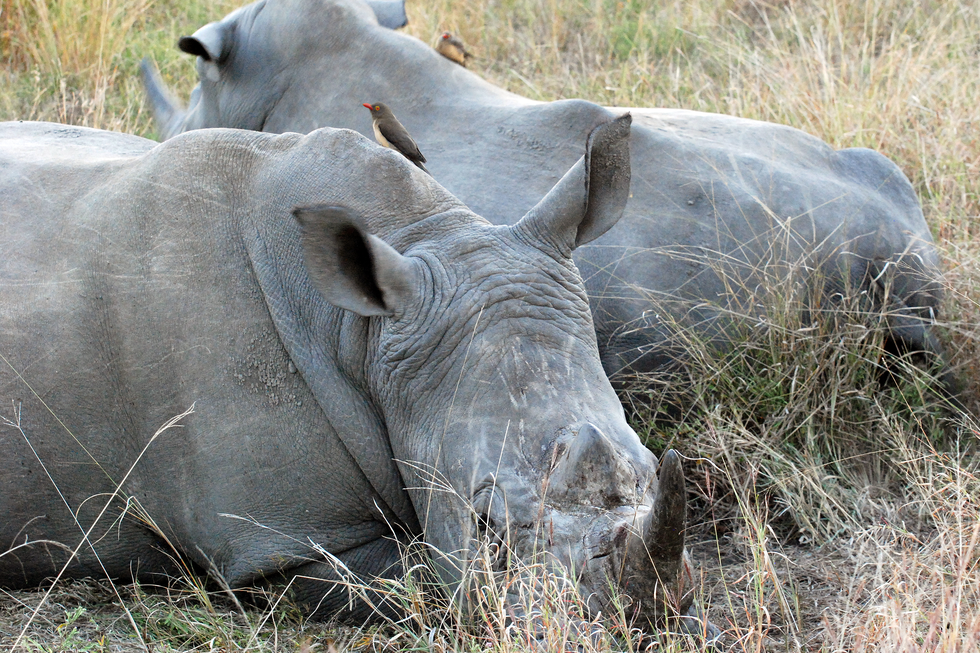
Mutual services are also provided by birds‑cleaners and large mammals, such as a buffalo, an antelope, a rhinoceros. Savannah herbivores suffer from parasites feeding on and under their skin. They cannot get rid of them effectively. Red‑billed oxpeckers peck them, bringing relief to the mammals and getting valuable food in return. A similar dependence occurs in the environment of coral reefs where small fish (bluestreak cleaner wrasses) live and remove parasites and dead tissues from bodies of large fish and food remains from their mouths.
Commensalism
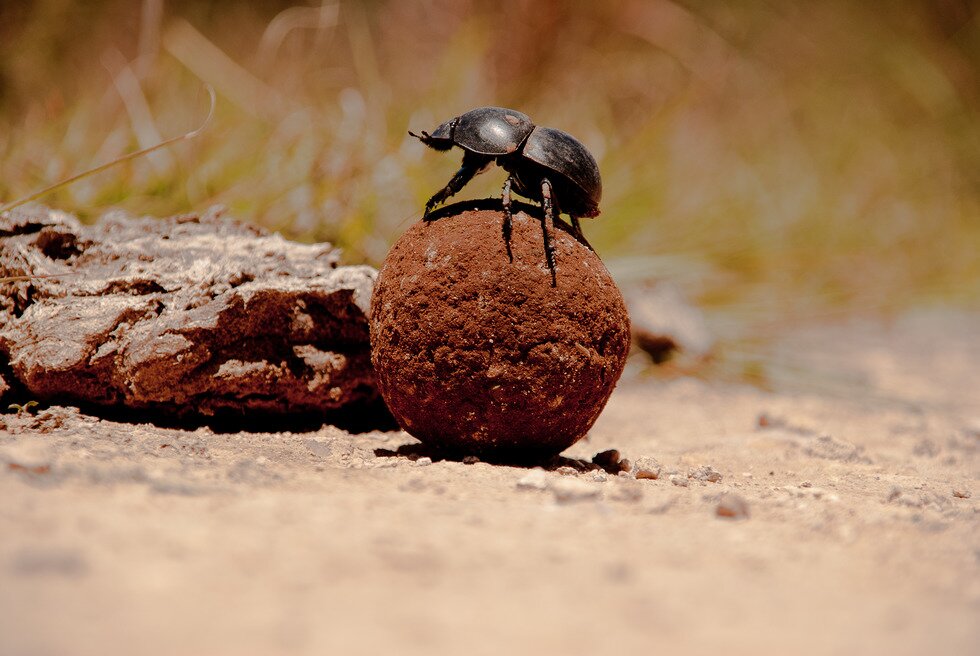
The least obliging non‑antagonistic interdependence between organisms is commensalismcommensalism which is also called „facilitation”. It occurs when one organism benefits from the presence of the other, while the other does not gain benefits or lose anything. Commensals are mainly scavengers feeding on remains left by predators and animals using feces of other species. This is the case with a dung beetle which lays eggs in horse manure. The beetle benefits from the presence of horses, because its larvae would not have any food without their manure. In turn, the presence of beetles is completely neutral to the horse population.
What conditions need to be met for the relationship between two organisms to be considered as protocooperation?
- The relationship between these organisms must be non-antagonistic.
- Both organisms must be of two different species.
- Both organisms must benefit from the mutual relationship.
- Both organisms can survive without the mutual relationship.
- Both organisms must be similar in size.
- The relationship between the organisms must last throughout their lives.
What distinguishes commensalism from other non-antagonistic forms of cohabitation of two organisms of different species? Select the correct answer.
- both organisms benefit
- both organisms loose
- one organism benefits, but the other one looses
- one organism benefits, but no organism looses
Summary
Non‑antagonistic dependencies bring benefits to at least one party.
Keywords
commensalism, protocooperation, non‑antagonistic dependencies
Glossary
komensalizm – nieantagonistyczna forma współżycia między organizmami należącymi do różnych gatunków, w której jeden z organizmów odnosi korzyść, drugi natomiast nie ponosi ani strat, ani korzyści
protokooperacja –nieantagonistyczna forma relacji między organizmami należącymi do różnych gatunków, w której oba organizmy odnoszą korzyści; protokooperacja nie jest konieczna do przeżycia uczestniczących w niej osobników
stosunki nieantagonistyczne – rodzaj zależności międzygatunkowych, które są korzystne dla obu populacji lub jednej z nich; zaliczamy do nich mutualizm, protokooperację, komensalizm