Thousands of years ago, a part of the area of today’s Poland became covered with a thick layer of ice after the climate had cooled. The glacier scoured the surface of the Earth and when it retreated it left a very varied terrain. The landforms created by glaciers include, among other things, moraine hillsmoraine hillmoraine hills, numerous lakes and erratic boulderserratic bouldererratic boulders. Areas characterized by a hilly terrain and the presence of the above‑described forms are called lake districtslake districtlake districts.
Lake districts have common features such as:
numerous lakes of various shapes and depths;
a hilly and very varied terrain and relatively low elevations, typical for lowlands, usually not exceeding 200 m above sea level;
the presence of large boulders, the so‑called erratic boulders;
numerous peat bogpeat bogpeat bog left by overgrown lakes.
In Poland, we currently distinguish three main lake areas. The Pomeranian Lake District is situated south of the coastal belt. It comprises about 5 thousand lakes, mostly small in size. The Masurian Lake District is situated to the east of the Pomeranian Lake District. There are about 3 thousand lakes there. Most of them are large. The Wielkopolski Lake District is situated to the south of the Pomeranian Lake District. It has the smallest number of lakes and they are small in size.
R19vDdub7wYCA
Ilustracja interaktywna przedstawia kontur mapy Polski na której zaznaczono pasmo pojezierza. Na grafice są napisy:
1. Moraine hill-fotografia przedstawia zielony, górzysty teren-A natural elevation created by rock materials brought by a glacial. Most moraine hills are not very high and have gentle slopes.
2. Erratic boulder-fotografia przedstawia niewielki głaz w ziemi-The rock was brought to this area by a glacier.
3. Peat bog- fotografia przedstawia porośnięte trawą polanę, na której są głazy porośnięte mchem-The terrain is marshy and overgrown with specific vegetation which, due to constant hydration, is transformed into peat when it dies
4. Wieżyca Hill- fotografia przedstawia wysoką wieżę widokową- The highest hill of the moraine range of the Szymbarskie Hills, situated 328.7 metres above sea level. At the top of the hill, there is an observation platform – Pope John Paul the Second Observation Tower.
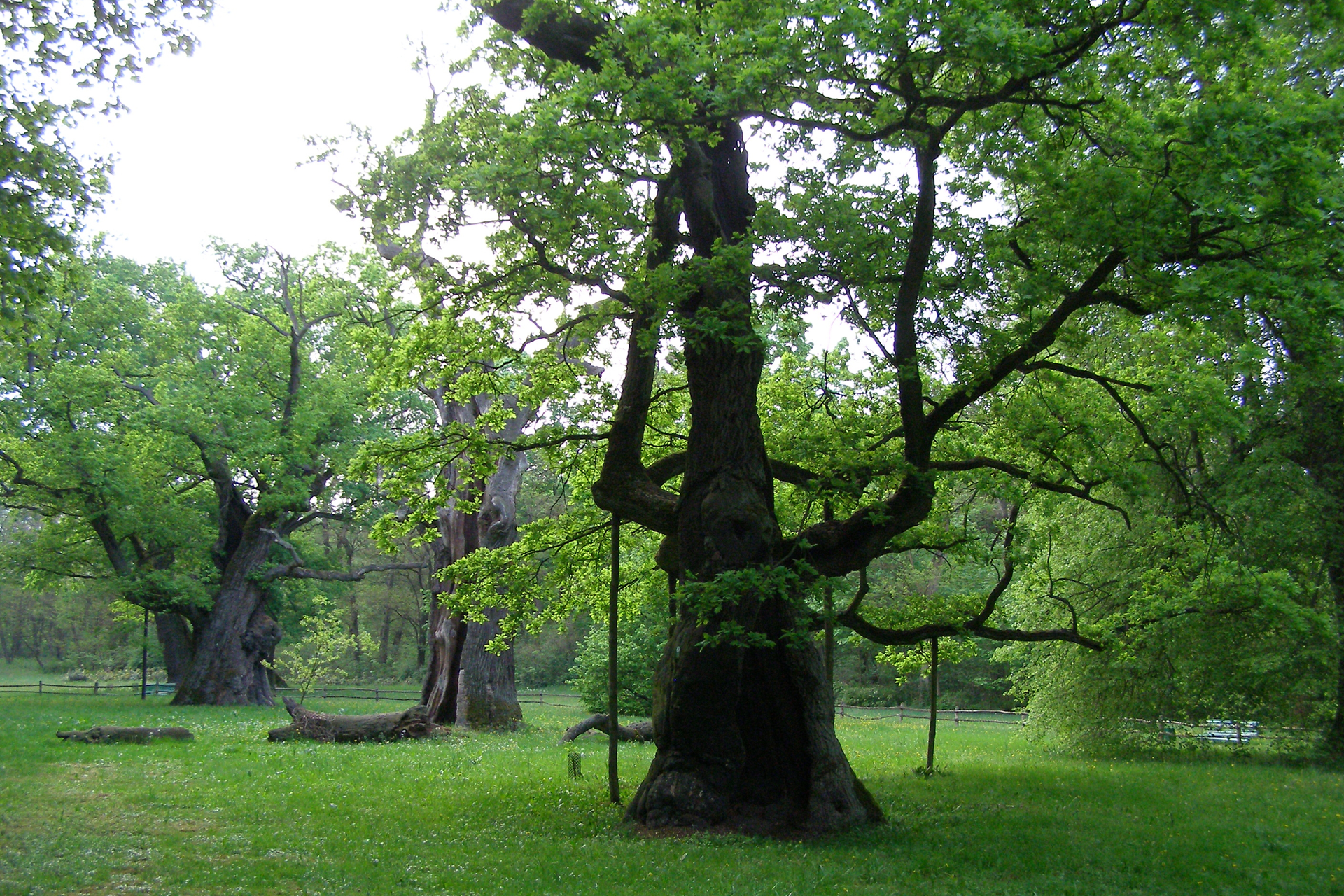
5 .Oaks in Rogalin- Fotografia przedstawia dąb rosnący w parku-This cluster of monumental oak trees is the largest in Europe.
Ilustracja interaktywna przedstawia kontur mapy Polski na której zaznaczono pasmo pojezierza. Na grafice są napisy:
1. Moraine hill-fotografia przedstawia zielony, górzysty teren-A natural elevation created by rock materials brought by a glacial. Most moraine hills are not very high and have gentle slopes.
2. Erratic boulder-fotografia przedstawia niewielki głaz w ziemi-The rock was brought to this area by a glacier.
3. Peat bog- fotografia przedstawia porośnięte trawą polanę, na której są głazy porośnięte mchem-The terrain is marshy and overgrown with specific vegetation which, due to constant hydration, is transformed into peat when it dies
4. Wieżyca Hill- fotografia przedstawia wysoką wieżę widokową- The highest hill of the moraine range of the Szymbarskie Hills, situated 328.7 metres above sea level. At the top of the hill, there is an observation platform – Pope John Paul the Second Observation Tower.
5 .Oaks in Rogalin- Fotografia przedstawia dąb rosnący w parku-This cluster of monumental oak trees is the largest in Europe.
The beauty of the Lake Districts
Source: Andrzej Otrębski, Mef.ellingen, NordNordWest, PanSG, Poconaco, GroMar Sp. z o.o., licencja: CC BY-SA 3.0.
Task 1
Wysłuchaj nagrania abstraktu, ułóż do niego pytania i zadaj je koledze.
Wysłuchaj nagrania abstraktu, ułóż do niego pytania i zadaj je koledze.
Using a map, show the largest lakes and cities/towns in each of the lake districts.
The natural characteristics of the lake districts
The typical vegetation of the lake districts includes beech and mixed forests in the west, with increasing prevalence of pine forests further east. The forests of the Pomeranian Lake District (Drawski Primeval Forest and Tuchola Forest) and of the Masurian Lake District (Pisz Forest) have a particularly high natural value. The lake districts provide favourable conditions for most species of mammals that live in Poland and for hundreds of species of birds, numerous lizards and snakes, frogs and toads, whereas lakes provide a habitat for quite many fish species. For this reason, there are many nature reserves here. The substrate in the lake districts is sandy or loamy, and the soils are not very fertile, but you can also find arable fields here, as well as meadows and pastures.
The summer in the lake districts is cooler than, for example, in the shoreland. In the eastern part of the Masurian Lake District, the winters are frosty, whereas the summers are short but sunny. In other lake districts, winters are not so frosty.
The natural characteristics of the lake districts
The natural characteristics of the lake districts
R1aWD3dYEMqdS
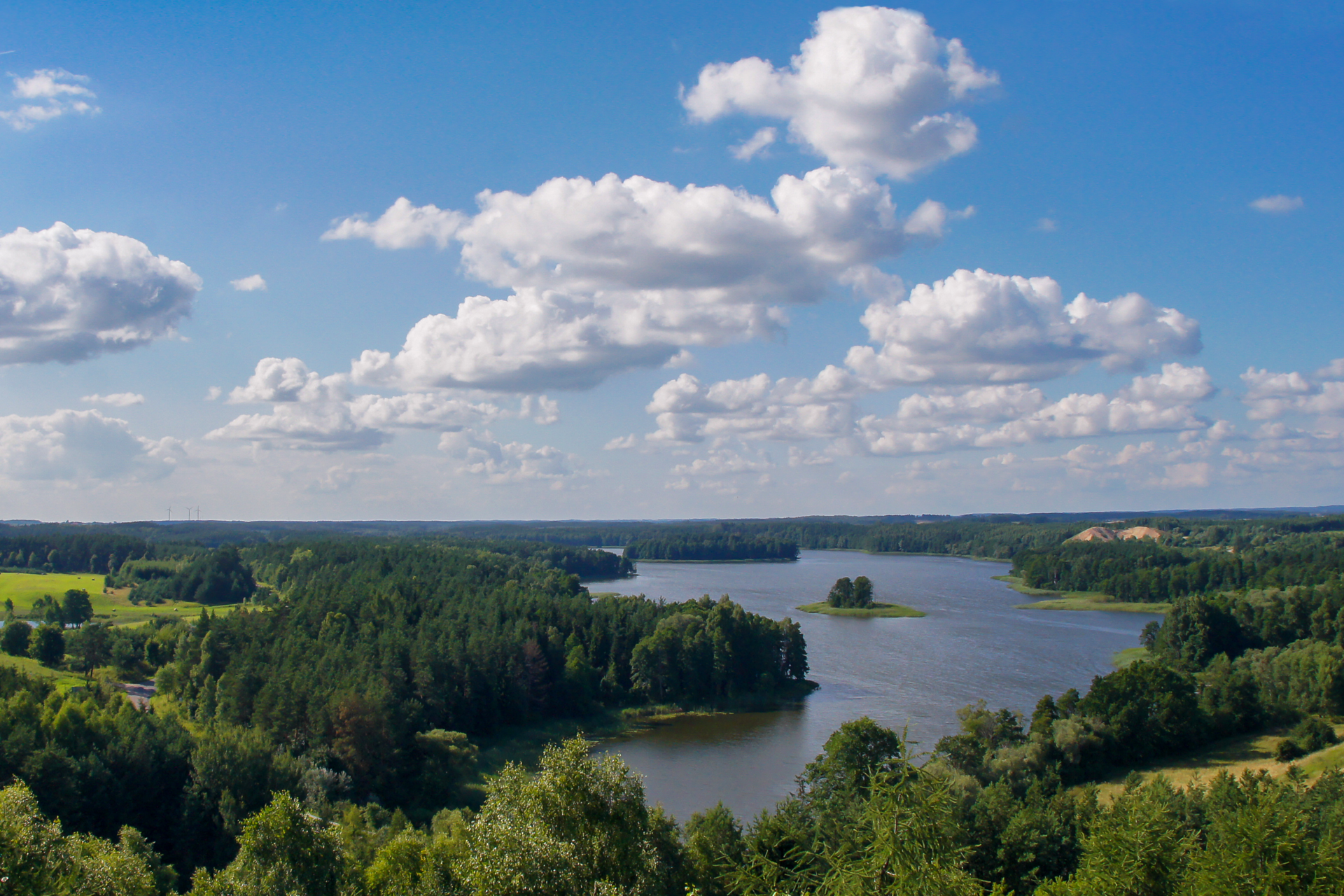
Fotografia ukazuje jezioro Pojezierza Mazurskiego otoczone lasami liściastymi. Fotografia została wykonana z niewielkiego wzniesienia. Niebo niebieskie z chmurami kłębiastymi.
The Masurian Lake District
Source: Roman Filipkowski, www.flickr.com, licencja: CC BY 2.0.
R17oBvFzmbK0z
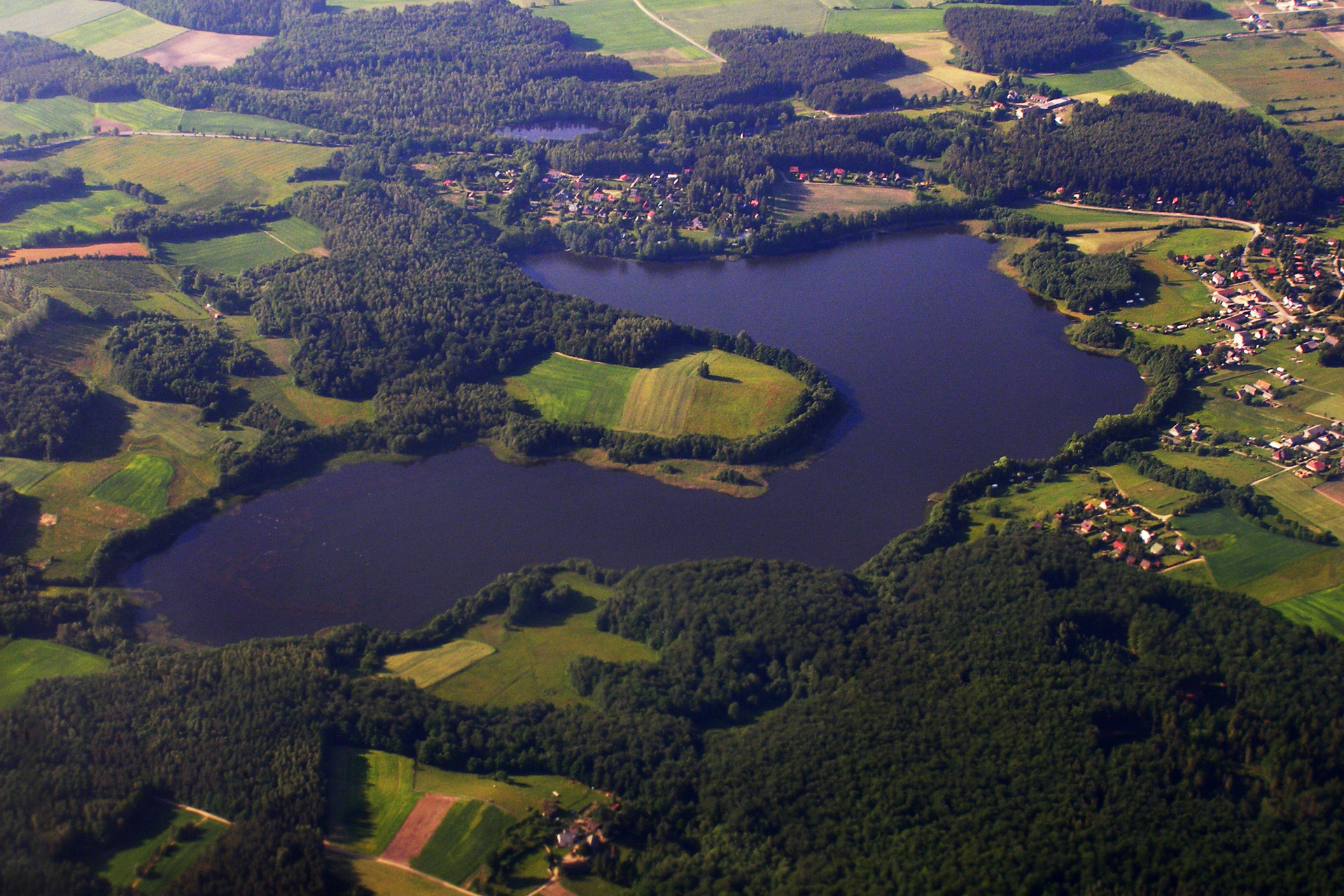
Fotografia wykonana z lotu ptaka ukazuje jezioro Pojezierza Pomorskiego. Jezioro ma kształt litery "U". Wokół jeziora lasy, łąki, pola oraz zabudowania.
The Pomeranian Lake District
Source: Andrzej Otrębski, http://commons.wikimedia.org, licencja: CC BY-SA 4.0.
RBgkAv4GPLbIz
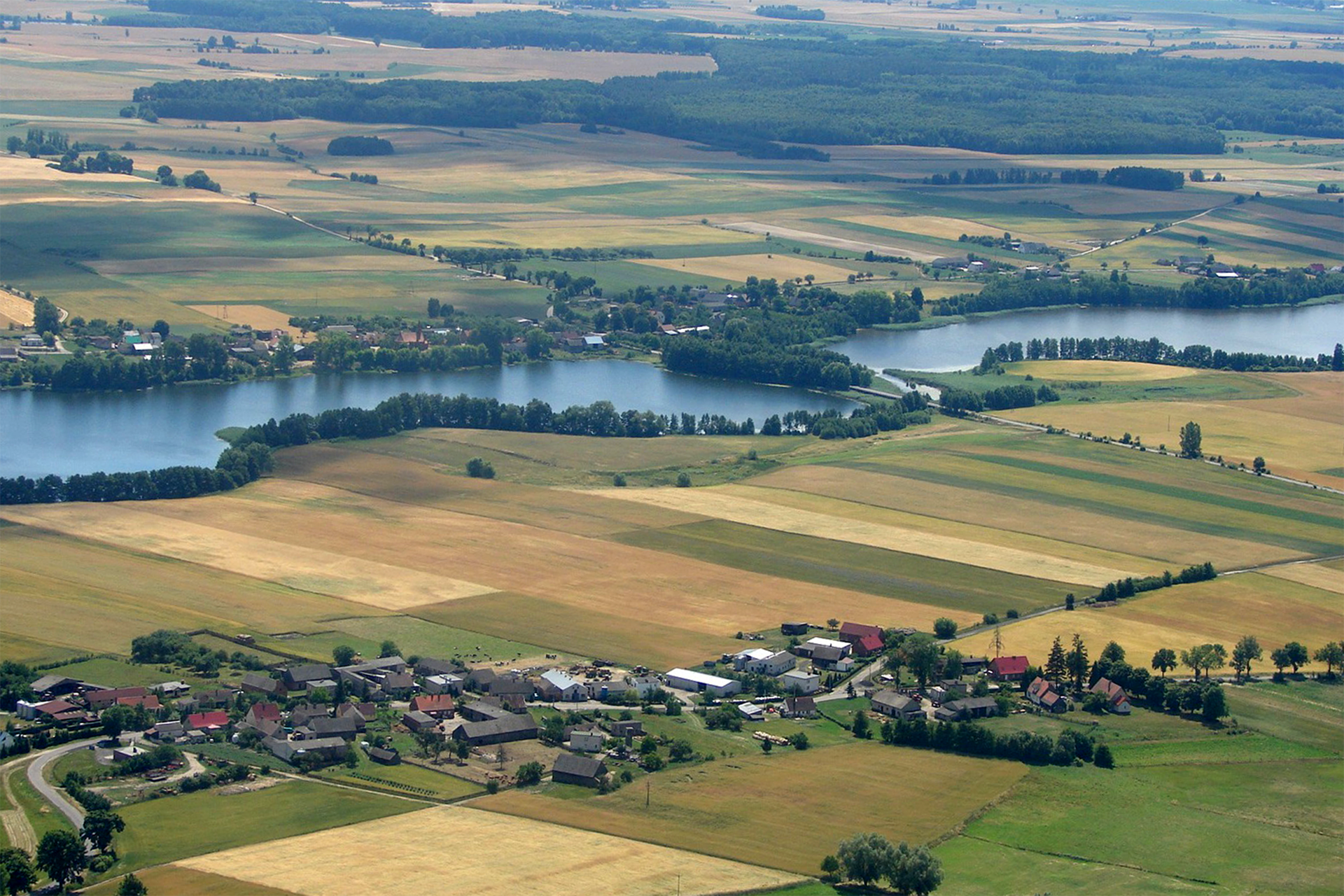
Fotografia wykonana z lotu ptaka ukazuje jezioro Pojezierza Wielkopolskiego. Jeziora zajmują centralną część fotografii. Przypomina kształtem wstęgę. Wokół jeziora pola, łąki, zabudowania.
Wielkopolskie Lake District
Source: Jan Budnik, http://commons.wikimedia.org, licencja: CC BY-SA 3.0.
The significance of the lake districts
Human activity in the lake districts is limited due to the hilly terrain and poor soils. Only the Wielkopolski Lake District provides more favourable conditions for agricultural production. The industry has developed mainly in large towns. The wood industry plays quite a significant role here – many species of trees, most of all spruce, pine and beech trees, are harvested in the forests of the lake districts. They are used for producing furniture, house‑building components, paper and many other products. The types of rock that are present in the lake districts include sand and clay, which are extracted there, too.
The lake districts are significant as a tourist destination. The varied nature, clean air, forests, lakes and well‑preserved nature attract many tourists. To reduce human impact on the environment, hiking and cycling routes have been established. Canoeing trips are organized on many rivers and canals. The largest number of such leisure activities are offered in the Masurian Lake District.
Attractions of the lake districts
Attractions of the lake districts
RNTcTEgzs7ty3
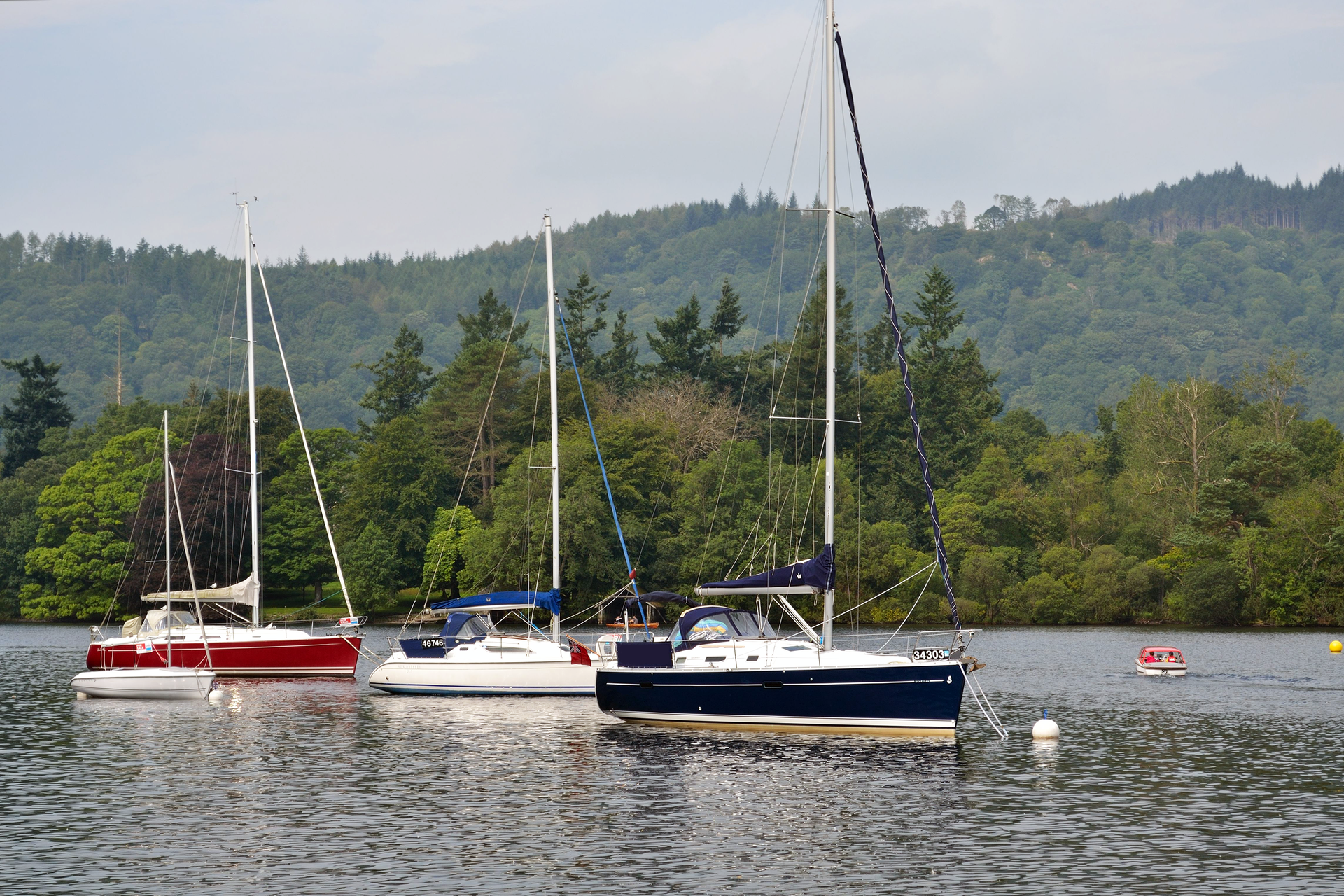
Fotografia prezentująca jachty na Jeziorze Mazurskim. Na fotografii znajdują się trzy duże jachty - czerwony, biały i ciemnoniebieski i jeden mały biały jacht oraz motorówka. Jezioro otaczają lasy mieszane.
Yachts on the Masurian lake.
Source: Chris Combe, www.flickr.com, licencja: CC BY 2.0.
R1OmpALZ7gt2j
Fotografia prezentuje okazałych rozmiarów, stary dąb znajdujący się w Rogalinie pod Poznaniem na Pojezierzu Wielkopolskim. Dąb otoczony jest w tle innymi, wiekowymi dębami.
Oaks in Rogalin near Poznań in the Wielkopolska Lake District.
Source: Andrzej Otrębski, http://commons.wikimedia.org, licencja: CC BY-SA 3.0.
R1KC4MsvD55hE
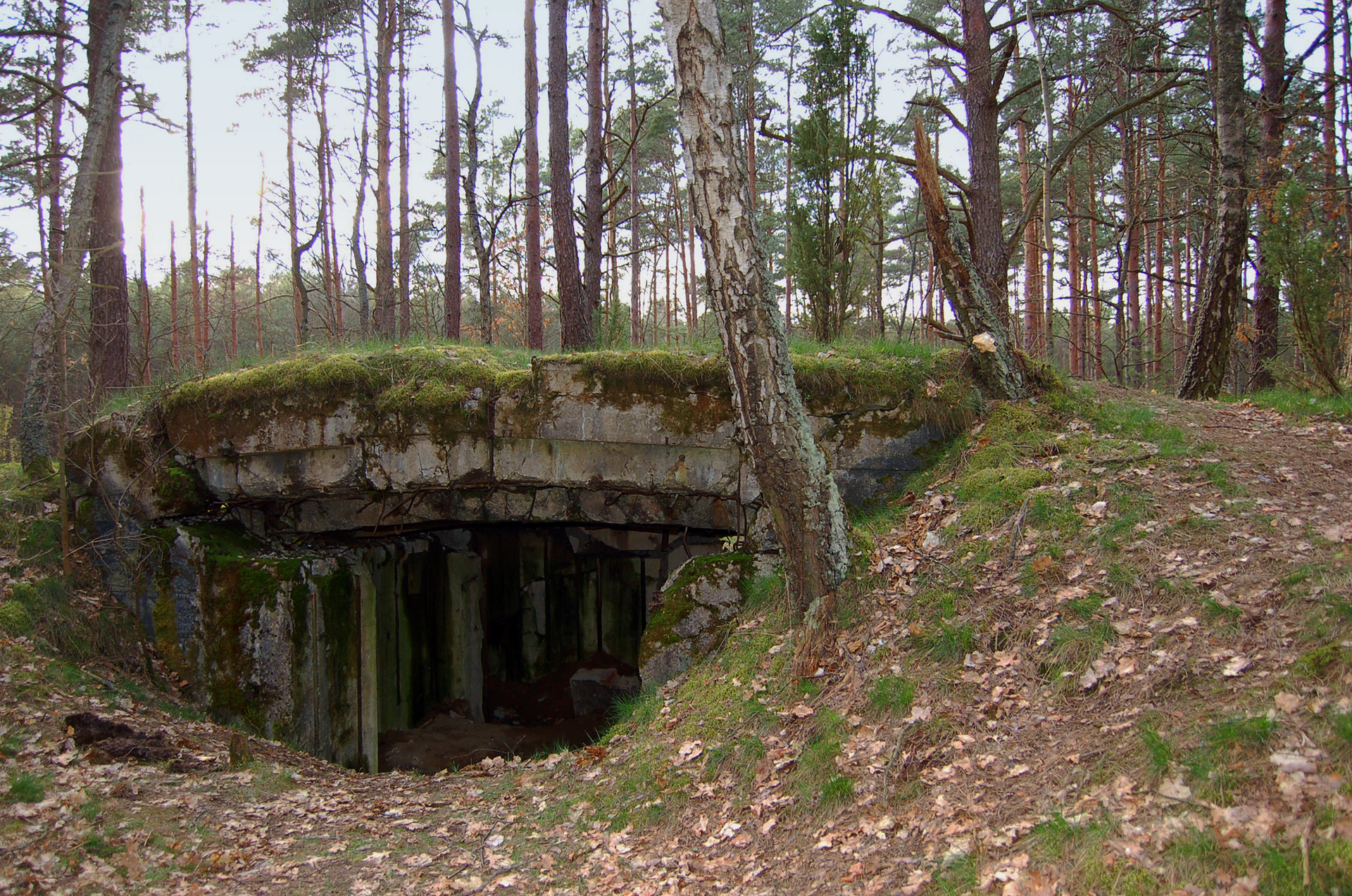
Zdjęcie przedstawiające stary bunkier z okresu drugiej wojny światowej ukryty w lesie. Bunkier porośnięty jest trawą. Fotografia wykonana jest jesienią. Wokół bunkra leżą suche liście.
Bunkers in the Wałcz Lake District
Source: Maciej Lorenc, Tomorrow Sp. z o.o., licencja: CC BY 3.0.
Rn4rF4CB0iSag
Exercise 1
Select common features of lake districts. Możliwe odpowiedzi: 1. Numerous lakes of various shapes and depths., 2. Hilly and very varied terrain., 3. Large elevations exceeding 200 metres above sea level, typical for lake districts., 4. Presence of huge stones, the so-called erratic boulders., 5. Numerous peat bogs left by overgrown lakes.
Select common features of lake districts. Możliwe odpowiedzi: 1. Numerous lakes of various shapes and depths., 2. Hilly and very varied terrain., 3. Large elevations exceeding 200 metres above sea level, typical for lake districts., 4. Presence of huge stones, the so-called erratic boulders., 5. Numerous peat bogs left by overgrown lakes.
Select common features of lake districts.
Numerous lakes of various shapes and depths.
Hilly and very varied terrain.
Large elevations exceeding 200 metres above sea level, typical for lake districts.
Presence of huge stones, the so-called erratic boulders.
Numerous peat bogs left by overgrown lakes.
Summary
In Poland, we distinguish three large lake districts: Pomeranian Lakeland, Wielkopolski Lake District and Masurian Lake District.
The natural environment of the lake districts is very rich and varied.
In the lake districts, a significant sector of the economy is tourism, which flourishes there.
pojezierze – obszar charakteryzujący się urozmaiconą rzeźbą terenu, występowaniem dużej ilości jezior oraz różnych, dobrze zachowanych form rzeźby (terenu), które są wynikiem działalności lodowca
wzgórze morenowe – naturalne wzniesienie terenu wytworzone z materiału skalnego naniesionego przez lodowiec, zazwyczaj o niewielkiej wysokości i łagodnych stokach