Poland after the death of Bolesław I the Brave
which kings and rulers ruled Poland in the period: 12th–14th century;
you will understand the causes and see the negative effects of fragmentation;
about the circumstances in which the Teutonic OrderTeutonic Order was brought to Chełmno land (part of Masovia);
what were the reasons for the conflict with the Teutonic Order;
who was Władysław I the Elbow‑high and what were his achievements.
After the death of Bolesław I the Brave, the Polish state collapsed due to a series of invasions and rebellions. Casimir - the grandson of the first Polish king, rebuilt the duke's power and therefore he was called the Restorer. He transferred the capital citycapital city of Poland to Kraków. After the death of Bolesław III Wrymouth, the power in the country was divided among his several sons. This initiated the period of the so‑called fragmentation – Poland broke up into many independent principalities. The Piasts often fought among themselves for supremacy.
In the 13th century, the Teutonic Knights (knights of the Order of Brothers of the German House of Saint Mary in Jerusalem) came to Poland. They conquered the lands of pagan PrussiansPrussians and founded their own state, which with time began to threaten Poland. Transitionally, Czech rulers from the Přemyslid dynasty became the kings of Poland. It was not until almost 200 years later that Władysław I the Elbow‑high from the Kuyavian line of Piasts united Greater Poland with Lesser Poland and was crowned king (in 1320). Outside the borders of the kingdom remained Silesia (incorporated into the Kingdom of Bohemia), Gdańsk Pomerania (seized by the Teutonic Knights) and Masovia (as an independent duchy under the rule of the side line of Piasts).
See the portraits of the rulers by Jan Matejko.
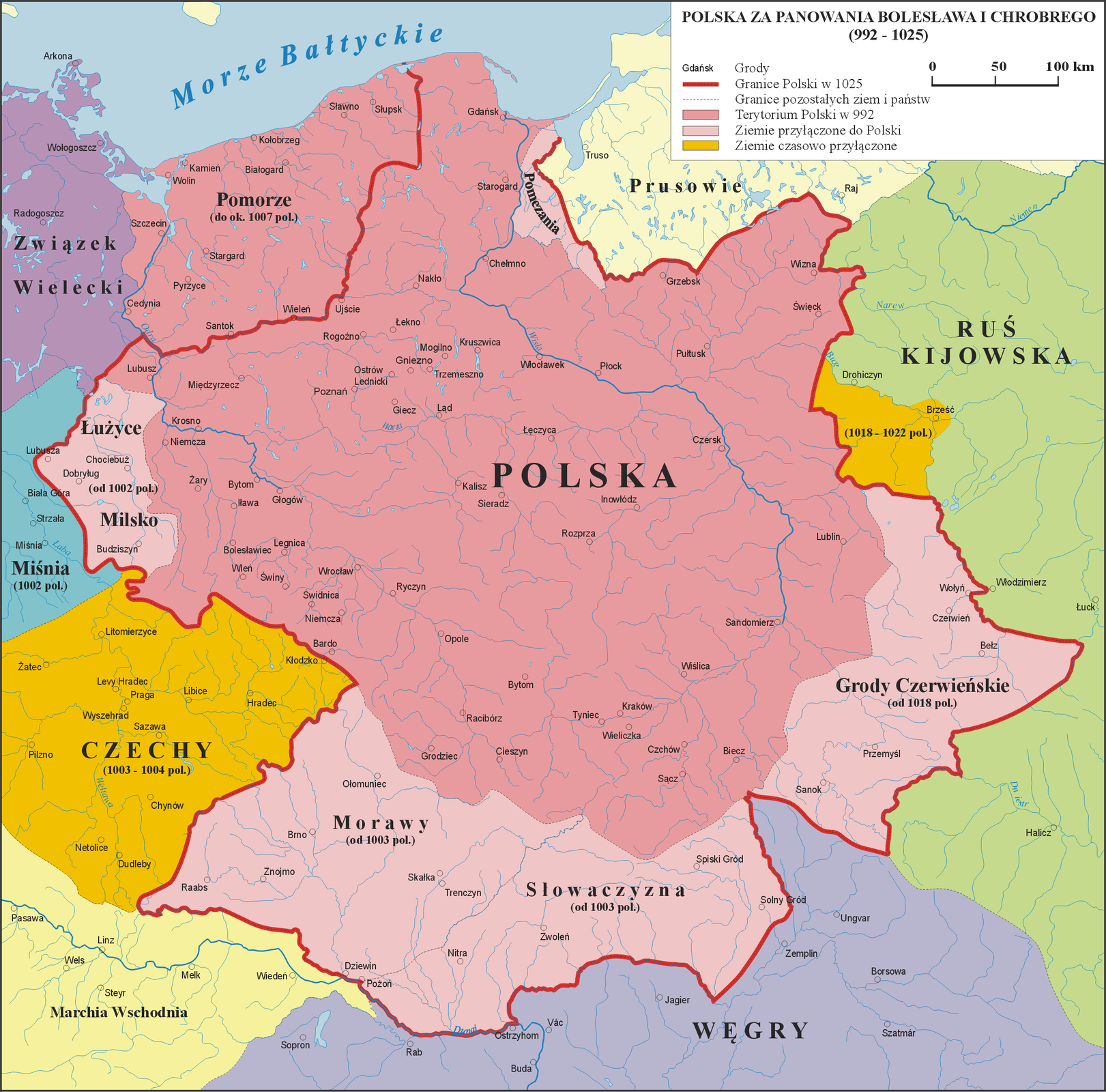
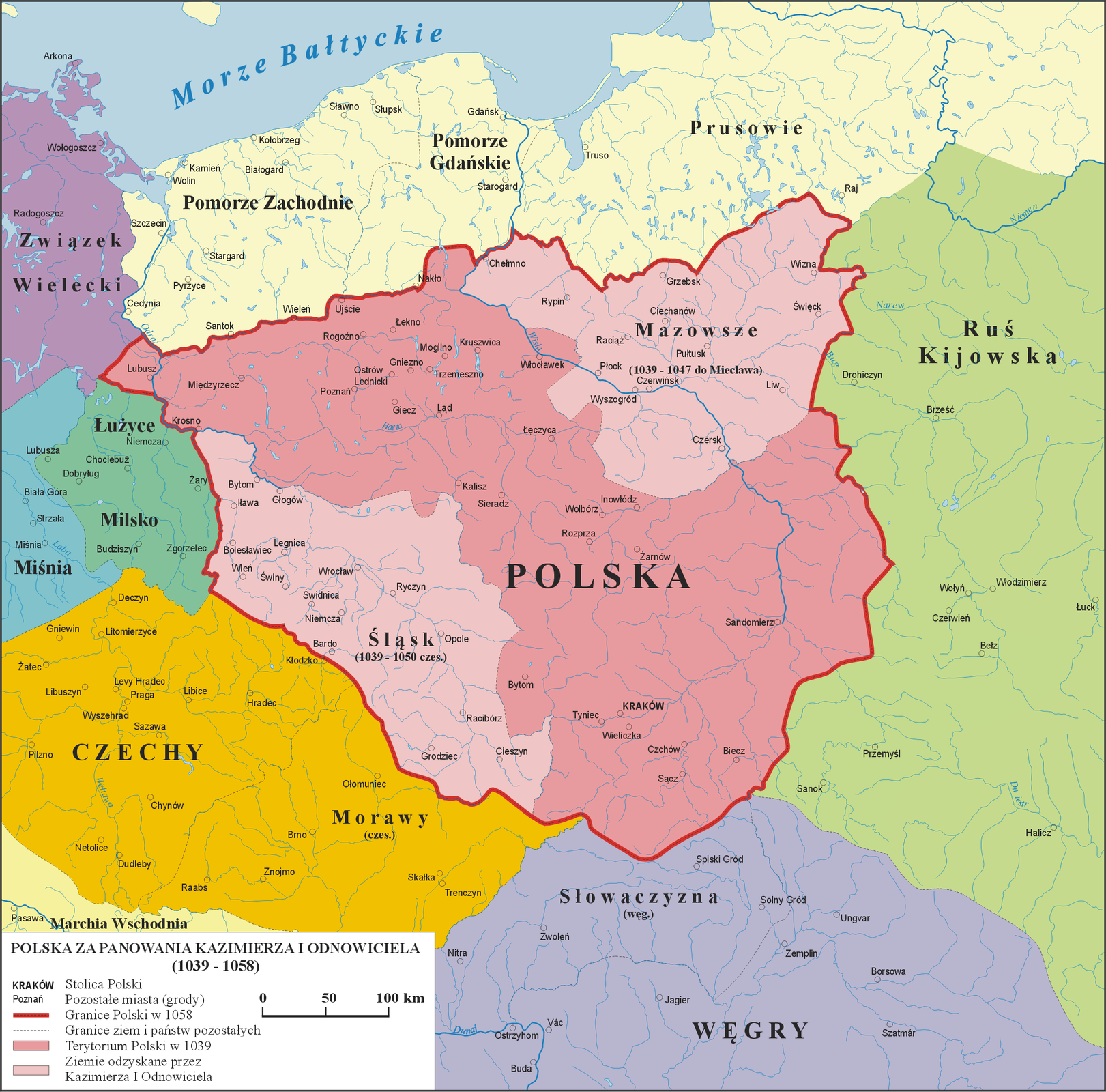
Indicate the lands that were lost after the death of Bolesław I the Brave.
- Łużyce
- Milsko
- Morawy
- Slovakian lands
- Cherven Cities
- Gdańsk Pomerania
Indicate the Polish rulers who were crowned.
- Mieszko I
- Bolesław I the Brave
- Casimir I the Restorer
- Mieszko II
Mark the cities that were the first capital cities of Poland.
- Gdańsk
- Wrocław
- Kraków
- Gniezno
- Warsaw
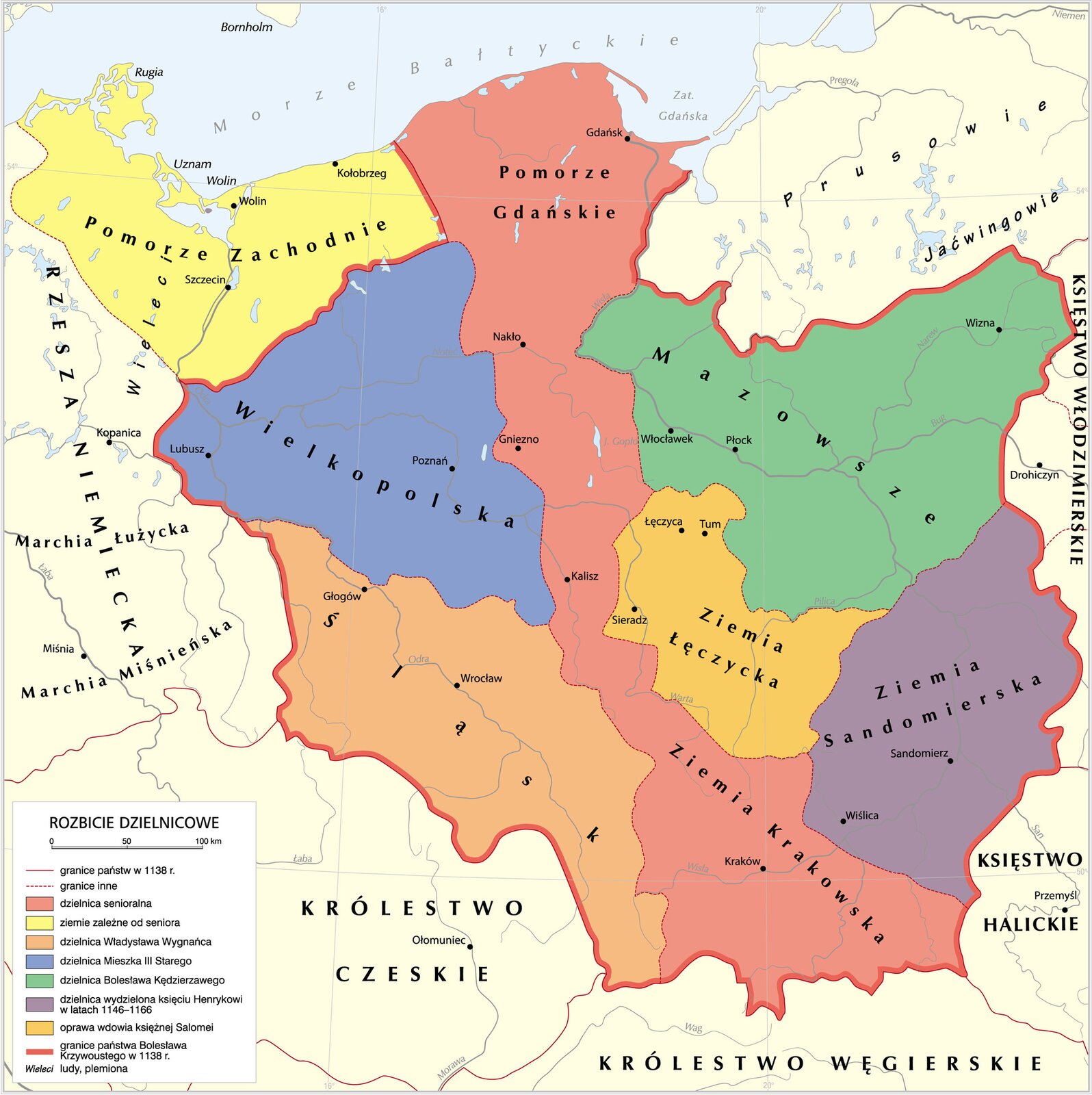
Read the text on the division of Poland by Bolesław III Wrymouth and then do the exercise.
Dynastia Piastów w PolsceSynowie Bolesława otrzymali poszczególne polskie prowincje. Najstarszy Władysław dostał Śląsk i ziemię radomsko‑raciborską, […] Bolesław Kędzierzawy otrzymał Mazowsze, Mieszko, zwany później Starym, odziedziczył Wielkopolskę, najprawdopodobniej tylko zachodnią, ze stolicą w Poznaniu. Henryk […] miał władać ziemią sandomierską. […] Stary książę nie przewidział tylko dzielnicy dla swego najmłodszego syna, Kazimierza. Niektórzy sądzą, że Kazimierz urodził się już po śmierci swego ojca, nie mógł więc zostać uwzględniony. Być może miał on uzyskać to, co Bolesław zostawił dożywotnio swej żonie Salomei [ziemię łęczycką]. Została też wyznaczona dzielnica centralna [senioralna], której stolicą był Kraków. W jej skład wchodziła ziemia krakowska, a także Pomorze Gdańskie […]. Najprawdopodobniej należała do niej wschodnia Wielkopolska z Gnieznem.
Source: Marek Barański, Dynastia Piastów w Polsce, Warszawa 2006, s. 219.
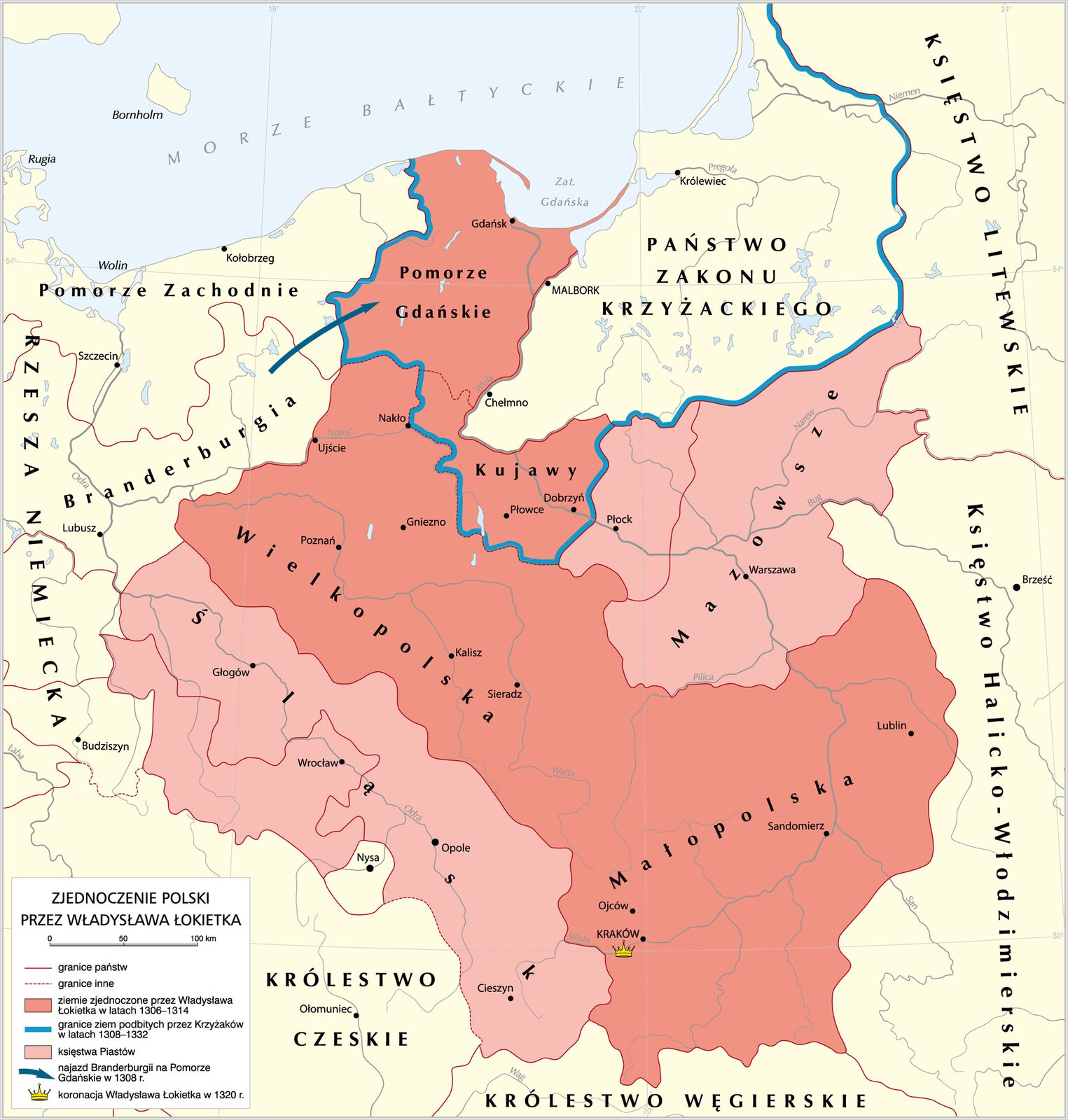
Name the big Polish city, which was in the hands of the Teutonic Knights after they occupied part of Pomerania.
Complete the sentences with the words listed below.
Bolesław I the Brave, Casimir I the Restorer, the Teutonic Knights, fragmentation, Władysław I the Elbow-high, Gniezno
After the death of .........................................................., there was the time of revolts and invasions in Poland. .......................................................... was destroyed during the invasions, so .......................................................... moved his seat to Kraków. Bolesław III Wrymouth divided Poland among his sons and in this way a long period of .......................................................... was started. In the first half of the 13th century .......................................................... were brought to Poland who became a threat to it. Polish lands were united by .......................................................... who was crowned king of Poland.
Keywords
fragmentation, Bolesław III Wrymouth, Bolesław I the Brave, Teutonic Knights
Glossary
katedra – główny kościół chrześcijański, siedziba biskupa.
stolica – miasto, w którym znajdują się najważniejsze (centralne) organy państwa.
testament – dokument, akt prawny, w którym spadkobierca rozporządza swoim majątkiem na wypadek swojej śmierci.
dzielnica – część Polski we władaniu księcia, która powstała po podziale kraju dokonanym przez Bolesława Krzywoustego.
senior – najstarszy z rodu, któremu mieli podlegać książęta poszczególnych dzielnic.
wojna domowa – konflikt zbrojny między obywatelami jednego państwa lub członkami jednej grupy/plemienia.
zakon – zgromadzenie religijne, którego członkowie składają śluby i żyją według przyjętych reguł.
Prusowie – pogańskie ludy zamieszkujące w średniowieczu wybrzeże Bałtyku na wschód od Wisły.
Krzyżacy – zakon rycerski, sprowadzony na ziemię chełmińską przez Konrada Mazowieckiego w 1226 r., jego pełna nazwa brzmi: Zakon Szpitala Najświętszej Marii Panny Domu Niemieckiego w Jerozolimie.