Population distribution worldwide
what population density is and how to calculate it;
where the oldest human civilisations were created;
what migration is;
what the causes and effects of migratory movements are.
to list conditions favourable to settlement;
to list settlement barriers;
to point on the map the areas with little population and those entirely uninhabited;
to discuss regularities which govern population distribution;
to explain the terms: anecumene, ecumene, subecumene.
When we look at the map showing population density, we will see that human population is not distributed evenly on Earth. Those lands, were people reside permanently, are called ecumeneecumene. Most people live in the northern hemisphere. One of the reasons for this situation is that this is where most of land areas are located. Apart from Antarctica, we can see that there are areas with less and more population in each continent. Sometimes the contrast is enormous.
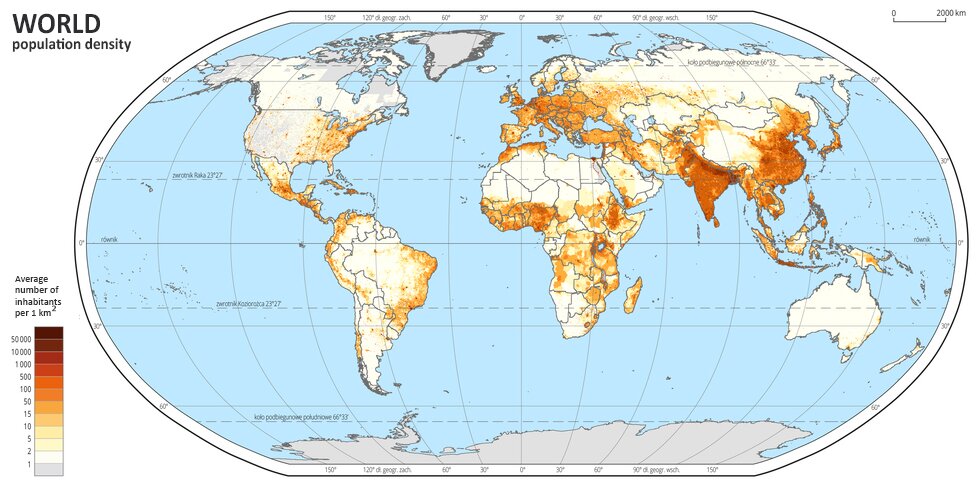
On the one hand, we can see uninhabited lands (anecumeneanecumene) or lands where population density is close to nil. Where population density (person/kmIndeks górny 22) is in single digits, people live in small, highly dispersed settlements. Those include: northern ends of Eurasia and North America, central Asia, major part of Australia, large portions of north Africa and South America. Antarctica is a special case here - this is a continent with no permanent settlement at all.
On the other hand, in some areas population density is greater than 1,000 people per 1 kmIndeks górny 22. Moreover, this scale has no upper limit, even though the last range starts with over 50,000 people per 1 kmIndeks górny 22. Consequently, we are unable to tell (based on the data on the map) what the top limit is. The areas with most dense population are: east and south Asia, Europe, east coast of North and South America, Central America, areas around the Gulf of Guinea and the belt from Ethiopian Highlands to the African Great Lakes. Even if we look at smaller areas, such as countries, the contrasts they are also very big.
Territory | Population density | Territory | Population density |
Iceland | 3 | India | 396 |
Australia | 3 | Netherlands | 497 |
Canada | 4 | South Korea | 503 |
Namibia | 3 | Barbados | 645 |
Suriname | 3 | Bangladesh | 1110 |
Mongolia | 2 | Bahrain | 1580 |
West Sahara | 2 | Hong Kong | 6483 |
Svalbard | 0,04 | Macau | 19830 |
No. | City/Urban agglomeration | Country | Population density |
1. | Mumbai | India | 29.65 |
2. | Kolkata | India | 23.9 |
3. | Karachi | Pakistan | 18.9 |
4. | Lagos | Nigeria | 18.15 |
5. | Shenzhen | China | 17.15 |
6. | Seoul/Incheon | South Korea | 16.7 |
7. | Taipei | Taiwan | 15.2 |
8. | Chennai | India | 14.35 |
9. | Bogota | Columbia | 13.5 |
10. | Shanghai | China | 13.4 |
Natural factors
If we compare the placement of oldest civilisation sites against the population density map, we can see that the areas, which were densely inhabited in antiquity, continue this trend today. Consequently, we can notice that conditions, which are most attractive for settlement, still are: climate with long vegetation period and high precipitation, even if it is seasonal or rivers with abundance of water. Fertile soil and its easy cultivation on even flatlands are an important factor too. Big rivers with slow current make perfect traffic ways. Nowadays, densely inhabited areas form also on industrial lands, in particular those rich in mineral resources, or service zones e.g. along transportation routes.

As the population grew, new lands were settled, selecting the best available areas. Hence the growth of the ecumene, which covers major portions of the continents. When we compare the population distribution map and the natural map, we can determine the conditions avoided by people or what can be a settlement barrier.
There is also a specific form of adjustment to unfavourable natural conditions, called nomadism - people are constantly on the move, without forming any permanent human settlements or residing there seasonally. Such areas are called subecumenesubecumene.
Use information from various sources to describe the following factors.
Do you know what do those terms mean? If not, turn the card around.
| Ecumene | area permanently inhabited by people |
| Anecumene | area uninhabited by people |
| Subecumene | area temporarily inhabited by people |
Point the area with highest concentration of people, where such concentration is contributed by lowland orography, advantageous climate e.g. warm temperate climate, colonisation, high industrialisation, high economic development, influx of immigrants from all over the world.
- Description of picture A
- Descripton of correct picture B
- Description of picture C
- Description of picture D
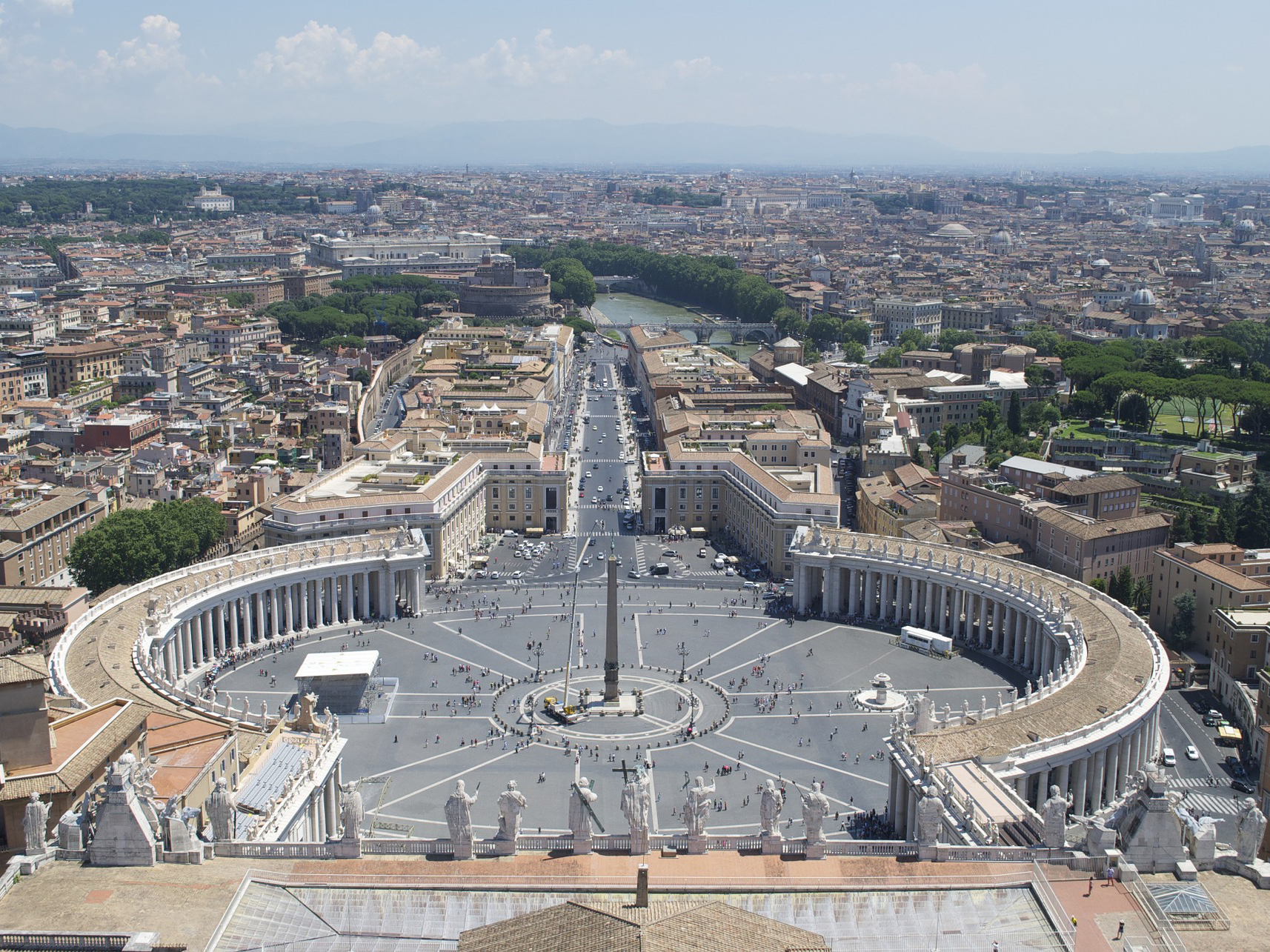
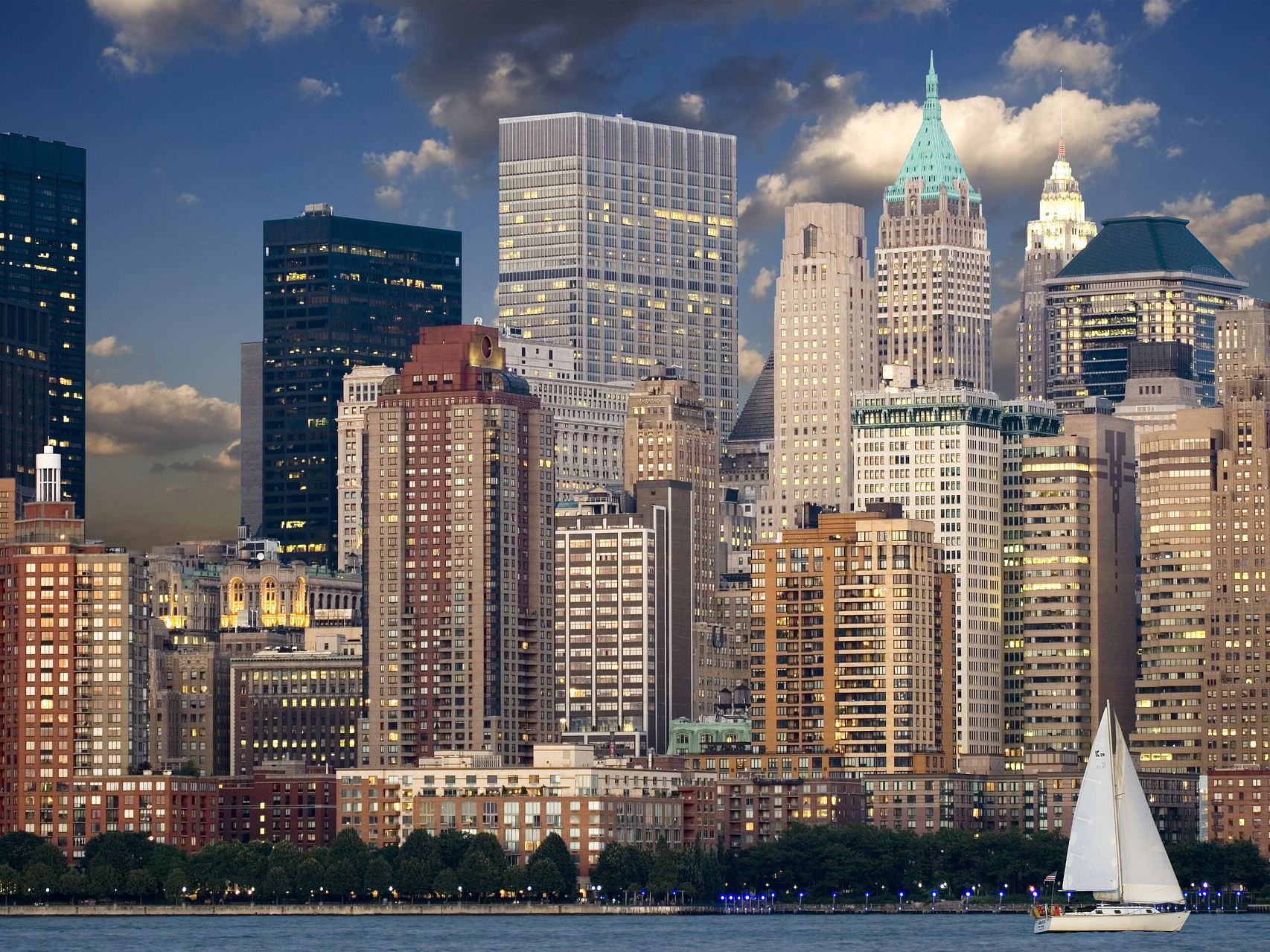
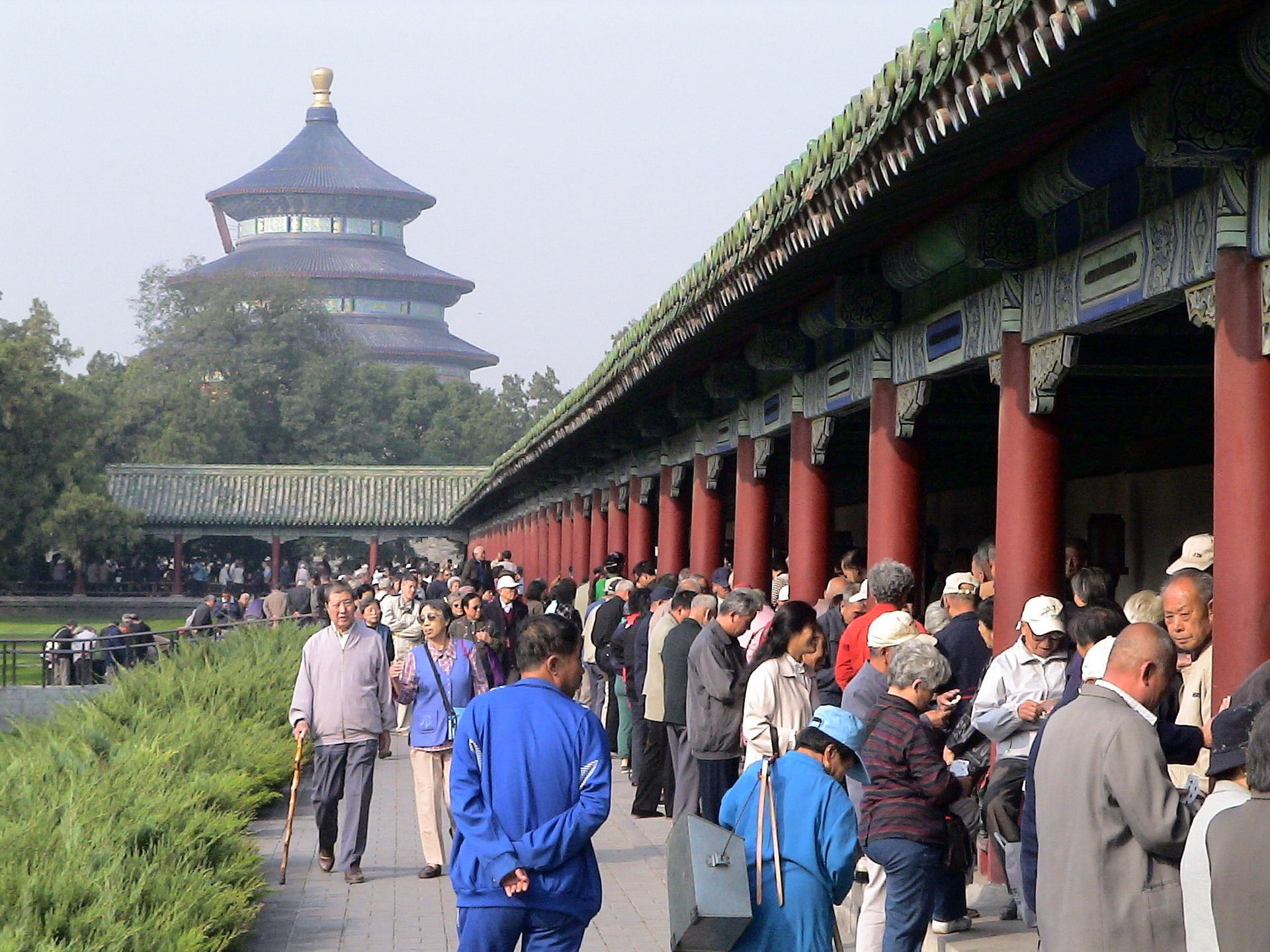
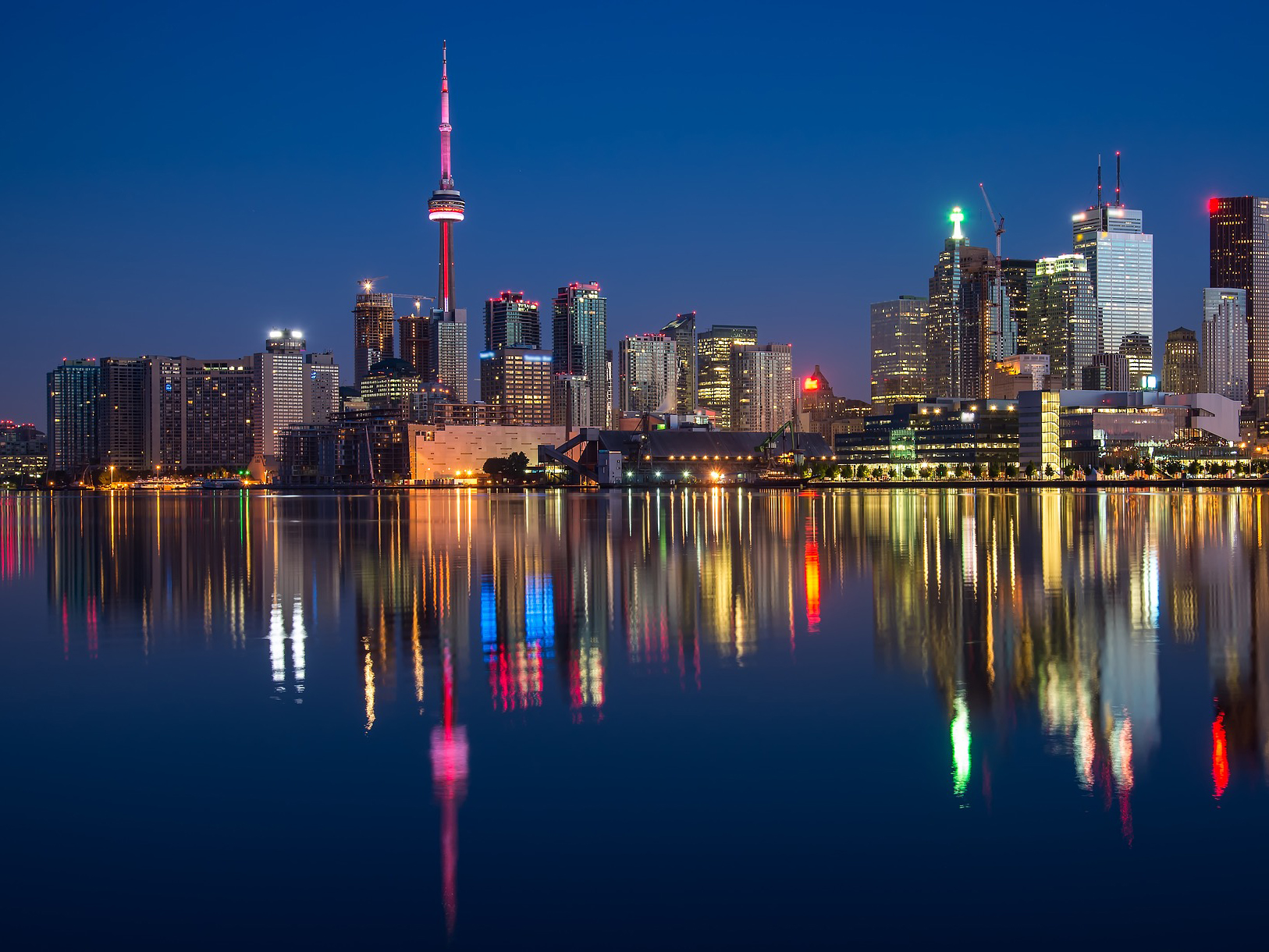
Using the photo, point out the settlement barrier for this site.
- Temperature barrier
- Height barrier
- Light barrier
- Water barrier

Summary
Ecumene is an area where people reside permanently, anecumene means uninhabited areas, and subecumeme - areas where people reside only temporarily.
Population density is affected by such natural factors as: climate conditions (temperature, precipitation), orographic conditions, soil, vicinity of big rivers and access to the sea, natural resources.
Conditions avoided by people form a settlement barrier. Those include water, temperature, light, height and gravity barriers.
Non‑natural factors, which have impact on differences in population distribution worldwide, are historical, economic and political processes and occurrences.
Keywords
subecumene, ecumene, anecumene, population distribution
Match the pairs: English words with Polish definition.
obszar niezamieszkały przez ludzi, występuje na obszarach częściowo lub całkowicie zdegradowanych w wyniku nieracjonalnej działalności gospodarczej człowieka., obszar okresowo zamieszkały przez ludzi, obszar stale zamieszkany przez ludzi
| ecumene | |
| anecumene | |
| subecumene | |
| ecological barrier |
Glossary
ekumena – obszar stale zamieszkany przez ludzi
anekumena – obszar niezamieszkały przez ludzi
subekumena – obszar okresowo zamieszkały przez ludzi
bariera ekologiczna – występuje na obszarach częściowo lub całkowicie zdegradowanych w wyniku nieracjonalnej działalności gospodarczej człowieka.