Environmental issues – waste management
what plastics are;
what polymerisation and polycondensation are;
what materials are used to produce packaging; which of them are biodegradable and which are particularly burdensome for the environment.
to justify the need to manage waste from various packaging;
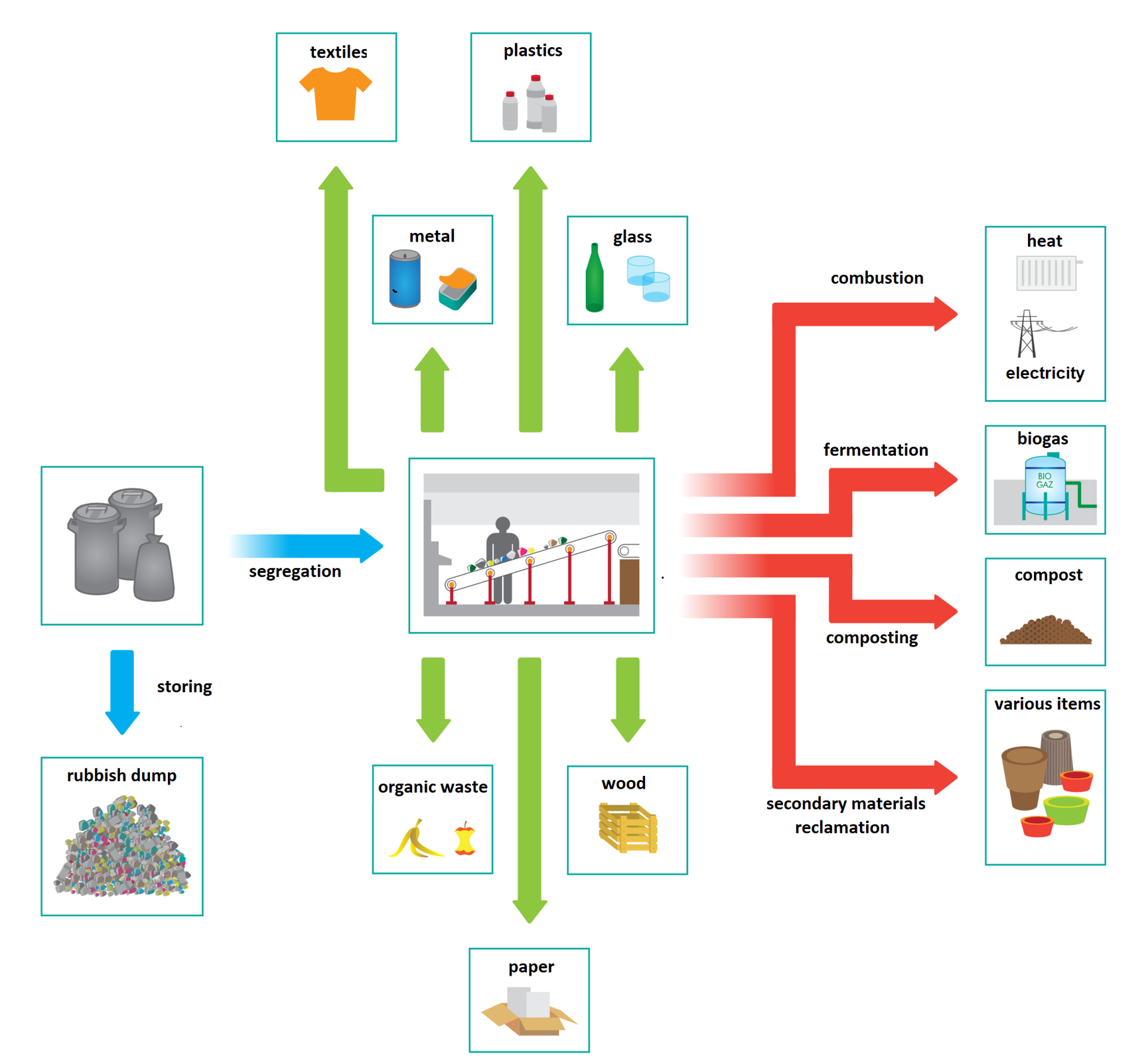
to discuss various types of waste management: landfills, segregation, recycling, utilization, incineration;
to explain what biodegradable packaging is and to justify why they should be used as often as possible.
Waste – an issue or a business in the 21st century?
Waste and associated hazards are nowadays becoming a more and more noticeable environmental issue. For example, a tiny watch battery may contaminate 1 mIndeks górny 33 of soil or 400 litres of water. On the other hand, the majority of garbage can be transformed into energy or processed into new raw materials (for example fibres – from PET bottles, zinc – from zinc batteries), and some of them can be re‑used (for example glass can be re‑processed indefinitely). Ultimately, waste management consists in their disposal, which means that waste are processed to that they do not pose threat to human health and life and to the environment. Over the centuries, waste management has taken various forms.
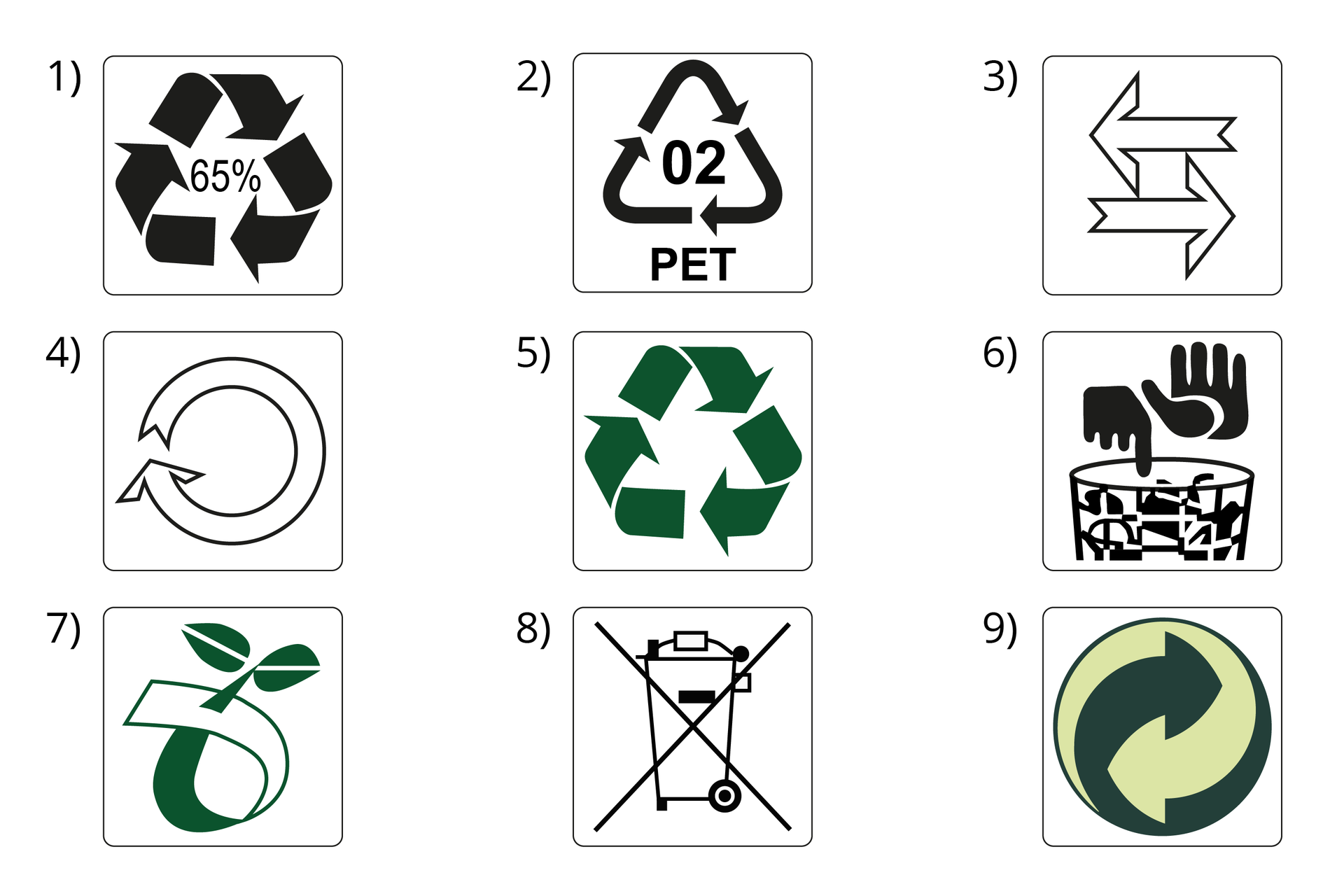
Municipal waste disposalwaste disposal consists in their landfilling or incineration. Modern landfills and incinerating plants are one of the most ambitious tasks of construction engineering. However each of these methods contributes to the irretrievable loss of many valuable raw materials that are found in waste. In the interests of the natural environment, pictograms are often placed on the packaging. They make it easier to find out what in fact they are and inform the consumer on how to handle the packaging and articles that are in them.
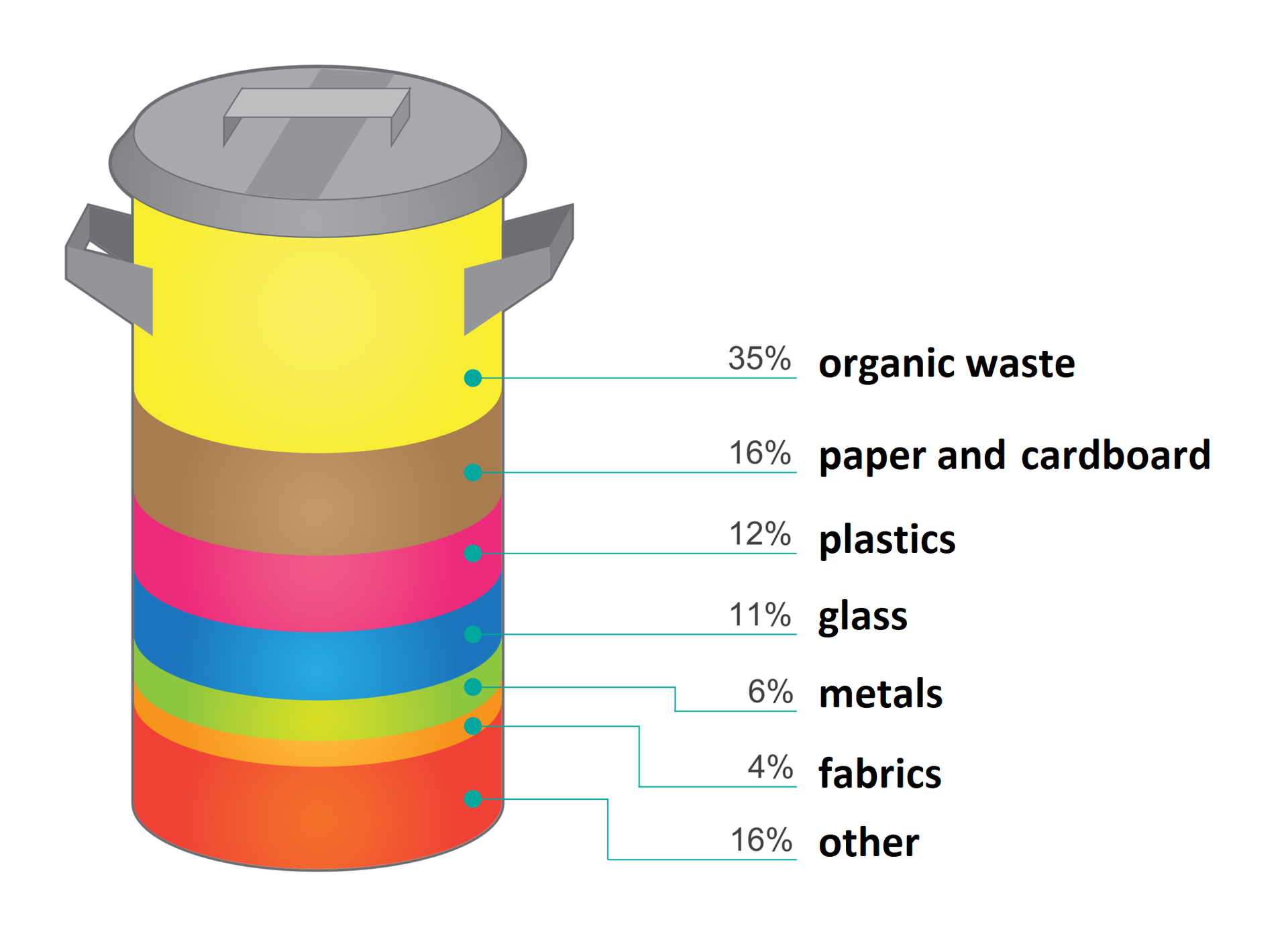
Depending on the source of waste, various provisions are laid down in legal acts regarding the rules for handling these wastes. And so, municipal waste is subject to the obligation of separate collection. The following fractions are selectively collected:
paper;
glass;
metals;
plastics;
biodegradable waste, with particular reference to bio‑waste.
The waste fractions mentioned above are collected in containers, and it is also allowed to collect selected fractions of waste at the place of their production in sacks.
The waste fraction, consisting of paper waste, including cardboard, paper waste from packaging and packaging waste from cardboard, is collected in blue containers marked with the words „Paper”. The waste fraction, consisting of glass waste, including packaging waste made of glass, is collected in green containers marked „Glass”. If glass is collected in color and colourless glass, clear glass is collected in white containers marked „Clear glass” and coloured glass in green containers marked „Coloured glass”. Waste factions, which include metal waste, including metal packaging waste, plastic waste, including plastic packaging waste, and multi‑material packaging waste, are collected in yellow containers marked „Metals and plastics”. The fraction of biodegradable waste is collected in bronze containers marked with the word „Bio”.
Other legal regulations apply to the handling of medical waste: infectious, dangerous and other than infectious and dangerous. Medical waste is collected in containers or bags at the place of their formation and pre‑stored, taking into account their properties, the manner of their disposal or recovery.
Waste management methods
Before you watch the video “Hazards resulting from incineration of products made of PVC”, write down a research question and a hypotheses. Note also your observations and conclusions.
Film dostępny na portalu epodreczniki.pl
Nagranie filmowe przedstawiające eksperyment: "zagrożenie wynikające ze spalania produktów wykonanych z PVC" (hazard resulting from incineration of products made of PVC). Do eksperymentu potrzebne są: palnik Bunsena (Bunsen burner) plastikowa rurka (plastic tube) szczypce (tongs) czysta butelka (wash bottle) polichlorek winylu (poli vinyl chloride) papierek lakmusowy (litmus paper). Na filmie widać jak naukowiec szczypcami (tongs) trzyma nad palnikiem (Bunsen burner) kawałek plastikowej rurki (plastic tube). Pod wpływem wysokiej temperatury zmienia ona swój kształ i kolor na czarny. Ze spalonego kawałka plastikowej rurki unosi się dym (acidic gas). Naukowiec przykłada w to miejsce papierek lakmusowy (litmus paper). Zabarwia się on na kolor pomarańczowy.
What threats are posed by incineration of products made of PVC?
Toxic chemicals are formed during incineration of products made of PVC.
functional fume hood,
a PVC sample,
metal pliers,
burner,
wash bottle filled with distilled water,
universal indicator paper.
Place a sample of polyvinyl chloride into the flame of the burner, holding the material in metal pliers. The experiment should be carried out under a functional fume hood.
Remove the sample from the flame after a while and check if it is still burning.
When it stops burning, place a universal indicator paper moistened with water over warm sample.
Observe what is happening.
Alternatively waste can be recycledrecycled thanks to which waste materials can be repeatedly processed and used. It contributes to reduced consumption of natural resources, energy savings and as a consequence has impact on environmental protection. Several types of recycling are distinguished: raw material (chemical), material (physical), organic and energy recycling. Selective waste collection is a starting point since virtually any waste can be a potential raw material.
Each waste management methods has both advantages and disadvantages. Rational waste management in our country should significantly reduce the quantity and type of waste going to landfills.
Biodegradation
Omnipresent plastic bags which are produced in only 1 second have been used on average for 18 minutes and decomposed in the environment for 10–40 years. PET bottles need even more time. Degradation of polymer products in the natural environment is a long‑term process. Therefore, materials decomposed by microorganisms (fungi and bacteria), i.e. biodegradable polymers are introduced, if possible. A polymer may be considered biodegradable if it completely decomposes in soil or water within 6 months. BiodegradationBiodegradation may take place under aerobic or anaerobic conditions and it yields the following products: carbon dioxide, water and humus.
Select a true statement.
- Materials produced for example from corn, rice, sugar beets are otherwise called biodegradable polymers.
- Segregation involves reusing of waste or worn elements to manufacture new products.
- Methane is the product of biodegradation of polymers under aerobic conditions.
Select properties of polyvinyl chloride from the ones listed below:
- flammable
- it becomes soft at a temperature of 100–120°C
- base-resistant
- hardening plastics
- artificial polymer
- non-biodegradable
- toxic hydrogen chloride is released when it is burning
Summary
There are the following municipal waste management methods: landfills, incineration, recycling (raw material, material, organic and energy recycling).
Composting and fermentation are examples of organic waste management (organic recycling).
Production of disposable packaging from biodegradable polymers contributes to waste reduction. Production of these polymers from renewable raw materials helps to reduce the consumption of fossil fuels and the emission of carbon dioxide.
Keywords
biodegradation, waste, recycling
Glossary
biodegradacja – biochemiczny rozkład związków organicznych na prostsze składniki chemiczne zachodzący pod wpływem organizmów żywych
recykling – system obiegu materiałów zawartych w odpadach, które mogą być wielokrotnie przetwarzane i wykorzystywane
unieszkodliwianie odpadów – przekształcenie odpadów w celu doprowadzenia ich do stanu, który nie stwarza zagrożeń dla życia lub zdrowia ludzi oraz dla środowiska
utylizacja odpadów – całkowite lub częściowe zniszczenie odpadów w wyniku celowej działalności człowieka