Przeczytaj
The picture below shows a crowded mall. This is still a common sight in huge shopping centres in big cities, but for how long? In this section, you are going to read a text introducing you to the phenomenon of dead malls. Before you read it, think: could you imagine your city without places like these?
Poniższe zdjęcie przedstawia zatłoczone centrum handlowe. To wciąż powszechny widok w dużych miastach, ale jak długo? W tej sekcji przeczytasz tekst wprowadzający cię w zagadnienie zjawiska „martwych” centrów handlowych. Zanim go przeczytasz, zastanów się, czy wyobrażasz sobie swoje miasto bez takich miejsc?
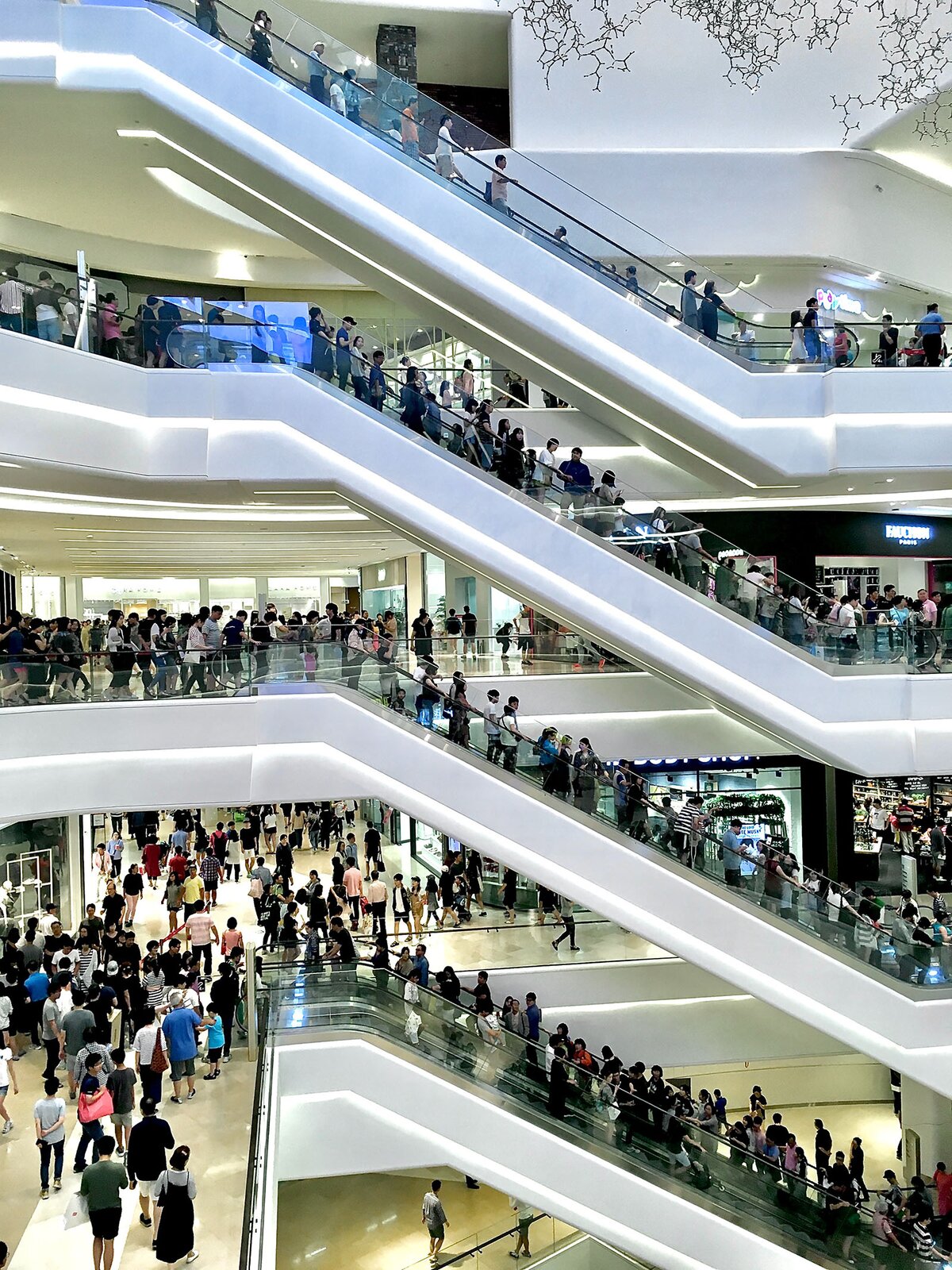
Read the text to find out what dead malls are, how they become derelict, and what may happen to them in the future.
Ghost MallsNot so long ago, a walk through the mallmall (or the shopping centreshopping centre, as we also call it) was what many people used to do in their free time. However, as the times change, so do our leisure activitiesleisure activities and shopping habits. This may lead to the creation of the so‑calledso‑called “dead malls”.
The term refers to shopping malls that are past their primepast their prime. Mostly, they are empty, derelictderelict buildings in a state of disrepairstate of disrepair, which got abandonedabandoned after their owners had gone out of businessgone out of business. They often have damaged, mouldy ceilingsmouldy ceilings, graffiti‑stainedgraffiti‑stained walls and rubbish litteringlittering the floors of corridors hauntedhaunted by the absence of shoppers who used to walk there. (1) ___ They used to be thrivingthriving centres of commercecentres of commerce. Now, they deal with a growing number of empty storefrontsstorefronts and a visible reduction in the number of customers who do their shopping in the stores which remainremain open.
Several different factors can contribute tocontribute to the gradual deteriorationgradual deterioration of a mall that once used to thrive. (2) ___ These are stores that draw the most shoppers and they are usually located strategically around a clustercluster of smaller stores. Once anchor storesanchor stores decide to relocate, consumers have less motivation to shop at the mall, so it soon falls out of favourfalls out of favour and begins to die.
(3) ___ One of them might be the increased crime rates, which become a deterrentdeterrent to both consumers and owners of the stores located in a mall. Nevertheless, the most common reasons are changes in the economy as well as shifts in the demographics and the makeupmakeup of the neighbourhood surrounding the mall. A mall located in the area of the city which is not growing begins to stagnatestagnate and, as a result, stores and customers begin to pull outpull out. Financial setbacksFinancial setbacks caused by the recession and a bad economic situation have also made many retail chain storesretail chain stores go bankrupt, but the biggest blow came from the shift in buyers’ shopping habits from in‑store to online. People didn’t use to buy things online as often as they do now and it has hit shopping malls hard.
The end result varies. Some of the dead malls end up being demolisheddemolished while some are turned into a warehousewarehouse or an office space. Some are taken over by local municipalitiesmunicipalities and begin to have both commercial and public functions. In Poland, this problem is starting to be visible, as more and more shopping centres are losing the fight with the economic crisis. (4) ___ At present, in Warsaw alone, there are plans to pull downpull down three malls and use the space for flats to rent, offices and hotels. One thing is certain: if malls don’t make some changes in the way they function soon, some of them will disappear, and the future of those which still remain will be uncertain.
Źródło: Agnieszka Sękiewicz‑Magoń , licencja: CC BY-SA 3.0.
Answer the questions in 2–3 sentences.
Why do you go to a shopping mall?
Did you use to buy more in‑store than online? Why?/Why not?
Do you agree with the prediction from the text that without necessary changes, shopping malls will disappear? Why?/Why not?
Słownik
/ əˈbændənd /
porzucony/porzucona
/ ˈæŋkə stɔːz / / ˈæŋkə stɔː /
główne sklepy (w dużym centrum handlowym) [główny sklep]
/ ˈsentərz əv ˈkɒmɜːs / / ˈsentər əv ˈkɒmɜːs /
ośrodki handlowe [ośrodek handlowy]
/ ˈsɪtɪzənz / / ˈsɪtɪzən /
mieszkańcy/mieszkanki [mieszkaniec/mieszkanka]
/ ˈklʌstə /
skupisko, grupka
/ ˌkəʊɪɡˈzɪst /
współistnieć
/ ˈkɒmɜːs /
handel
/ kəˈmɜːʃl̩ /
handlowy/handlowa
/ kənˈtrɪbjuːt tuː /
przyczynić się do
/ ˈkɔːtjɑːdz / / ˈkɔːtjɑːd /
dziedzińce [dziedziniec]
/ dɪˈmɒlɪʃt /
wyburzony/wyburzona, rozebrany/rozebrana (np. budynek)
/ ˈderəlɪkt /
opuszczony/opuszczona, porzucony/porzucona
/ dɪˈterənt /
odstraszacz, czynnik odstraszający
/ dɪˈveləpəz / / dɪˈveləpə /
deweloperzy [deweloper]
/ fɔːl əˈpɑːt /
rozpadać się
/ fɔːlz aʊt əv ˈfeɪvə / / fɔːl aʊt əv ˈfeɪvə /
popada w niełaskę [popaść w niełaskę]
/ faɪˈnænʃl̩ ˈsetbæks / / faɪˈnænʃl̩ ˈsetbæk /
problemy finansowe [problem finansowy]
/ fuːd kɔːts / / fuːd kɔːt /
punkty gastronomiczne, wydzielona część restauracyjna w centrum handlowym [punkt gastronomiczny]
/ fə ðə ˈbenɪfɪt ɒv /
na czyjąś korzyść
/ ɡɒn aʊt əv ˈbɪznəs / / ˈɡəʊ aʊt əv ˈbɪznəs /
wypadł/wypadła z interesu, przestał/przestała działać [wypaść z interesu]
/ ˈɡrædʒʊəl dɪˌtɪərɪəˈreɪʃn̩ /
stopniowe pogorszenie się, upadek
/ ɡrəˈfiːtiː steɪnd /
pokryty/pokryta graffiti
/ ˈhæŋ ˈaʊt /
spędzać czas
/ ˈhɔːntɪd /
nawiedzony/nawiedzona
/ ˈhaʊzɪŋ ˈprɒdʒekts / / ˈhaʊzɪŋ ˈprɒdʒekt /
osiedla mieszkaniowe [osiedle mieszkaniowe]
/ aɪˈdɪəlz / / aɪˈdɪəl /
ideały [ideał]
/ ˈleʒə ækˈtɪvətiz / / ˈleʒə ækˈtɪvəti /
rozrywki, zajęcia w wolnym czasie [zajęcie w wolnym czasie]
/ ˈlɪtərɪŋ / / ˈlɪtə /
pokrywający śmieciami, zaśmiecający [śmiecić]
/ ˈmeɪkʌp /
skład, charakter
/ mɔːl /
centrum handlowe, galeria handlowa
/ ˈməʊldi ˈsiːlɪŋz / / ˈməʊldi ˈsiːlɪŋ /
zapleśniałe sufity [zapleśniały sufit]
/ mju:ˌnɪsɪˈpælɪtɪz / / mju:ˌnɪsɪˈpælɪti /
gminy, samorządy [gmina, samorząd]
/ ˈpɑːkɪŋ lɒts / / ˈpɑːkɪŋ lɒt /
parkingi [parking]
/ pɑːst ðeə praɪm / / pɑːst wʌnz praɪm /
poza czasem swej świetności, mający najlepsze lata za sobą [mieć najlepsze lata za sobą]
/ prɪˈdɪkʃn̩z / / prɪˈdɪkʃn̩ /
przewidywania [przewidywanie]
/ ˈprɒfɪts / / ˈprɒfɪt /
zyski [zysk]
/ pʊl daʊn /
zburzyć
/ pʊl aʊt /
tu: wycofać się
/ rɪˈmeɪn /
tu: pozostawać [zostawiać]
/ ˈriːteɪl ˈtʃeɪn stɔ:z / / ˈriːteɪl ˈtʃeɪn stɔ:r /
sieci handlowe [sieć handlowa]
/ ˈʃɒpɪŋ ˈsentə /
centrum handlowe, galeria handlowa
/ səʊ ˈkɔːld /
tak zwany
/ stæɡˈneɪt /
być w zastoju, ulec stagnacji
/ steɪt əv ˌdɪsrɪˈpeə /
w opłakanym stanie
/ ˈstɔː.frʌnts / / ˈstɔː.frʌnt /
witryny sklepowe [witryna sklepowa]
/ ˈstrʌɡl̩ /
mieć trudności
/ səˈbɜːbən /
podmiejski/podmiejska
/ səˈraʊnd /
otoczyć
/ ˈthetaraɪvɪŋ / / thetaraɪv /
prosperujący/prosperująca [prosperować]
/ ˈweəhaʊs /
magazyn
Źródło: GroMar Sp. z o.o., licencja: CC BY‑SA 3.0