R1cMp69w8HfsS

My city

Source: domena publiczna.

Link to the lesson

You will learn
  • you will get to know the poetic images of WarsawWarsawWarsaw

  • you will interpret the poem of K.I. Gałczyński

  • you will identify the contrast as a poetic measure and give its examples

R1QYaz8l1QgUl
nagranie abstraktu
Exercise 1

Write down the names of your three favourite cities. Next to each name, add an important, interesting, unique place or event that you associate with the citycitycity.

RFVKWNZTxVXM5
Wykonaj ćwiczenie zgodnie z poleceniem.

The city attracts people. It offers a wide range of cinemas, theatres and galleries. It can be considered as a recognised space, but at the same time anonymous. It leads passers‑by along the elegant streets and scares them with its dark corners. The city is attractive but also terrifying And what are the cities you find interesting? What impresses you in urban environment and what deters you from it?

Rq3EU7k9uA6Yw1
Exercise 2
Do you know the monuments located in Malbork, Wałbrzych, Gdańsk, Warsaw, Cracow?

Today we are talking about Warsaw – both old and modern. What do you associate this city with?

R7xqsxt8ddYQJ1
Ilustracja barwna przedstawiająca centrum Warszawy w świetle wschodzącego słońca. Na pierwszym planie widać pięć wieżowców oraz budynek z zaokrągloną fasadą. Na ulicach widać samochody. W oddali znajdują się inne budynki, niższe, oraz dźwig świadczący o tym, że trwa budowa. Question: What are your associations related to Warsaw? List them.
Source: licencja: CC 0.
Exercise 3

Read the poem by Konstanty Ildefons Gałczyński. Pay attention to the date of the creation of the work. What is happening in Warsaw at that time?

  • Does the speaker in the poem like the changes taking place in Warsaw?

  • What does the lyrical subject want to persuade the reader to? Answer using quotations from the poem.

Stare miasto

Jest w Warszawie Stare Miasto,
gdzie od rana kielnia stuka,
Stare Miasto – tak się zowie,
a po warszawsku – Starówka.

Gdy przyjedziesz na wycieczkę
do Warszawy, mój kolego,
wybierz się na Stare Miasto,
tuż nad Wisłą, niedaleko.

Zobaczysz, jak słońce błyszczy
na wieżyczkach, na dachówkach.
Kiedyś mury te wróg zniszczył;
lecz znów stoją. Jest Starówka!

Znów po Rynku Staromiejskim
strojne w pozłociste blaski
spaceruje sobie stadko
srebrnych gołębi warszawskich.

A od samego świtania,
ledwo słońce się ukaże,
na wysokich rusztowaniach
freski malują malarze.

I na ścianach kamieniczek
powstają pod pędzlem wartkim
różne piękne malowidła:
skrzypce, śpiewające ptaki,

owoce, z liści girlandy,
księżyc, co się z nieba zwiesza...
Bo piękna była Starówka,
a będzie jeszcze piękniejsza.

1953

gałczyński Source: Stare miasto, [w:] Konstanty Ildefons Gałczyński, Wybór poezji, Wrocław 1982.
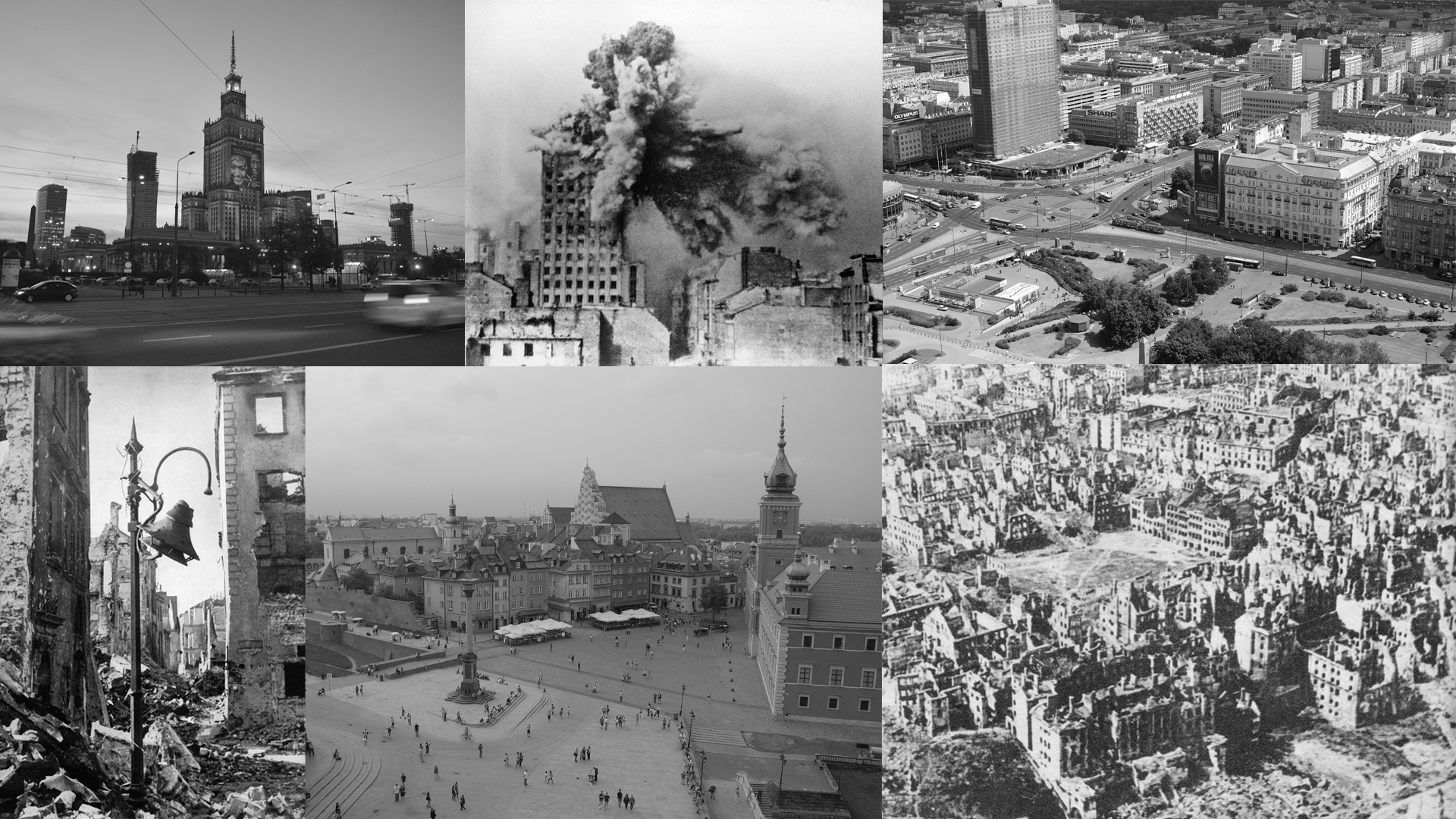
Exercise 4
Choose four words from the Glossary and compose four phrases about Warsaw with them.
R18ijtPHQ5JEm
Source: domena publiczna, [online], dostępny w internecie: Wikimedia Commons.
ROMk4Yilonq7k
Wykonaj ćwiczenie zgodnie z poleceniem.
R1APhmxSibujH
Exercise 5
Combine the following terms in pairs with opposite meanings. Term: chaos. Możliwe odpowiedzi: 1. „piękna Starówka", 2. safety, 3. modern communication arteries, 4. vibrant metropolis, 5. order, 6. happiness, 7. carefree walks and blissful peace, 8. beautiful, ornamented tenement houses, 9. peace. Term: sadness. Możliwe odpowiedzi: 1. „piękna Starówka", 2. safety, 3. modern communication arteries, 4. vibrant metropolis, 5. order, 6. happiness, 7. carefree walks and blissful peace, 8. beautiful, ornamented tenement houses, 9. peace. term: destroyed streets. Możliwe odpowiedzi: 1. „piękna Starówka", 2. safety, 3. modern communication arteries, 4. vibrant metropolis, 5. order, 6. happiness, 7. carefree walks and blissful peace, 8. beautiful, ornamented tenement houses, 9. peace. Term: raids and bombings. Możliwe odpowiedzi: 1. „piękna Starówka", 2. safety, 3. modern communication arteries, 4. vibrant metropolis, 5. order, 6. happiness, 7. carefree walks and blissful peace, 8. beautiful, ornamented tenement houses, 9. peace. Term: ruins. Możliwe odpowiedzi: 1. „piękna Starówka", 2. safety, 3. modern communication arteries, 4. vibrant metropolis, 5. order, 6. happiness, 7. carefree walks and blissful peace, 8. beautiful, ornamented tenement houses, 9. peace. Term: fear. Możliwe odpowiedzi: 1. „piękna Starówka", 2. safety, 3. modern communication arteries, 4. vibrant metropolis, 5. order, 6. happiness, 7. carefree walks and blissful peace, 8. beautiful, ornamented tenement houses, 9. peace. Term: death. Możliwe odpowiedzi: 1. „piękna Starówka", 2. safety, 3. modern communication arteries, 4. vibrant metropolis, 5. order, 6. happiness, 7. carefree walks and blissful peace, 8. beautiful, ornamented tenement houses, 9. peace. Term: war. Możliwe odpowiedzi: 1. „piękna Starówka", 2. safety, 3. modern communication arteries, 4. vibrant metropolis, 5. order, 6. happiness, 7. carefree walks and blissful peace, 8. beautiful, ornamented tenement houses, 9. peace. Term: „mury te wróg zniszczył”. Możliwe odpowiedzi: 1. „piękna Starówka", 2. safety, 3. modern communication arteries, 4. vibrant metropolis, 5. order, 6. happiness, 7. carefree walks and blissful peace, 8. beautiful, ornamented tenement houses, 9. peace.
Exercise 6

Find on the Internet and listen to the song Sen o Warszawie by Czesław Niemen and answer the questions:

  • What feelings does Warsaw, depicted in the song, evoke? How is it presented?

  • From what perspective does the lyrical ego tell the story of the city?

  • What does the author of the song encourage the listener to?

Exercise 7

Compare the poem of Konstanty Ildefons Gałczyński Stare Miasto with the song Sen o Warszawie. Indicate similarities in the way the image of the city is shown. Which image of Warsaw is not mentioned in both texts?

Important!

IdealisationidealisationIdealisation is imagining or presenting something as much better than it really is.

Exercise 8

In your opinion, are the images of Warsaw presented in the poem of Konstanty Ildefons Gałczyński Stare Miasto and the song Sen o Warszawie idealised? Justify your opinion.

Keywords

little homeland, local patriotism, city, memories, idealisation

Glossary

little homeland
little homeland
RAd254pGiaoV2
Nagranie słówka: little homeland

mała ojczyzna

local patriotism
local patriotism
Rm5g9jZhIjJjC
Nagranie słówka: local patriotism

patriotyzm lokalny

city
city
R19su4A3OJtgX
Nagranie słówka: city

miasto

Warsaw
Warsaw
R18dO0gTEAoEv
Nagranie słówka: Warsaw

Warszawa

capital
capital
R1PnfNGcjVy7t
Nagranie słówka: capital

stolica

monument
monument
R1WfCzIpbFqlJ
Nagranie słówka: monument

zabytek

castle
castle
R14Losr5bU1iB
Nagranie słówka: castle

zamek

palace
palace
R1AlPCIuOxDU4
Nagranie słówka: palace

pałac

memories
memories
RPfxEFJDCFTnV
Nagranie słówka: memories

wspomnienia

childhood
childhood
RyH9HLdV3AG1f
Nagranie słówka: childhood

dzieciństwo

idealisation
idealisation
RsMMEoKZYNquP
Nagranie słówka: idealisation

idealizacja

chaos
chaos
R1EanWZ8KaCyy
Nagranie słówka: chaos

chaos

order
order
RWtDGX7zPHeWi
Nagranie słówka: order

ład

metropolis
metropolis
RAVmS5rtvOLbo
Nagranie słówka: metropolis

metropolia

destruction
destruction
R5g63jB5robVi
Nagranie słówka: destruction

destrukcja

ornaments
ornaments
R8FfuuBYZq0GB
Nagranie słówka: ornaments

ornamenty

ruins
ruins
R10eqWk3UXYUp
Nagranie słówka: ruins

zgliszcza

war
war
R18x7G3NBUFTY
Nagranie słówka: war

wojna

peace
peace
R4jdqu3awDQ36
Nagranie słówka: peace

pokój

uprising
uprising
R1KubNN86LvTc
Nagranie słówka: uprising

powstanie

reconstruction
reconstruction
R8dUTHk5kEUBL
Nagranie słówka: reconstruction

odbudowa