Soil and its main types. Distribution of soil types on Earth
what is the soil;
that the soil is affected by: climate, water, parent rock, terrain and human activity.
explain the term: soil;
provide factors that influence the course of the soil‑forming process;
name the types of zonal soils: podzolic, brown and fawn, chernozems;
discuss the causes of formation of astrophic soils: fen soils, rendzinas, black and mountainous soils;
show the most fertile soils on the map of world and Poland;
discuss soil profiles;
indicate differences in the structure of soil profiles, soils;
discuss the economic importance and degradation of soils
SoilSoil is the outer layer of the earth's crust, which apart from mineral particles also contains water, air, various soil organisms and dead matter of organic origin, called humus. Soil is formed as a result of a slow soil‑forming process that involves the transformation of the parent rock into soil and its further development. This process takes place in two stages:
fragmentation of the parent rock or accumulation of rock crumbs as a result of the activity of water, wind, temperature or other processes;
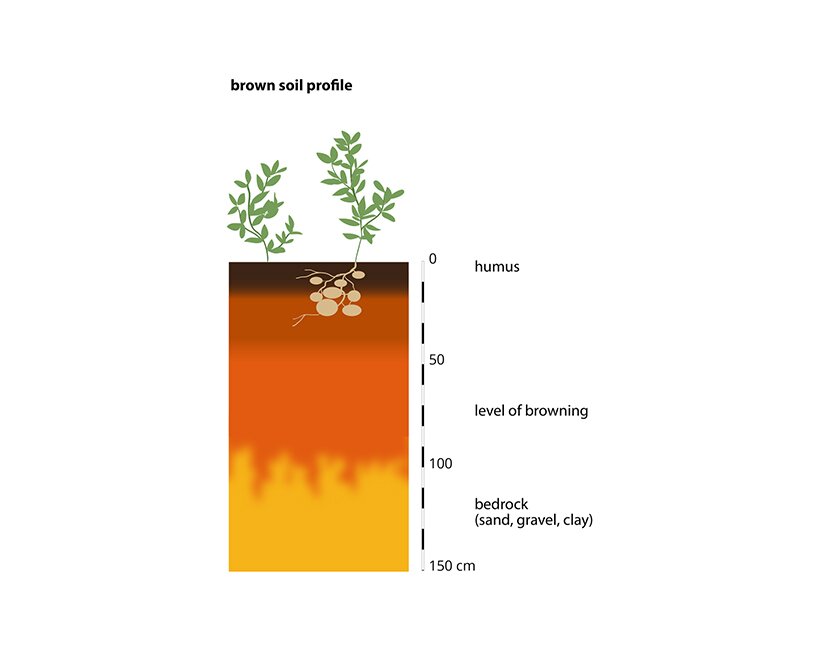
transformation of rock material into soil with the participation of soil organisms; characteristic soil levels are formed then, starting from the surface level with a high content of humus to the parent rock; these levels specific for each type of soil form the so‑called soil profilesoil profile.
The main factors that shape the properties of soils are: climate, water, parent rock, organisms, relief and human activity.
These factors are called soil‑forming factorssoil‑forming factors.
Look at the illustration showing the stages of soil formation. Think about what factors can speed up this process and what factors can delay it. How long can the process be shown in the illustration last?
Look at the gallery of illustrations depicting the profiles of basic soils found in Poland. Think about how they differ and what their characteristics are. Talk about it with the rest of the class.
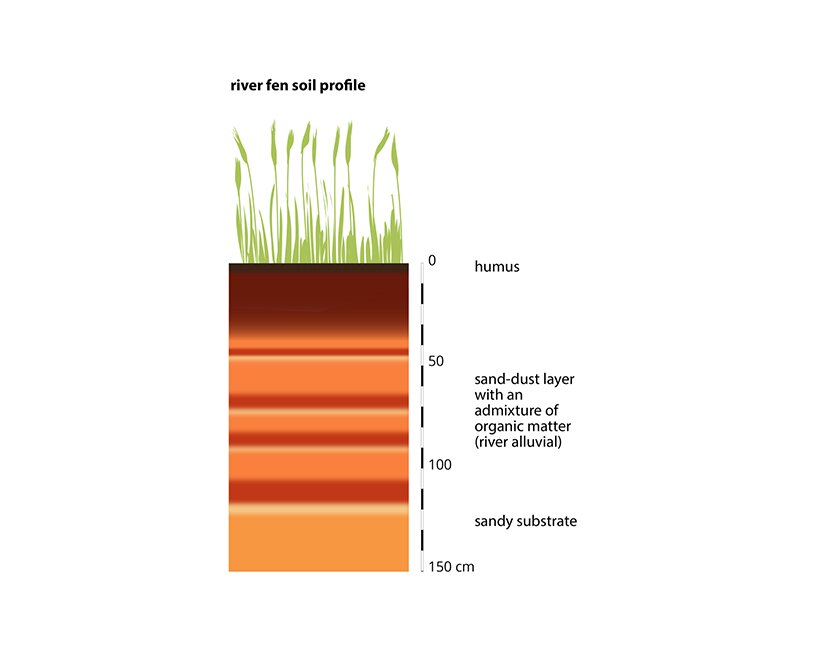
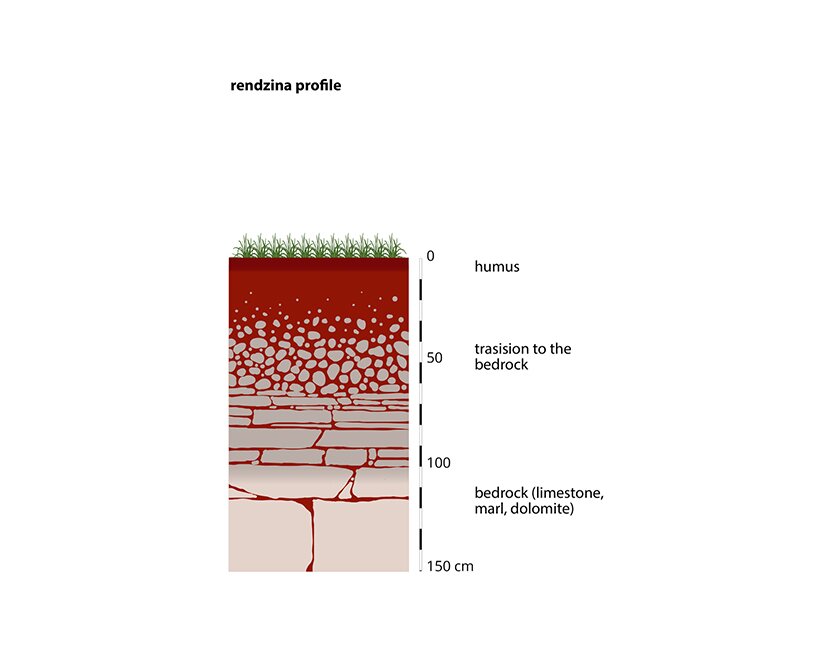
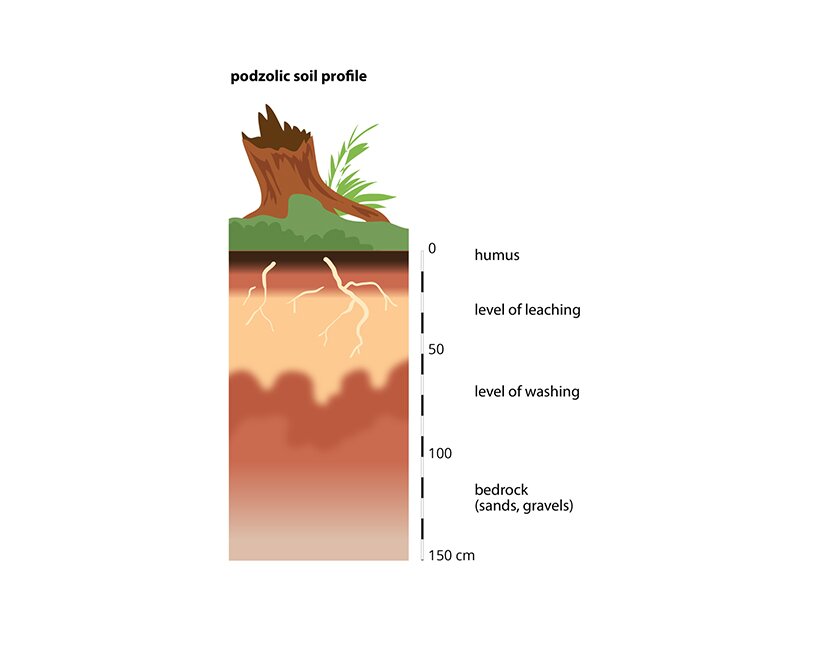
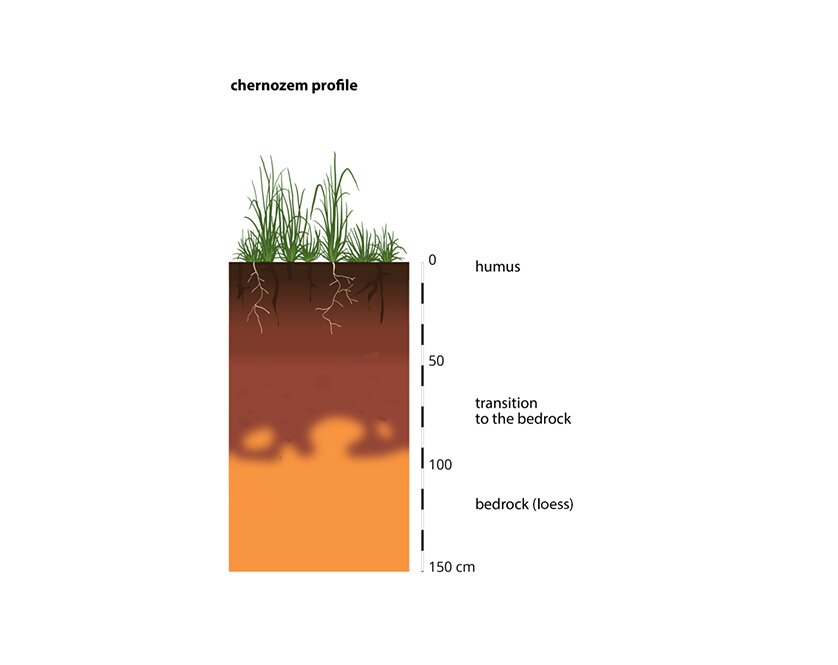
The diversity and zonation of climate, and with it the plant zones, resulted in the formation of climatic‑plant‑soil zones with characteristic soil types.
Main soil types
Read the text below about types of zone soils depending on climatic conditions. Give 3 examples of connections between climate, vegetation and soil of the globe.
Types of zone soils depending on climatic conditions
Zone: equatorial
Climatic conditions:hot climate and rainfall over 100 mm per month.
Examples of soil types: oxisol (red-yellow, rich in iron, poor in humus), latosol (red, rich in aluminium, manganese and iron, poor in humus).
Zone: tropical (subequatorial)
Climatic conditions: rainy summer season and a period of drought.
Examples of soil types: cinnamon-red and dark red soils (rich in aluminium and iron, poor in humus).
Zone: tropical
Climatic conditions: dry and extremely dry climate.
Examples of soil types: greyzems (poor in humus, close to initial), aridisols.
Zone: Mediterranean (subtropical)
Climatic conditions: dry, hot summers and mild rainy winters.
Examples of soil types: cinnamon soils (from limestone, fertile), terra rosa (red soil from limestone, rich in aluminium and iron, poor in humus).
Zone: temperate warm and humid
Climatic conditions: warm and rainy summers, and mild winters.
Examples of soil types: brown soils (on clay).
Zone:temperate chilly and humid
Climatic conditions:warm and rainy summers, and short and cold winters.
Examples of soil types: podzolic soils (on sands, poor in humus), brown soils (on clay, rich in humus), luvisol (on sands, poorer than brown soils).
Zone: temperate warm and dry
Climatic conditions: warm summers, dry and cold winters.
Examples of soil types: chernozem (on loess, very rich in humus and very fertile), chestnut soils (very fertile, too dry), greyzems (poor soils, close to initial).
Zone:temperate, very chilly and humid
Climatic conditions: short and warm summers, long and cold winters.
Examples of soil types: podzolic soils (on sands, poor in humus).
Zone: polar
Climatic conditions: short and chilly summers, long and cold winters.
Examples of soil types: >tundra soil (poorly developed).
Regardless of the climatic‑plant‑soil zone, there are intrazonal soils. Examples of them are:
fen soils – formed during river floods in valleys and deltas; they are fertile and rich in humus;
rendzinas– formed on limestone substrates, mainly in temperate climates; they are rich in humus, fertile but difficult to do farming;
black soils – formed in areas of vanishing swamps and lakes; rich in humus, very fertile but difficult to do farming;
bog soils – formed in swamps, swamp drying increases their fertility;
mountain soils – they generally do not have a developed soil profile, low fertility.
It takes many years to grow the soil. Depending on the climate and rocks in the substrate, a layer of 1 cm thick soil can be formed even for 100‑500 years.
Exercises
Mark the correct answers.
- Soil organisms form a component of the soil.
- An important component of the soil are fragments of the parent rock.
- Water is never part of the soil.
- No gases are part of the soil.
Fill the gaps in the text by dragging each item to the correct place.
fragmentation, primary, soil organisms, soil-forming, parent, ingredients
Soil is formed as a result of a slow ............................ process involving the transformation of the ............................ rock into the soil.
This process takes place in two stages:
1............................. of the parent rock,
2. transformation of rock material into the soil with .............................
Select the real answers.
- Alluvial soils are formed in river valleys and deltas.
- The podzolic soils are classified as non-zonal soils.
- Boggy soils are the most fertile soils on Earth.
- Rendzina soils are formed on limestone rocks.
Keywords
soil, soil types, soil profile
Glossary
czynniki glebotwórcze - elementy środowiska przyrodniczego – klimat, wody, skała macierzysta, rzeźba terenu, organizmy oraz działalność człowieka mająca wpływ na powstawanie i rozwój gleb
gleba - zewnętrzna warstwa skorupy ziemskiej zawierająca cząstki mineralne, wodę, powietrze, organizmy glebowe oraz próchnicępróchnicę
okres wegetacji - część roku, w której roślinność może się rozwijać dzięki dostatecznej ilości wilgoci, światła i ciepła; w Polsce jest to okres ze średnią dobową temperaturą powietrza powyżej 5°C
profil gleby - pionowy przekrój przez glebę ukazujący jej budowę, rodzaj, grubość i wzajemny układ poziomów glebowych
próchnica - mieszanina szczątków organicznych w różnym stadium procesu rozkładu