Ilustracja do zadania przedstawia lód unoszący się na wodzie. Zastanów się,
jak to możliwe, że jedna substancja unosi się na powierzchni innej.
Ilustracja do zadania przedstawia lód unoszący się na wodzie. Zastanów się,
jak to możliwe, że jedna substancja unosi się na powierzchni innej.
Arrange a puzzle. What do you see in the picture? How is it possible that one substance is floating on the surface of another?
Task 1
Before you watch the screencast „States of matter: Oxygen” formulate a research question and hypotheses. Consider what has a higher density: solid or liquid? Why?
After the viewing, write down your observations and conclusions
RTAPpRQ8sbTGB
Analysis of the movie: “States of matter: Oxygen”. Research question (Uzupełnij). Hypothesis (Uzupełnij).
Analysis of the movie: “States of matter: Oxygen”. Research question (Uzupełnij). Hypothesis (Uzupełnij).
Analysis of the movie: “States of matter: Oxygen”
R1YJBgdJuNRVu
Film przedstawia, jak zachowują się cząsteczki różnych substancji o różnych stanach skupienia pod wpływem temperatury. Na filmie przedstawione jest na poziomie mikroświata uporządkowanie cząsteczek tlenu w różnych stanach skupienia. Początkowo cząsteczki tworzą ciało stałe, ukazane w temp. minus dwustu sześćdziesięciu stopni Celsjusza. Wówczas cząsteczki tworzą zwartą uporządkowaną strukturę, są blisko siebie. Następnie ukazany jest stan w temp. minus dwustu czterech stopniach Celsjusza. Cząsteczki tlenu są oddalone od siebie i poruszają się. Zajmują więcej przestrzeni. Mamy do czynienia ze stanem ciekłym. Następnie ukazano sytuację w temperaturze minus siedemdziesiąt dziewięć stopni Celsjusza. Jest to stan gazowy. Cząsteczki tlenu są daleko od siebie. Wypełniają całą objętość naczynia. Następnie na filmie pokazano, co dzieje się z cząsteczkami podczas podgrzewania naczynia, w którym się znajdują. Przy wzroście temperatury, aż do plus trzydziestu jeden stopni Celsjusza. Im wyższa temperatura tym cząsteczki szybciej się poruszają we wszystkich kierunkach. Później pokazano co dzieje się podczas obniżania temperatury. Ruch staje się coraz wolniejszy, rośnie stopień uporządkowania struktury. Następuje przejście ze stanu skupienia gazowego, poprzez ciekły do stałego stanu skupienia.
Film przedstawia, jak zachowują się cząsteczki różnych substancji o różnych stanach skupienia pod wpływem temperatury. Na filmie przedstawione jest na poziomie mikroświata uporządkowanie cząsteczek tlenu w różnych stanach skupienia. Początkowo cząsteczki tworzą ciało stałe, ukazane w temp. minus dwustu sześćdziesięciu stopni Celsjusza. Wówczas cząsteczki tworzą zwartą uporządkowaną strukturę, są blisko siebie. Następnie ukazany jest stan w temp. minus dwustu czterech stopniach Celsjusza. Cząsteczki tlenu są oddalone od siebie i poruszają się. Zajmują więcej przestrzeni. Mamy do czynienia ze stanem ciekłym. Następnie ukazano sytuację w temperaturze minus siedemdziesiąt dziewięć stopni Celsjusza. Jest to stan gazowy. Cząsteczki tlenu są daleko od siebie. Wypełniają całą objętość naczynia. Następnie na filmie pokazano, co dzieje się z cząsteczkami podczas podgrzewania naczynia, w którym się znajdują. Przy wzroście temperatury, aż do plus trzydziestu jeden stopni Celsjusza. Im wyższa temperatura tym cząsteczki szybciej się poruszają we wszystkich kierunkach. Później pokazano co dzieje się podczas obniżania temperatury. Ruch staje się coraz wolniejszy, rośnie stopień uporządkowania struktury. Następuje przejście ze stanu skupienia gazowego, poprzez ciekły do stałego stanu skupienia.
Film przedstawia, jak zachowują się cząsteczki różnych substancji o różnych stanach skupienia pod wpływem temperatury. Na filmie przedstawione jest na poziomie mikroświata uporządkowanie cząsteczek tlenu w różnych stanach skupienia. Początkowo cząsteczki tworzą ciało stałe, ukazane w temp. minus dwustu sześćdziesięciu stopni Celsjusza. Wówczas cząsteczki tworzą zwartą uporządkowaną strukturę, są blisko siebie. Następnie ukazany jest stan w temp. minus dwustu czterech stopniach Celsjusza. Cząsteczki tlenu są oddalone od siebie i poruszają się. Zajmują więcej przestrzeni. Mamy do czynienia ze stanem ciekłym. Następnie ukazano sytuację w temperaturze minus siedemdziesiąt dziewięć stopni Celsjusza. Jest to stan gazowy. Cząsteczki tlenu są daleko od siebie. Wypełniają całą objętość naczynia. Następnie na filmie pokazano, co dzieje się z cząsteczkami podczas podgrzewania naczynia, w którym się znajdują. Przy wzroście temperatury, aż do plus trzydziestu jeden stopni Celsjusza. Im wyższa temperatura tym cząsteczki szybciej się poruszają we wszystkich kierunkach. Później pokazano co dzieje się podczas obniżania temperatury. Ruch staje się coraz wolniejszy, rośnie stopień uporządkowania struktury. Następuje przejście ze stanu skupienia gazowego, poprzez ciekły do stałego stanu skupienia.
Recall the basic knowledge about the mass, density and volume of the substance.
Mass
Expand the next tabs and read information about mass.
RXOqK9rUBHqyS
What is mass? Mass reflects the amount of matter determined by the scale., Unit of mass The mass unit in the SI is a kilogram. Mass and weight The body with the same mass – depending on the force of gravity and the place of measurement – may have different weight. The gravity on the Moon is lower than on Earth, so the astronaut’s weight is lower on the Moon. The unit of weight (force of gravity) is Newton (N).
What is mass? Mass reflects the amount of matter determined by the scale., Unit of mass The mass unit in the SI is a kilogram. Mass and weight The body with the same mass – depending on the force of gravity and the place of measurement – may have different weight. The gravity on the Moon is lower than on Earth, so the astronaut’s weight is lower on the Moon. The unit of weight (force of gravity) is Newton (N).
Expand the next tabs and read information about mass.
What is mass Mass reflects the amount of matter determined by the scale.
Unit of mass The mass unit in the SI is a kilogram.
Mass and weight The body with the same mass – depending on the force of gravity and the place of measurement – may have different weight. The gravity on the Moon is lower than on Earth, so the astronaut’s weight is lower on the Moon. The unit of weight (force of gravity) is Newton (N).
Volume
Expand the next tabs and recall the information about volume.
RuZPlBOtFIXXZ
Volume of liquid The volume of liquid is measured using graduated glassware. In the laboratory, measuring cylinders and pipettes are used for this purpose, and the unit is a cubic decimetre (dm3). At home, we can use glasses or spoons. The following are examples of approximate volume conversion rates., Volume of gases The volume of gases depends on the size of their "packaging" because the gases fill up all of the available space. For example, when drinking water from a bottle, the air takes up the empty space. The empty 1 litre bottle contains a litre of air., Volume of solids with regular shapes The volume of solids with regular shapes can be calculated by knowing their dimensions.
The volume of cube is calculated using the formula:
fau równa się a trzy (V=a3), and the volume of cuboid – using the formula: fau równa się a razy be razy ce (V=a⋅b⋅c), Volume of solids with irregular shape Volume of solids with irregular shape can be determined by immersing this object in a cylinder filled with water. The volume is a difference between the final volume (after immersing the object) and the initial volume of water in the cylinder.
Volume of liquid The volume of liquid is measured using graduated glassware. In the laboratory, measuring cylinders and pipettes are used for this purpose, and the unit is a cubic decimetre (dm3). At home, we can use glasses or spoons. The following are examples of approximate volume conversion rates., Volume of gases The volume of gases depends on the size of their "packaging" because the gases fill up all of the available space. For example, when drinking water from a bottle, the air takes up the empty space. The empty 1 litre bottle contains a litre of air., Volume of solids with regular shapes The volume of solids with regular shapes can be calculated by knowing their dimensions.
The volume of cube is calculated using the formula:
fau równa się a trzy (V=a3), and the volume of cuboid – using the formula: fau równa się a razy be razy ce (V=a⋅b⋅c), Volume of solids with irregular shape Volume of solids with irregular shape can be determined by immersing this object in a cylinder filled with water. The volume is a difference between the final volume (after immersing the object) and the initial volume of water in the cylinder.
Expand the next tabs and recall the information about volume.
Volume of liquid The volume of liquid is measured using graduated glassware. In the laboratory, measuring cylinders and pipettes are used for this purpose, and the unit is a cubic decimetre (dm3). At home, we can use glasses or spoons. The following are examples of approximate volume conversion rates.
Volume of gases The volume of gases depends on the size of their "packaging" because the gases fill up all of the available space. For example, when drinking water from a bottle, the air takes up the empty space. The empty 1 litre bottle contains a litre of air.
Volume of solids with regular shapes The volume of solids with regular shapes can be calculated by knowing their dimensions.
The volume of cube is calculated using the formula:
V=a3, and the volume of cuboid – using the formula: V=a⋅b⋅c
Volume of solids with irregular shape Volume of solids with irregular shape can be determined by immersing this object in a cylinder filled with water. The volume is a difference between the final volume (after immersing the object) and the initial volume of water in the cylinder.
Density
Expand the next tabs and read information about density.
RYs0gfWwt3bbH
What is density? Density d is relation between the mass m of the substance and the volume V it occupies. It is expressed by the formula: density is equal to mass kg divide to volume m3, de równa się em dzielone na fau (d = m / v).
Density of solids and liquids The usual unit of density of solids and liquids is gram divided to cm3.
Density of gases. The usual unit of density of gases is g divided to dm3.
Chemical and physical symbol, Chemists usually mark density with a symbol d (English density), and physicist mark it with Greek letter ρ (ro).
What determines the density of the substance The density of the substance depends on: temperature – it usually decreases with increasing temperature; pressure – just for gases, because the impact of pressure on liquids and solids is so small that we omit it.
What is density? Density d is relation between the mass m of the substance and the volume V it occupies. It is expressed by the formula: density is equal to mass kg divide to volume m3, de równa się em dzielone na fau (d = m / v).
Density of solids and liquids The usual unit of density of solids and liquids is gram divided to cm3.
Density of gases. The usual unit of density of gases is g divided to dm3.
Chemical and physical symbol, Chemists usually mark density with a symbol d (English density), and physicist mark it with Greek letter ρ (ro).
What determines the density of the substance The density of the substance depends on: temperature – it usually decreases with increasing temperature; pressure – just for gases, because the impact of pressure on liquids and solids is so small that we omit it.
Expand the next tabs and read information about density.
What is density? Density () is relation between the mass () of the substance and the volume () it occupies. It is expressed by the formula:
Density of solids and liquids The usual unit of density of solids and liquids is
Density of gases The usual unit of density of gases is
Chemical and physical symbol Chemists usually mark density with a symbol (English ), and physicist mark it with Greek letter (ro).
What determines the density of the substance The density of the substance depends on:
temperature – it usually decreases with increasing temperature;
pressure – just for gases, because the impact of pressure on liquids and solids is so small that we omit it.
Calculations using mass, density and volume
Task 3
Watch the presentation „How to calculate the density, knowing the mass and volume?” and memorise how to solve these types of tasks.
RtwsfOfqm4kMe
Pierwsza strona prezentacji. Na niebieskim tle wyświetla się pytanie: Jak obliczyć gęstość, znając masę i objętość?, How to calculate the density, knowing the mass and volume?
Source: GroMar Sp. z o.o., licencja: CC BY-SA 3.0.
RytdRCGFhFvQb
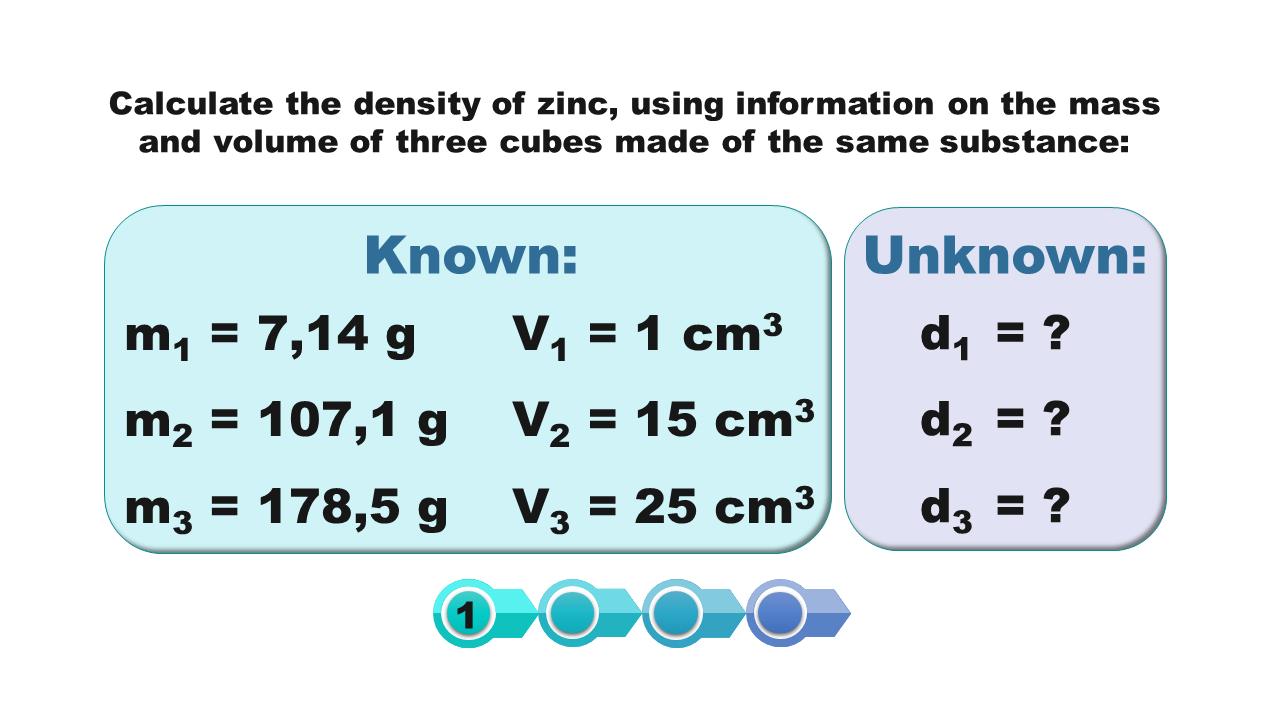
Grafika przedstawia sposób, jak obliczyć gęstość cynku, wykorzystując informacje o masie i objętości trzech kostek wykonanych z tej samej substancji, calculate the density of zinc, using information on the mass and volume of three cubes made of the same substance. Znane są dane, known: m1 = siedem przecinek 14 g, v1 = jeden cm3, m2 = sto siedem przecinek 1 gram, v2 = piętnaście cm3, m3 = sto siedemdziesiąt osiem przecinek pięć g, v3 = dwadzieścia pięć cm3. Nieznane są, unknown: d1, d2, d3.
This kind of task should be solved in a few steps. The first will be to carefully read the content of the task. Calculate the density of zinc, using information on the mass and volume of three cubes made of the same substance: mass of the first substance, m1 is 7,14 g. The mass of the second substance, m2 is 107,1 g, and the third, m3 - 178,5 g. We also have the data about the volume: the volume of the first substance V1 is 1 cm3; the volume of the second substance V2 is 15 cm3, and the third substance V3 - 25 cm3 We're looking for density data.
Source: GroMar Sp. z o.o., licencja: CC BY-SA 3.0.
RpeqSoHmftAOR
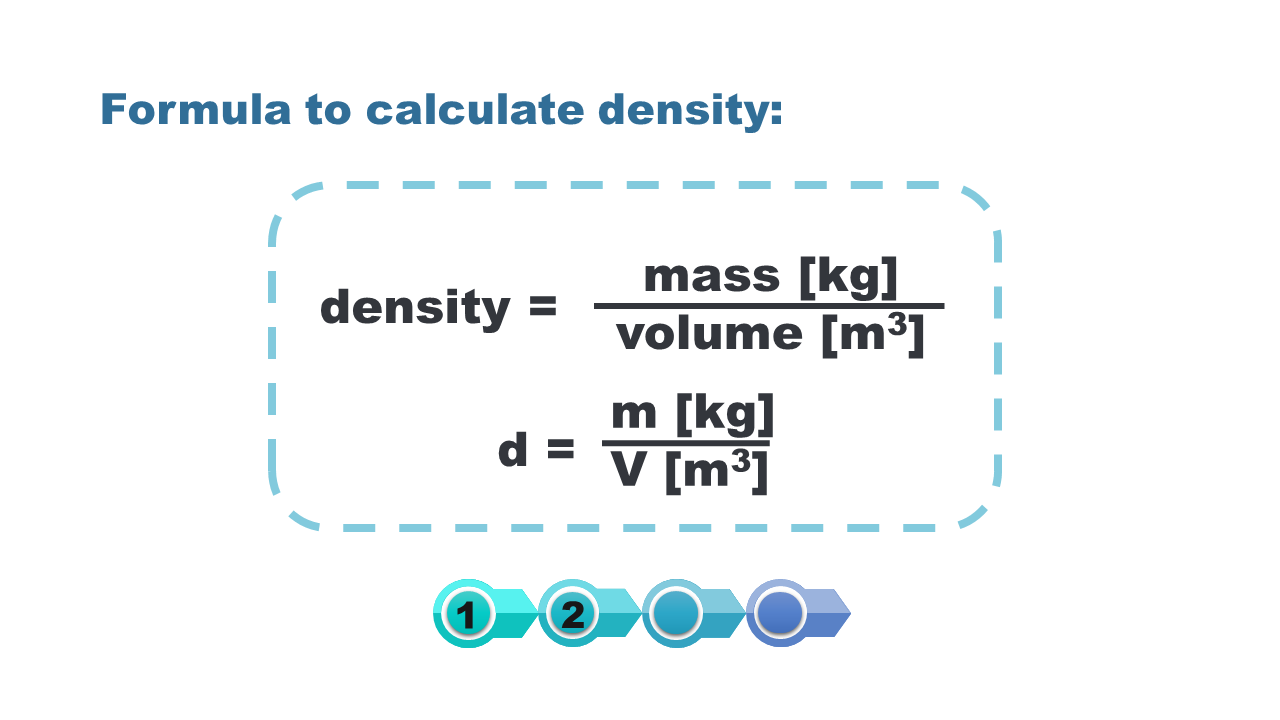
Grafika przedstawia wzór do obliczenia gęstości, formula to calculate density. density is equal to mass in kg dived to volume in m3. Wzór: de, czyli gęstość równa się em, czyli masa, dzielone na fau, czyli objętość.
Let's now write down the formula to calculate density.
Source: GroMar Sp. z o.o., licencja: CC BY-SA 3.0.
R1KpvhMRwxhJz
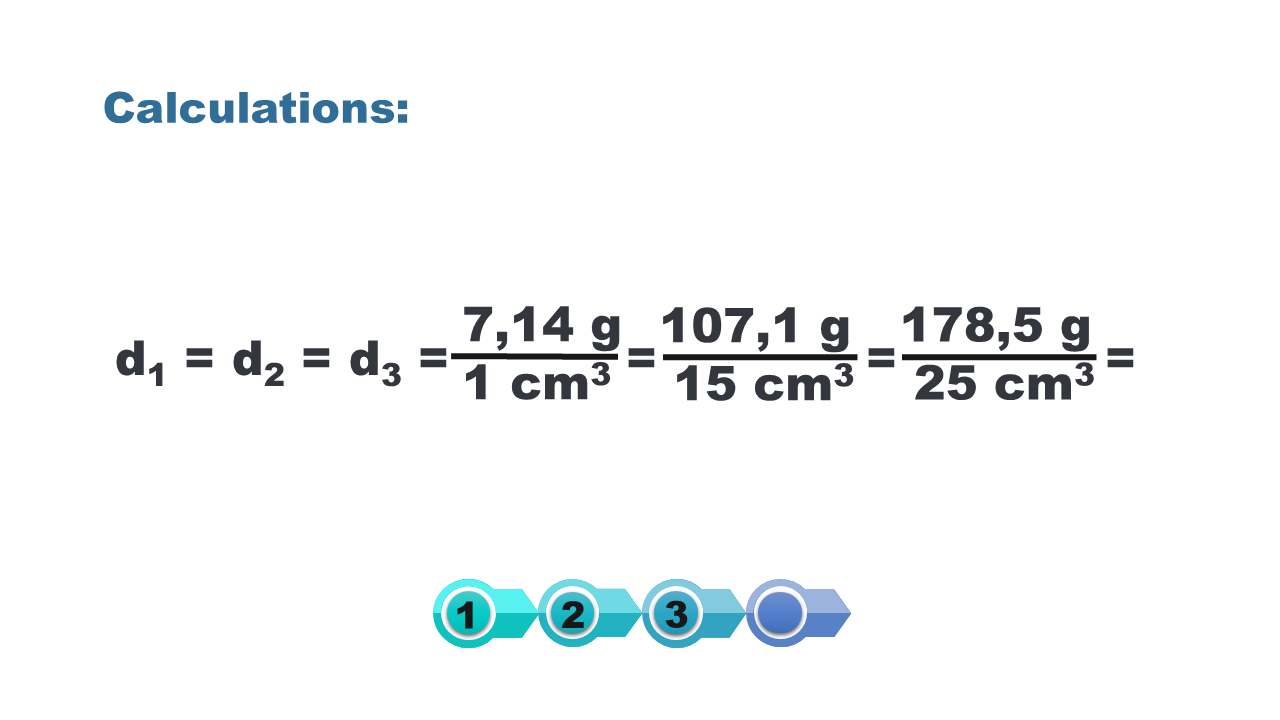
Grafika przedstawia kalkulację, gdzie pod elementy składowe wzoru do obliczenia gęstości podstawiono podane wcześniej, znane dane liczbowe.
Let's base the data under the formula and make calculations.
Source: GroMar Sp. z o.o., licencja: CC BY-SA 3.0.
R1V6JGjUxTVxA
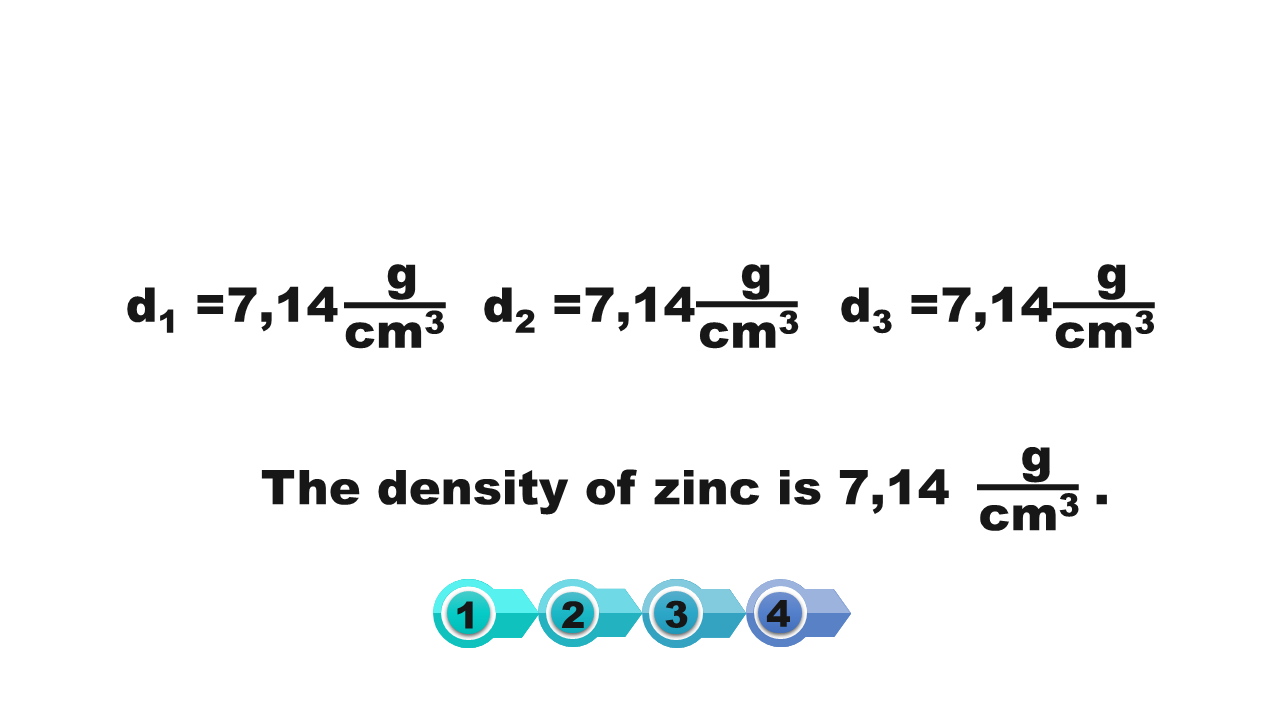
Grafika przedstawia zestawienie wyliczeń d1, d2, d3. Gęstość cynku, the density of zinc została wyliczona na siedem przecinek czternaście grama na centymetr sześcienny
We can now answer correctly. The density of zinc is 7,14 g/cm3.
Source: GroMar Sp. z o.o., licencja: CC BY-SA 3.0.
Exercise 2
What is the density of liquid with 60 ml of volume and 0.6 kg of mass?
Task 4
Watch the presentation „How to calculate the mass, knowing the volume and density?” and memorise how to calculate task with missing data.
RQQ5TGf7nKQFE
Pierwsza strona prezentacji. Na niebieskim tle wyświetla się pytanie: Jak obliczyć masę, znając objętość i gęstość substancji?, How to calculate the mass, knowing the volume and density of the substance?
Source: GroMar Sp. z o.o., licencja: CC BY-SA 3.0.
RND7Li7vAO2E1
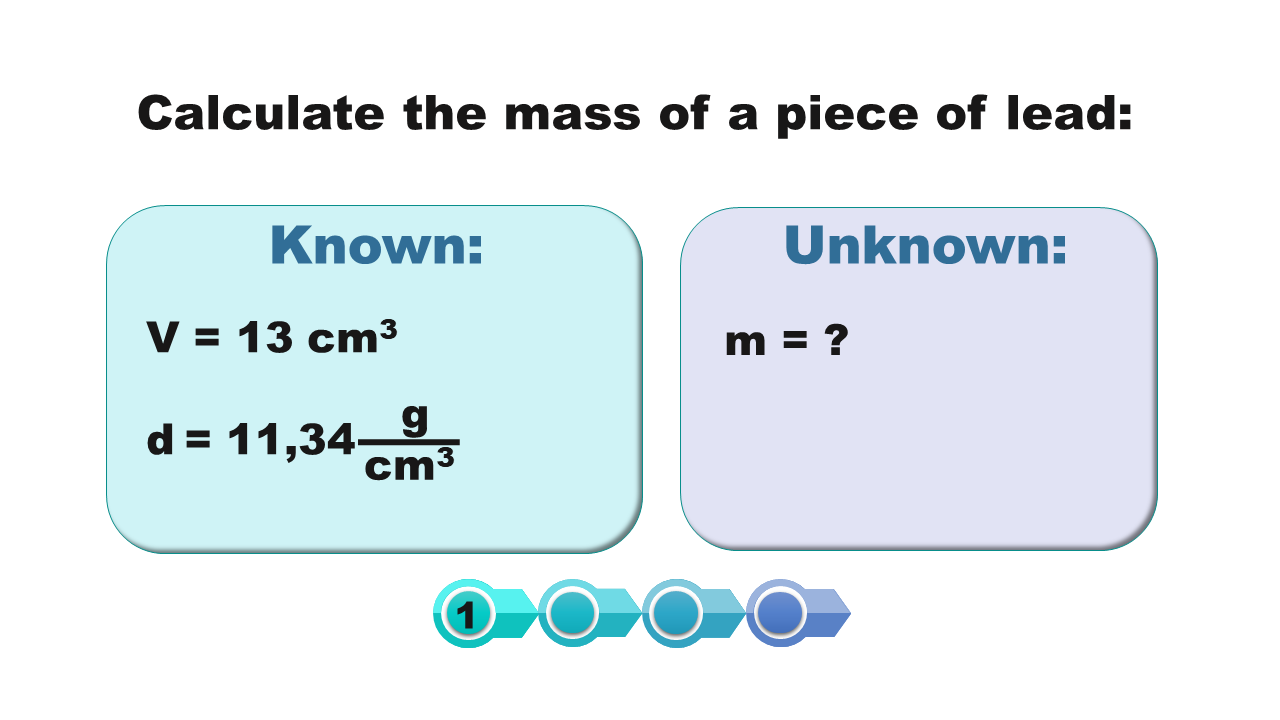
Grafika przedstawia polecenie oraz dane, oblicz masę kawałka ołowiu, calculate the mass a piece of lead. Znane, known są fau równa się trzynaście centymetrów sześciennych, de równa się jedenaście przecinek trzydzieści cztery gramy na centymetr sześcienny. Nieznana, unknown jest wartość masy em.
First, carefully read the content of the task. Calculate the mass of a piece of lead with a volume of 13 cm3, knowing that the density of lead is 11,34 g/cm3. We know volume, V = 13 cm3 and density, i.e. d = 11,34 g/cm3. We are looking for mass.
Source: GroMar Sp. z o.o., licencja: CC BY-SA 3.0.
R1F3cwvVHP4Cm
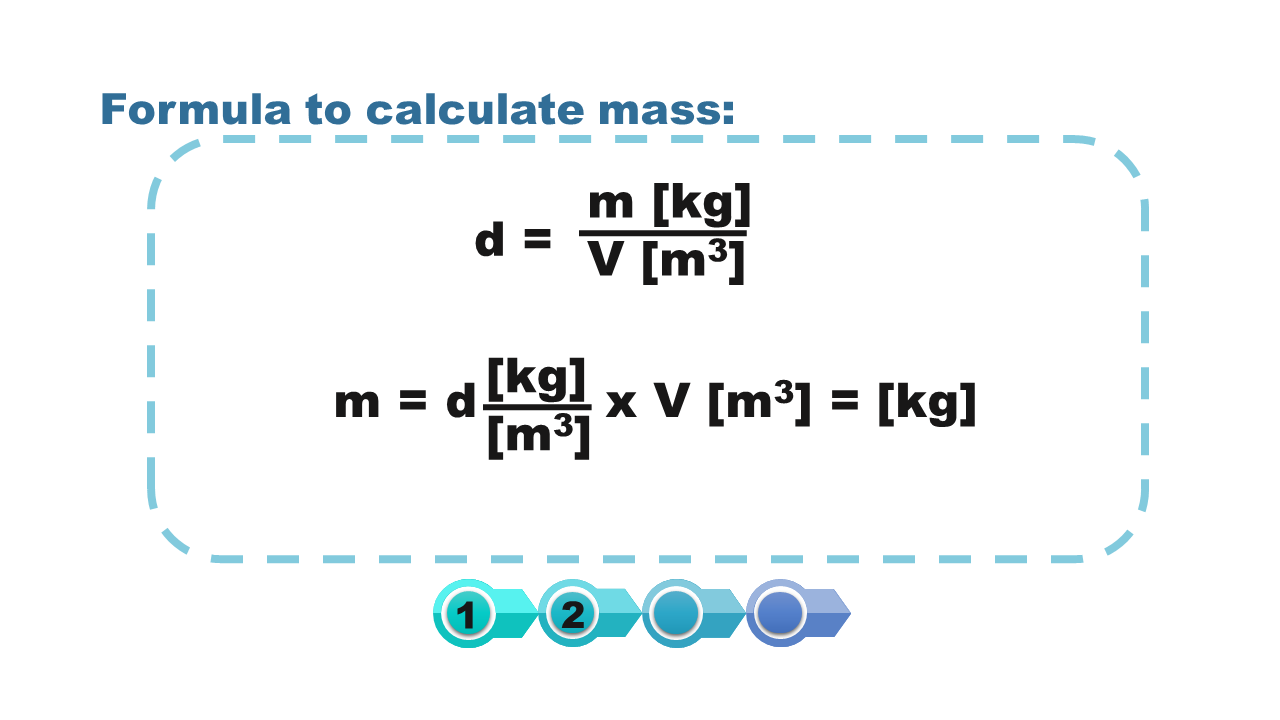
Grafika przedstawia wzór do obliczenia masy, formula to calculate mass. density is equal to mass in kg dived to volume in m3. de równa się masa w kilogramach podzielona przez objętość fau w metrach sześciennych. Zatem masa równać się będzie gęstość de (kilogram przez metr sześcienny) razy objętość (metr sześcienny), czyli da wartość w kilogramach.
Let's now write a formula to calculate the density and transform it so that we can calculate the mass.
Source: GroMar Sp. z o.o., licencja: CC BY-SA 3.0.
Rh8LyuAVTaedD
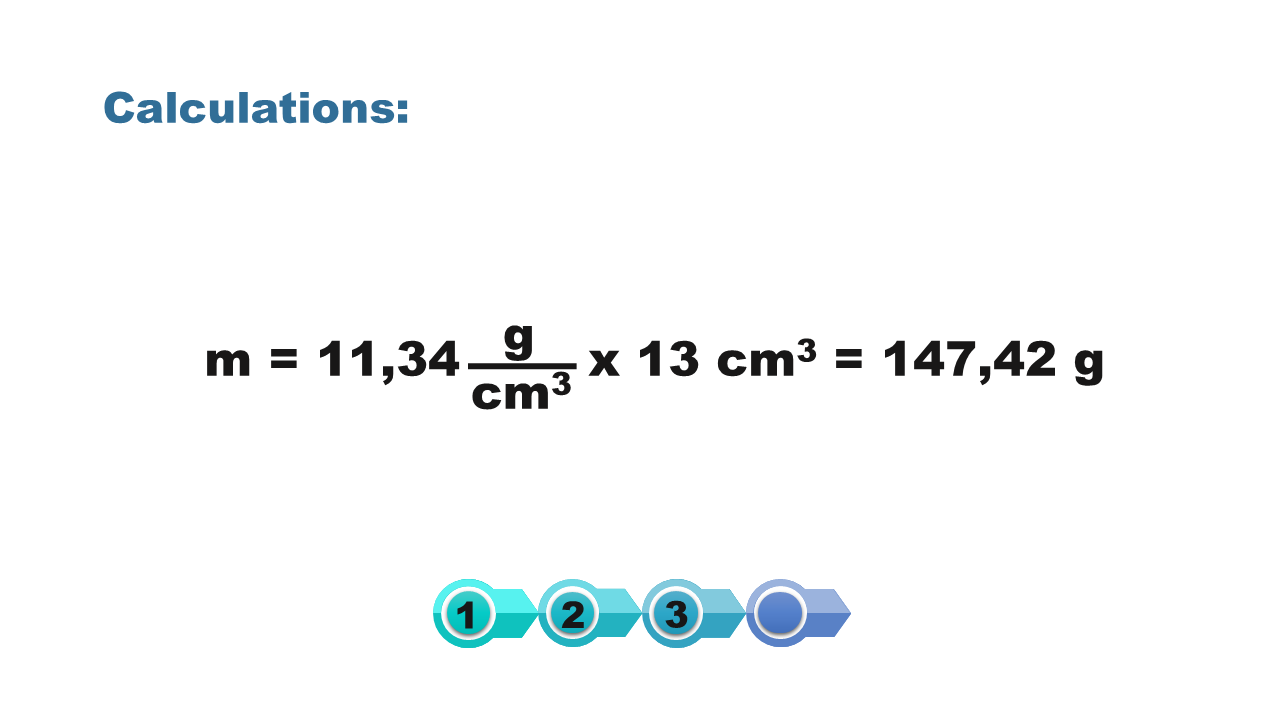
Grafika przedstawia obliczenie dla podanych wcześniej danych. Masa ołowiu wynosi sto czterdzieści siedem przecinek czterdzieści dwa gramy.
Let's now substitute the data and make calculations.
Source: GroMar Sp. z o.o., licencja: CC BY-SA 3.0.
R1cJEsAdnvCA7
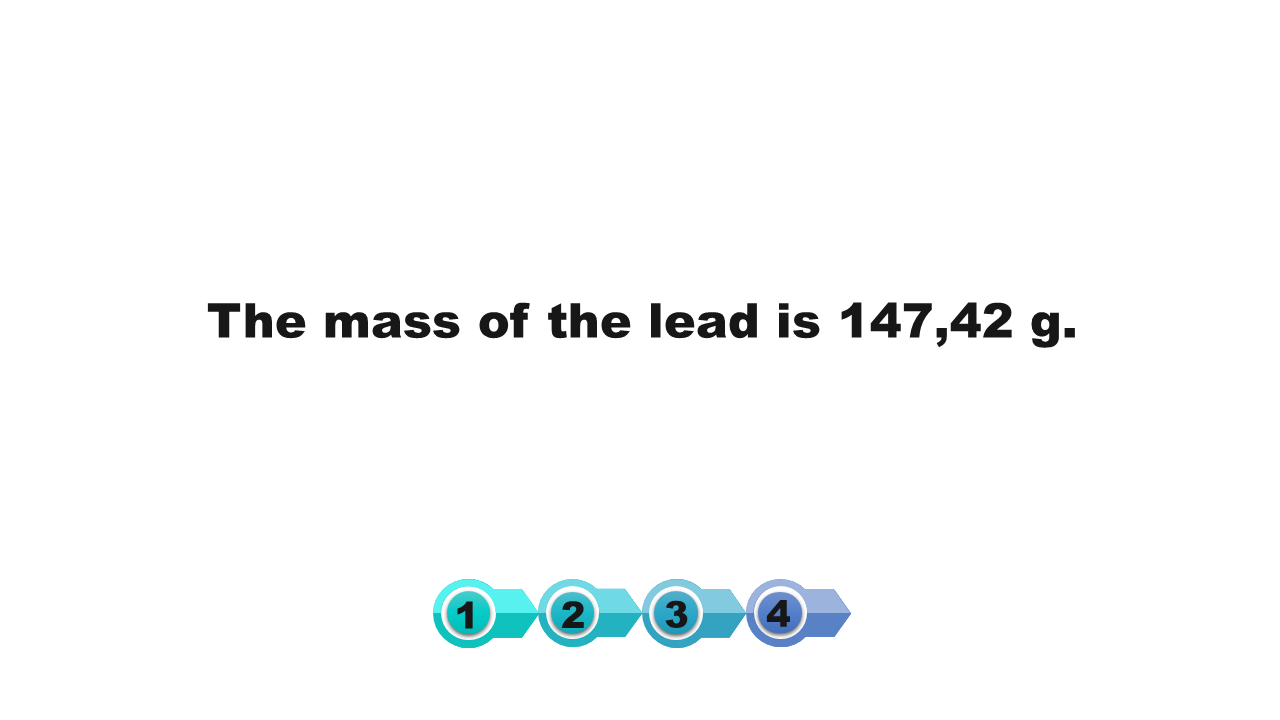
Grafika przedstawia wynik końcowy obliczeń. Masa ołowiu wynosi sto czterdzieści siedem przecinek czterdzieści dwa gramy.
We can now answer - the mass of the lead is 147,42 g.
Source: GroMar Sp. z o.o., licencja: CC BY-SA 3.0.
Exercise 3
Density of a material is . Calculate the mass of the cube with 3 cm edges made of this material. Provide the result in grams.
Task 5
Watch the presentation „How to calculate the volume, knowing the mass and density?” and memorise how to solve these types of tasks.
RCarvcbhqF6cd
Pierwsza strona prezentacji. Na niebieskim tle wyświetla się pytanie: Jak obliczyć objętość, znając masę i gęstość?, How to calculate the volume, knowing the mass and density?
Source: GroMar Sp. z o.o., licencja: CC BY-SA 3.0.
R1IjzYUp5PBKw
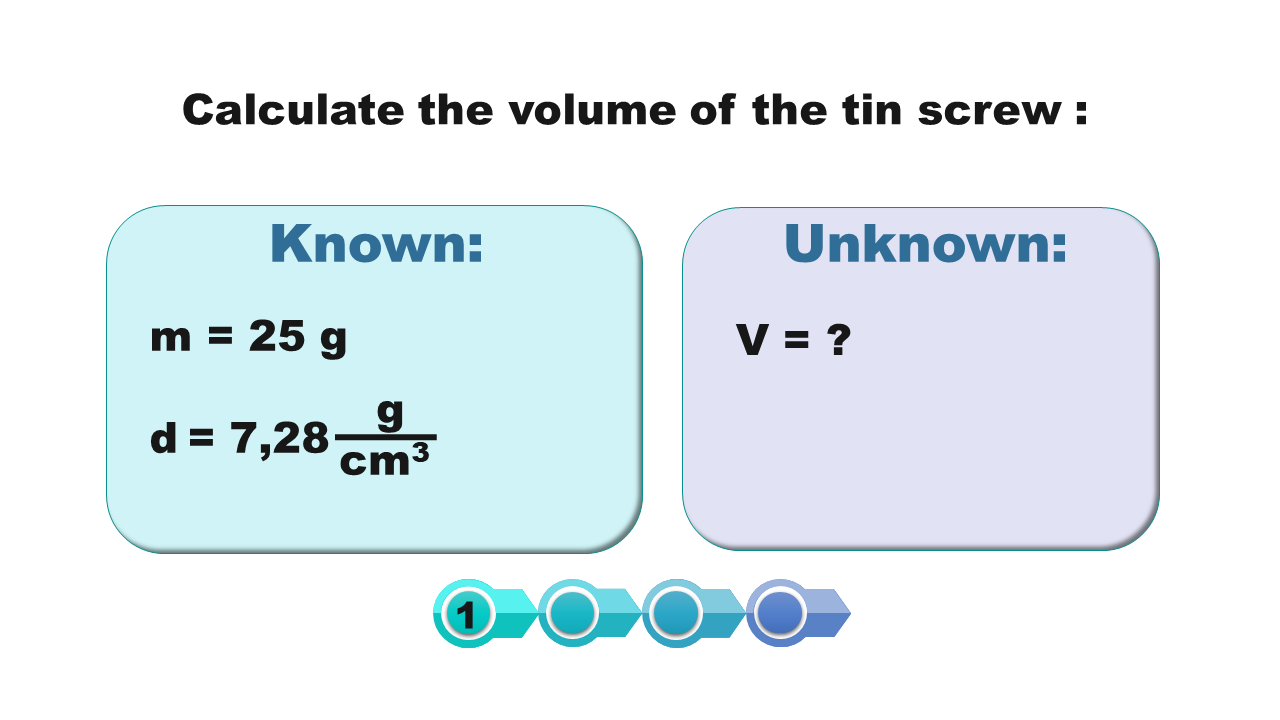
Grafika przedstawia dane liczbowe niezbędne do przeprowadzenia obliczeń. Masa próbki wynosi 25 g, gęstość próbki wynosi 7 przecinek 28 gramów na centymetr sześcienny.
First, we carefully read the content of the task. Calculate the volume of the tin bolt weighing 25 g, knowing that the tin density is 7,28 g/cm3. When calculating, record the result with the second decimal place. We have a given mass, which is 25 g and a density of 7,28 g/cm3
Source: GroMar Sp. z o.o., licencja: CC BY-SA 3.0.
RjnBtQWQ7pT6b
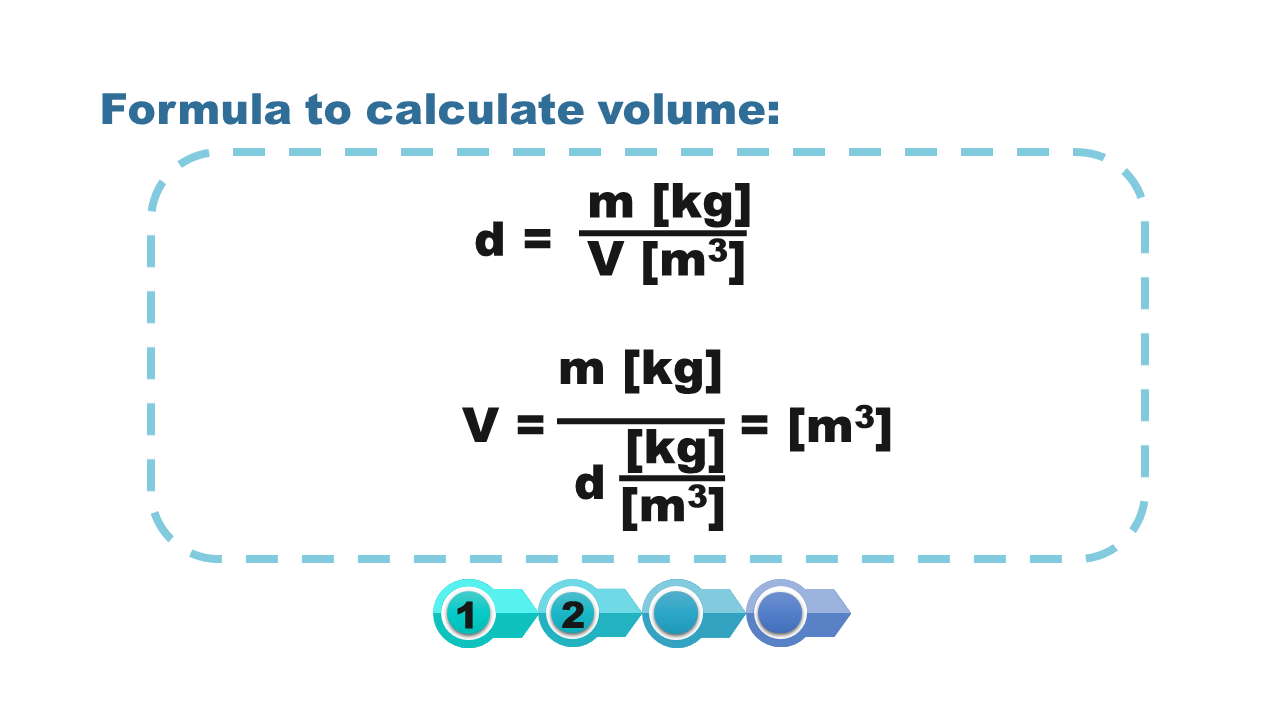
Grafika przedstawia wzór do obliczenia objętości, formula to calculate volume. Gęstość, density równa się masa w kilogramach podzielona przez objętość w metrach sześciennych. Zatem objętość fau równa się masa w kilogramach podzielona przez gęstość w kilogramach na metr sześcienny. Jednostka objętości w metrach sześciennych.
We now write down the formula to calculate density of the substance and transform it so that we can calculate the volume.
Source: GroMar Sp. z o.o., licencja: CC BY-SA 3.0.
R1HegOccWTgyu
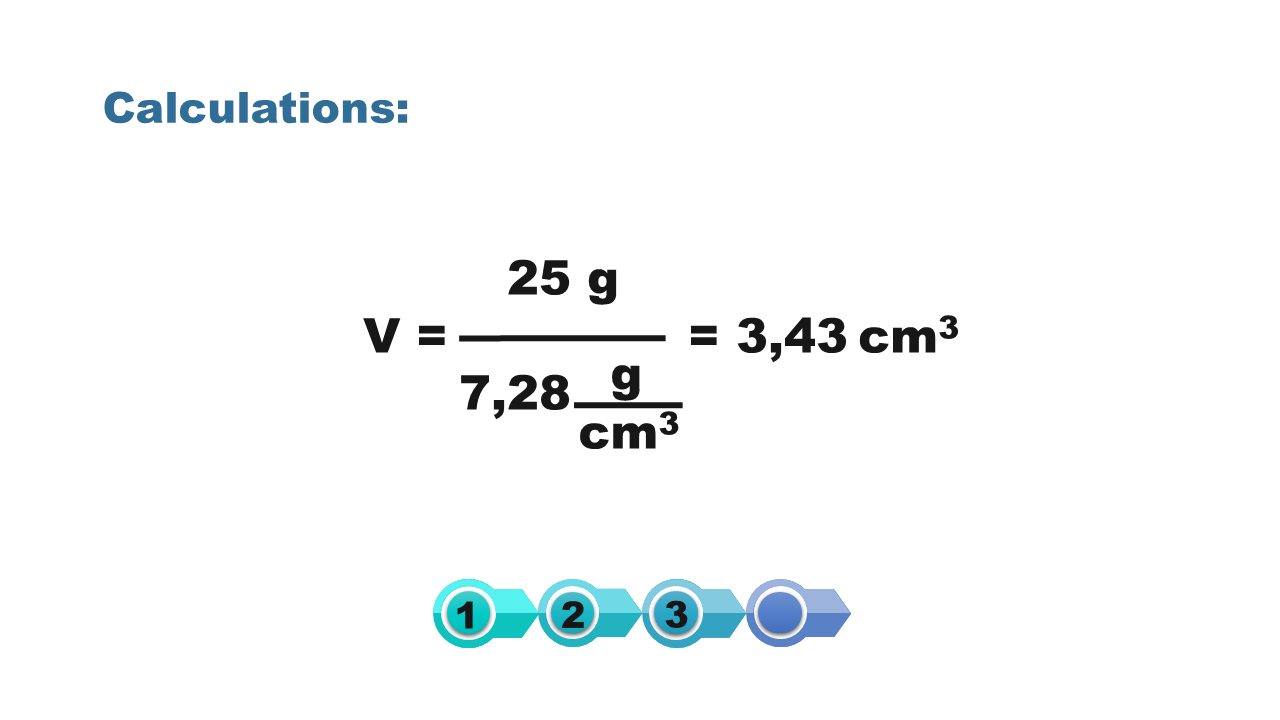
Grafika przedstawia obliczenia, calculations. Objętość równa się trzy przecinek czterdzieści trzy centymetry sześcienne.
We substitute the data and make calculations.
Source: Contentplus.pl sp. z o.o., licencja: CC BY-SA 3.0.
Rj9Lj7JaKnUJd
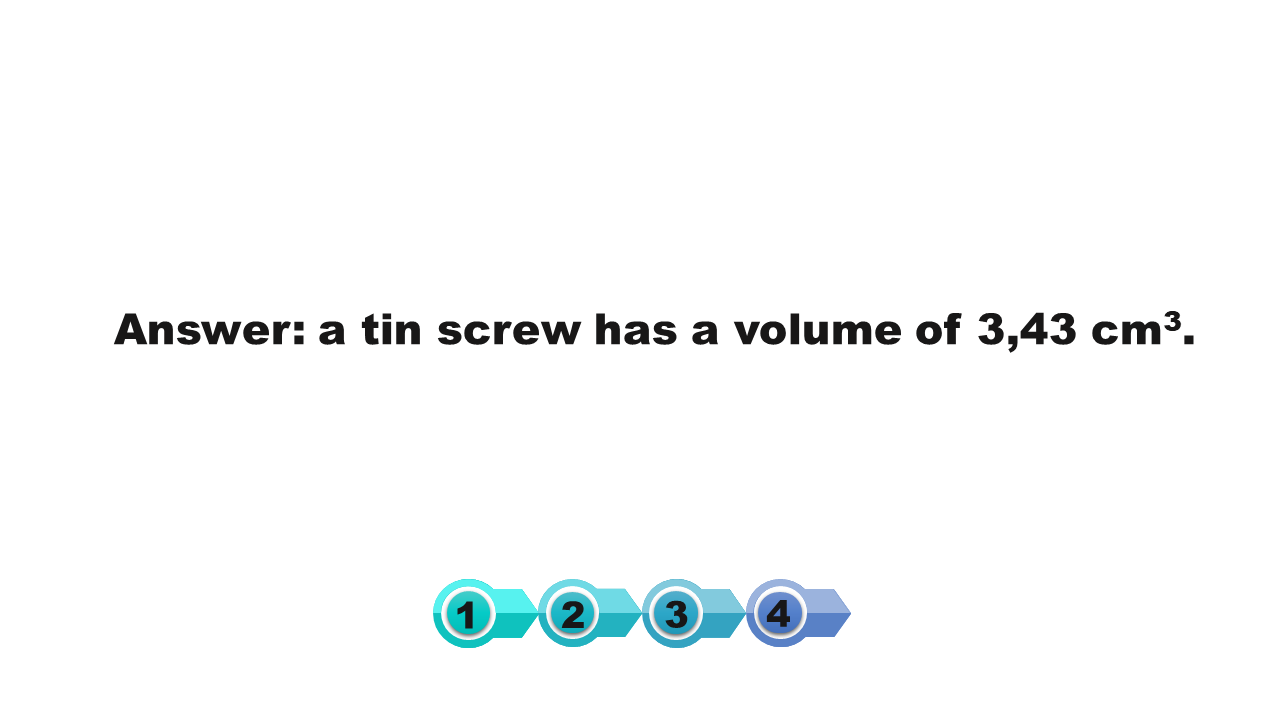
Grafika przedstawia odpowiedź, answer, mała śrubka ma objętość, a tin screw has a volume of trzy przecinek czterdzieści trzy centymetry sześcienne.
We can now answer: a 25 g tin screw has a volume of 3,43 cm3.
Source: GroMar Sp. z o.o., licencja: CC BY-SA 3.0.
Exercise 4
Calculate density of silver necklace with 15 g of mass, knowing that the density of silver is .
R1SFMXyT0Jm9G
Exercise 5
Knowing that the density of ammonia in normal conditions is 0.7 g/dm3, its mass in a 400 cm3 glass vessel is equal to: Możliwe odpowiedzi: 1. 28 g, 2. 2.8 g, 3. 0.28 g, 4. 0.028 g
Knowing that the density of ammonia in normal conditions is 0.7 g/dm3, its mass in a 400 cm3 glass vessel is equal to: Możliwe odpowiedzi: 1. 28 g, 2. 2.8 g, 3. 0.28 g, 4. 0.028 g
Knowing that the density of ammonia in normal conditions is 0.7 g/dm3, its mass in a 400 cm3 glass vessel is equal to:
28 g
2.8 g
0.28 g
0.028 g
Rxq9q4RSd86VW
Exercise 6
Knowing that the density of petrol in normal conditions is equal to 0.72 g/cm3, the volume of 500 g of this substance is equal to: Możliwe odpowiedzi: 1. 360 cm3, 2. 694.44 cm3, 3. 0.014 cm3, 4. 69.44 cm3
Knowing that the density of petrol in normal conditions is equal to 0.72 g/cm3, the volume of 500 g of this substance is equal to: Możliwe odpowiedzi: 1. 360 cm3, 2. 694.44 cm3, 3. 0.014 cm3, 4. 69.44 cm3
Knowing that the density of petrol in normal conditions is equal to 0.72 g/cm3, the volume of 500 g of this substance is equal to:
360 cm3
694.44 cm3
0.014 cm3
69.44 cm3
RgY0xCc1Yac8k
Exercise 7
Knowing that 50 m3 of air has a mass of 64.5 kg, the air density in normal conditions in g/cm3 is equal to: Możliwe odpowiedzi: 1. 0.00129 g/cm3, 2. 0.78 g/cm3, 3. 12.9 g/cm3, 4. 7.8 g/cm3
Knowing that 50 m3 of air has a mass of 64.5 kg, the air density in normal conditions in g/cm3 is equal to: Możliwe odpowiedzi: 1. 0.00129 g/cm3, 2. 0.78 g/cm3, 3. 12.9 g/cm3, 4. 7.8 g/cm3
Knowing that 50 m3 of air has a mass of 64.5 kg, the air density in normal conditions in g/cm3 is equal to:
0.00129 g/cm3
0.78 g/cm3
12.9 g/cm3
7.8 g/cm3
Summary
One of the physical properties of the substance is density.
Density is the value that characterizes a substance and its equal to the quotient of the mass and volume of a given substance.
We can determine the substance given object was made of by experimentally determining the density of it.
The density of a substance depends on the temperature – it generally decreases with increasing temperature.
R18Tcfx8PL0qw1
Grafika przedstawiająca tablicę szkolną, na której znajdują się zdania do dokończenia. Finish selected sentences. 1 It was easy for me (uzupełnij). 2 It was difficult for me (uzupełnij). 3 Today I learned (uzupełnij). 4 I understood that (uzupełnij). 5 It surprised me (uzupełnij). 6. Today I found out (uzupełnij). 7. I was interested in (uzupełnij). 8. I still have to repeat (uzupełnij).
Grafika przedstawiająca tablicę szkolną, na której znajdują się zdania do dokończenia. Finish selected sentences. 1 It was easy for me (uzupełnij). 2 It was difficult for me (uzupełnij). 3 Today I learned (uzupełnij). 4 I understood that (uzupełnij). 5 It surprised me (uzupełnij). 6. Today I found out (uzupełnij). 7. I was interested in (uzupełnij). 8. I still have to repeat (uzupełnij).
Source: GroMar Sp. z o.o., licencja: CC BY-SA 3.0.