The Germanic Tribes in the Ruins of the Empire
What Germanic tribes created their states on the former territories of the Western Roman Empire;
Where did the barbarians of the Roman Empire come from;
Who were the greatest Germanic chiefs;
Why did the collapse of the Western Roman Empire mark the end of Antiquity.
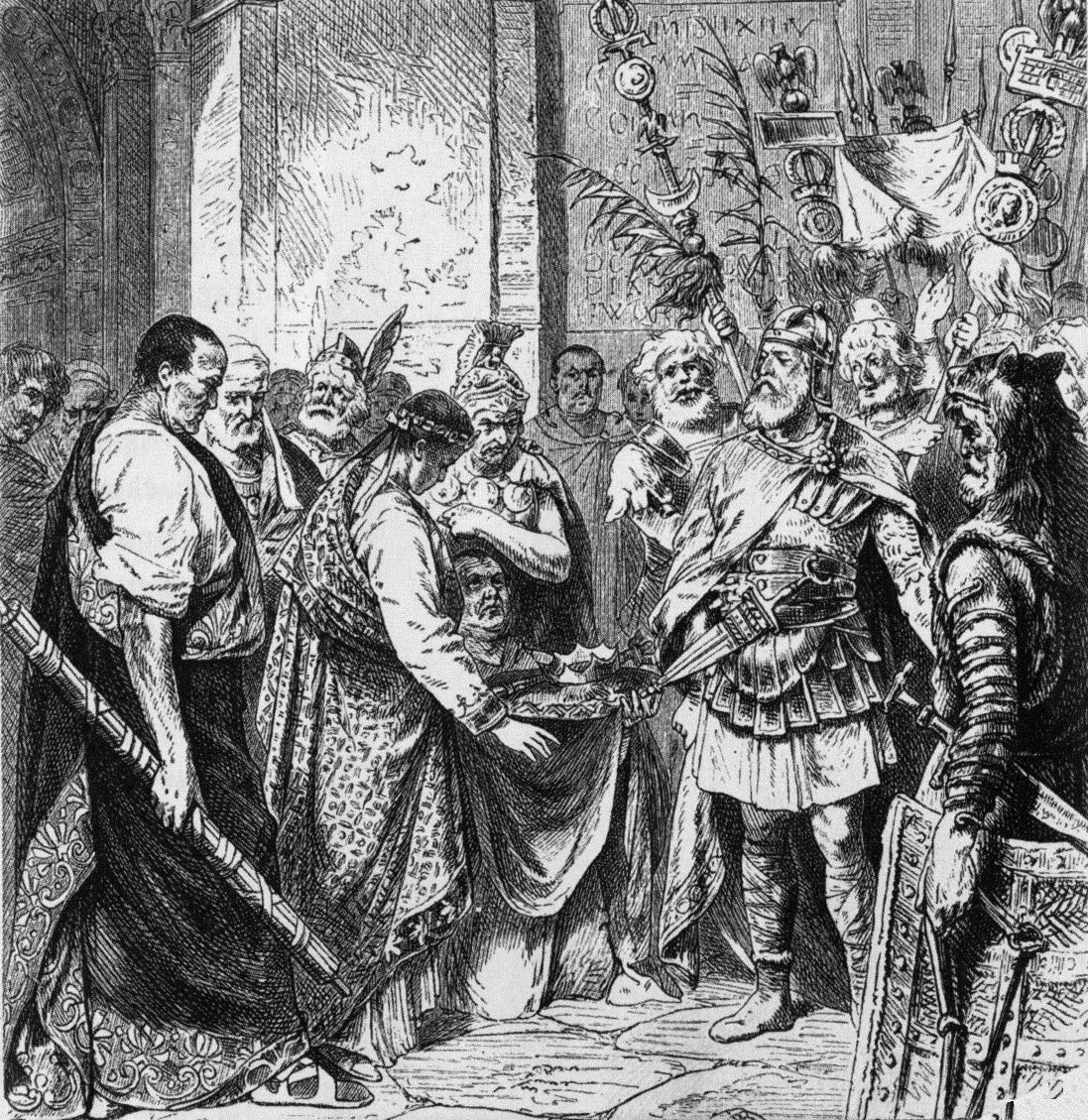
In 476, the Germanic chief Odoacer forced the Emperor of Rome, Romulus Augustulus, to abdicate. Even though the Roman Emperors were dependent on the Germanic leaders for many years by then, this event marked the end of the Empire’s existence. Centuries later, historians acknowledged this symbolic event as the end of Antiquity and the beginning of the Middle Ages.
The Germanic peoples that entered the territories of the Western Empire did not outnumber the Romans. They were aware that the only way to stay in power was to collaborate with the local populace. Owing to this, the legacy of Antiquity has not gone to waste entirely. With time, almost all of the invading tribes fully assimilated with the Roman populace. The Germanic culture changed as well. From the fifth century onwards, the tribes started to slowly undergo christianization, assuming mainly the Arian variant of the religion.
When deposing the Western Emperor, Odoacer, not wanting to provoke conflict with his Eastern counterpart, Zeno, sent the Imperial insignia to Constantinople, at the same time electing to abstain from requesting to be named the ruler in the West. Zeno, however, did not trust the Germanic leader, and sought to depose him. Thus, he entered into an agreement with the OstrogothOstrogoth King, Theodoric, raised at the court of Constantinople. In 493, he managed to defeat Odoacer’s rule, taking over the whole of Italy and, with the Emperor’s approval, founded his own state in Ravenna.
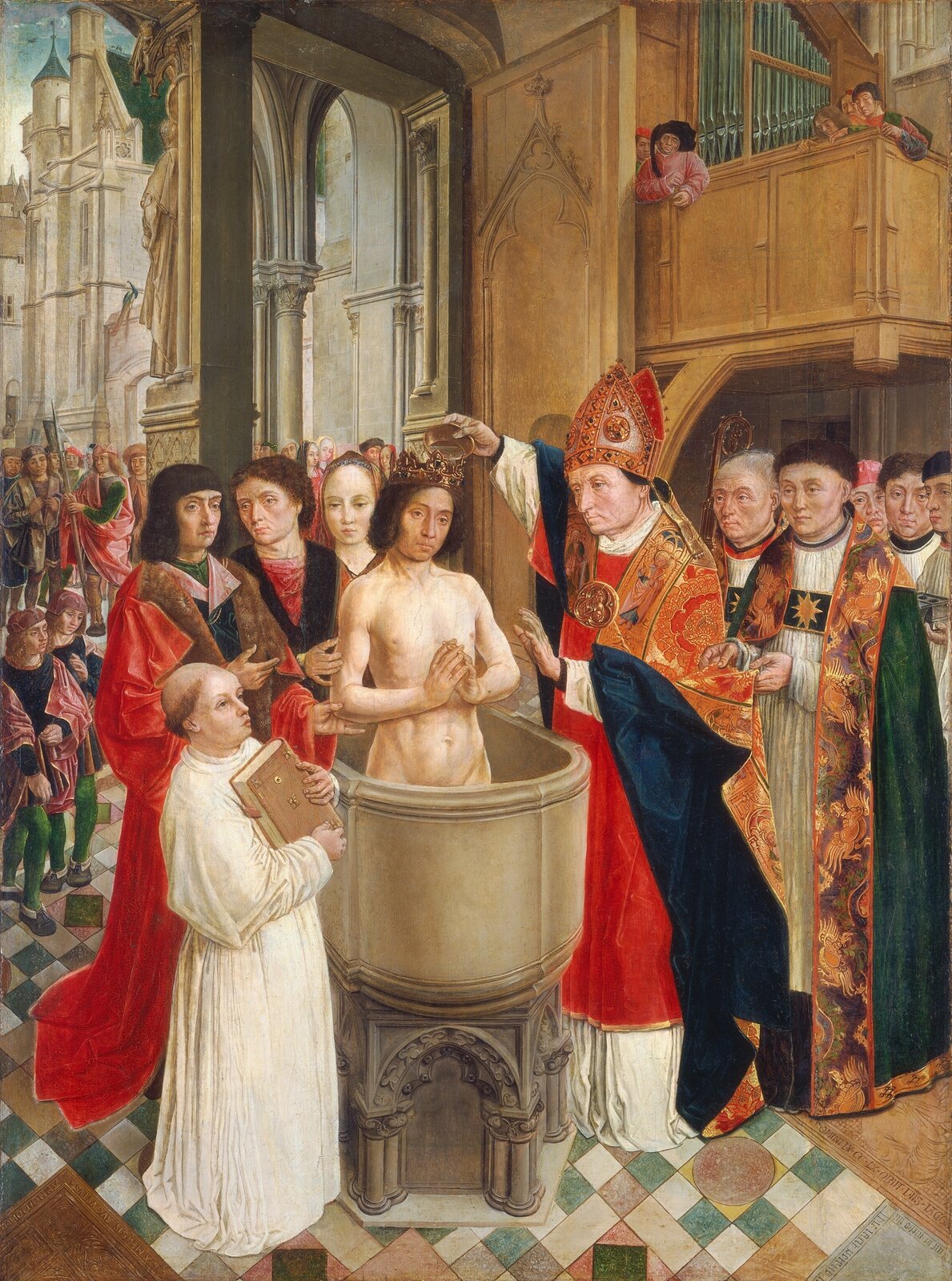
In the second half of the fifth century, the VisigothsVisigoths, seeing the collapse of the Empire and the weakness of the legal authorities, revolted and took over the territories of Gaul and the Iberian Peninsula. There, they created their own state, seeking to maintain separateness from the Romans. The situation shifted at the beginning of the sixth century, when they were defeated by the Franks during the expansion of the latter. Had it not been for the aid of the Ostrogoth King, Theodoric, the Visigoths’ state would probably have ceased to exist. From then onwards, the subsequent rulers sought to collaborate with the Roman subjects, e.g. by dropping Arianism in favor of Catholicism. The Muslim raids brought an end to their statehood, conquering nearly the entire Iberian Peninsula by 716. The Franks, brought to the left bank of Rhine by Romans, who appreciated their bravery, stayed loyal to the Imperial commanders even after losing touch with Rome itself. The situation changed only after Syagrius, the son of one of the Roman commanders, declared himself King. He did not have sufficient authority among the Franks, and his rule could not bring any order. Thus, Frankish kings of the Merovingian dynasty – Childeric, then Clovis – sought to take over. They collaborated closely with the Roman elites, a testament to which was the baptism of Clovis in 496. Aware of the military potential of the Roman locals, he admitted them to his army, gaining advantage over his competitors. In the end, Clovis managed to create a stable state, whose stability and power was based on strict cooperation and the collaborative rule of the Franks and Gallo‑RomansGallo‑Romans.
The VandalsVandals were a group of East Germanic tribes originating from Central Europe. At the beginning of the fifth century, led by King Genseric, they invaded the Roman Empire’s African provinces, where they founded their own state (439). Then, they began the conquest of the Mediterranean islands, quickly taking over Corsica, Sardinia, and Sicily. In 455, during one of their raids on Italy, they attacked and looted Rome. They applied the policy of completely isolating the Roman citizens from the Germanic tribesmen. Any attempts to assimilate or step away from the Germanic tradition were severely punished. This policy quickly proved ineffective; in consequence, as early as at the beginning of the sixth century, the Byzantine military invaded the state of the Vandals and caused it to collapse, displacing the defeated into the depths of the Empire.
The last place to be reached by the Germanic tribes was Britain. Deprived of the protection of the Roman legions, the romanized Britons, fearing the attack of the Picts and the Celts, called, according to the tradition, their cousins, the Germanic tribes. The tribes that supposedly responded to the call were the Saxons, the Angles, and the Jutes, who, in the course of the battles, set up their own kingdoms in Britain.
Determine the reasons behind the synthesis of cultures in Western Europe between the fifth and seventh centuries.
| The State | Equality of cultures and people | Separation of cultures and people | It survived until the eighth century. |
| Ostrogoth | □ | □ | □ |
| Visigoth | □ | □ | □ |
| Vandal | □ | □ | □ |
| Frank | □ | □ | □ |
Theodoric wanted to be perceived by his subjects who looked at the palace as:
- a ruler building a new Germanic identity for the Romans.
- a ruler of nomads who rejected Christianity.
- a king making references to the Roman models.
Indicate the correct way to end the sentence: The Anglo-Saxon culture was...
- a closed one.
- dominant in its relation with other cultures.
- open to various cultural influences.
Study the information concerning the Vandal sack of Rome in 455.
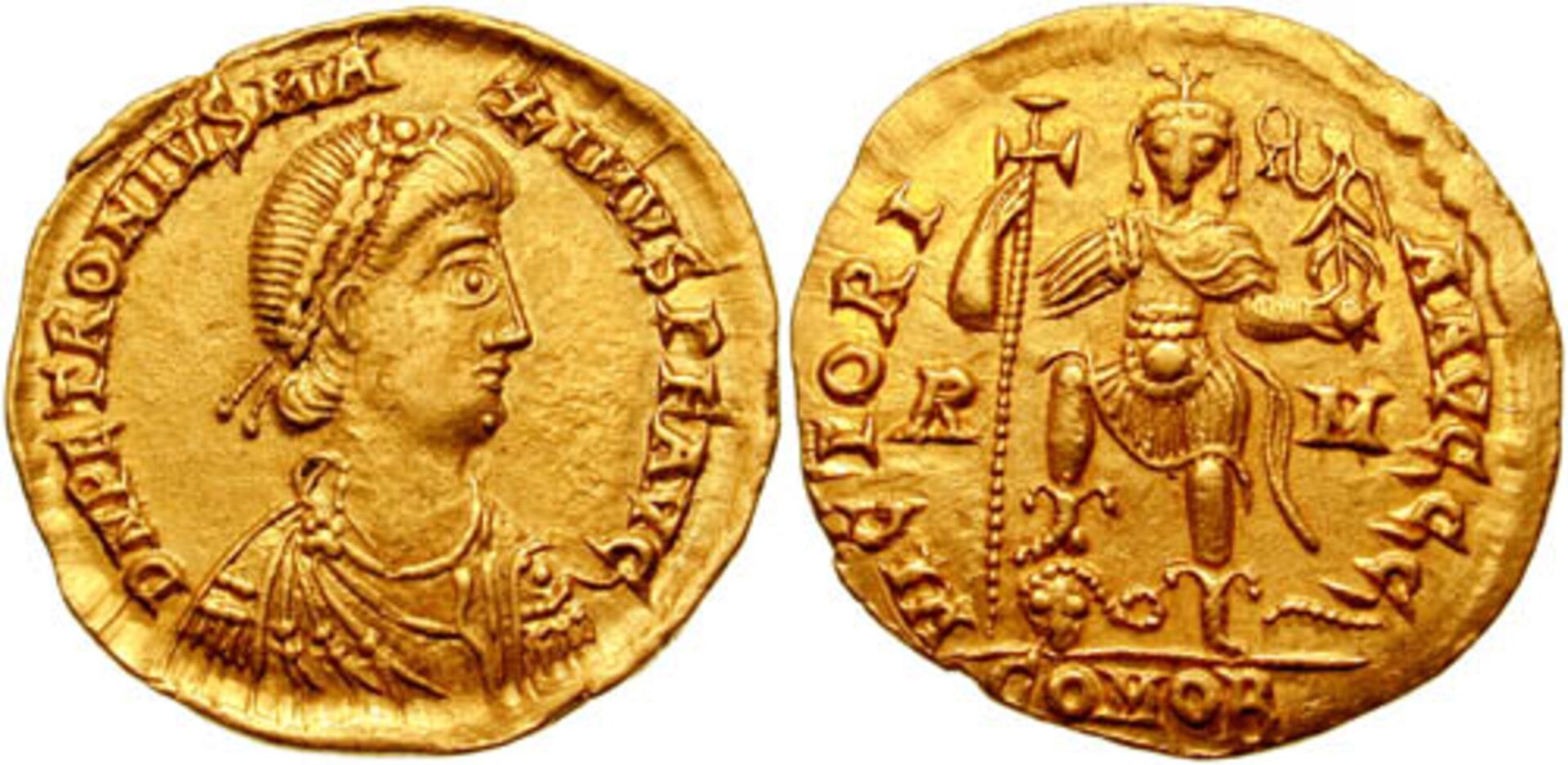
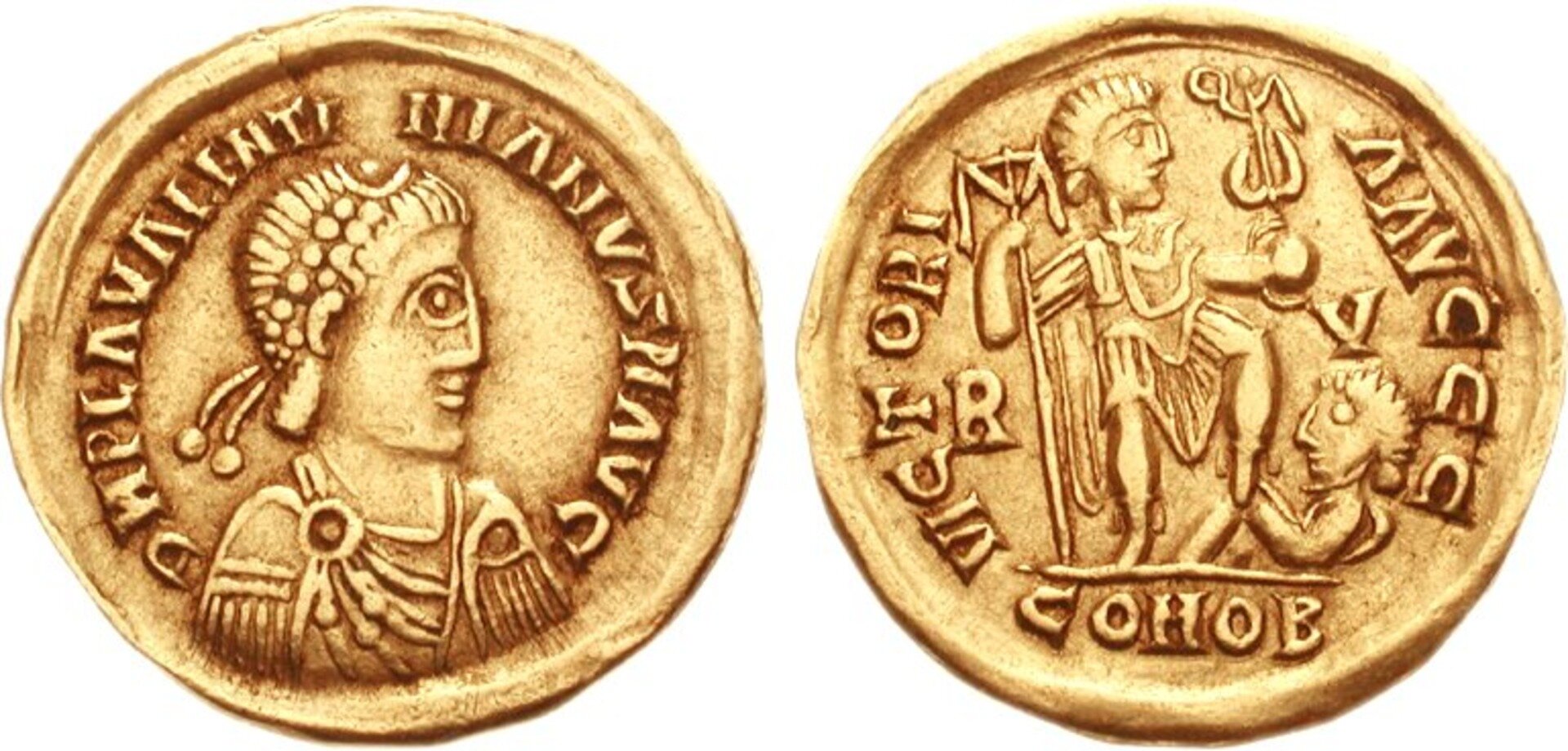
Compare the depictions on the Roman and Visigoth coins. Show the similarities and differences. What seems to prevail?
on the reverse side, Roma is holding a cross, Latin writing on the coin, the likeness of the emperor on the face of the coin, the depicted characters look to the left, the depiction of Roma placing her foot on the defeated enemy on the reverse side
| Similarities | |
|---|---|
| Differences |
Keywords
Migration Period, Limes, Arians
Glossary
Wielka wędrówka ludów – migracja plemion barbarzyńskich na tereny Cesarstwa Rzymskiego w okresie od IV do VI w. Doprowadziła do licznych zmian etnicznych w Europie przyczyniając się do upadku cesarstwa zachodniorzymskiego.
Limes – umocnienia i fortyfikacje na granicach cesarstwa rzymskiego.
Arianie – wcześni chrześcijanie, wyznawcy poglądów Ariusza. Odrzucali dogmat o Trójcy świętej i negowali boskość Jezusa.
Mauzoleum – monumentalny i bogato zdobiony grobowiec najczęściej przywódcy lub władcy.
Galorzymianie – zromanizowani Galowie, czyli ludność zamieszkująca tereny dzisiejszej Francji, Belgii i północnych Włoch.
Wizygoci – lud pochodzenia germańskiego. W V w. utworzyli państwo na części Półwyspu Iberyjskiego i południowo‑zachodniej Galii.
Ostrogoci – lud pochodzenia germańskiego przybyły na tereny cesarstwa zachodniorzymskiego prawdopodobnie z południowego wybrzeża Morza Bałtyckiego i Skandynawii.
Wandalowie – grupa plemion germańskich wywodząca się z Europy środkowej. Na początku V wieku założyli państwo na wybrzeżu Afryki Północnej ze stolicą w Kartaginie. W 455 r. złupili Rzym. Od bezmyślnego zniszczenia przez nich Rzymu ukuto termin wandalizm.