Crisis in the Church
what the Reformation was;
what opinions Martin Luther propagated and what results of his activity were.
One of factors shaping early modern period was the reformationreformation. It was a religious movement which aimed at “healing” Christianity, but in practice it was aimed against dogmas proclaimed by the Church.
This movement had also social and political aspects. Reasons of the ReformationReformation lied in the activity of the Church itself. The Church was criticised for low moral and intellectual level as well as for the secularization of clergymen. There were protests against increasing church goods e.g. by land grants, tithetithe, Peter’s PencePeter’s Pence, annatesannates or selling indulgences.
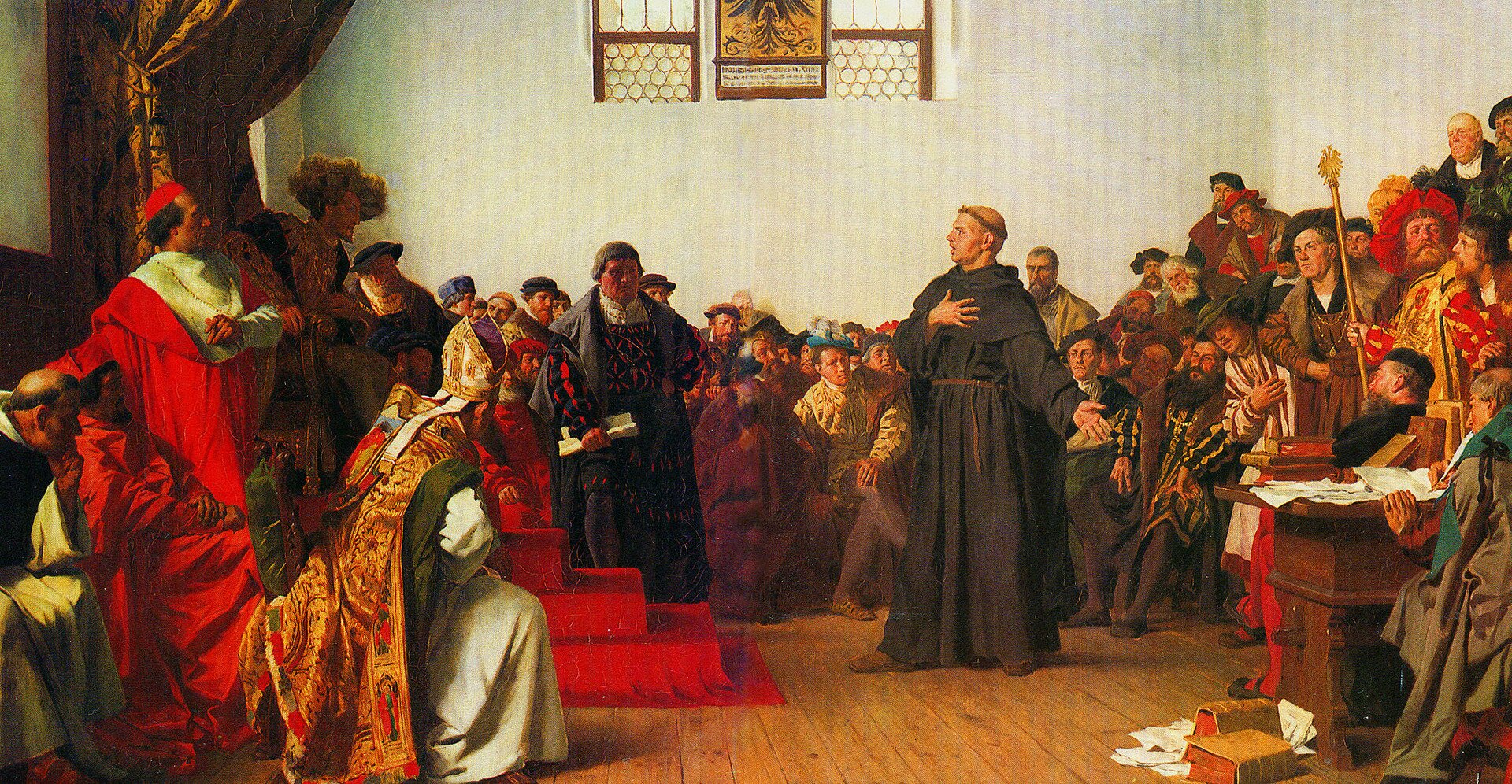
The clergymen had a few church positions each which also was not approved by laymen. Martin Luther, a German priest and theologian, was the first one to express his disapproval. He was outraged with the crisis in the Church. In 1517 he appeared against abuse related to indulgences trading and (according to the tradition) posted 95 Theses on the door of the church in Wittenberg.
Martin Luther’s views were very radical. He claimed that there was no difference between clergymen and laymen. He turned down the pope’s power and the church hierarchy. He also supported liquidation of orders and celibacy. He declared the Bible the only resource of faith which can be interpreted on one’s own. He turned down the cult of saints, paintings and relics. He did not recognize sacraments apart from baptism and communion. He claimed that people would be redeemed because of the Jesus Christ’s death not their good deeds.
Martin Luther’s position was recognized by all social layers. Some clergymen were attracted to the ReformationReformation by the possibility of starting a family, the nobility – by the possibility of increasing properties at the expense of church goods. Dukes saw in the Reformation a possibility of liberating themselves from the influence of the Church and the Emperor. In 1522 there was a petty knighthood revolt which struggled for taking over lands used by the Church. Between 1524–1526 there was a peasants’ uprising where they objected to feudal system. In 1520 the Pope issued a bull in which he censured Luther’s speech and called on him to convert. In response to this Luther burnt the bull publically. The Emperor called him a heretic and banished him.
Look at the timeline presenting the most important events of the Reformation and organize your knowledge. Which of the events were the most important and why?

Match terms and definitions.
giving indulgences to relatives, tax at the amount of one-tenth of revenue for the benefit of the Church, church tax; payments to the Pope made by clergymen, reformation movement initiated by Martin Luther, selling indulgences, religious and social movement aiming at Christianity revival, curse, secularisation, Polish name for the tribute to the papacy (so called alms of St Peter) paid by medieval European catholic countries
| Reformation | |
| Simony | |
| Nepotism | |
| Laicization | |
| Tithe | |
| Peter’s Pence | |
| Annates | |
| Excommunication | |
| Lutheranism |
Key words
Reformation, Lutheranism, tithe
Glossary
Annaty – podatek kościelny; opłaty składane papieżowi przez duchownych.
Dziesięcina – podatek płacony przez ludność na rzecz Kościoła katolickiego, wynoszący dziesiątą część zbiorów lub dochodów.
Ekskomunika – kara polegająca na wyłączeniu wiernego ze społeczności kościelnej.
Laicyzacja – zeświecczenie.
Luteranizm – jedno z głównych wyznań protestanckich, któremu początek dały poglądy Marcina Lutra.
Reformacja – ruch religijny i społeczny mający na celu odnowę chrześcijaństwa. Zgodnie z tradycją za jej początek uważa się zawieszenie przez Marcina Lutra na drzwiach kościoła w Wittenberdze swoich 95 tez, choć historycznie nie ma pewności, że zdarzenie to miało miejsce.
Symonia – sprzedawanie i kupowanie stanowisk kościelnych i związanych z nimi dóbr materialnych.
Świętopietrze – polska nazwa daniny na rzecz papiestwa (tzw. denar świętego Piotra) płaconej przez średniowieczne europejskie państwa katolickie.