Mutualism
the species with similar requirements living in the same area strongly compete with each other;
insects, using flowers as a source of food, at the same time enable the multiplication of plants;
lichens are composed of fungi and algae cooperating with each other.
explain what symbiosis and mutualism are and give examples thereof;
explain that symbiosis is the result of adaptation to the environment.
Mutualism
Many species of animals, plants and fungi coexist and cooperate with other species, which is generally beneficial to both organisms. This type of relation is called symbiosissymbiosis and belongs to a group of non‑antagonistic relationsnon‑antagonistic relations. A kind of symbiosis in which cooperation between two species is necessary for their survival is referred to as mutualismmutualism, i.e. obligatory symbiosis. An example of this type of symbiosis is the cooperation of fungi and green algae forming lichens. Lichens are found in extremely unfavorable conditions, in which the living components of lichen could not survive. The fungus protects the algae cells against negative impact and absorbs water from the environment, and the algae conducts photosynthesis to produce nutrients for itself and its partner. They even reproduce together. They form easily detachable clusters of fungus and algae cells (isidia or soredia) that spread by the wind inhabit new environment.
A very interesting case of symbiosis is the relationship between manioc ants, living in Middle and South America, and fungi. These ants are not able to feed on the leaves, because they do not digest the cellulose contained therein. Therefore, they prepare the surface from them, instil fungi thereon and cultivate them. The cultivated fungi form at the ends of their hyphae spherical construct filled with easily digestible substances from the substrate decomposed by the fungi, which the ants collect and feed on. In the wilderness, there are no manioc ants in nests without fungi, and these fungi can be found only in the nests of manioc ants.
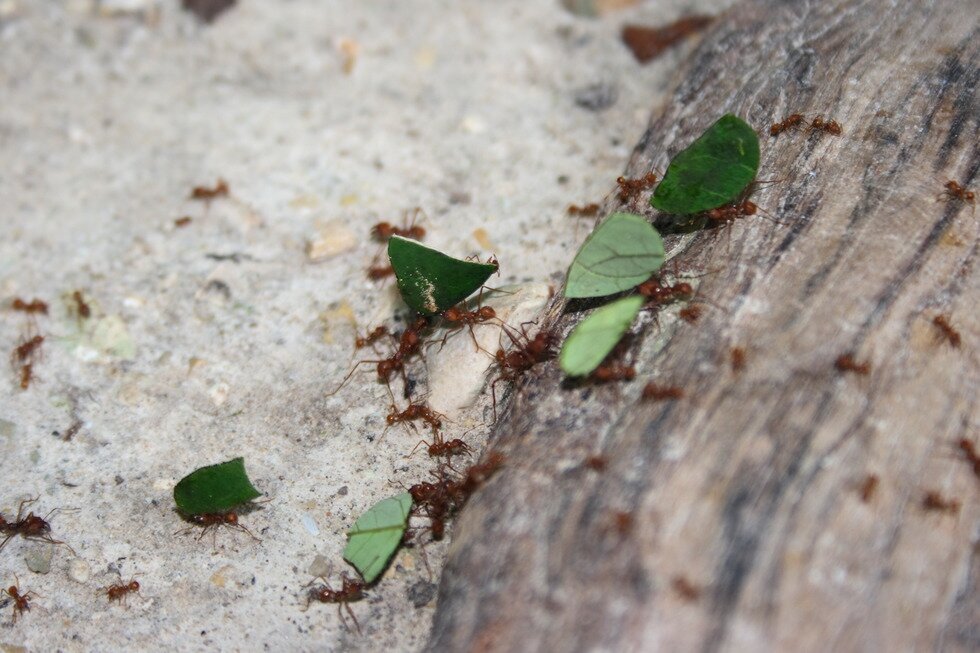
Determine if the relationship between the fungus cultured by the ants and the manioc ants is mutualism. Justify your answer.
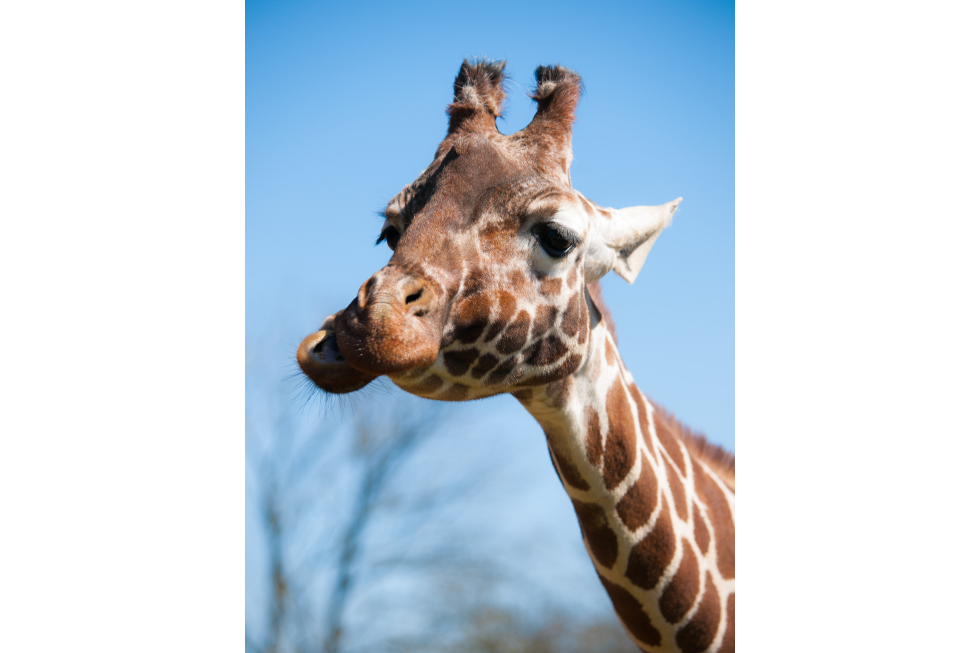
A special case of mutualism is the symbiotic relationship between ruminantsruminants, such as cows or deer, and microorganisms living in their digestive systems. In one of the parts of their multi‑chambered stomach, called the rumen, live bacteria and protozoa capable of digesting cellulose. From time to time, rumen content, partially digested by symbionts, returns to the mouth of the animal, where it is masticated. When swallowed again, grass and certain microorganisms are digested with the help of herbivore's digestive enzymes. This way, ruminants gain not only sugars but also protein and vitamins (mainly vitamins from B group and vitamin K) produced by bacteria.
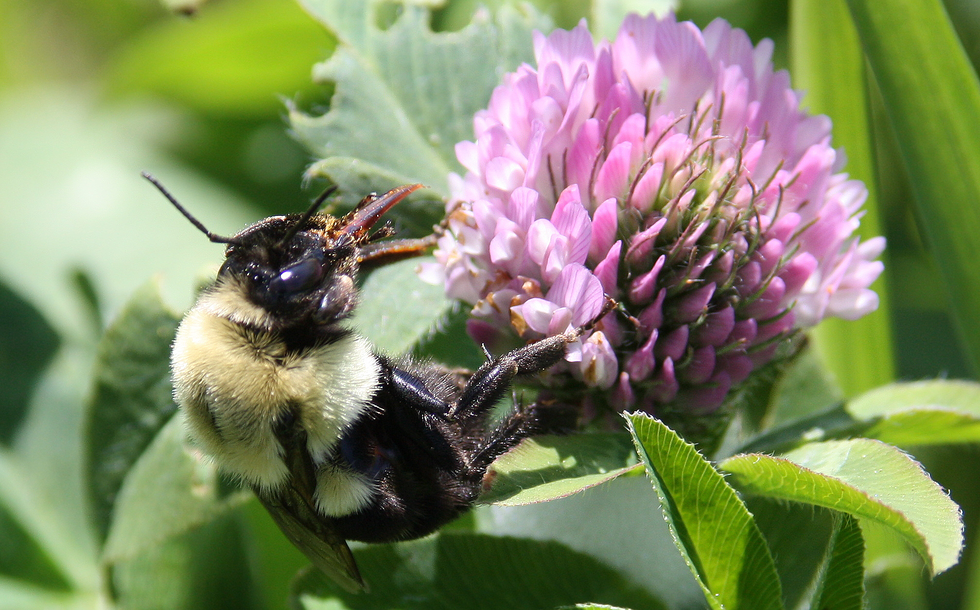
Another example of symbiosis is the relationship between flowers and their pollinators. This is how the flowers can transfer male gametes from one flower (specimen) to another. As a result, fertilisation and seed production occurs. In return, pollinators use the nectar and pollen produced by flowers. In the case of certain plant species, only one specially adapted insect species can pollinate them. This is the case of red clover. It has particularly long and narrow flowers, the bottom of which can only be reached by the mouthpiece of a bumblebee. Clover cannot exist without this insect, but the bumblebee can also feed on the nectar of other flowers. Hummingbirds are also specialists in pollination of specific species. They only visit those flowers whose shape fits perfectly the shape of their beaks.
MycorrhizaMycorrhiza, cooperation of fungi with plants, is also a case of mutualism. It involves braiding the roots of a plant by the hyphae of the mycelium, which grow into their interior, and form a dense network on their surface. Mycelium increases the absorbent surface of the root. This way, the fungi take and supply water, phosphorus and nitrogen compounds to the plants. In exchange, they can feed on the nutrients produced by plants in the process of photosynthesis. Larch seeds, as they fall on the soil overgrown with mycelium of the suillus luteus, quickly sprout and develop healthy plants. A larch grows much weaker in soil deprived of mycelium.
Further pairs of species that provide services to one another are birch boletes and birches, porcini mushrooms and oaks, red pine mushrooms and spruce.
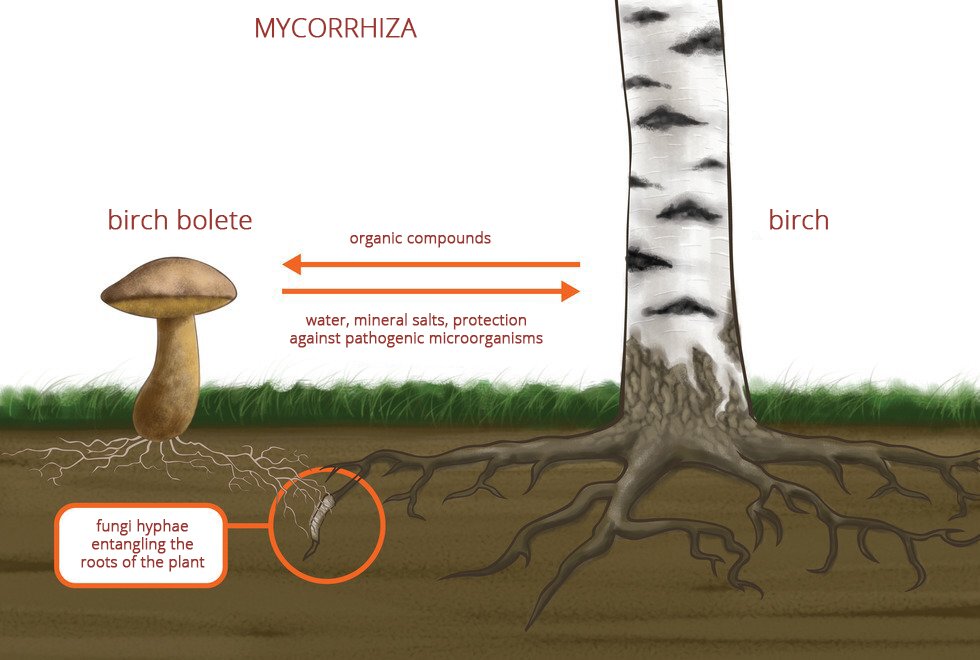
Gardeners can now use mycorrhizal vaccines – preparations containing the appropriate mycelium. Decide where to place it to improve the condition of a 30‑year‑old spruce: spray on the needles, bury near the trunk or inject into the soil a few meters away from the tree. Justify your answer.
Match the definitions with the terms below.
mutualistic relationship between fungi and vascular plants; the fungus supplies water and the plants supply nutrients, a type of interspecies relationships beneficial to both populations or to one of them, a form of coexistence between organisms belonging to different species, beneficial to at least one of them and not detrimental to the other, a form of coexistence between organisms belonging to different species, beneficial to each of these species and necessary for their survival
| non-antagonistic relations | |
| symbiosis | |
| mutualism | |
| mycorrhiza |
Match the items to the appropriate group.
cooperation of certain scavengers and predators, cooperation of fungi and vascular plants (mycorrhiza), cooperation of algae and fungi resulting with the growth of lichens, cooperation of intestinal bacteria and herbivores, cooperation of red clover and a bumblebee, cooperation of fungi and manioc ants (Acromyrmex octospinosus)
| mutualism | |
|---|---|
| symbiosis |
Select all conditions that must be met in order for the symbiosis of two species to be considered a mutualism.
- no antagonism between the species
- benefits to both species
- necessity of cooperation between both species in order to survive
- the possibility of temporary harming one species by another
Summary
Non‑antagonistic relations bring benefits to at least one of the parties.
Symbiosis is a way to adapt to the environment.
Species living with each other in symbiosis usually develop adjustments that allow them to remain in this relationship that are reflected , e.g. in their physique.
Keywords
mutualism, symbiosis, mycorrhiza
Glossary
mikoryza – mutualistyczna zależność między grzybami a roślinami naczyniowymi; grzyb dostarcza wodę, a rośliny pokarm
mutualizm – nieantagonistyczna forma współżycia między organizmami należącymi do różnych gatunków, przynosząca korzyści każdemu z tych gatunków i konieczna dla ich przetrwania
przeżuwacze – ssaki parzystokopytne, roślinożerne, o czterokomorowym żołądku, w którym odbywa się trawienie celulozy z wykorzystaniem symbiotycznych mikroorganizmów
stosunki nieantagonistyczne – rodzaj zależności międzygatunkowych, które są korzystne dla obu populacji lub jednej z nich; zaliczamy do nich mutualizm, protokooperację, komensalizm
symbioza – nieantagonistyczna forma współżycia między organizmami należącymi do różnych gatunków, korzystna dla przynajmniej jednej strony i nie szkodząca innej