Poetic description of the atmospheric phenomenon
you will acquire the vocabulary needed to describe the stormstorm
you will create a word family to the word „storm”
you will determine the mood of the poem
you will recognise the onomatopoeic words
Do you like a storm? What do you associate it with? What emotions does it evoke? Discuss this in the classroom.
Write down as many storm associations as possible according to the formula given. Group them by parts of speech. Use the words you came up with at the beginning of the lesson.
| nouns | verbs | adjectives |
|---|---|---|
| storm | to thunder | violent |
During a storm, you must follow the safety rules listed below. Read or listen to the description. Did you know these rules?
1. Place If you know there is going to be a storm on a given day, it's best to stay home.
2. Electrical equipment Stay away from stoves, fans and other electrical equipment connected to electricity. It's best to disconnect them from the power supply.
3. Disconnect the power supply Disconnect the computer, TV and other electronic devices from the power outlet. Do not use a mobile phone.
4. If the storm hits you outside ... Do not protect yourself under a tree! Crouch, but do not sit down and do not lie down on the ground. If you are in a larger group, you should be distracted.
5. Where to get shelter? Do not stay in water or in small boats. Stay in the car while you are on the road; look for a shelter in a building, cave, car.
6. Metal objects Stay away from metal objects, get rid of metal objects if you have them with you.
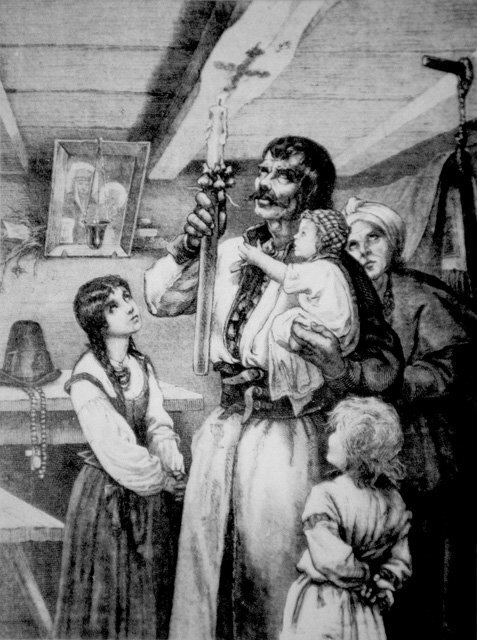
According to folk beliefs, in order to protect oneself from a storm and a lightninglightning strike, one had to light a blessed candleblessed candle in the window of the house - a candle which was lit on the Candlemas Day (2 February). After coming back from the church, the cross sign on the ceiling beamsceiling beams was mounded with the flame of a blessed candle. Preventively, after the blessed candle was snuffed, its smokesmoke was swallowed, believing that it prevented sore throats and tooth decaytooth decay.
Explain the idiomatic phrases.
appear or move quickly, suddenly, there is going to be trouble, the atmosphere is tense, something that happened to someone which was completely unexpected (usually a bad thing), concerns a violent reaction to an unexpected message, to a terrible sight, a brawl that broke out for a trivial reason, swear at somebody, become outraged with somebody, someone has been sharply reprimanded, barked at
| burza wisi w powietrzu | |
| burza w szklance wody | |
| rzucać gromy | |
| jakby w niego piorun strzelił | |
| wpadać / lecieć jak burza | |
| spadło jak grom z jasnego nieba | |
| gromy posypały się na czyjąś głowę |
Guess the words belonging to the family of the word "burza” (storm).
| Meanings | Words to be entered |
|---|---|
| adjective “having a violent course" | |
| adjective "associated with the storm" | |
| verb: "persuade someone to do something wrong, to speak up against someone, to stir up" | |
| noun: "irritation, irritability" | |
| noun: "he who demolishes something, destroys something" |
Read the poem by Adam Mickiewicz. Note how the narrator describes the storm.
BurzaA już deszcz wciąż pluszczy,
Jak z sita, w gęstych kroplach; wtem rykły pioruny,
Krople zlały się razem: to jak proste struny
Długim warkoczem wiążą niebiosa do ziemi,
To jak z wiader buchają warstwami całemi.
Już zakryły się całkiem niebiosa i ziemia,
Noc je z burzą od nocy czarniejszą zaciemia.
Czasem widnokrąg pęka od końca do końca
I anioł burzy na kształt niezmiernego słońca
Rozświeci twarz, i znowu okryty całunem
Uciekł w niebo i drzwi chmur zatrzasnął piorunem.
Znowu wzmaga się burza, ulewa nawalna
I ciemność gruba, gęsta, prawie dotykalna.
Znowu deszcz ciszej szumi, grom na chwilę uśnie.
Znowu wzbudzi się, ryknie i znów wodą chluśnie.
Aż się uspokoiło wszystko; tylko drzewa
Szumią około domu i szemrze ulewa.Source: Adam Mickiewicz, Burza.
Find passages in the text that affect the sense of sight, hearing and touch. Mark them with colors. Green: sight, yellow: hearing, red: touch. Compare your versions. Check if you have the same feelings. Discuss about the differences.
A już deszcz wciąż {hearing}pluszczy{/hearing},
Jak z sita, w {touch}gęstych kroplach{/touch}; wtem {hearing}rykły pioruny{/hearing},
{sight}Krople zlały się razem:{/sight}to jak proste struny
{sight}Długim warkoczem wiążą niebiosa do ziemi{/sight},
To jak z wiader {touch}buchają warstwami całemi.{/touch}
Już {sight}zakryły się całkiem niebiosa i ziemia{/sight},
Noc je z burzą {sight}od nocy czarniejszą zaciemia{/sight}.
Czasem {sight}widnokrąg pęka od końca do końca{/sight}
I anioł burzy na kształt niezmiernego słońca
{sight}Rozświeci twarz{/sight}, i znowu okryty całunem
Uciekł w niebo i drzwi chmur {hearing}zatrzasnął piorunem{/hearing}.
Znowu wzmaga się burza, ulewa nawalna
I {touch}ciemność gruba, gęsta, prawie dotykalna.{/touch}
Znowu {hearing}deszcz ciszej szumi{/hearing}, {hearing}grom na chwilę uśnie.{/hearing}
Znowu wzbudzi się, {hearing}ryknie{/hearing} i {touch}znów wodą chluśnie.{/touch}
Aż się uspokoiło wszystko; tylko drzewa
{hearing}Szumią około domu i szemrze ulewa{/hearing}.
Mark onomatopoeia in red in the text. Note: the words other than onomatopoeia mark grey.
A już {onomatopoeia}deszcz{/onomatopoeia} wciąż {onomatopoeia}pluszczy,{/onomatopoeia}
Jak z sita, w {other}gęstych{/other} kroplach; wtem {onomatopoeia}rykły{/onomatopoeia} pioruny,
Krople zlały się razem: to jak proste struny
Długim warkoczem wiążą niebiosa do ziemi,
To jak z wiader {onomatopoeia}buchają{/onomatopoeia} warstwami całemi.
Już zakryły się całkiem niebiosa i ziemia,
Noc je z burzą od nocy {other}czarniejszą{/other} zaciemia.
Czasem widnokrąg pęka od końca do końca
I anioł {onomatopoeia}burzy{/onomatopoeia} na {other}kształt{/other} niezmiernego słońca
Rozświeci twarz, i znowu okryty całunem
Uciekł w niebo i drzwi chmur {onomatopoeia}zatrzasnął{/onomatopoeia} piorunem.
Znowu wzmaga się {onomatopoeia}burza{/onomatopoeia}, ulewa nawalna
I {other}ciemność{/other} gruba, gęsta, prawie dotykalna.
Znowu {onomatopoeia}deszcz{/onomatopoeia} ciszej {onomatopoeia}szumi{/onomatopoeia}, grom na chwilę uśnie.
Znowu wzbudzi się, {onomatopoeia}ryknie{/onomatopoeia} i znów wodą {onomatopoeia}chluśnie{/onomatopoeia}.
Aż się uspokoiło wszystko; tylko {other}drzewa{/other}
{onomatopoeia}Szumią{/onomatopoeia} około domu i {onomatopoeia}szemrze{/onomatopoeia} ulewa.
Read the poem „Burza” aloud together with other students so that one person reads the text of the poem, and the rest of the class joins with the onomatopoeics, strongly intoning the following sounds: r, sz, cz.
Illustrate the selected fragment of a poetic description of a storm. Title your work and sign it with your initials, nickname or first and last name.
Keywords
atmospheric phenomenaatmospheric phenomena, storm, poetical description, impressions
Glossary
zjawisko atmosferyczne
burza, nawałnica
błyskawicza
burza z piorunami
grzmot
huragan
piorun
ulewa
burzliwy
burzowy
podburzać
wzburzenie
burzyciel
całun
widnokrąg
szumieć
szemrać
ryczeć
chlusnąć
gromnica
belka stropowa
próchnica zębów
dym