Power and rulers in the early Middle Ages
to define the idea of power was in the Middle Ages;
to list the monarchiesmonarchies that ruled over the first centuries of the Middle Ages;
to explain why Christianity became one of the cornerstones of European culture.
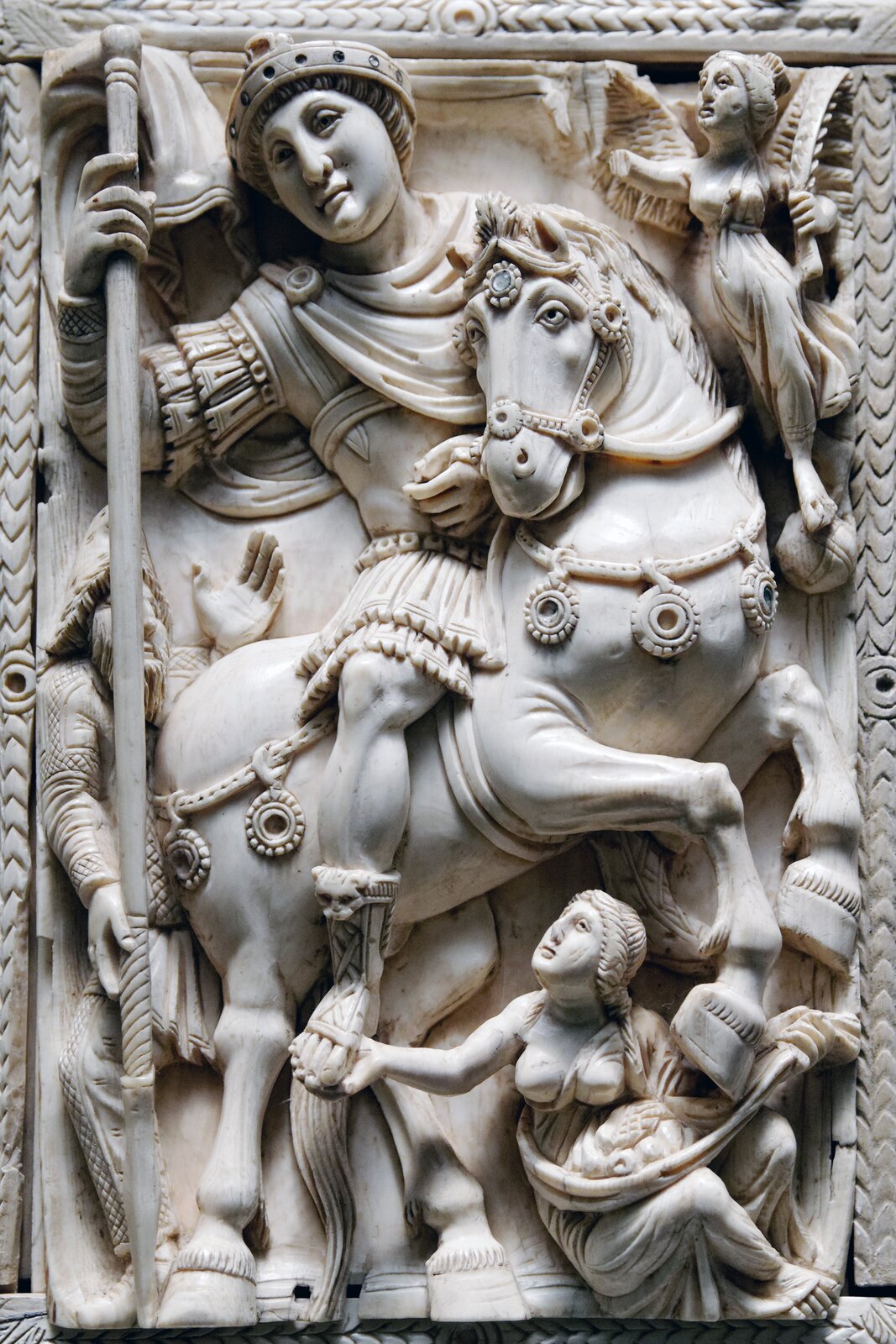
The fall of the western Roman EmpireEmpire in 476 was an event considered by posterity to be the end of the era of antiquity and the start of the Middle Ages. A number of countries, ruled by the Germanic peoples were founded – Ostrogoths, Visigoths, Franks and Vandals. However, the heritage of antiquity survived and developed in the eastern part of the empireempire – Byzantium. It assumed the Roman tradition and carried on its traditions. The most important person in the Byzantine Empire was the emperor, standing next to the army and administrationadministration of the state in three pillars, which fulfilled the functions of the eastern Roman empireempire. The most eminent of the early medieval rulers was Justinian I the Great. It was in his time that codification of the law was done and Constantinople's most famous building was built – The Church of the Wisdom of God – Hagia Sophia. The culture and art of Byzantium, referring to its centuries‑long standards, became an inspiration for the western world. At its centre was the Christian faith, which affected every aspect of life. It was no coincidence that the overwhelming majority of cultural works conveyed the truths of the faith and the expectations of the Emperor, God's representative on earth, upon his subjects.
In the west also, after centuries in the making, a Carolingian EmpireEmpire was founded. Although it did not last for long, it had a significant effect on the history of the whole of Western Europe. Its founder was the most eminent ruler of the Franks – Charlemagne the Great, crowned as Emperor in 800 by the Pope. He was a capable ruler and politician. Thanks to a number of reforms, he strengthened the authority of his state and contributed to a flowering of science and art. For this reason, his reign is known as the Carolingian Renaissance. After his death, power passed into the hands of his son Louis the Pious, but lacking charisma and troubled by frequent rebellions, he could not preserve Charlemagne's unity. The empire was divided under the Treaty of Verdun in 843 into three parts – forming the seeds for states of the future: France, Germany and Italy. The East Frankish state soon became the largest power in the west and its ruler, Otto I, was crowned Emperor in 962. In this way, the Roman EmpireEmpire of the Germanic nation would exist for nearly 1000 years, until 1806.
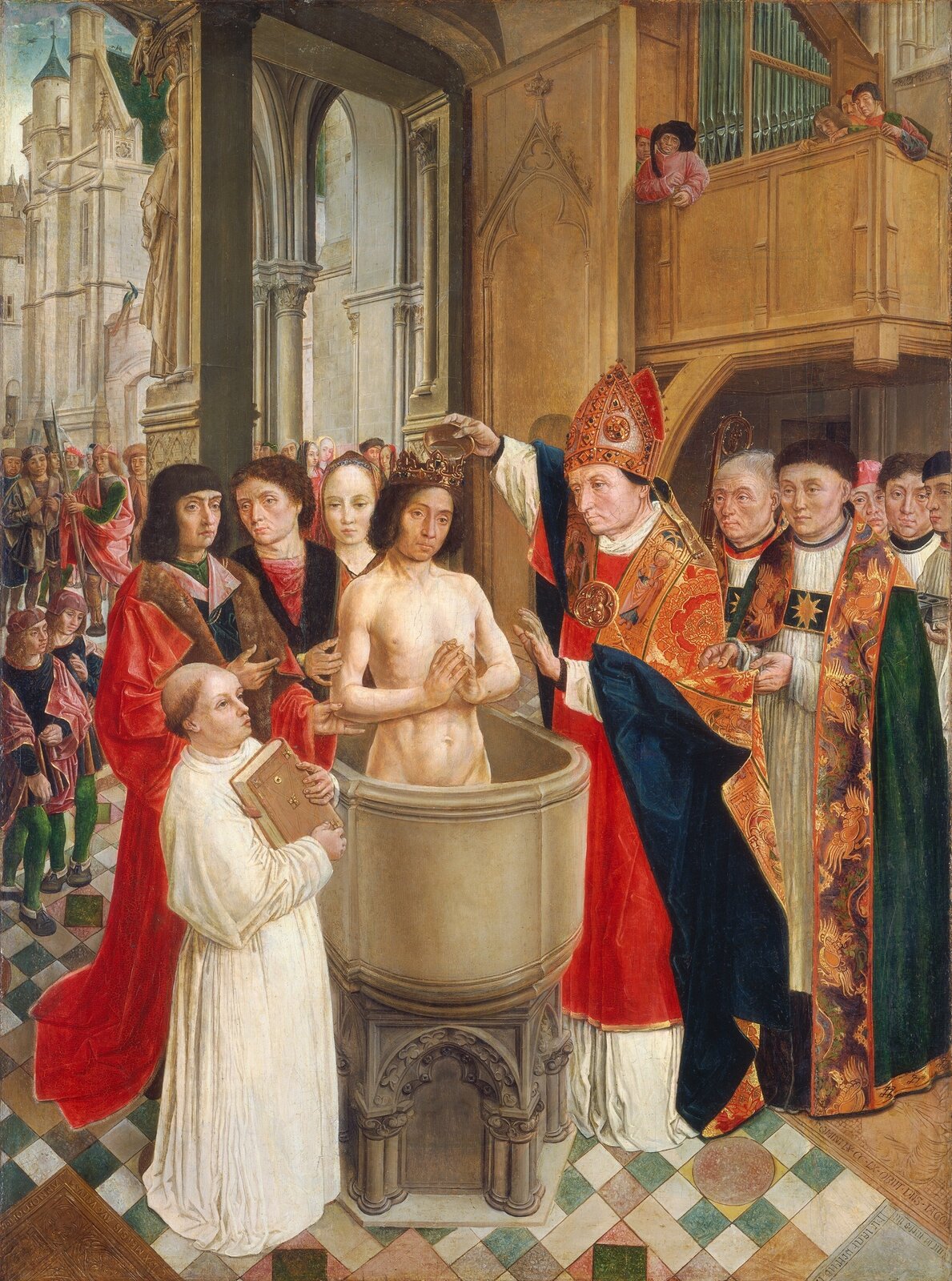
The connection between western, barbaric Europe and the Byzantine EmpireEmpire, over time, came to be the Christian religion. The Germanic peoples were the first to adopt this (the Aryan religion), and it then spread to other areas. One of the first to adopt Christianity was the Frankish ruler Clovis in 496, which began a long‑lasting process of Christianisation of Western and Northern Europe, which is said to have ended at the beginning of the eleventh century, when the teachings of Jesus were adopted by the people of Scandanavia.
The mission to proclaim the Word of God was also undertaken in the Eastern EmpireEmpire. In the second half of the 9th century, the brothers Cyril and Methodius played the most important role in the development of a special script (Glagolitic), which was then used to write the bible. It is thanks to their mission to Christian Europe that Christianity was adopted by the Grand Moravian Prince Rastislav and in Kiev Rus.
Unfortunately, as a result of centuries‑old disputes and struggles for primacyprimacy in the church, Christian unity collapsed in 1054. As a result of a dispute between the Patriarchs in Rome and Constantinople, a permanent division arose –the schism– between the Christians of East and West.
Try to recall the most important events of the early Middle Ages.
Mark the appropriate fragments in the text and try to indicate the stages of the coronation.
stages of the coronation
Po śmierci Henryka (I Ptasznika) [...] cały lud Franków i Sasów wybrał sobie panem syna jego Ottona, już przedtem wyznaczonego przez ojca na króla. Jako miejsce powszechnego wyboru wyznaczono pałac w Akwizgranie. Skoro się tam zjechano, książęta oraz pierwsi z hrabiów wraz z orszakiem najznamienitszych wasali, zebrani w krużgankach przylegających do bazyliki Karola Wielkiego, posadzili nowego władcę na wzniesionym tam tronie, a podawszy mu ręce ślubowali wierność i pomoc przeciw wszystkim nieprzyjaciołom i tak zwyczajem swoim uczynili królem. [...] najwyższy biskup (Hildebert, arcybiskup Moguncji) z całym klerem i ludem oczekiwał na dole w bazylice wejścia nowego króla. Gdy ten się zbliżył, arcybiskup wyszedł naprzeciw niego i dotknął swoją lewą ręką prawicy króla [...], postąpiwszy na środek świątyni [...] w ten sposób przemówił: "Oto przywiodłem wam przez Boga wybranego, przez pana Henryka niegdyś wyznaczonego, teraz zaś przez wszystkich książąt podniesionego na królestwo Ottona. Jeśli ten wybór wam się podoba, poświadczę to podniesieniem prawicy ku niebu". Na te słowa cały lud podnosząc ręce, gromkim okrzykiem złożył nowemu władcy życzenia pomyślności. [...] Arcybiskup przystąpiwszy do ołtarza i zdjąwszy zeń miecz z pasem, zwrócił się do króla i rzekł: "Przyjmij ten miecz i wypędź nim wszystkich wrogów Chrystusa, pogan i złych chrześcijan, ponieważ z woli Boga powierzona ci została wszelka władza w całym państwie Franków dla utwierdzenia pokoju pośród wszystkich chrześcijan". [...] Potem wziąwszy berło i laskę rzekł: "Niechaj ci te insygnia przypominają, że po ojcowsku masz karać swoich poddanych przede wszystkim sługom bożym, wdowom i sierotom winieneś podać dłoń miłosierną [...]". Namaszczony olejem świętym i koronowany diademem złotym [...] zaprowadzony został przez tychże biskupów do tronu, na który wstąpił po kręconych schodach [...] skąd mógł wszystkich widzieć i być przez wszystkich widziany. [...] odprawiwszy solenne nabożeństwo udał się król do pałacu i z biskupami oraz całym ludem usiadł przy marmurowym stole [...].
Place the term in the appropriate place in the table.
Principate, The Great Migration of Peoples, Charlemagne, Attila, St Paul of Tarsus, Iconoclasm, Baptism of Clovis I, The Milanese Edict, Hagia Sophia, Division of the Roman Empire, Hijrah, Christian Universalism
| Antiquity | |
|---|---|
| Middle Ages |
Keywords
power, monarchy, empire, Christianity, Baptism, Middle Ages
Glossary
Administracja – administration – nazywana również aparatem urzędniczym to zbiór instytucji państwowych powiązanych i współpracujących ze sobą przy zarządzaniu państwa.
Dworzanin – courtier – członek dworu władcy obdarzony przywilejami i zajmujący najczęściej wysokie stanowisko w jego otoczeniu. Stanowili elitę wczesnośredniowiecznego społeczeństwa.
Prymat – primacy – pierwszeństwo, przewodzenie w czymś, posiadanie zwierzchności i nadrzędnej roli.
Pragmatyzm – pragmatism – postawa oznaczająca podejmowanie tylko takich działań, które przynoszą konkretne korzyści.
Decentralizacja – decentralization – przeniesienie lub utrata znaczenia części uprawnień oraz odpowiedzialności instytucji władzy na rzecz tych znajdujących się niżej w hierarchii.
Majordom – Mayor of the Palace – wysoki urzędnik na dworze władcy, był odpowiedzialny za zarządzanie bieżącymi sprawami dworu i dowodzenie wojskiem królewskim.
Monarchia – monarchy – forma rządów oparta na władzy stojącego na czele państwa monarchy (króla, cesarza itp.).
Monarchia patrymonialna – patrimonialism – ustrój charakterystyczny dla wczesnego średniowiecza. U jego podstaw leżało przekonanie, że państwo jest prywatną własnością władcy i rozporządza on nim według uznania. Była charakterystyczna dla dynastii Karolingów.
Sukcesja – successor to hereditary – zasada przekazywania, dziedziczenia władzy monarszej następcy w przypadku śmierci, abdykacji lub innych okolicznościach.
Cesarstwo – empire – forma ustroju państwa (monarchii), w której panujący obdarzony jest tytułem cesarza. Zgodnie z tradycją jest ono wyższej rangi i prestiżu niż królestwo.