The image of the Acropolis and Areopagus in the classical period of Athens
Source: Leo van Klenze, Wyobrażenie Akropolu i Areopagu w klasycznym okresie Aten, 1846, olej na płótnie, Nowa Pinakoteka w Monachium, domena publiczna.
Greece (Hellas) is a country located in the southern part of the Balkan Peninsula. Its inhabitants, the Hellenes, had a sense of cultural community. Still, they did not establish a single state, but a few hundred city‑states called poleis (sing. polispolispolis). Athens was a major Greek polis. DemocracydemocracyDemocracy or the rule of the people was developed there. In this system of government, decisions are taken by casting votes. All citizenscitizencitizens could vote. However, only men born in Athens were citizens. Athens enjoyed its golden agegolden eragolden age under Pericles.
1
Task 1
Wysłuchaj nagrania abstraktu i zastanów się, czego jeszcze chciałbyś się dowiedzieć w związku z tematem lekcji.
Wysłuchaj nagrania abstraktu i zastanów się, czego jeszcze chciałbyś się dowiedzieć w związku z tematem lekcji.
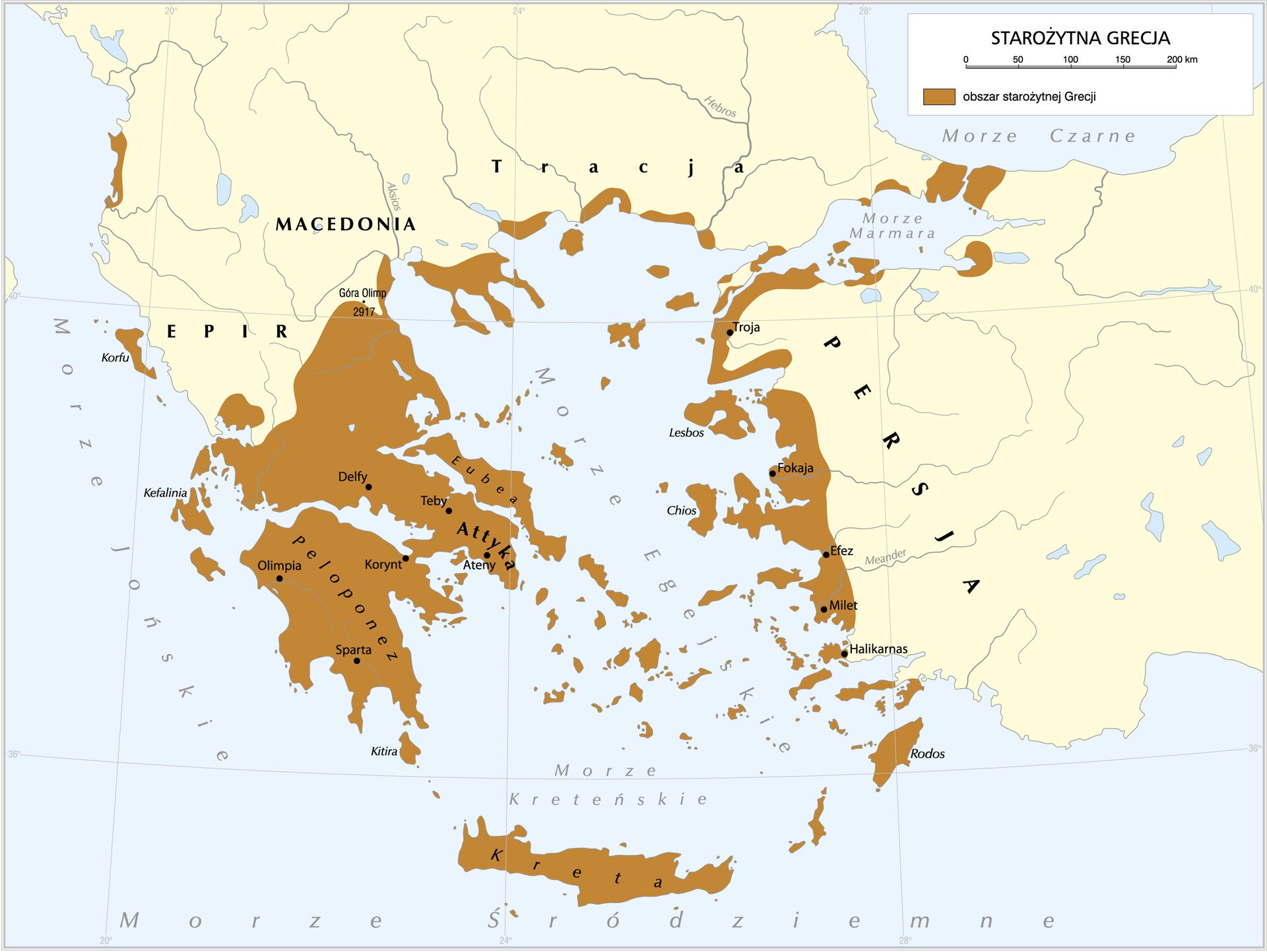
Read the names of the seas surrounding Greece from the map.
Name three islands inhabited by the Greeks.
Show Athens and Sparta on the map.
Read the names of the lands these cities were located in.
Look at the map and explain why the Greeks were perfect sailors.
R1ewaVyC5tOdv11
Mapa starożytnej Grecji. Kraj zajmuje południową część półwyspu Bałkańskiego, zachodnie wybrzeże Azji Mniejszej i wyspy pomiędzy nimi, w tym Kretę.
Map of ancient Greece
Source: Krystian Chariza i zespół.
Task 2
Read the fragment of Pericles' speech.
Our political system is not an imitation of foreign rights, and we ourselves are rather a model for others than others for us. It is called democracy because it depends on the majority of citizens, not on minorities. In private disputes, every citizen is equal in the face of the law; as for respect, the individual is valued not because he belongs to a certain layer, but because of the advantages that he sets himself apart; no one, who wants to serve their homeland, is disturbed by poverty or low birth in achieving dignity.
1
Task 3
Look at the participants of the Assembly and answer questions:
How do the attendees react to the orator's words?
Why do you think the orator stood on a platform?
Explain why clepsydra was used.
Rl0RRFcpqq7m511
Ilustracja przedstawiającego greckiego mówcę w todze i publiczność. Przy ilustracji widnieją podpisy.
Speaker
The art of public speaking was a valued skill. The principles of rhetorics and discussion were taught.
Platform
The speaker stood on a platform.
Hourglass
The time of the speech was limited. At the moment when the water in the hourglass poured from one dish to another, the speaker had to finish.
Ilustracja przedstawiającego greckiego mówcę w todze i publiczność. Przy ilustracji widnieją podpisy.
Speaker
The art of public speaking was a valued skill. The principles of rhetorics and discussion were taught.
Platform
The speaker stood on a platform.
Hourglass
The time of the speech was limited. At the moment when the water in the hourglass poured from one dish to another, the speaker had to finish.
Source: Contentplus.pl sp. z o.o., licencja: CC BY-SA 3.0.
Task 4
As pupils of a school (class), you create a community. Can you identify in its functioning mechanisms similar to those used in Athens's democratic system?
R1OSiyitt7beq1
Exercise 1
Read information about Athens carefully and complete the text with the correct words. Ancient Greece was called 1. generals, 2. Zeus, 3. Parthenon, 4. cities, 5. Ostracism, 6. strategoi, 7. Athena, 8. the Assembly, 9. generals, 10. angora, 11. pancrasism, 12. Propylaea, 13. Acropolis, 14. theocracy, 15. Sophocles, 16. Zeus, 17. polis, 18. agora, 19. 20 years, 20. scholarships, 21. Hellas, 22. 10 years, 23. Sparta, 24. democracy, 25. Pericles by its inhabitants. Athens was one of the largest city-states called 1. generals, 2. Zeus, 3. Parthenon, 4. cities, 5. Ostracism, 6. strategoi, 7. Athena, 8. the Assembly, 9. generals, 10. angora, 11. pancrasism, 12. Propylaea, 13. Acropolis, 14. theocracy, 15. Sophocles, 16. Zeus, 17. polis, 18. agora, 19. 20 years, 20. scholarships, 21. Hellas, 22. 10 years, 23. Sparta, 24. democracy, 25. Pericles in Greek. It was there that the "power of the people" was born – 1. generals, 2. Zeus, 3. Parthenon, 4. cities, 5. Ostracism, 6. strategoi, 7. Athena, 8. the Assembly, 9. generals, 10. angora, 11. pancrasism, 12. Propylaea, 13. Acropolis, 14. theocracy, 15. Sophocles, 16. Zeus, 17. polis, 18. agora, 19. 20 years, 20. scholarships, 21. Hellas, 22. 10 years, 23. Sparta, 24. democracy, 25. Pericles – a form of power in which all citizens participate. Rulers of Athens were determined by 1. generals, 2. Zeus, 3. Parthenon, 4. cities, 5. Ostracism, 6. strategoi, 7. Athena, 8. the Assembly, 9. generals, 10. angora, 11. pancrasism, 12. Propylaea, 13. Acropolis, 14. theocracy, 15. Sophocles, 16. Zeus, 17. polis, 18. agora, 19. 20 years, 20. scholarships, 21. Hellas, 22. 10 years, 23. Sparta, 24. democracy, 25. Pericles, which elected its officials as well as military commanders called 1. generals, 2. Zeus, 3. Parthenon, 4. cities, 5. Ostracism, 6. strategoi, 7. Athena, 8. the Assembly, 9. generals, 10. angora, 11. pancrasism, 12. Propylaea, 13. Acropolis, 14. theocracy, 15. Sophocles, 16. Zeus, 17. polis, 18. agora, 19. 20 years, 20. scholarships, 21. Hellas, 22. 10 years, 23. Sparta, 24. democracy, 25. Pericles. One of the most prominent of them was 1. generals, 2. Zeus, 3. Parthenon, 4. cities, 5. Ostracism, 6. strategoi, 7. Athena, 8. the Assembly, 9. generals, 10. angora, 11. pancrasism, 12. Propylaea, 13. Acropolis, 14. theocracy, 15. Sophocles, 16. Zeus, 17. polis, 18. agora, 19. 20 years, 20. scholarships, 21. Hellas, 22. 10 years, 23. Sparta, 24. democracy, 25. Pericles, who held this function several times. Athenians also held a special vote every year – 1. generals, 2. Zeus, 3. Parthenon, 4. cities, 5. Ostracism, 6. strategoi, 7. Athena, 8. the Assembly, 9. generals, 10. angora, 11. pancrasism, 12. Propylaea, 13. Acropolis, 14. theocracy, 15. Sophocles, 16. Zeus, 17. polis, 18. agora, 19. 20 years, 20. scholarships, 21. Hellas, 22. 10 years, 23. Sparta, 24. democracy, 25. Pericles – in which they decided who was the greatest threat to their system. The person with the highest number of votes had to leave Athens for 1. generals, 2. Zeus, 3. Parthenon, 4. cities, 5. Ostracism, 6. strategoi, 7. Athena, 8. the Assembly, 9. generals, 10. angora, 11. pancrasism, 12. Propylaea, 13. Acropolis, 14. theocracy, 15. Sophocles, 16. Zeus, 17. polis, 18. agora, 19. 20 years, 20. scholarships, 21. Hellas, 22. 10 years, 23. Sparta, 24. democracy, 25. Pericles. Athens became famous not only for the invention of democracy, but also for its beautiful buildings. A particularly representative one was the 1. generals, 2. Zeus, 3. Parthenon, 4. cities, 5. Ostracism, 6. strategoi, 7. Athena, 8. the Assembly, 9. generals, 10. angora, 11. pancrasism, 12. Propylaea, 13. Acropolis, 14. theocracy, 15. Sophocles, 16. Zeus, 17. polis, 18. agora, 19. 20 years, 20. scholarships, 21. Hellas, 22. 10 years, 23. Sparta, 24. democracy, 25. Pericles, on the top of which there were temples and statues of deities. The most famous of these was 1. generals, 2. Zeus, 3. Parthenon, 4. cities, 5. Ostracism, 6. strategoi, 7. Athena, 8. the Assembly, 9. generals, 10. angora, 11. pancrasism, 12. Propylaea, 13. Acropolis, 14. theocracy, 15. Sophocles, 16. Zeus, 17. polis, 18. agora, 19. 20 years, 20. scholarships, 21. Hellas, 22. 10 years, 23. Sparta, 24. democracy, 25. Pericles devoted to 1. generals, 2. Zeus, 3. Parthenon, 4. cities, 5. Ostracism, 6. strategoi, 7. Athena, 8. the Assembly, 9. generals, 10. angora, 11. pancrasism, 12. Propylaea, 13. Acropolis, 14. theocracy, 15. Sophocles, 16. Zeus, 17. polis, 18. agora, 19. 20 years, 20. scholarships, 21. Hellas, 22. 10 years, 23. Sparta, 24. democracy, 25. Pericles. Social, political and economic life took place in the 1. generals, 2. Zeus, 3. Parthenon, 4. cities, 5. Ostracism, 6. strategoi, 7. Athena, 8. the Assembly, 9. generals, 10. angora, 11. pancrasism, 12. Propylaea, 13. Acropolis, 14. theocracy, 15. Sophocles, 16. Zeus, 17. polis, 18. agora, 19. 20 years, 20. scholarships, 21. Hellas, 22. 10 years, 23. Sparta, 24. democracy, 25. Pericles. It was there that the ancient Greeks met, talked, traded and rested.
Read information about Athens carefully and complete the text with the correct words. Ancient Greece was called 1. generals, 2. Zeus, 3. Parthenon, 4. cities, 5. Ostracism, 6. strategoi, 7. Athena, 8. the Assembly, 9. generals, 10. angora, 11. pancrasism, 12. Propylaea, 13. Acropolis, 14. theocracy, 15. Sophocles, 16. Zeus, 17. polis, 18. agora, 19. 20 years, 20. scholarships, 21. Hellas, 22. 10 years, 23. Sparta, 24. democracy, 25. Pericles by its inhabitants. Athens was one of the largest city-states called 1. generals, 2. Zeus, 3. Parthenon, 4. cities, 5. Ostracism, 6. strategoi, 7. Athena, 8. the Assembly, 9. generals, 10. angora, 11. pancrasism, 12. Propylaea, 13. Acropolis, 14. theocracy, 15. Sophocles, 16. Zeus, 17. polis, 18. agora, 19. 20 years, 20. scholarships, 21. Hellas, 22. 10 years, 23. Sparta, 24. democracy, 25. Pericles in Greek. It was there that the "power of the people" was born – 1. generals, 2. Zeus, 3. Parthenon, 4. cities, 5. Ostracism, 6. strategoi, 7. Athena, 8. the Assembly, 9. generals, 10. angora, 11. pancrasism, 12. Propylaea, 13. Acropolis, 14. theocracy, 15. Sophocles, 16. Zeus, 17. polis, 18. agora, 19. 20 years, 20. scholarships, 21. Hellas, 22. 10 years, 23. Sparta, 24. democracy, 25. Pericles – a form of power in which all citizens participate. Rulers of Athens were determined by 1. generals, 2. Zeus, 3. Parthenon, 4. cities, 5. Ostracism, 6. strategoi, 7. Athena, 8. the Assembly, 9. generals, 10. angora, 11. pancrasism, 12. Propylaea, 13. Acropolis, 14. theocracy, 15. Sophocles, 16. Zeus, 17. polis, 18. agora, 19. 20 years, 20. scholarships, 21. Hellas, 22. 10 years, 23. Sparta, 24. democracy, 25. Pericles, which elected its officials as well as military commanders called 1. generals, 2. Zeus, 3. Parthenon, 4. cities, 5. Ostracism, 6. strategoi, 7. Athena, 8. the Assembly, 9. generals, 10. angora, 11. pancrasism, 12. Propylaea, 13. Acropolis, 14. theocracy, 15. Sophocles, 16. Zeus, 17. polis, 18. agora, 19. 20 years, 20. scholarships, 21. Hellas, 22. 10 years, 23. Sparta, 24. democracy, 25. Pericles. One of the most prominent of them was 1. generals, 2. Zeus, 3. Parthenon, 4. cities, 5. Ostracism, 6. strategoi, 7. Athena, 8. the Assembly, 9. generals, 10. angora, 11. pancrasism, 12. Propylaea, 13. Acropolis, 14. theocracy, 15. Sophocles, 16. Zeus, 17. polis, 18. agora, 19. 20 years, 20. scholarships, 21. Hellas, 22. 10 years, 23. Sparta, 24. democracy, 25. Pericles, who held this function several times. Athenians also held a special vote every year – 1. generals, 2. Zeus, 3. Parthenon, 4. cities, 5. Ostracism, 6. strategoi, 7. Athena, 8. the Assembly, 9. generals, 10. angora, 11. pancrasism, 12. Propylaea, 13. Acropolis, 14. theocracy, 15. Sophocles, 16. Zeus, 17. polis, 18. agora, 19. 20 years, 20. scholarships, 21. Hellas, 22. 10 years, 23. Sparta, 24. democracy, 25. Pericles – in which they decided who was the greatest threat to their system. The person with the highest number of votes had to leave Athens for 1. generals, 2. Zeus, 3. Parthenon, 4. cities, 5. Ostracism, 6. strategoi, 7. Athena, 8. the Assembly, 9. generals, 10. angora, 11. pancrasism, 12. Propylaea, 13. Acropolis, 14. theocracy, 15. Sophocles, 16. Zeus, 17. polis, 18. agora, 19. 20 years, 20. scholarships, 21. Hellas, 22. 10 years, 23. Sparta, 24. democracy, 25. Pericles. Athens became famous not only for the invention of democracy, but also for its beautiful buildings. A particularly representative one was the 1. generals, 2. Zeus, 3. Parthenon, 4. cities, 5. Ostracism, 6. strategoi, 7. Athena, 8. the Assembly, 9. generals, 10. angora, 11. pancrasism, 12. Propylaea, 13. Acropolis, 14. theocracy, 15. Sophocles, 16. Zeus, 17. polis, 18. agora, 19. 20 years, 20. scholarships, 21. Hellas, 22. 10 years, 23. Sparta, 24. democracy, 25. Pericles, on the top of which there were temples and statues of deities. The most famous of these was 1. generals, 2. Zeus, 3. Parthenon, 4. cities, 5. Ostracism, 6. strategoi, 7. Athena, 8. the Assembly, 9. generals, 10. angora, 11. pancrasism, 12. Propylaea, 13. Acropolis, 14. theocracy, 15. Sophocles, 16. Zeus, 17. polis, 18. agora, 19. 20 years, 20. scholarships, 21. Hellas, 22. 10 years, 23. Sparta, 24. democracy, 25. Pericles devoted to 1. generals, 2. Zeus, 3. Parthenon, 4. cities, 5. Ostracism, 6. strategoi, 7. Athena, 8. the Assembly, 9. generals, 10. angora, 11. pancrasism, 12. Propylaea, 13. Acropolis, 14. theocracy, 15. Sophocles, 16. Zeus, 17. polis, 18. agora, 19. 20 years, 20. scholarships, 21. Hellas, 22. 10 years, 23. Sparta, 24. democracy, 25. Pericles. Social, political and economic life took place in the 1. generals, 2. Zeus, 3. Parthenon, 4. cities, 5. Ostracism, 6. strategoi, 7. Athena, 8. the Assembly, 9. generals, 10. angora, 11. pancrasism, 12. Propylaea, 13. Acropolis, 14. theocracy, 15. Sophocles, 16. Zeus, 17. polis, 18. agora, 19. 20 years, 20. scholarships, 21. Hellas, 22. 10 years, 23. Sparta, 24. democracy, 25. Pericles. It was there that the ancient Greeks met, talked, traded and rested.
Read information about Athens carefully and complete the text with the correct words.
Ostracism, angora, the Assembly, 20 years, Sparta, Hellas, Pericles, theocracy, Propylaea, scholarships, Acropolis, agora, pancrasism, democracy, 10 years, Zeus, strategoi, generals, cities, Parthenon, generals, Athena, polis, Zeus, Sophocles
Ancient Greece was called ........................ by its inhabitants. Athens was one of the largest city-states called ........................ in Greek. It was there that the "power of the people" was born – ........................ – a form of power in which all citizens participate. Rulers of Athens were determined by ........................, which elected its officials as well as military commanders called ......................... One of the most prominent of them was ........................, who held this function several times. Athenians also held a special vote every year – ........................ – in which they decided who was the greatest threat to their system. The person with the highest number of votes had to leave Athens for ......................... Athens became famous not only for the invention of democracy, but also for its beautiful buildings. A particularly representative one was the ........................, on the top of which there were temples and statues of deities. The most famous of these was ........................ devoted to ......................... Social, political and economic life took place in the ......................... It was there that the ancient Greeks met, talked, traded and rested.
Task 5
Look at the map of the Seven Wonders. How many of them belong to ancient Greece?
R1Hnpy7JcEkEi1
Mapa regionu morza śródziemnego w okresie starożytności. Na mapie oznaczone są cuda świata z podpisami.
Great Pyramid of Giza
2584–2561 BC
It is the oldest of the Seven Wonders of the Ancient World, and the only one to remain largely intact.
Hanging Gardens of Babylon
c. 600 BC
They were described as an ascending series of tiered gardens containing a wide variety of trees, shrubs, and vines.
Temple of Artemis at Ephesus
c. 550 BC; and again at 323 BC
A Greek temple dedicated to the goddess Artemis.
Statue of Zeus at Olympia
466–456 BC (temple), 435 BC (statue)
It was a giant seated figure, about 13 m tall, made by the Greek sculptor Phidias.
Mausoleum at Halicarnassus
351 BC
It was a tomb built for Mausolus, a satrap in the Persian Empire, and his sister-wife Artemisia II of Caria.
Colossus of Rhodes
292–280 BC
It was a statue of the Greek titan-god of the sun Helios. It was constructed to celebrate Rhodes' victory over the ruler of Cyprus, Antigonus I Monophthalmus.
Lighthouse of Alexandria
c. 280 BC
It was a lighthouse built by the Ptolemaic Kingdom. It has been estimated to be 100 metres in overall height.
Mapa regionu morza śródziemnego w okresie starożytności. Na mapie oznaczone są cuda świata z podpisami.
Great Pyramid of Giza
2584–2561 BC
It is the oldest of the Seven Wonders of the Ancient World, and the only one to remain largely intact.
Hanging Gardens of Babylon
c. 600 BC
They were described as an ascending series of tiered gardens containing a wide variety of trees, shrubs, and vines.
Temple of Artemis at Ephesus
c. 550 BC; and again at 323 BC
A Greek temple dedicated to the goddess Artemis.
Statue of Zeus at Olympia
466–456 BC (temple), 435 BC (statue)
It was a giant seated figure, about 13 m tall, made by the Greek sculptor Phidias.
Mausoleum at Halicarnassus
351 BC
It was a tomb built for Mausolus, a satrap in the Persian Empire, and his sister-wife Artemisia II of Caria.
Colossus of Rhodes
292–280 BC
It was a statue of the Greek titan-god of the sun Helios. It was constructed to celebrate Rhodes' victory over the ruler of Cyprus, Antigonus I Monophthalmus.
Lighthouse of Alexandria
c. 280 BC
It was a lighthouse built by the Ptolemaic Kingdom. It has been estimated to be 100 metres in overall height.
The location of the Seven Wonders
Source: Kandi, licencja: CC BY-SA 3.0.
RQV8NKSX5rM3q
Exercise 2
Match pairs: English and Polish. democracy Możliwe odpowiedzi: 1. morza, 2. Zgromadzenie Ludowe, 3. góry, 4. demokracja, 5. mówca, 6. złoty wiek, 7. obywatel, 8. strateg, 9. polis, rodzaj miasta-państwa polis Możliwe odpowiedzi: 1. morza, 2. Zgromadzenie Ludowe, 3. góry, 4. demokracja, 5. mówca, 6. złoty wiek, 7. obywatel, 8. strateg, 9. polis, rodzaj miasta-państwa mountains Możliwe odpowiedzi: 1. morza, 2. Zgromadzenie Ludowe, 3. góry, 4. demokracja, 5. mówca, 6. złoty wiek, 7. obywatel, 8. strateg, 9. polis, rodzaj miasta-państwa seas Możliwe odpowiedzi: 1. morza, 2. Zgromadzenie Ludowe, 3. góry, 4. demokracja, 5. mówca, 6. złoty wiek, 7. obywatel, 8. strateg, 9. polis, rodzaj miasta-państwa citizen Możliwe odpowiedzi: 1. morza, 2. Zgromadzenie Ludowe, 3. góry, 4. demokracja, 5. mówca, 6. złoty wiek, 7. obywatel, 8. strateg, 9. polis, rodzaj miasta-państwa the Assembly Możliwe odpowiedzi: 1. morza, 2. Zgromadzenie Ludowe, 3. góry, 4. demokracja, 5. mówca, 6. złoty wiek, 7. obywatel, 8. strateg, 9. polis, rodzaj miasta-państwa strategos Możliwe odpowiedzi: 1. morza, 2. Zgromadzenie Ludowe, 3. góry, 4. demokracja, 5. mówca, 6. złoty wiek, 7. obywatel, 8. strateg, 9. polis, rodzaj miasta-państwa orator Możliwe odpowiedzi: 1. morza, 2. Zgromadzenie Ludowe, 3. góry, 4. demokracja, 5. mówca, 6. złoty wiek, 7. obywatel, 8. strateg, 9. polis, rodzaj miasta-państwa golden era Możliwe odpowiedzi: 1. morza, 2. Zgromadzenie Ludowe, 3. góry, 4. demokracja, 5. mówca, 6. złoty wiek, 7. obywatel, 8. strateg, 9. polis, rodzaj miasta-państwa
Match pairs: English and Polish. democracy Możliwe odpowiedzi: 1. morza, 2. Zgromadzenie Ludowe, 3. góry, 4. demokracja, 5. mówca, 6. złoty wiek, 7. obywatel, 8. strateg, 9. polis, rodzaj miasta-państwa polis Możliwe odpowiedzi: 1. morza, 2. Zgromadzenie Ludowe, 3. góry, 4. demokracja, 5. mówca, 6. złoty wiek, 7. obywatel, 8. strateg, 9. polis, rodzaj miasta-państwa mountains Możliwe odpowiedzi: 1. morza, 2. Zgromadzenie Ludowe, 3. góry, 4. demokracja, 5. mówca, 6. złoty wiek, 7. obywatel, 8. strateg, 9. polis, rodzaj miasta-państwa seas Możliwe odpowiedzi: 1. morza, 2. Zgromadzenie Ludowe, 3. góry, 4. demokracja, 5. mówca, 6. złoty wiek, 7. obywatel, 8. strateg, 9. polis, rodzaj miasta-państwa citizen Możliwe odpowiedzi: 1. morza, 2. Zgromadzenie Ludowe, 3. góry, 4. demokracja, 5. mówca, 6. złoty wiek, 7. obywatel, 8. strateg, 9. polis, rodzaj miasta-państwa the Assembly Możliwe odpowiedzi: 1. morza, 2. Zgromadzenie Ludowe, 3. góry, 4. demokracja, 5. mówca, 6. złoty wiek, 7. obywatel, 8. strateg, 9. polis, rodzaj miasta-państwa strategos Możliwe odpowiedzi: 1. morza, 2. Zgromadzenie Ludowe, 3. góry, 4. demokracja, 5. mówca, 6. złoty wiek, 7. obywatel, 8. strateg, 9. polis, rodzaj miasta-państwa orator Możliwe odpowiedzi: 1. morza, 2. Zgromadzenie Ludowe, 3. góry, 4. demokracja, 5. mówca, 6. złoty wiek, 7. obywatel, 8. strateg, 9. polis, rodzaj miasta-państwa golden era Możliwe odpowiedzi: 1. morza, 2. Zgromadzenie Ludowe, 3. góry, 4. demokracja, 5. mówca, 6. złoty wiek, 7. obywatel, 8. strateg, 9. polis, rodzaj miasta-państwa
Match pairs: English and Polish.
góry, obywatel, mówca, złoty wiek, demokracja, polis, rodzaj miasta-państwa, Zgromadzenie Ludowe, strateg, morza
democracy
polis
mountains
seas
citizen
the Assembly
strategos
orator
golden era
Keywords
democracy, polis, mountains, seas, citizen, the Assembly, strategos, orator, golden era