For freedom
explain the causes and circumstances of the American War of Independence;
recognize and characterize the most important figures of the American War of Independence;
assess the consequences of the American War of Independence.
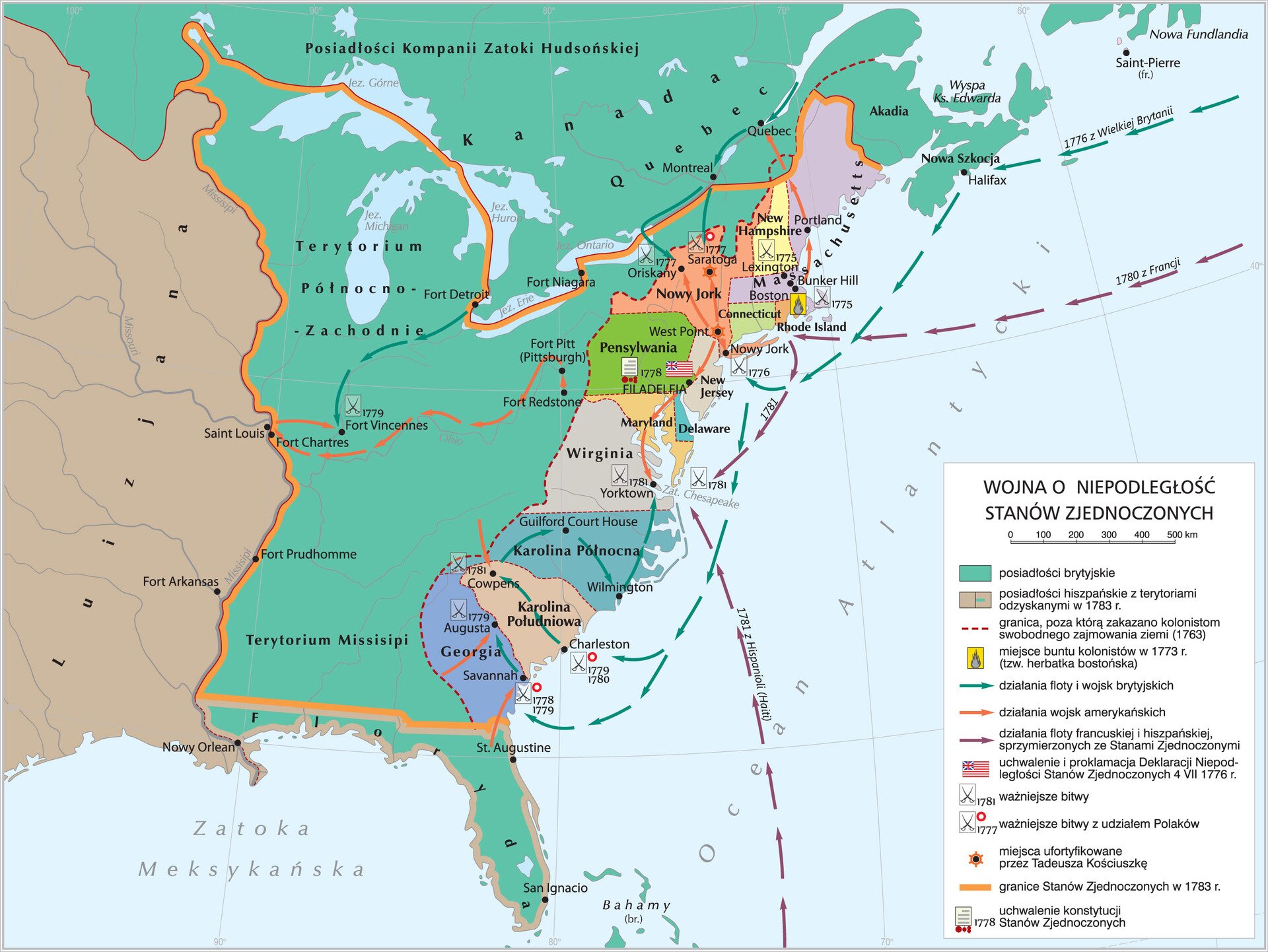
After the Seven Years War, Britain was in crisis. In order to improve the budget, the king charged the colonies with taxes. In 1765, the stamp act was introduced. This led to the outbreak of a specific action of „civil disobedience”. The reason for the opposition was the breaking of the principle of freedom and independence of the colonies because until now the colonists decided about taxes on their own. In 1773, there was another conflict between the colony and the metropolis. It has gone down in history as „Boston Tea Party”„Boston Tea Party”. The escalation of tempers in the colonies led to the outbreak of a war between the United Kingdom and the colonists from America in 1775. A year later - on 4 July 1776, 13 colonies declared independence. The fight ended only in 1783. Under the Treaty of Paris, the United Kingdom recognized the independence of the colony.
Who was the head of the American colonists in the fight for freedom?
Select the true sentences from the following.
| True | False | |
| The main cause of the war between British colonists in North America and the United Kingdom were economic conflicts. | □ | □ |
| Great Britain wanted to transfer the cost of the Seven Years War onto the US colonies. | □ | □ |
| The boycott of British goods led by the colonists caused the United Kingdom to abolish all previously imposed tariffs. | □ | □ |
| „The Boston Tea Party” is an ironic description of the siege of Boston by the English who wanted to deal with the rebels in this way. | □ | □ |
| Only the surrender of the British forces at Yorktown in 1781 surrounded by American-French troops allowed for an end to the military clashes. | □ | □ |
Match the pairs: English words with Polish definition.
polityka państwa polegająca na dążeniu do zwiększania wpływów do budżetu poprzez nakładanie kolejnych obciążeń podatkowych na ludność., W dniu 16 grudnia 1773 r. przebrani za Indian mieszkańcy Bostonu zatopili czekający na rozładunek transport herbaty (nazwano to później nieco kpiarsko "bostońskim piciem herbaty"). Był to akt przeciwstawienia się brytyjskim próbom złamania akcji bojkotowej prowadzonej w koloniach., ustawa uchwalona przez Parlament Brytyjski w 1774, regulująca system administracji w Kanadzie, dawnej Nowej Francji.
| Fiscalism | |
| "Boston Tea Party" | |
| Quebec Act |
Keywords
Fiscalism, „Boston Tea Party”
Glossary
Fiskalizm – polityka państwa polegająca na dążeniu do zwiększania wpływów do budżetu poprzez nakładanie kolejnych obciążeń podatkowych na ludność.
„Bostońska herbatka” – W dniu 16 grudnia 1773 r. przebrani za Indian mieszkańcy Bostonu zatopili czekający na rozładunek transport herbaty (nazwano to później nieco kpiarsko „bostońskim piciem herbaty”). Był to akt przeciwstawienia się brytyjskim próbom złamania akcji bojkotowej prowadzonej w koloniach.
Ustawa o Quebecu – ustawa uchwalona przez Parlament Brytyjski w 1774, regulująca system administracji w Kanadzie, dawnej Nowej Francji.