The Bible is an extraordinary book. It was created for hundreds of years! It consists of two main parts: the Old TestamentOld TestamentOld Testament and the New TestamentNew TestamentNew Testament. In the Old Testament, the history of Israel is shown before the coming of Christ, including the creation of the world, man, banishment from paradise, departure from Egypt, receiving the Ten Commandments. The New Testament describes the life and activities of Jesus and his disciples. The Bible is the most important book for two great religions: Judaism and ChristianityChristianityChristianity.
Do you know in which languages the Bible was written? Do you know what the holy booksholy bookholy books of other religions are called?
Exercise 1
Do you know where Palestine is situated? Tell the others about it.
Do you know where Palestine is situated? Tell the others about it.
Look at the map illustrating the location of the Palestine in the 10th century BC. Do you know where in the world is this part of the world?
R1UPH9B0j3yVG
Ilustracja barwna. Mapa przedstawia położenie Ziemi Świętej i przebieg granic państw tego regionu ok. X w. p.n.e. W centrum mapy znajduje się zaznaczone niebieskim kolorem Królestwo Izraela ze stolicą w Samarii. Należą do niego miasta: Shechem, Jaffa, Beit El, Jerash oraz Jericho. Na północ od Królestwa Izraela położone są państwa fenickie z takimi miastami, jak Beirut czy Byblos. Na północnym wschodzie Izraela położone jest Królestwo Damaszku ze stolicą w Damaszku. Należy do niego również miasto Umomium. Na wschód od Królestwa Izraela znajduje się Królestwo Ammon ze stolicą w Rabbath-Ammonie. Na południowym wschodzie zaznaczono Królestwo Moabu ze stolicą w Dibonie. Na południu od Królestwa Izraela znajduje się Królestwo Judy ze stolicą w Jeruzalem oraz takimi miastami, jak Beersheba czy Hebron. Na południowym zachodzie od Izraela znajdują się państwa Filistynów z takimi miastami, jak Gaza, Ashdod czy Askelon. Na południe od Królestwa Judy leży Królestwo Edomu ze stolicą w Petrze. Colorful illustration. The map presents the location of the Holy Land and the course of the borders of the countries of this region around the 10th century BC In the center of the map, the Kingdom of Israel with the capital in Samaria is marked in blue. It includes the cities of Shechem, Jaffa, Beit El, Jerash and Jericho. North of the Kingdom of Israel are the Phoenician states with such cities as Beirut or Byblos. In the north-east of Israel lies the Kingdom of Damascus with the capital in Damascus. The city of Umomium belongs to him. To the east of the Kingdom of Israel is the Kingdom of Ammon with its capital in Rabbath-Ammon. In the southeast is the Kingdom of Moab with the capital at Dibon. To the south of the Kingdom of Israel is the Kingdom of Judah with the capital in Jerusalem and cities such as Beersheba and Hebron. In the south-west of Israel there are the Philistines with such cities as Gaza, Ashdod and Askelon. To the south of the Kingdom of Judah lies the Kingdom of Edom with the capital in Petra.
Source: Richardprins, licencja: CC BY-SA 3.0, [online], dostępny w internecie: http://commons.wikimedia.org.
Exercise 2
Read the text of Anna Kamieńska about the Bible in the lesson “Book over books“ on epodreczniki.pl website. Pay attention to the origin of the word bible.
Talk in pairs why the Bible is called a book over books. Write down the arguments in a notebook.
Task 1
Ahead of you there are questions checking the understanding of the read text. Select the correct answer.
RXXVjY3pNEiXy
Exercise 3
The word "bible" comes from the: Możliwe odpowiedzi: 1. Greek, 2. Hebrew, 3. Arabic, 4. Latin
The word "bible" comes from the: Możliwe odpowiedzi: 1. Greek, 2. Hebrew, 3. Arabic, 4. Latin
The word bible comes from the:
Greek
Hebrew
Arabic
Latin
R19kSHmBx6YWd
Exercise 4
Wybierz prawidłową odpowiedź: According to Anna Kamieńska, the Bible, among other books, is different because... Możliwe odpowiedzi: 1. it contains many books., 2. it was written a long time ago., 3. it is the holy book of the Israelites., 4. it was dictated by the Spirit of God.
Wybierz prawidłową odpowiedź: According to Anna Kamieńska, the Bible, among other books, is different because... Możliwe odpowiedzi: 1. it contains many books., 2. it was written a long time ago., 3. it is the holy book of the Israelites., 4. it was dictated by the Spirit of God.
According to Anna Kamieńska, the Bible, among other books, is different because...
it contains many books.
it was written a long time ago.
it is the holy book of the Israelites.
it was dictated by the Spirit of God.
REkubMHXCchzq
Exercise 5
Jednokrotny wybór. The Holy Land lies... Możliwe odpowiedzi: 1. East of the Mediterranean., 2. South of the Mediterranean., 3. North of the Mediterranean., 4. West of the Mediterranean.
Jednokrotny wybór. The Holy Land lies... Możliwe odpowiedzi: 1. East of the Mediterranean., 2. South of the Mediterranean., 3. North of the Mediterranean., 4. West of the Mediterranean.
The Holy Land lies...
East of the Mediterranean.
South of the Mediterranean.
North of the Mediterranean.
West of the Mediterranean.
RmFLdvBBsVsHP
Exercise 6
Jednokrotny wybór. The text shows that the Bible should be known because... Możliwe odpowiedzi: 1. they swear upon it in many countries., 2. it influenced and influences our culture., 3. it is an important book of the nation of Israel., 4. in many homes it occupies a special place.
Jednokrotny wybór. The text shows that the Bible should be known because... Możliwe odpowiedzi: 1. they swear upon it in many countries., 2. it influenced and influences our culture., 3. it is an important book of the nation of Israel., 4. in many homes it occupies a special place.
The text shows that the Bible should be known because...
they swear upon it in many countries.
it influenced and influences our culture.
it is an important book of the nation of Israel.
in many homes it occupies a special place.
R1MJkW1YpU4ij
Exercise 7
Jednokrotny wybór. The book was initially... Możliwe odpowiedzi: 1. created by history., 2. spread by word of mouth, 3. translated into many languages., 4. written down and then read.
Jednokrotny wybór. The book was initially... Możliwe odpowiedzi: 1. created by history., 2. spread by word of mouth, 3. translated into many languages., 4. written down and then read.
The book was initially...
created by history.
spread by word of mouth
translated into many languages.
written down and then read.
R1SzmqbT95j8H
Exercise 8
Jednokrotny wybór. In other words related to the Bible... Możliwe odpowiedzi: 1. bibliothecal, 2. biblical, 3. bibliothecarial, 4. bibliographic
Jednokrotny wybór. In other words related to the Bible... Możliwe odpowiedzi: 1. bibliothecal, 2. biblical, 3. bibliothecarial, 4. bibliographic
In other words related to the Bible...
bibliothecal
biblical
bibliothecarial
bibliographic
The translation of the Bible into GreekGreekGreek is called the Septuagint. This name comes from the number of people who worked on the translation. The translation into LatinLatinLatin is Vulgate. The Bible had many translations and editions. The best‑known modern edition is the Millenium Bible.
Exercise 9
Wyjaśnij kluczowe pojęcia związane z tematem abstraktu.
Wyjaśnij kluczowe pojęcia związane z tematem abstraktu.
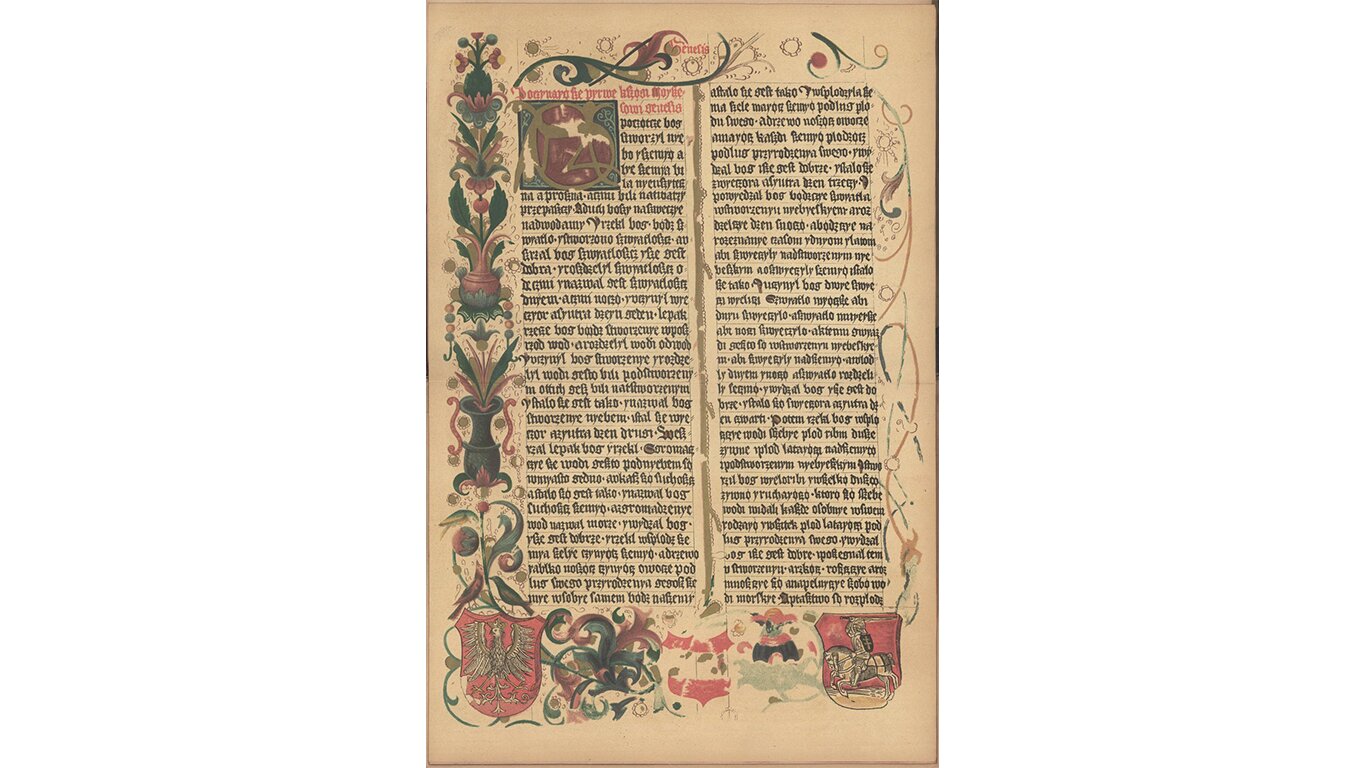
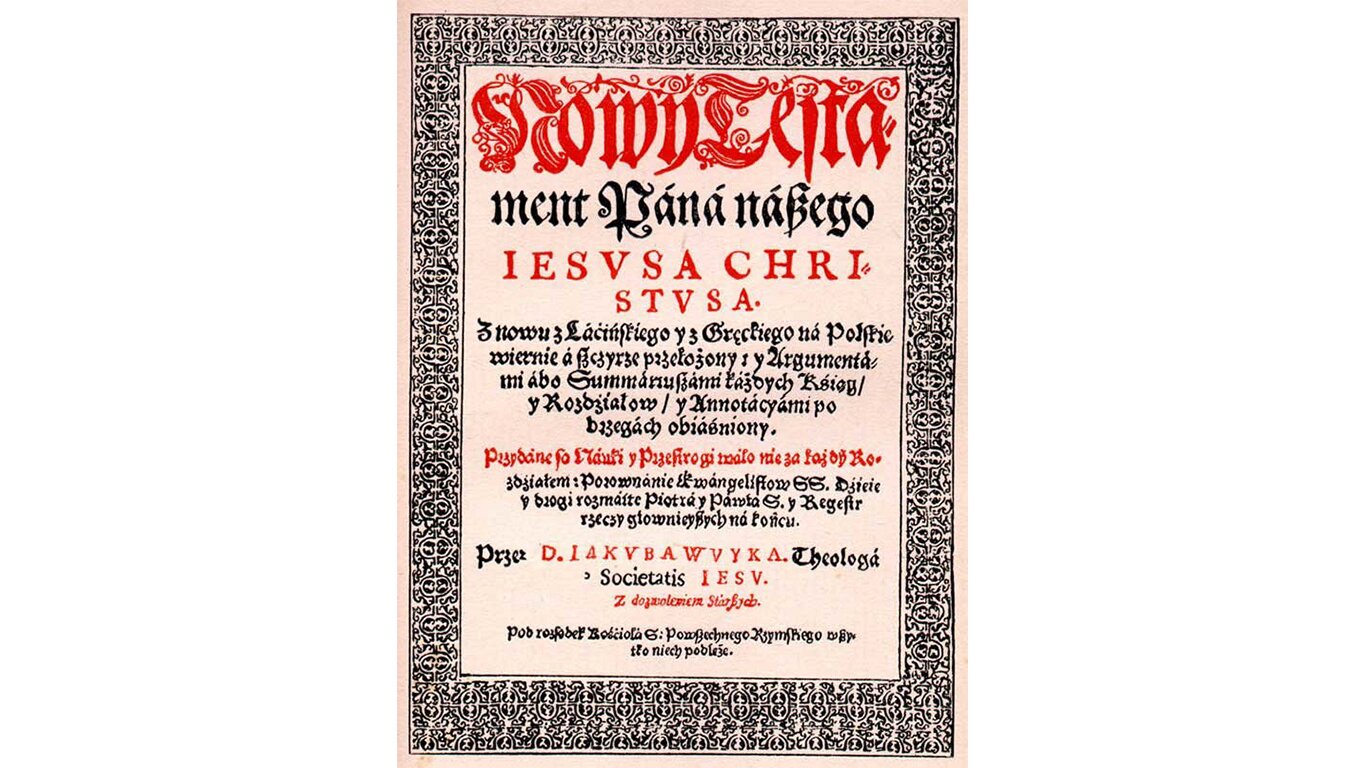
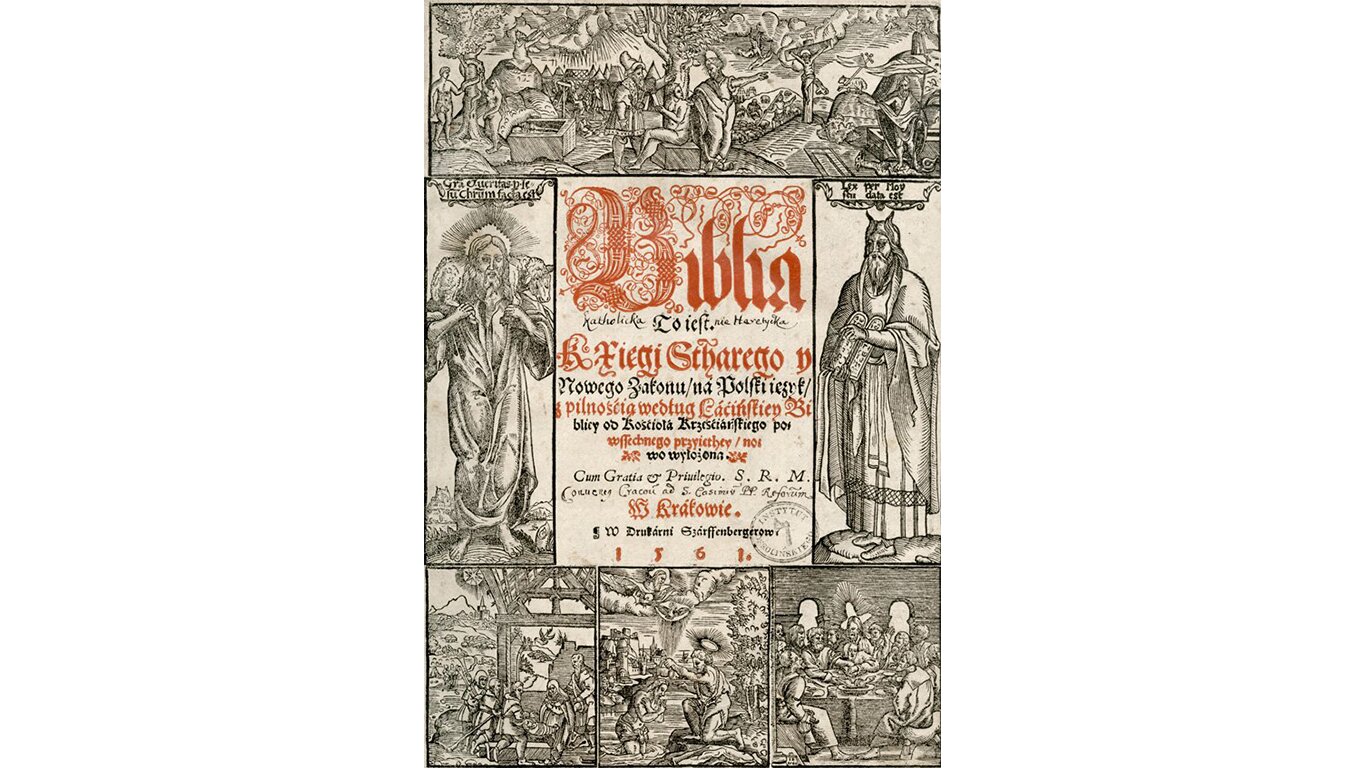
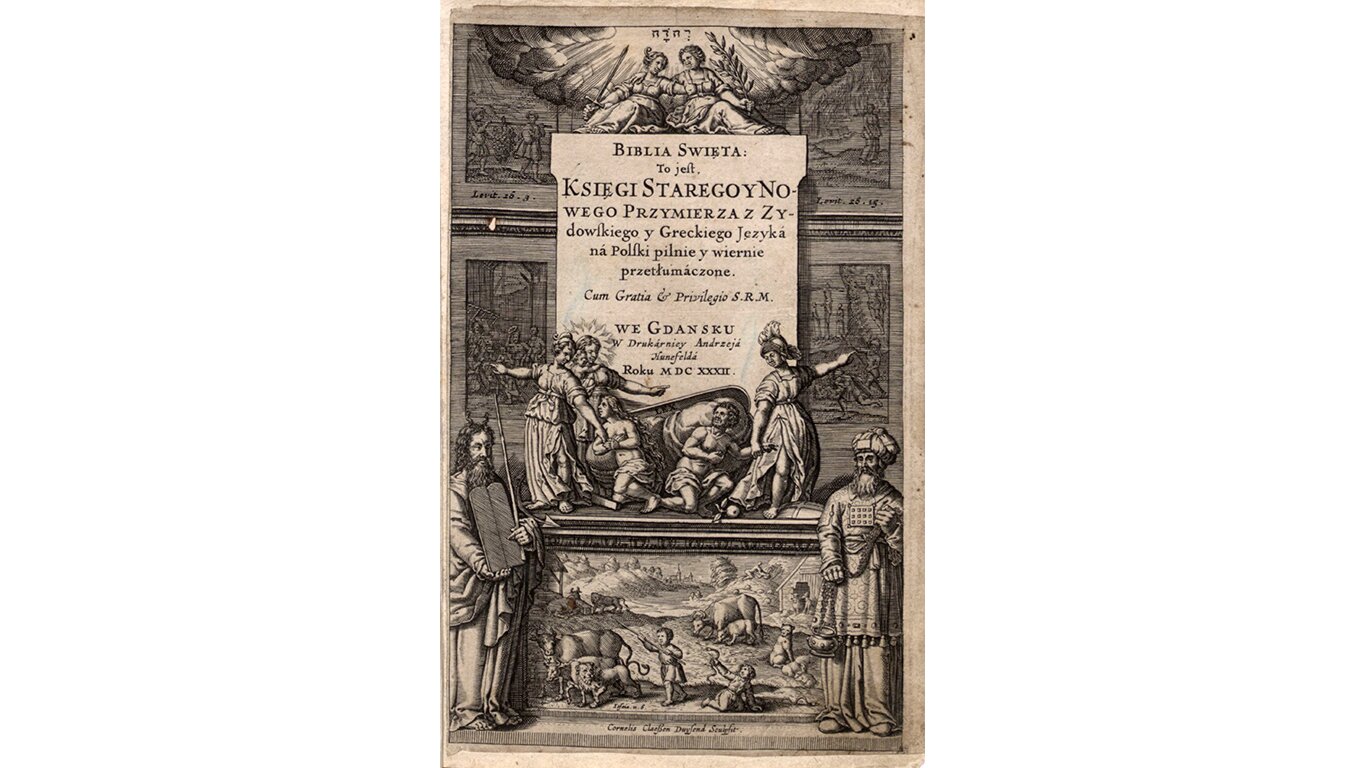
Watch the photo gallery presenting various editions of the Bible. Pay attention to the release dates. Which one do you like the most? Justify your answer.
R1O2doO0nAcFD
Fotografia przedstawia stronę z jednego z wydań Biblii. Papier jest pożółkły. Ręcznie kaligrafowany tekst otoczony został zdobieniami. Dominują wśród nich wzory kwiatowe, jednak na dole strony umieszczone zostały tarcze herbowe. Na jednej z nich znajduje się biały orzeł. Incipit tekstu biblijnego zaczyna się dużą, zdobioną literą. The photograph shows a page from one of the editions of the Bible. The paper is yellowed. The handwritten text was surrounded by ornaments. Floral designs predominate among them, but at the bottom of the page there are coats of arms. One of them has a white eagle. The incipit of the biblical text begins with a large, ornamented letter.
The Bible of Queen Zofia, 1455.
Source: domena publiczna.
R1SpVTS4zG3bz
Fotografia przedstawia stronę z jednego z wydań Biblii. Litery przywodzą na myśl gotyk, są czarne i czerwone, trudne do odczytania przez to, jak zdobne. Wokół tekstu umieszczono ozdobną ramkę, która składa się z misternego wzoru. The photograph shows a page from one of the editions of the Bible. The letters resemble Gothic, they are black and red, difficult to read by how remarkable. Around the text there is a decorative frame, which consists of an intricate pattern.
Jakub Wujek's Bible, 1593.
R157YUMg20bcc
Fotografia przedstawia stronę z jednego z wydań Biblii. Tekst jest bardzo zdobny, czarny i czerwony. Pierwsza litera "b" w słowie "Biblia" została bardzo misternie ozdobiona. Wokół tekstu umieszczono ramkę, która składa się z rycin obrazujących sceny biblijne. The photograph shows a page from one of the editions of the Bible. The text is very ornamented, black and red. The first letter "b" in the word "Bible" has been very elaborately decorated. A frame is placed around the text, which consists of figures depicting biblical scenes.
Leopolita's Bible, 1561.
R1If8solD0L59
Fotografia przedstawia stronę z jednego z wydań Biblii. Litery są mniej zdobne, przypominają współczesne kroje pisma. Tytuł umieszczono na płaskorzeźbie, która jest wkomponowana w rycinę, która pokrywa całą stronę. Znaleźć można na niej Mojżesza z Dekalogiem czy inne sceny biblijne. The photograph shows a page from one of the editions of the Bible. Letters are less similar, reminiscent of modern typefaces. The title is placed on a bas-relief, which is incorporated into the drawing, which covers the whole page. Here you can find Moses with the Decalogue and other biblical scenes.
The Gdańsk Bible, 1632.
R16RVOgmLU26V
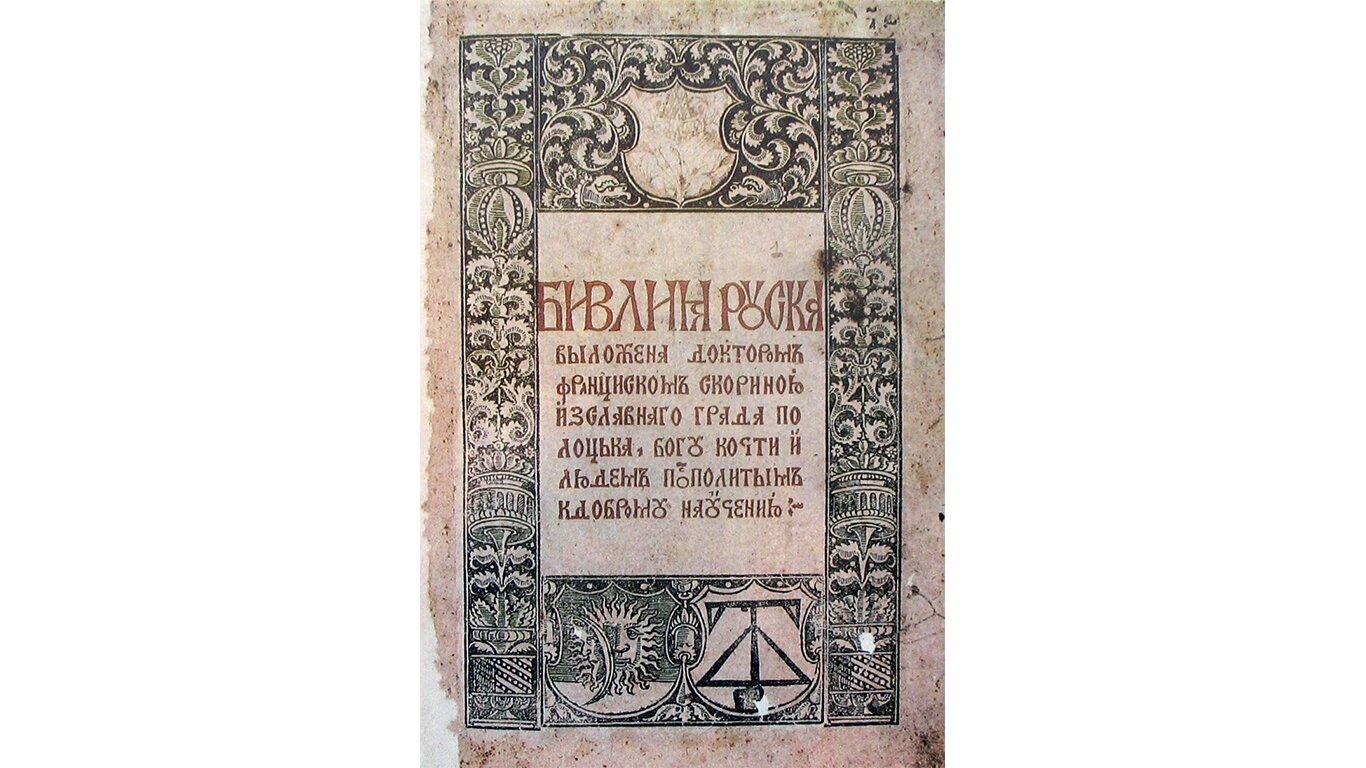
Fotografia przedstawia stronę z jednego z wydań Biblii. Litery zapisane są w cyrylicy, wokół nich umieszczono ramkę, która składa się z dekoracyjnych rycin. Dominują wzory kwiatowe, jednak na dole strony umieszczono tarcze herbowe. The photograph shows a page from one of the editions of the Bible. Letters are written in Cyrillic, a frame is placed around them, which consists of decorative engravings. Floral designs predominate, but at the bottom of the page there are coats of arms.
Russian Bible, 1517.
The Bible has influenced and influences our culture. It is a source of many idiomatic expressions and proverbs.
R1XY9mDUDRRoJ1
Exercise 10
Combine in pairs the idiomatic expressions with their explanations. łono Abrahama Możliwe odpowiedzi: 1. mess, confusion, 2. unbeliever, 3. something forbidden and tempting, 4. a man who was guilty, but came to his senses; a converted sinner, 5. a desired place that is being pursued, 6. to separate what is valuable from what is not worth much, 7. a place where a righteous, god-fearing man goes after death, 8. horrible news, 9. unexpected good, unexpected gift niewierny Tomasz Możliwe odpowiedzi: 1. mess, confusion, 2. unbeliever, 3. something forbidden and tempting, 4. a man who was guilty, but came to his senses; a converted sinner, 5. a desired place that is being pursued, 6. to separate what is valuable from what is not worth much, 7. a place where a righteous, god-fearing man goes after death, 8. horrible news, 9. unexpected good, unexpected gift zakazany owoc Możliwe odpowiedzi: 1. mess, confusion, 2. unbeliever, 3. something forbidden and tempting, 4. a man who was guilty, but came to his senses; a converted sinner, 5. a desired place that is being pursued, 6. to separate what is valuable from what is not worth much, 7. a place where a righteous, god-fearing man goes after death, 8. horrible news, 9. unexpected good, unexpected gift hiobowe wieści Możliwe odpowiedzi: 1. mess, confusion, 2. unbeliever, 3. something forbidden and tempting, 4. a man who was guilty, but came to his senses; a converted sinner, 5. a desired place that is being pursued, 6. to separate what is valuable from what is not worth much, 7. a place where a righteous, god-fearing man goes after death, 8. horrible news, 9. unexpected good, unexpected gift manna z nieba Możliwe odpowiedzi: 1. mess, confusion, 2. unbeliever, 3. something forbidden and tempting, 4. a man who was guilty, but came to his senses; a converted sinner, 5. a desired place that is being pursued, 6. to separate what is valuable from what is not worth much, 7. a place where a righteous, god-fearing man goes after death, 8. horrible news, 9. unexpected good, unexpected gift syn marnotrawny Możliwe odpowiedzi: 1. mess, confusion, 2. unbeliever, 3. something forbidden and tempting, 4. a man who was guilty, but came to his senses; a converted sinner, 5. a desired place that is being pursued, 6. to separate what is valuable from what is not worth much, 7. a place where a righteous, god-fearing man goes after death, 8. horrible news, 9. unexpected good, unexpected gift ziemia obiecana Możliwe odpowiedzi: 1. mess, confusion, 2. unbeliever, 3. something forbidden and tempting, 4. a man who was guilty, but came to his senses; a converted sinner, 5. a desired place that is being pursued, 6. to separate what is valuable from what is not worth much, 7. a place where a righteous, god-fearing man goes after death, 8. horrible news, 9. unexpected good, unexpected gift oddzielić ziarno od plew Możliwe odpowiedzi: 1. mess, confusion, 2. unbeliever, 3. something forbidden and tempting, 4. a man who was guilty, but came to his senses; a converted sinner, 5. a desired place that is being pursued, 6. to separate what is valuable from what is not worth much, 7. a place where a righteous, god-fearing man goes after death, 8. horrible news, 9. unexpected good, unexpected gift wieża Babel Możliwe odpowiedzi: 1. mess, confusion, 2. unbeliever, 3. something forbidden and tempting, 4. a man who was guilty, but came to his senses; a converted sinner, 5. a desired place that is being pursued, 6. to separate what is valuable from what is not worth much, 7. a place where a righteous, god-fearing man goes after death, 8. horrible news, 9. unexpected good, unexpected gift
Combine in pairs the idiomatic expressions with their explanations. łono Abrahama Możliwe odpowiedzi: 1. mess, confusion, 2. unbeliever, 3. something forbidden and tempting, 4. a man who was guilty, but came to his senses; a converted sinner, 5. a desired place that is being pursued, 6. to separate what is valuable from what is not worth much, 7. a place where a righteous, god-fearing man goes after death, 8. horrible news, 9. unexpected good, unexpected gift niewierny Tomasz Możliwe odpowiedzi: 1. mess, confusion, 2. unbeliever, 3. something forbidden and tempting, 4. a man who was guilty, but came to his senses; a converted sinner, 5. a desired place that is being pursued, 6. to separate what is valuable from what is not worth much, 7. a place where a righteous, god-fearing man goes after death, 8. horrible news, 9. unexpected good, unexpected gift zakazany owoc Możliwe odpowiedzi: 1. mess, confusion, 2. unbeliever, 3. something forbidden and tempting, 4. a man who was guilty, but came to his senses; a converted sinner, 5. a desired place that is being pursued, 6. to separate what is valuable from what is not worth much, 7. a place where a righteous, god-fearing man goes after death, 8. horrible news, 9. unexpected good, unexpected gift hiobowe wieści Możliwe odpowiedzi: 1. mess, confusion, 2. unbeliever, 3. something forbidden and tempting, 4. a man who was guilty, but came to his senses; a converted sinner, 5. a desired place that is being pursued, 6. to separate what is valuable from what is not worth much, 7. a place where a righteous, god-fearing man goes after death, 8. horrible news, 9. unexpected good, unexpected gift manna z nieba Możliwe odpowiedzi: 1. mess, confusion, 2. unbeliever, 3. something forbidden and tempting, 4. a man who was guilty, but came to his senses; a converted sinner, 5. a desired place that is being pursued, 6. to separate what is valuable from what is not worth much, 7. a place where a righteous, god-fearing man goes after death, 8. horrible news, 9. unexpected good, unexpected gift syn marnotrawny Możliwe odpowiedzi: 1. mess, confusion, 2. unbeliever, 3. something forbidden and tempting, 4. a man who was guilty, but came to his senses; a converted sinner, 5. a desired place that is being pursued, 6. to separate what is valuable from what is not worth much, 7. a place where a righteous, god-fearing man goes after death, 8. horrible news, 9. unexpected good, unexpected gift ziemia obiecana Możliwe odpowiedzi: 1. mess, confusion, 2. unbeliever, 3. something forbidden and tempting, 4. a man who was guilty, but came to his senses; a converted sinner, 5. a desired place that is being pursued, 6. to separate what is valuable from what is not worth much, 7. a place where a righteous, god-fearing man goes after death, 8. horrible news, 9. unexpected good, unexpected gift oddzielić ziarno od plew Możliwe odpowiedzi: 1. mess, confusion, 2. unbeliever, 3. something forbidden and tempting, 4. a man who was guilty, but came to his senses; a converted sinner, 5. a desired place that is being pursued, 6. to separate what is valuable from what is not worth much, 7. a place where a righteous, god-fearing man goes after death, 8. horrible news, 9. unexpected good, unexpected gift wieża Babel Możliwe odpowiedzi: 1. mess, confusion, 2. unbeliever, 3. something forbidden and tempting, 4. a man who was guilty, but came to his senses; a converted sinner, 5. a desired place that is being pursued, 6. to separate what is valuable from what is not worth much, 7. a place where a righteous, god-fearing man goes after death, 8. horrible news, 9. unexpected good, unexpected gift
Combine in pairs the idiomatic expressions with their explanations.
a man who was guilty, but came to his senses; a converted sinner, unbeliever, something forbidden and tempting, unexpected good, unexpected gift, a desired place that is being pursued, horrible news, to separate what is valuable from what is not worth much, mess, confusion, a place where a righteous, god-fearing man goes after death
łono Abrahama
niewierny Tomasz
zakazany owoc
hiobowe wieści
manna z nieba
syn marnotrawny
ziemia obiecana
oddzielić ziarno od plew
wieża Babel
Exercise 11
Do you know what stories the above idiomatic expressions are related to?
Do you know other sayings from the Bible?
R1QNajvhTftpj1
Grafika przedstawiająca tablicę szkolną, na której znajdują się zdania do dokończenia. Finish selected sentences. 1 It was easy for me (uzupełnij). 2 It was difficult for me (uzupełnij). 3 Today I learned (uzupełnij). 4 I understood that (uzupełnij). 5 It surprised me (uzupełnij).
Grafika przedstawiająca tablicę szkolną, na której znajdują się zdania do dokończenia. Finish selected sentences. 1 It was easy for me (uzupełnij). 2 It was difficult for me (uzupełnij). 3 Today I learned (uzupełnij). 4 I understood that (uzupełnij). 5 It surprised me (uzupełnij).
How was this lesson? Did you like it? Finish selected sentences.
Keywords
Bible, Holy book, Old Testament, New Testament, Christianity