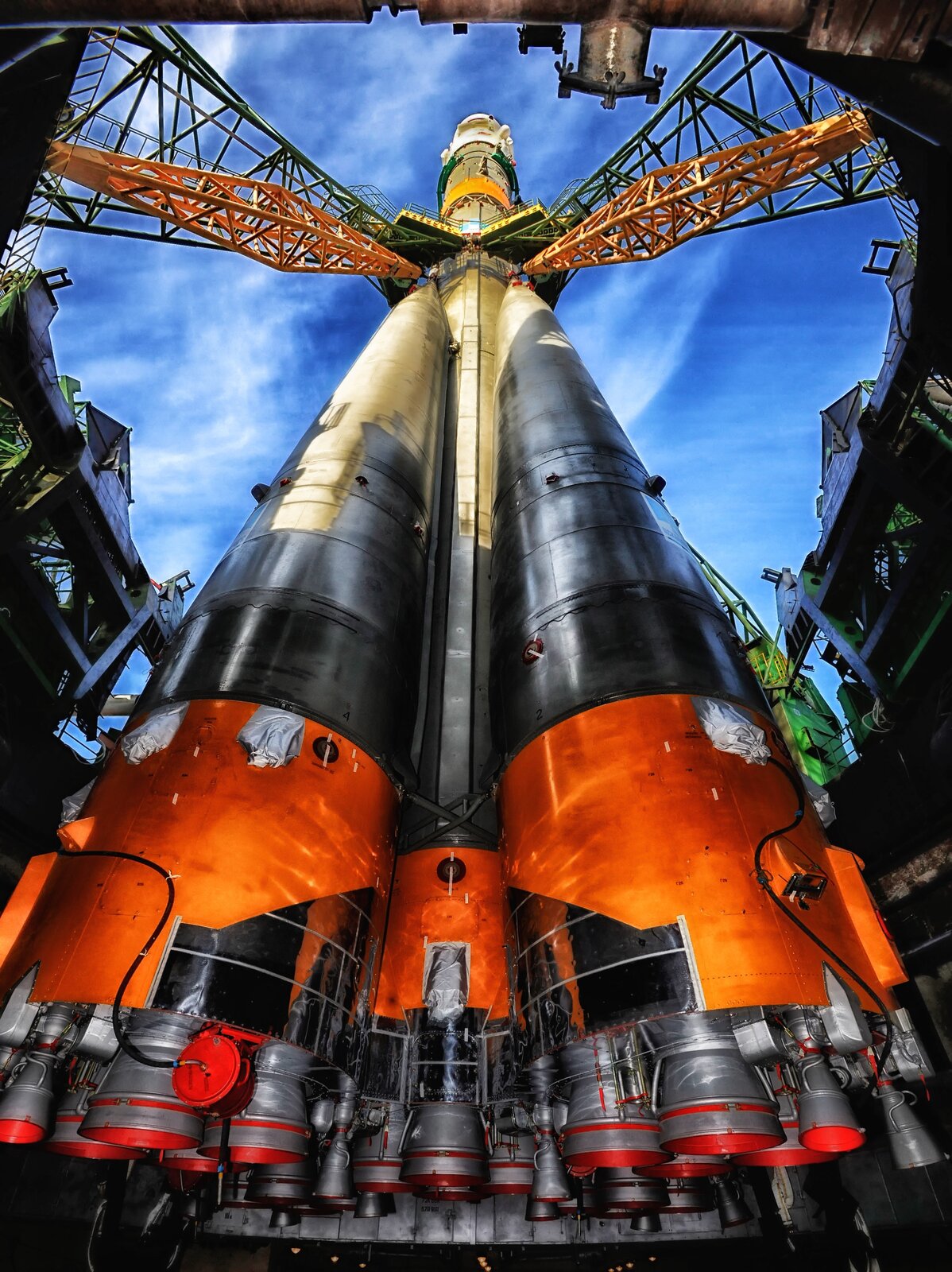
In the present days, a surprisingly large group of rich individuals are working hard to put mankind back in our rightful place among the stars. Unlike NASA and other government space agencies, these guys are doing it all with their own private cash. Sometimes referred to as the billionaire space race, this current competition involves players who are largely private company owners or founders. They've all acquired vast personal fortunes by doing successful business, and that’s why the space race is now characterised more by private joy rides into orbit and floating hotels than the ceremonial planting of 19th century flags on dusty and distant plains. Having said that, hardly any profits have been made on space tourism programmes so far.
Let’s have a look at some of the billionaire competitors and examine their very different approaches to the challenges of space travel. First, the undisputed rock star of the field: Elon Musk. His project SpaceX was first established in 2002 with an aim of colonising the planet Mars. SpaceX has long been a leader in the field of private space travel and has, for several years, been a regular and reliable partner to NASA in supplying the International Space Station located in low orbit around the Earth with goods and personnel. Musk has already established a private space shipyard in Boko Chica, South Texas to develop his next generation of ultra ambitious so‑called starships. He believes the future is in reusable spacecraft. This would not only make space flight more sustainable, but also cost effective. After all, throwing away a giant rocket after a single use is not exactly the wisest business investment. SpaceX’s ultimate mission is to establish, or at least lay the groundwork for a self‑sustaining colony on Mars.
By contrast, his billionaire rival Jeff Bezos has a quite different vision of mankind’s future among the stars. Blue Origin, his rocket project, has also been making great efforts in the new field of reusable rockets. Rather than being super focused on Mars, however, Bezos’s short‑term goals include the first ever privately run mission to the Moon and back, potentially as soon as the year 2024. Bezos believes the first step should lead into commercial low–orbit space tourism. His new space capsule has attractive big windows and comfortable seats. Bezos hopes to lift tourists into the stratosphere, if all goes well, by the end of this decade. Bezos’s vision is that to survive, human beings should ultimately aspire to leave planet Earth, and he reckons the future will involve vast floating space stations where as many as a trillion human beings could comfortably live and work forever.
Another billionaire in the race, although on a more modest scale, is the UK’s Richard Branson. His space project is aimed at the potential low Earth orbit tourism market, which is not quite as ambitious as Musk’s Martian colonies, or Bezos’s colossal floating continents. Still, at least it promises a flight into space that could possibly be within the reach of a common person. Soon, his space planes should be able to carry as many as 19 excited space travellers at three times the speed of sound using good old‑fashioned jet engines. Branson has stated publicly his belief that by the end of the current century, hundreds of thousands of people will have the chance to become astronauts.
The most feasible project currently working towards that end is the excitingly named Breakthrough Starshot. Founded in 2016 by Israeli Russian Yuri Milner, Breakthrough Starshot plans to visit our nearest star Proxima Centauri travelling at around a fifth of the speed of light. The mission will take 30 years to reach its destination. After that, we can look forward to observational data arriving back to us on Earth maybe four years later. The fact is Proxima Centauri, although pretty much our neighbour, is still 4.37 light years away and for now, sadly, there’s no getting around the fact that these things take time. The huge challenge is to cross the 40 trillion kilometres to the star and regular spacecrafts won’t do. Breakthrough Starshot’s big innovation is to launch a fleet of up to a thousand tiny spacecraft, each with the mass of a paper clip, and push them into the void by directing a powerful laser at them. This way, they have a bigger chance of reaching their destination.
In addition to private corporations, numerous nations are striving to become leaders in taking humans into space. China is currently planning a manned mission to the lunar south pole by 2030 and has already landed a robotic rover on the dark side of the Moon. The country is also working on its own vast multi‑module orbital space station. India is also in the game with its own rovers and lunar landers at various stages of development. Not to mention a less‑known mission from the United Arab Emirates that’s hoping to get to Mars.
Spending long periods of time in space has, however, certain disadvantages. A great obstacle in the space colonisation that we are yet to overcome is how long‑term stay in zero‑gravity conditions affects our bodies. The current record for the longest spell a human has ever spent in space belongs to Russian cosmonaut Valerie Polyakov, who spent 437 days aboard the orbital station and later reported unstable moves. Research has shown that low gravity environments are detrimental to orientation, balance, bone density and the cardiovascular system. Dehydration can cause kidney problems and adverse conditions in space may lead to scary cognitive issues and behavioural abnormalities. For example, previous experiments suggest that human groups left in isolation often fall into arguments and face socialisation‑related problems. As minor as they seem, just imagine having to cope with these problems being years away from the Earth!
So the challenges of human space travel are enormous from a financial, technological and physiological point of view. But remember: not so long ago it was widely believed that fast train travel wasn’t feasible because the human body couldn’t tolerate speeds of over 80 kilometres per hour. Who knows which among our present fears about space will look as silly as that in the decades and centuries ahead? So let’s all adopt Jeff Bezos’s attitude and agree we’ll all meet up again out there someday.
Autor: Marcin Legeżyński