bg‑azure

Almost everyone has an opinion on online learning, especially when it comes to its advantages and disadvantages. However, the benefits and drawbacks of digital education depend largely on the type of learning one engages in. Indeed, there are a few popular methods of studying in the online space. Do you know what they are? Can you characterise them? What are their pros and cons? Work with the illustration in this section to find out.

Prawie każdy ma opinię na temat nauki w internecie, szczególnie jeśli chodzi o jej plusy i minusy. Należy jednak pamiętać, że wady i zalety edukacji zdalnej uzależnione są w dużej mierze od typu nauki, w jakim bierze się udział. Istnieje kilka popularnych sposobów nauczania w przestrzeni cyfrowej. Potrafisz je nazwać i scharakteryzować? Jakie są ich wady i zalety? Pracuj z ilustracją w tej sekcji, aby je poznać dowiedzieć.

Exercise 1
R1TMDLAESfCzC
Fill in the gaps with the correct prepositions.
Źródło: GroMar Sp. z o.o., licencja: CC BY-SA 3.0.
R1DRsoeiA30pA
Match the words and phrases with their definitions. instantaneous Możliwe odpowiedzi: 1. to force someone to accept something, 2. to fail to do something fast enough or on time, 3. happening immediately, without any delay, 4. to have the same or similar effect as something else, 5. something that is a mixture of two very different things, 6. able to change or be changed easily according to the situation, 7. to encourage the development or growth of ideas or feelings mimic Możliwe odpowiedzi: 1. to force someone to accept something, 2. to fail to do something fast enough or on time, 3. happening immediately, without any delay, 4. to have the same or similar effect as something else, 5. something that is a mixture of two very different things, 6. able to change or be changed easily according to the situation, 7. to encourage the development or growth of ideas or feelings impose Możliwe odpowiedzi: 1. to force someone to accept something, 2. to fail to do something fast enough or on time, 3. happening immediately, without any delay, 4. to have the same or similar effect as something else, 5. something that is a mixture of two very different things, 6. able to change or be changed easily according to the situation, 7. to encourage the development or growth of ideas or feelings flexible Możliwe odpowiedzi: 1. to force someone to accept something, 2. to fail to do something fast enough or on time, 3. happening immediately, without any delay, 4. to have the same or similar effect as something else, 5. something that is a mixture of two very different things, 6. able to change or be changed easily according to the situation, 7. to encourage the development or growth of ideas or feelings foster Możliwe odpowiedzi: 1. to force someone to accept something, 2. to fail to do something fast enough or on time, 3. happening immediately, without any delay, 4. to have the same or similar effect as something else, 5. something that is a mixture of two very different things, 6. able to change or be changed easily according to the situation, 7. to encourage the development or growth of ideas or feelings hybrid Możliwe odpowiedzi: 1. to force someone to accept something, 2. to fail to do something fast enough or on time, 3. happening immediately, without any delay, 4. to have the same or similar effect as something else, 5. something that is a mixture of two very different things, 6. able to change or be changed easily according to the situation, 7. to encourage the development or growth of ideas or feelings fall behind Możliwe odpowiedzi: 1. to force someone to accept something, 2. to fail to do something fast enough or on time, 3. happening immediately, without any delay, 4. to have the same or similar effect as something else, 5. something that is a mixture of two very different things, 6. able to change or be changed easily according to the situation, 7. to encourage the development or growth of ideas or feelings
Źródło: GroMar Sp. z o.o., licencja: CC BY-SA 3.0.

Study the illustration on the types of online education and do the exercises below.
1
R1EOM5TDCzkAF
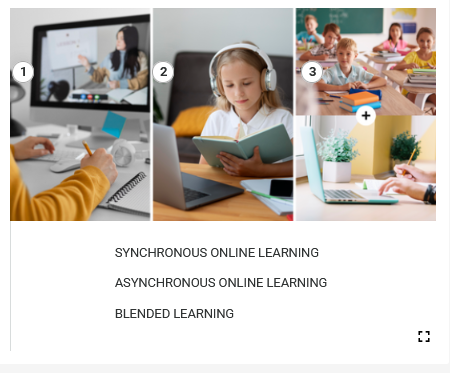
Grafika składa się z 3 elementów ustawionych obok siebie, na które składają się 4 zdjęcia. Każda fotografia przedstawia dzieci z zeszytami oraz laptopy. Grafika posiada trzy punkty interaktywne, po naciśnięciu których pojawiają się tekst oraz nagrania. Transkrypcja do nagrań znajduje się poniżej. SYNCHRONOUS ONLINE LEARNING. Zdjęcie nr. 1. Ujęcie wykonane od boku, zza pleców osoby siedzącej przy biurku, ukazuje jedynie fragment włosów oraz jej ręce oparte na blacie, na którym jest sprzęt komputerowy, a na monitorze wyświetla się postać kobiety siedzącej przy stole i wskazującej na tablice stojącą obok niej. ASYNCHRONOUS ONLINE LEARNING Zdjęcie nr. 2 przedstawia dziewczynkę w wieku około 10 lat, siedzącą w słuchawkach, przy stole, na którym leżą zeszyty, ołówek oraz laptop. Ujęcie zza komputera ukazuje, że dziecko w lewej ręce trzyma otwarty zeszyt, w kierunku którego jest skierowany jej wzrok. BLENDED LEARNING. Zdjęcie nr 3 to zestawienie dwóch zdjęć, jedno pod drugim, na łączeniu których jest znak +. Górna fotografia przedstawia fragment pomieszczenia z ławkami szkolnymi, w których siedzą dzieci, mające przed sobą zeszyty i książki. W tle za nimi wisi zielona tablica kredowa. Natomiast zdjęcie dolne ukazuje dłonie oparte o blat na którym stoi otwarty laptop.

Grafika składa się z 3 elementów ustawionych obok siebie, na które składają się 4 zdjęcia. Każda fotografia przedstawia dzieci z zeszytami oraz laptopy. Grafika posiada trzy punkty interaktywne, po naciśnięciu których pojawiają się tekst oraz nagrania. Transkrypcja do nagrań znajduje się poniżej.

SYNCHRONOUS ONLINE LEARNING.

This type of learning relies on rapid communication between teachers and their students. It allows for real‑time schooling with the use of digital means.

Zdjęcie nr. 1. Ujęcie wykonane od boku, zza pleców osoby siedzącej przy biurku, ukazuje jedynie fragment włosów oraz jej ręce oparte na blacie, na którym jest sprzęt komputerowy, a na monitorze wyświetla się postać kobiety siedzącej przy stole i wskazującej na tablice stojącą obok niej.

ASYNCHRONOUS ONLINE LEARNING.

This type of learning focuses on self‑management instead of instantaneous communication with teachers. Students create their own schedules and use emails or e‑learning platforms to turn in their work.

Zdjęcie nr. 2 przedstawia dziewczynkę w wieku około 10 lat, siedzącą w słuchawkach, przy stole, na którym leżą zeszyty, ołówek oraz laptop. Ujęcie zza komputera ukazuje, że dziecko w lewej ręce trzyma otwarty zeszyt, w kierunku którego jest skierowany jej wzrok.

BLENDED LEARNING.

This type of learning brings together synchronous and asynchronous learning. Students enjoy real‑time schooling as well as individual work.

Zdjęcie nr 3 to zestawienie dwóch zdjęć, jedno pod drugim, na łączeniu których jest znak +. Górna fotografia przedstawia fragment pomieszczenia z ławkami szkolnymi, w których siedzą dzieci, mające przed sobą zeszyty i książki. W tle za nimi wisi zielona tablica kredowa. Natomiast zdjęcie dolne ukazuje dłonie oparte o blat na którym stoi otwarty laptop.

TRANSCRIPTazurewhite
Exercise 2
RPBkguEQKKzOH
Based on the interactive illustration, choose the correct answer. 1. Synchronous online learning
a) relies on the student’s ability to self-organise.
b) embraces real-time communication capabilities.
c) promotes self-imposed restrictions.

2. The proponents of asynchronous online learning
a) value the inherent flexibility of digital education.
b) appreciate isolation because it fosters self-management.
c) are against coursework schedules of all kinds.

3. Blended learning aims to
a) ease teachers’ problems by removing digital feedback.
b) combine synchronous and asynchronous methods.
c) mitigate the disadvantages of other types of online learning.

4. Asynchronous and blended learning share a drawback that is
a) the lack of contact with one’s teachers.
b) the inability to organise one’s work.
c) the refusal to provide digital feedback.

5. A person that thrives while having support from others would probably benefit from the
a) asynchronous and synchronous online learning.
b) synchronous and blended online learning.
c) blended and asynchronous online learning.
Źródło: GroMar Sp. z o.o., licencja: CC BY-SA 3.0.
Exercise 3
R78gNmvmrufEa
Pair the words connected with types of online learning with their definitions. instantaneous Możliwe odpowiedzi: 1. to make pain or problems less severe, 2. to have the same or similar effect as something else, 3. to force someone to accept something, 4. happening immediately, without any delay, 5. to encourage the development or growth of ideas or feelings, 6. something that is a mixture of two very different things, 7. able to change or be changed easily according to the situation mimic Możliwe odpowiedzi: 1. to make pain or problems less severe, 2. to have the same or similar effect as something else, 3. to force someone to accept something, 4. happening immediately, without any delay, 5. to encourage the development or growth of ideas or feelings, 6. something that is a mixture of two very different things, 7. able to change or be changed easily according to the situation alleviate Możliwe odpowiedzi: 1. to make pain or problems less severe, 2. to have the same or similar effect as something else, 3. to force someone to accept something, 4. happening immediately, without any delay, 5. to encourage the development or growth of ideas or feelings, 6. something that is a mixture of two very different things, 7. able to change or be changed easily according to the situation impose Możliwe odpowiedzi: 1. to make pain or problems less severe, 2. to have the same or similar effect as something else, 3. to force someone to accept something, 4. happening immediately, without any delay, 5. to encourage the development or growth of ideas or feelings, 6. something that is a mixture of two very different things, 7. able to change or be changed easily according to the situation foster Możliwe odpowiedzi: 1. to make pain or problems less severe, 2. to have the same or similar effect as something else, 3. to force someone to accept something, 4. happening immediately, without any delay, 5. to encourage the development or growth of ideas or feelings, 6. something that is a mixture of two very different things, 7. able to change or be changed easily according to the situation hybrid Możliwe odpowiedzi: 1. to make pain or problems less severe, 2. to have the same or similar effect as something else, 3. to force someone to accept something, 4. happening immediately, without any delay, 5. to encourage the development or growth of ideas or feelings, 6. something that is a mixture of two very different things, 7. able to change or be changed easily according to the situation flexible Możliwe odpowiedzi: 1. to make pain or problems less severe, 2. to have the same or similar effect as something else, 3. to force someone to accept something, 4. happening immediately, without any delay, 5. to encourage the development or growth of ideas or feelings, 6. something that is a mixture of two very different things, 7. able to change or be changed easily according to the situation
Źródło: GroMar Sp. z o.o., licencja: CC BY-SA 3.0.
Exercise 4
RAmsewGheCJLe
Translate the words in brackets to fill in the gaps. 1. The synchronous method relies on (natychmiastowej) Tu uzupełnij communication between all involved parties. 2. Some critics of the method argue that it (imituje) Tu uzupełnij the traditional learning environment. 3. When you (narzucasz) Tu uzupełnij a schedule on students, it’s no different from asking them to come to class. 4. Those schools that want the best of both worlds, tend to introduce (hybrydowe) Tu uzupełnij learning. 5. If you want to (złagodzić) Tu uzupełnij the drawbacks of this type of online learning, you ought to ensure your students have contact with their peers. 6. Asynchronous online learning (pielęgnuje) Tu uzupełnij independence in students which is a valuable trait. Online learning is a(n) (elastyczny) Tu uzupełnij model of education, so it’s no wonder so many students and teachers like it.
Źródło: GroMar Sp. z o.o., licencja: CC BY-SA 3.0.
Exercise 5

Which type of online learning do you find the most appealing? Why? Use the for and against arguments from the recordings to construct your answer in 4–5 sentences.

R1R3BbQzsMq0q
(Uzupełnij).
Źródło: GroMar Sp. z o.o., licencja: CC BY-SA 3.0.