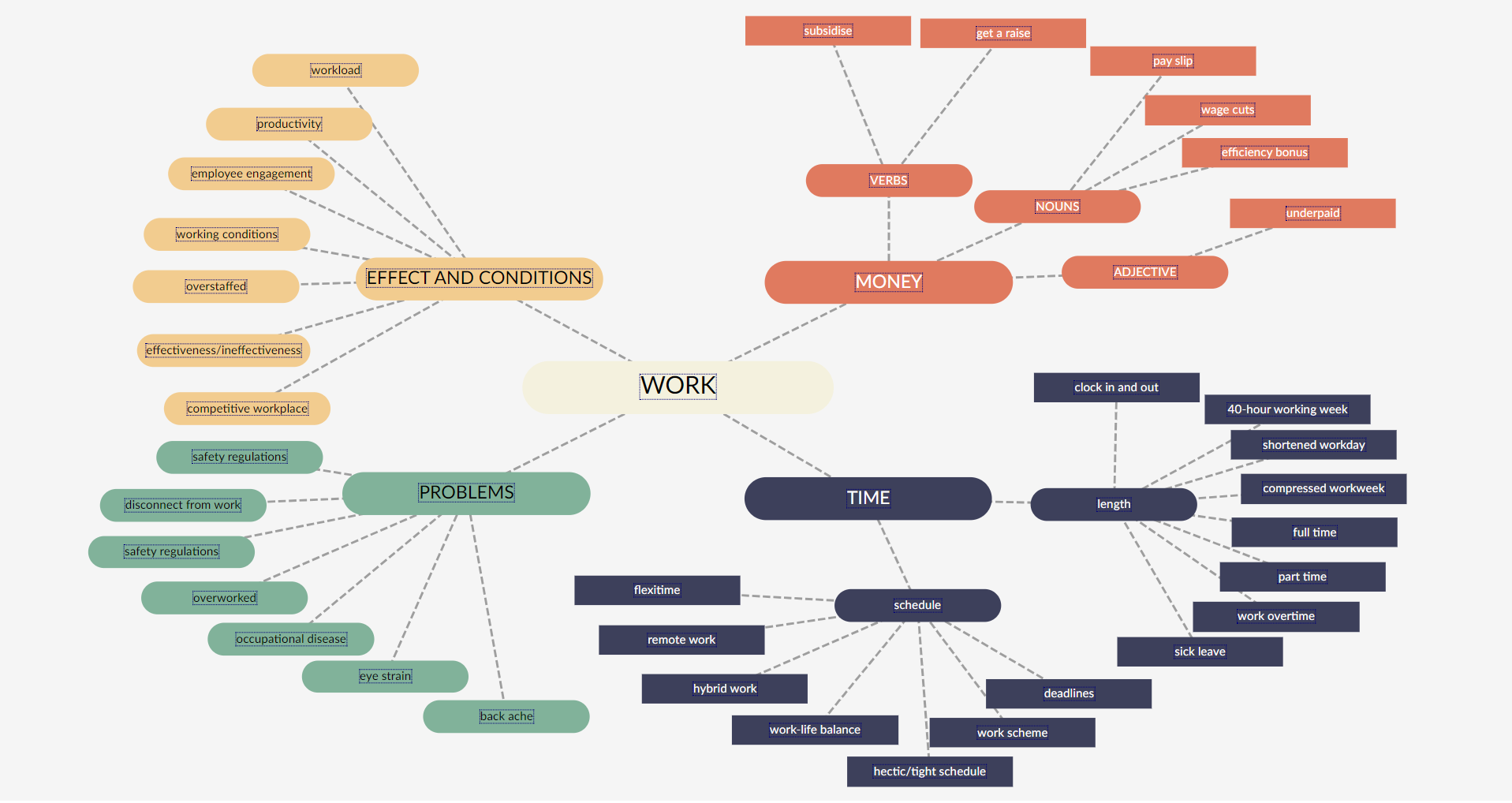
Time management is an important aspect of adulthood. Many people face a daily challenge of dividing time between personal and professional life. This is called work‑life balance. Can you find it on the mind map below?
Zarządzanie czasem jest ważnym aspektem dorosłości. Wielu ludzi mierzy się z codziennym wyzwaniem, żeby podzielić czas pomiędzy życiem osobistym i zawodowym. W języku angielskim zjawisko to nazywamy „work‑life balance”. Czy widzisz je na mapie pojęć poniżej?
R1OjJEOntiuli
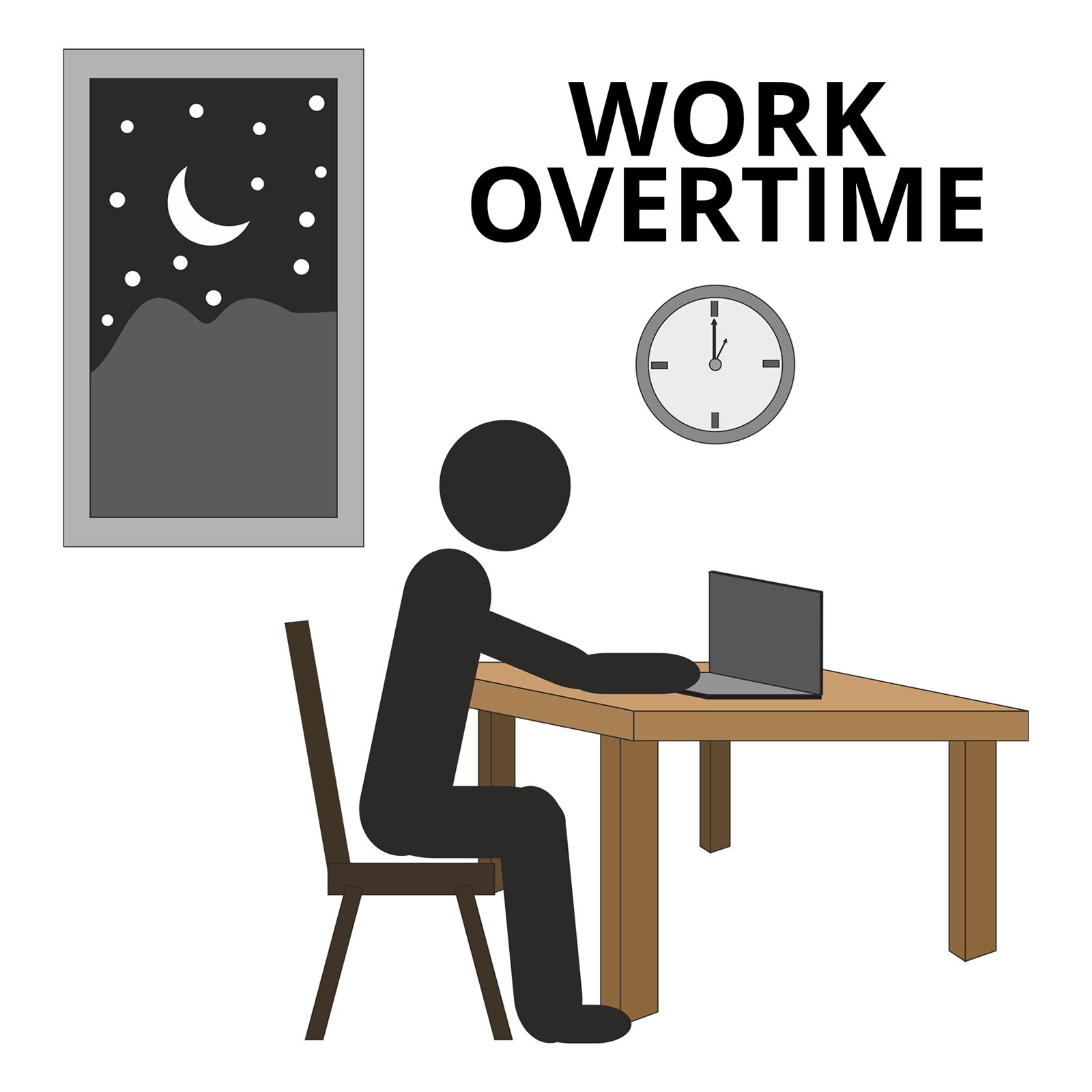
Ilustracja przedstawia ludzika siedzącego przy biurku, na którym stoi komputer. Widoczne jest okno a za nim ciemna noc, księżyc i gwiazdy. Na ścianie widoczny jest napis w języku angielskim: WORK OVERTIME. Pod napisem jest zegar.
The time to finish work was yesterday.
Termin zakończenia pracy był na wczoraj.
Źródło: GroMar Sp. z o.o., licencja: CC BY-SA 3.0.
Exercise1
Study and choose the correct answer.
R1LREBsUja39C
Nagranie dźwiękowe
Nagranie dźwiękowe
Źródło: GroMar Sp. z o.o., licencja: CC BY-SA 3.0.
Źródło: GroMar Sp. z o.o., licencja: CC BY-SA 3.0.
Nagranie dźwiękowe
TRANSCRIPTazurewhite
Switching to full time remote working last year was the best health decision ever, both in terms of mental and physical health. Miss the office? Never! Neither the so‑called corpo‑culture of small talk with my colleagues, nor the daily commute in traffic. A small part of this time now goes into walking to the co‑working space in the library near my house. Much healthier I must say! And it’s not just about taking a walk in the fresh air. It’s straightening up instead of sitting in the car, and it’s looking around instead of focusing on one point all day. My eyes feel much better and my back aches have gone away. When I get to the library, there are usually three or four other people working on their computers. I stay there for three or four hours, it depends on the day and project. But it’s a great place to focus and I’m doing so well that I even got an efficiency bonus last month. I honestly don’t know why you’re hesitating! Trust me, just do it. You won’t regret it.
RsIg2izcci6vq
Listen and choose the correct answer. 1. The person talking is probably
a) an employer.
b) a company doctor.
c) an employee.
2. The person is probably saying this to
a) a former employer.
b) a friend.
c) a colleague from work.
Listen and choose the correct answer. 1. The person talking is probably
a) an employer.
b) a company doctor.
c) an employee.
2. The person is probably saying this to
a) a former employer.
b) a friend.
c) a colleague from work.
Źródło: GroMar Sp. z o.o., licencja: CC BY-SA 3.0.
RRCvULj7Z0wMQ
Exercise2
Listen again and complete the phrases used by the speaker. full Tu uzupełnij co-working Tu uzupełnij efficiency Tu uzupełnij Tu uzupełnij ache remote Tu uzupełnij
Listen again and complete the phrases used by the speaker. full Tu uzupełnij co-working Tu uzupełnij efficiency Tu uzupełnij Tu uzupełnij ache remote Tu uzupełnij
Źródło: GroMar Sp. z o.o., licencja: CC BY-SA 3.0.
1
1
Exercise3
Study the following words and expressions connected with work. Then put the words or phrases in the correct categories.
RxyV4VOkHSMX2
Źródło: GroMar Sp. z o.o., licencja: CC BY-SA 3.0.
Study the mind map and complete it with the following words or phrases:
pay slip
deadlines
underpaid
overworked
eye strain
full time
competitive workplace
R14jfVDDHxD8U1
Źródło: GroMar Sp. z o.o., licencja: CC BY-SA 3.0.
CHECK YOU ANSWERazurewhite
RDwbRlYQaPo8G
Ilustracja
Źródło: GroMar Sp. z o.o., licencja: CC BY 3.0.
Rsxim0pKpjsEP
Exercise3
Drag the expressions to match them with their definitions. scheme Możliwe odpowiedzi: 1. final date, 2. written information about salary/wages from a given month, 3. inform the employer you’re starting work, 4. plan, 5. detach, 6. receiving lower wages than one should, 7. support financially by paying part of the costs, 8. a flexible working time, 9. extra money for high productivity, 10. tired because of working too much deadline Możliwe odpowiedzi: 1. final date, 2. written information about salary/wages from a given month, 3. inform the employer you’re starting work, 4. plan, 5. detach, 6. receiving lower wages than one should, 7. support financially by paying part of the costs, 8. a flexible working time, 9. extra money for high productivity, 10. tired because of working too much flexitime Możliwe odpowiedzi: 1. final date, 2. written information about salary/wages from a given month, 3. inform the employer you’re starting work, 4. plan, 5. detach, 6. receiving lower wages than one should, 7. support financially by paying part of the costs, 8. a flexible working time, 9. extra money for high productivity, 10. tired because of working too much subsidise Możliwe odpowiedzi: 1. final date, 2. written information about salary/wages from a given month, 3. inform the employer you’re starting work, 4. plan, 5. detach, 6. receiving lower wages than one should, 7. support financially by paying part of the costs, 8. a flexible working time, 9. extra money for high productivity, 10. tired because of working too much disconnect Możliwe odpowiedzi: 1. final date, 2. written information about salary/wages from a given month, 3. inform the employer you’re starting work, 4. plan, 5. detach, 6. receiving lower wages than one should, 7. support financially by paying part of the costs, 8. a flexible working time, 9. extra money for high productivity, 10. tired because of working too much clock in Możliwe odpowiedzi: 1. final date, 2. written information about salary/wages from a given month, 3. inform the employer you’re starting work, 4. plan, 5. detach, 6. receiving lower wages than one should, 7. support financially by paying part of the costs, 8. a flexible working time, 9. extra money for high productivity, 10. tired because of working too much underpaid Możliwe odpowiedzi: 1. final date, 2. written information about salary/wages from a given month, 3. inform the employer you’re starting work, 4. plan, 5. detach, 6. receiving lower wages than one should, 7. support financially by paying part of the costs, 8. a flexible working time, 9. extra money for high productivity, 10. tired because of working too much efficiency bonus Możliwe odpowiedzi: 1. final date, 2. written information about salary/wages from a given month, 3. inform the employer you’re starting work, 4. plan, 5. detach, 6. receiving lower wages than one should, 7. support financially by paying part of the costs, 8. a flexible working time, 9. extra money for high productivity, 10. tired because of working too much overworked Możliwe odpowiedzi: 1. final date, 2. written information about salary/wages from a given month, 3. inform the employer you’re starting work, 4. plan, 5. detach, 6. receiving lower wages than one should, 7. support financially by paying part of the costs, 8. a flexible working time, 9. extra money for high productivity, 10. tired because of working too much pay slip Możliwe odpowiedzi: 1. final date, 2. written information about salary/wages from a given month, 3. inform the employer you’re starting work, 4. plan, 5. detach, 6. receiving lower wages than one should, 7. support financially by paying part of the costs, 8. a flexible working time, 9. extra money for high productivity, 10. tired because of working too much
Drag the expressions to match them with their definitions. scheme Możliwe odpowiedzi: 1. final date, 2. written information about salary/wages from a given month, 3. inform the employer you’re starting work, 4. plan, 5. detach, 6. receiving lower wages than one should, 7. support financially by paying part of the costs, 8. a flexible working time, 9. extra money for high productivity, 10. tired because of working too much deadline Możliwe odpowiedzi: 1. final date, 2. written information about salary/wages from a given month, 3. inform the employer you’re starting work, 4. plan, 5. detach, 6. receiving lower wages than one should, 7. support financially by paying part of the costs, 8. a flexible working time, 9. extra money for high productivity, 10. tired because of working too much flexitime Możliwe odpowiedzi: 1. final date, 2. written information about salary/wages from a given month, 3. inform the employer you’re starting work, 4. plan, 5. detach, 6. receiving lower wages than one should, 7. support financially by paying part of the costs, 8. a flexible working time, 9. extra money for high productivity, 10. tired because of working too much subsidise Możliwe odpowiedzi: 1. final date, 2. written information about salary/wages from a given month, 3. inform the employer you’re starting work, 4. plan, 5. detach, 6. receiving lower wages than one should, 7. support financially by paying part of the costs, 8. a flexible working time, 9. extra money for high productivity, 10. tired because of working too much disconnect Możliwe odpowiedzi: 1. final date, 2. written information about salary/wages from a given month, 3. inform the employer you’re starting work, 4. plan, 5. detach, 6. receiving lower wages than one should, 7. support financially by paying part of the costs, 8. a flexible working time, 9. extra money for high productivity, 10. tired because of working too much clock in Możliwe odpowiedzi: 1. final date, 2. written information about salary/wages from a given month, 3. inform the employer you’re starting work, 4. plan, 5. detach, 6. receiving lower wages than one should, 7. support financially by paying part of the costs, 8. a flexible working time, 9. extra money for high productivity, 10. tired because of working too much underpaid Możliwe odpowiedzi: 1. final date, 2. written information about salary/wages from a given month, 3. inform the employer you’re starting work, 4. plan, 5. detach, 6. receiving lower wages than one should, 7. support financially by paying part of the costs, 8. a flexible working time, 9. extra money for high productivity, 10. tired because of working too much efficiency bonus Możliwe odpowiedzi: 1. final date, 2. written information about salary/wages from a given month, 3. inform the employer you’re starting work, 4. plan, 5. detach, 6. receiving lower wages than one should, 7. support financially by paying part of the costs, 8. a flexible working time, 9. extra money for high productivity, 10. tired because of working too much overworked Możliwe odpowiedzi: 1. final date, 2. written information about salary/wages from a given month, 3. inform the employer you’re starting work, 4. plan, 5. detach, 6. receiving lower wages than one should, 7. support financially by paying part of the costs, 8. a flexible working time, 9. extra money for high productivity, 10. tired because of working too much pay slip Możliwe odpowiedzi: 1. final date, 2. written information about salary/wages from a given month, 3. inform the employer you’re starting work, 4. plan, 5. detach, 6. receiving lower wages than one should, 7. support financially by paying part of the costs, 8. a flexible working time, 9. extra money for high productivity, 10. tired because of working too much
Źródło: GroMar Sp. z o.o., licencja: CC BY-SA 3.0.
R1CdlTwlQSA6R
Exercise4
Have a look at the mind map above. Next, type in the missing parts of words.
Would you prefer a cTu uzupełnij workweek of four days or shorter work days Monday through Friday?
My doctor says I'm suffering from eye sTu uzupełnij, sitting in front of the computer all day.
The company declared it suffered huge losses and was forced to introduce wage cTu uzupełnij.
What is the most typical oTu uzupełnij disease of your chosen profession?
I’ve tried working two jobs, but the wTu uzupełnij is just too much and I’ll have to quit one of them.
With three deadlines on the horizon, our schedule has been hTu uzupełnij lately.
Unfortunately, Mr. Hansey is on sick lTu uzupełnij till the end of the week, please call back next Monday.
To improve employee eTu uzupełnij, the company officially encourages employees to listen to music or indulge in any other activities that lighten their mood and help them work better.
This is a very cTu uzupełnij workplace; you either prove you can handle the stress and oTu uzupełnij, (sometimes four extra hours a day), or you’re out.
Have a look at the mind map above. Next, type in the missing parts of words.
Would you prefer a cTu uzupełnij workweek of four days or shorter work days Monday through Friday?
My doctor says I'm suffering from eye sTu uzupełnij, sitting in front of the computer all day.
The company declared it suffered huge losses and was forced to introduce wage cTu uzupełnij.
What is the most typical oTu uzupełnij disease of your chosen profession?
I’ve tried working two jobs, but the wTu uzupełnij is just too much and I’ll have to quit one of them.
With three deadlines on the horizon, our schedule has been hTu uzupełnij lately.
Unfortunately, Mr. Hansey is on sick lTu uzupełnij till the end of the week, please call back next Monday.
To improve employee eTu uzupełnij, the company officially encourages employees to listen to music or indulge in any other activities that lighten their mood and help them work better.
This is a very cTu uzupełnij workplace; you either prove you can handle the stress and oTu uzupełnij, (sometimes four extra hours a day), or you’re out.
Źródło: GroMar Sp. z o.o., licencja: CC BY-SA 3.0.
Exercise5
Use the vocabulary about work presented earlier and answer the question. Write 3‑5 sentences.
What would be a perfect organisation of work time for you? Why?
Ra8ta0qxeaxBP
(Uzupełnij).
Źródło: GroMar Sp. z o.o., licencja: CC BY-SA 3.0.
I wouldn’t want to…, I think I'd prefer... But I'd love to... clocking in and out whenever I want sounds...
I wouldn’t want to have totally flexible time, because I’m afraid I would get distracted too easily. I think I’d prefer hybrid, which, with some office time, would motivate me to work better, as would a tight schedule. But I’d love to have flexitime schedule, since clocking in and out whenever I want sounds perfect to someone who, like me, likes to sleep longer in the morning, then work, then take a break. But late in the evening my productivity goes up again.