Przeczytaj
Origami is a kind of art people of all ages enjoy. What you need is a simple piece of paper, some imagination and definitely lots of patience. You will read a text about this paper folding kind of art. Do you think origami will be right for you? Would you like to try it?
Origami to rodzaj sztuki lubiany przez osoby w każdym wieku. Potrzebujesz jedynie kartkę zwykłego papieru, trochę wyobraźni i na pewno dużo cierpliwości. Przeczytasz tekst o tym artystycznym składaniu papieru. Czy uważasz, że origami jest dla ciebie odpowiednie? Czy chciałbyś/chciałabyś spróbować?
Study the following words and match them with the correct translations.
Zapoznaj się z poniższymi wyrazami i połącz je z ich tłumaczeniami.
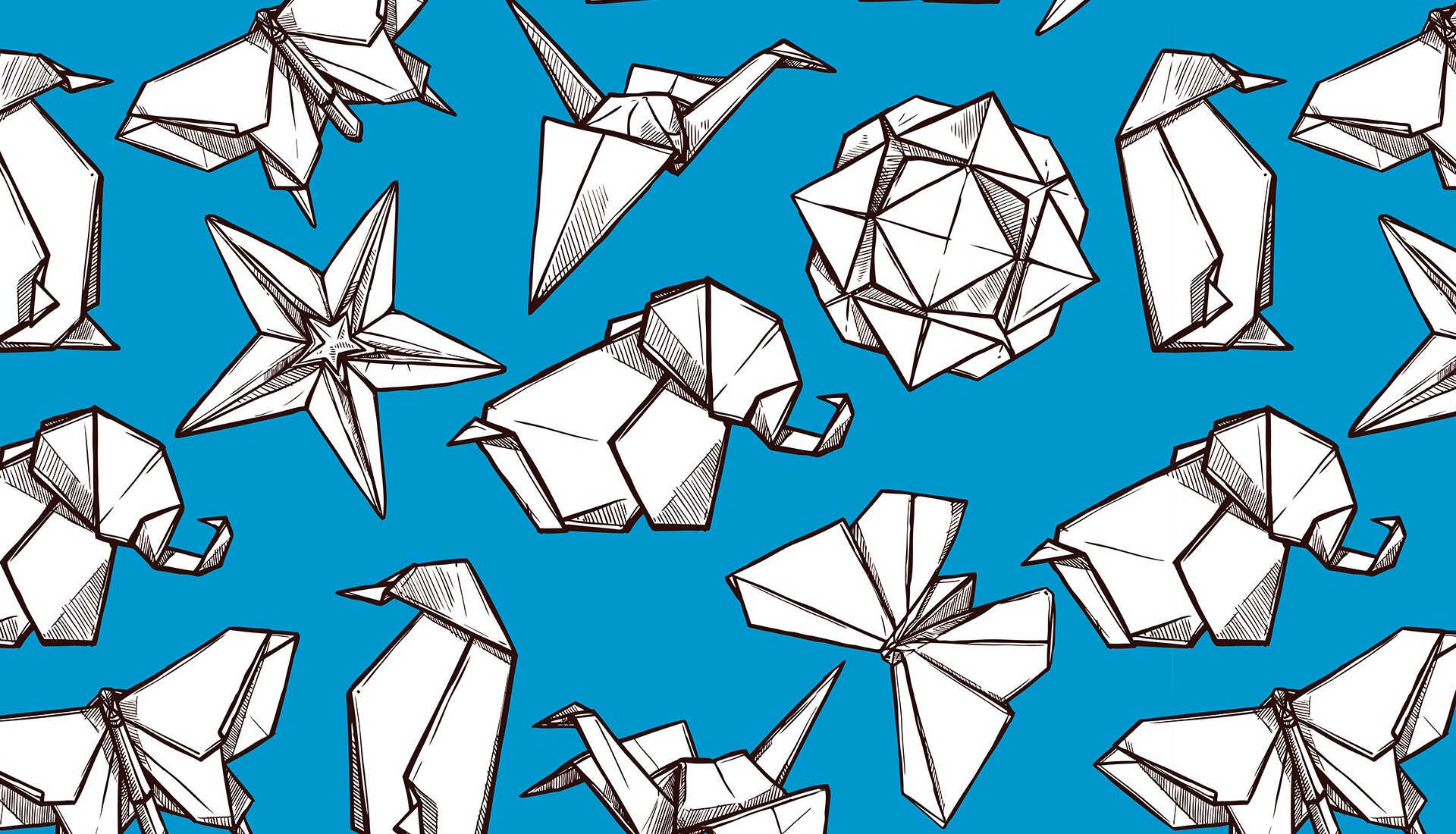
Look at the pictures of origami animals and match their names to the right pictures.
Przyjrzyj się ilustracjom przedstawiającym zwierzęta origami i dopasuj ich nazwy.
Read the text below about origami to find out more about this kind of art. Be careful, some of the sentences are missing from the text (1.1 – 1.3). Then do the exercises below.
Przeczytaj poniższy tekst o origami, aby dowiedzieć się więcej o tej sztuce. Uwaga: w tekście brakuje niektórych zdań (luki 1.1–1.3). Następnie wykonaj poniższe ćwiczenia.
All About OrigamiOrigami is a paper foldingpaper folding kind of art. The name origami comes from two Japanese words: ori which means foldingfolding and kami which means paper. The goal of the traditional origami is to transform a square piece of paper into a three‑dimensional sculpturethree‑dimensional sculpture. Origami usually takes the shapesshapes of animals or flowers. It is important that the shape is made only by folding the paper without using scissors or glue.
Origins
1.1. _____ There are theories that Japan was the first country to start it. But other theories mentionmention China and the invention of paper as the starting point of origami. Today, origami is mostly associated withassociated with Japanese culture but you can find tracestraces of this art throughout Asia and Europe.
Thousand CraneCrane Folding
There is a Japanese folk legend in which gods promise a person who foldsfolds 1000 origami cranes to make their one wish come true. 1.2. _____ The book presented some basic origami instruction and also Japanese culture. However, you could not find a thousand ways of folding a paper crane there.
Past and Present
In the past, origami was the art of folding paper without any use of scissors or glue. Today, there are many variationsvariations of origami. You may find a wet‑foldingwet‑folding origami technique where you spray the paperspray the paper with water in order toin order to make shapes more round. There are also techniques which use glue and cuts in paper to make the designs more stablestable.
What Are the Benefits of Paper Folding?
People from all over the world make origami. They want to relax and have a brain challengebrain challenge. It helps to develop hand‑eye coordinationhand‑eye coordination, fine motor skillsfine motor skills and concentration. 1.3. _____ There are three basic types of folds. The “Folds of Life” introduce children to origami. The “Folds of Truth” teach basic geometrygeometry. Finally, “Folds of Beauty”are more advancedadvanced, and are based on shapes like squares, hexagonshexagons or octagonsoctagons.
Źródło: Ela Borowiec, licencja: CC BY-SA 3.0.
Read the text with 3 missing sentences. For each gap (1.1–1.3), write a letter that corresponds to the missing sentence (A–E), so the text makes logical sense. Two sentences don’t fit into any gap.
Przeczytaj tekst, z którego usunięto 3 zdania. Do każdej luki dopasuj (1.1–1.3) literę, która oznacza brakujące zdanie (A–E), tak aby otrzymać spójny i logiczny tekst. Dwa zdania nie pasują do żadnej luki.
Read the text again and decide if the following sentences are true or false.
Ponownie przeczytaj tekst i zdecyduj, czy podane zdania są prawdziwe, czy fałszywe.
Drag and drop the words and phrases below to form logical sentences.
Przeciągnij i upuść poniższe wyrazy i zwroty, aby utworzyć logiczne zdania.
2. The name “origami” comes from two 1. three-dimensional, 2. challenge to the brain, 3. Japanese words, 4. relax and concentrate, 5. paper folding, 6. piece of paper ori and kami.
3. The traditional origami is made with a square 1. three-dimensional, 2. challenge to the brain, 3. Japanese words, 4. relax and concentrate, 5. paper folding, 6. piece of paper.
4. Origami art looks like a 1. three-dimensional, 2. challenge to the brain, 3. Japanese words, 4. relax and concentrate, 5. paper folding, 6. piece of paper sculpture.
5. Folding paper into origami sculptures helps you 1. three-dimensional, 2. challenge to the brain, 3. Japanese words, 4. relax and concentrate, 5. paper folding, 6. piece of paper.
6. Origami offers a 1. three-dimensional, 2. challenge to the brain, 3. Japanese words, 4. relax and concentrate, 5. paper folding, 6. piece of paper and develops hand-eye coordination.
Read the above text about origami again. Then write the missing words to complete the gaps in the text below. Remember to fill in the gaps in Polish.
Po przeczytaniu tekstu wpisz odpowiednie wyrazy w luki w poniższej wiadomości. Pamiętaj, by uzupełnić treść w języku polskim.
Słownik
/ ədˈvɑːnst /
zaawansowany/zaawansowana
/ əˈsəʊsieɪtɪd wɪð / / əˈsəʊsieɪt wɪð /
powiązany/powiązana z [powiązywać z]
/ ˈbreɪn ˈtʃæləndʒ /
wyzwanie dla mózgu
/ ˈfaɪn ˌməʊtər skɪlz / / ˈfaɪn ˌməʊtər skɪl /
dobre zdolności motoryczne [sprawność motoryczna]
/ ˈfəʊldɪŋ /
składanie
/ fəʊldz / / fəʊld /
zagięcia [zagięcie]
/ dʒɪˈɒmətri /
geometria
/ hænd eɪ ˌkəʊˌɔːdɪnˈeɪʃn̩ /
koordynacja ręka‑oko
/ ˈheksəɡənz / / ˈheksəɡən /
sześciokąty [sześciokąt]
/ ɪn ɔ:də tuː /
w celu
/ ˈmenʃn̩ /
wspominać
/ ˈɒktəɡənz / / ˈɒktəɡən /
ośmiokąty [ośmiokąt]
/ peɪpər ˈfəʊldɪŋ /
składanie papieru
/ ʃeɪps / / ʃeɪp /
kształty [kształt]
/ skweə /
kwadratowy/kwadratowa
/ ˈsteɪbl̩ /
stabilny/stabilna
/ ˈspreɪ ðə ˈpeɪpə /
spryskać papier
/ ˌthetariː daɪˈmenʃnəl ˈskʌlptʃə /
rzeźba trójwymiarowa
/ ˈtreɪsɪz / / treɪs /
ślady [ślad]
/ ˌveərɪˈeɪʃn̩z / / ˌveərɪˈeɪʃn̩ /
odmiany [odmiana]
/ ˈwet ˈfəʊldɪŋ /
składanie na mokro
Źródło: GroMar Sp. z o.o., licencja: CC BY‑SA 3.0